Int’l Report: 4,000 Yemenis are Killed Each Year in Land, Water Disputes

Yemeni farmers during the harvest season (EPA)
TT

Int’l Report: 4,000 Yemenis are Killed Each Year in Land, Water Disputes

Yemeni farmers during the harvest season (EPA)

An international center has warned that climate change put the population of Yemen at significant risk moving forward, both in their ability to attain needed resources to survive and in the potential for conflict to continue well into the future over increasingly constrained resources.

In its report on the climate and conflict in Yemen, the Center for Civilians in Conflict (CIVIC) noted that 4,000 people are killed yearly in disputes over land and water.

The report stated that scientists have been discussing the threat posed by climate change in Yemen for decades. One of the most water-poor countries in the world, Yemen is at significant risk of running completely dry, leaving its 30 million inhabitants without water.

Water is a complex problem

In 2010, the World Bank published a paper predicting that Yemen’s groundwater reserves would be depleted between 2030 and 2040, a prediction that remains essentially unchanged.

Ten years later, the Century Foundation published a report stating that, even as the war rages on, “Yemen’s environmental crisis is the biggest risk for its future.”

Although water scarcity in Yemen is a complex problem with multiple causes, climate change has and continues to exacerbate the problem while also contributing to the dire food scarcity and famine experienced throughout the country.

In addition to the threat that climate changes pose to Yemenis’ ability to access water and food, they also threaten to exacerbate the conflict and spark future conflicts due to resource competition and migration.

This phenomenon is already evident in Yemen: the impacts of climate change, combined with the harm warring parties in the current armed conflict have inflicted upon the environment and on critical resources, have contributed to resource scarcity and forced migration across the country, according to the report.

Landmines

These impacts have increased protection threats, tensions between communities over resources, and outbreaks of violence and local conflicts.

With no sustainable, long-term solutions in place to mitigate the effects of both climate change and environmental destruction, the population of Yemen faces significant risks moving forward “both in their ability to attain needed resources to survive and in the potential for conflict to continue well into the future over increasingly constrained resources.”

The last eight years of conflict have “compounded the impacts of climate change on land, water, and food” through the deterioration of basic government services, blockades by warring parties, direct attacks upon farmland and water sources, and the placement of landmines across vast swaths of agricultural land as well as near and inside of water sources.

The report says that resource mismanagement has been an issue for many decades in Yemen, starting long before the conflict. However, it has been exacerbated by the conflict.

The breakdown of government institutions due to the lack of salary payments since the start of the war has left many government entities either completely shut down or working with minimal resources. Additionally, there are possibly over two million landmines scattered across the country.

Thousands of deaths annually

The Center discussed the impacts that climate change and the current conflict have had on their access to resources, their livelihoods, and inter- and intra-community relations.

CIVIC found that, combined with the environmental destruction caused by warring parties, climate change is directly correlated to shortages in critical resources, loss of livelihoods, forced migration, and, ultimately, conflict.

Disputes over land and water in Yemen are not a new phenomenon.

The Chief Technical Advisor at the UN Food and Agricultural Organization (UNFAO) in Aden, Walid Saleh, told CIVIC that according to statistics provided by the Ministry of Interior in 2010, “land and water conflict is the second biggest cause of conflict in Yemen… 4,000 people are killed each year in conflicts over land and water.”

The Center asserts that water and land scarcity remain one of the most significant challenges Yemen faces and continue to cause local conflicts across Yemen.

Families fleeing the conflict end up fighting with the host communities over the limited water sources.

Aid workers believe climate change and environmental degradation are having a multiplier effect on conflict drivers and exacerbating protection threats facing civilians, creating a greater risk for ongoing and future conflicts in Yemen.

Threatening the right to life

According to the report, the combined effects of climate change and environmental degradation threaten people in Yemen’s right to life, food, and water, and they are creating civilian protection concerns as conflicts erupt, and individuals are displaced due to the increasing lack of resources.

“It’s a conflict trigger. Even if there’s not a conflict because of climate change, it’s a serious risk for causing future conflict.”

It noted that many living in camps have less access to safe and affordable water and food than their non-displaced counterparts.

The poverty and displacement exacerbated by climate change and environmental degradation have also contributed to child recruitment into armed groups and early marriage, and many children have been forced to drop out of school to support their families.

The Center stated that efforts to end the current conflict and secure sustainable peace are a priority and a necessary first step to ensure the protection of civilians and end the widespread damage caused by the war. It is also required to allocate more resources to rebuilding the country.

Lebanon Says Two Killed in Israeli Strike on Palestinian Refugee Camp

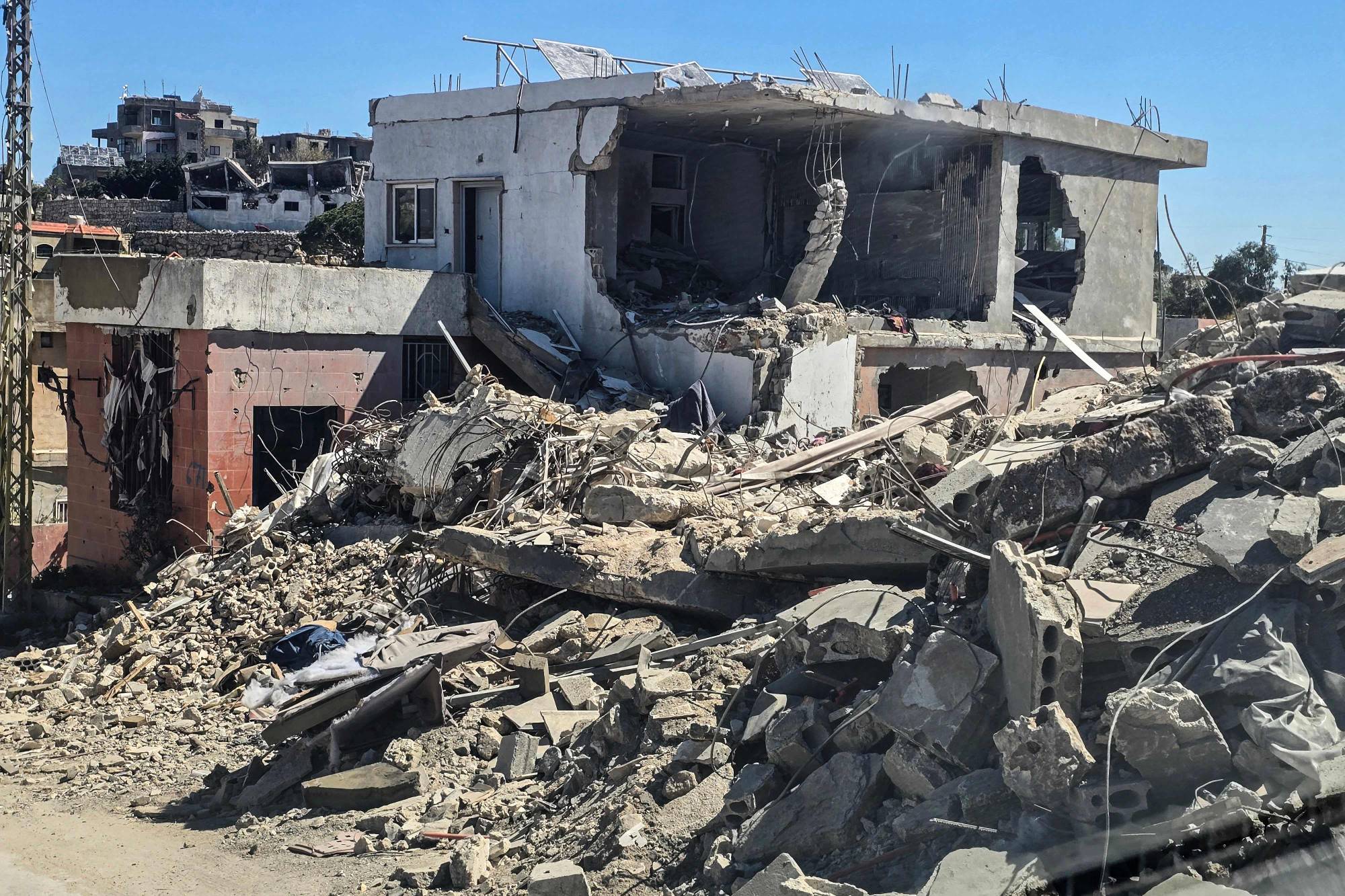
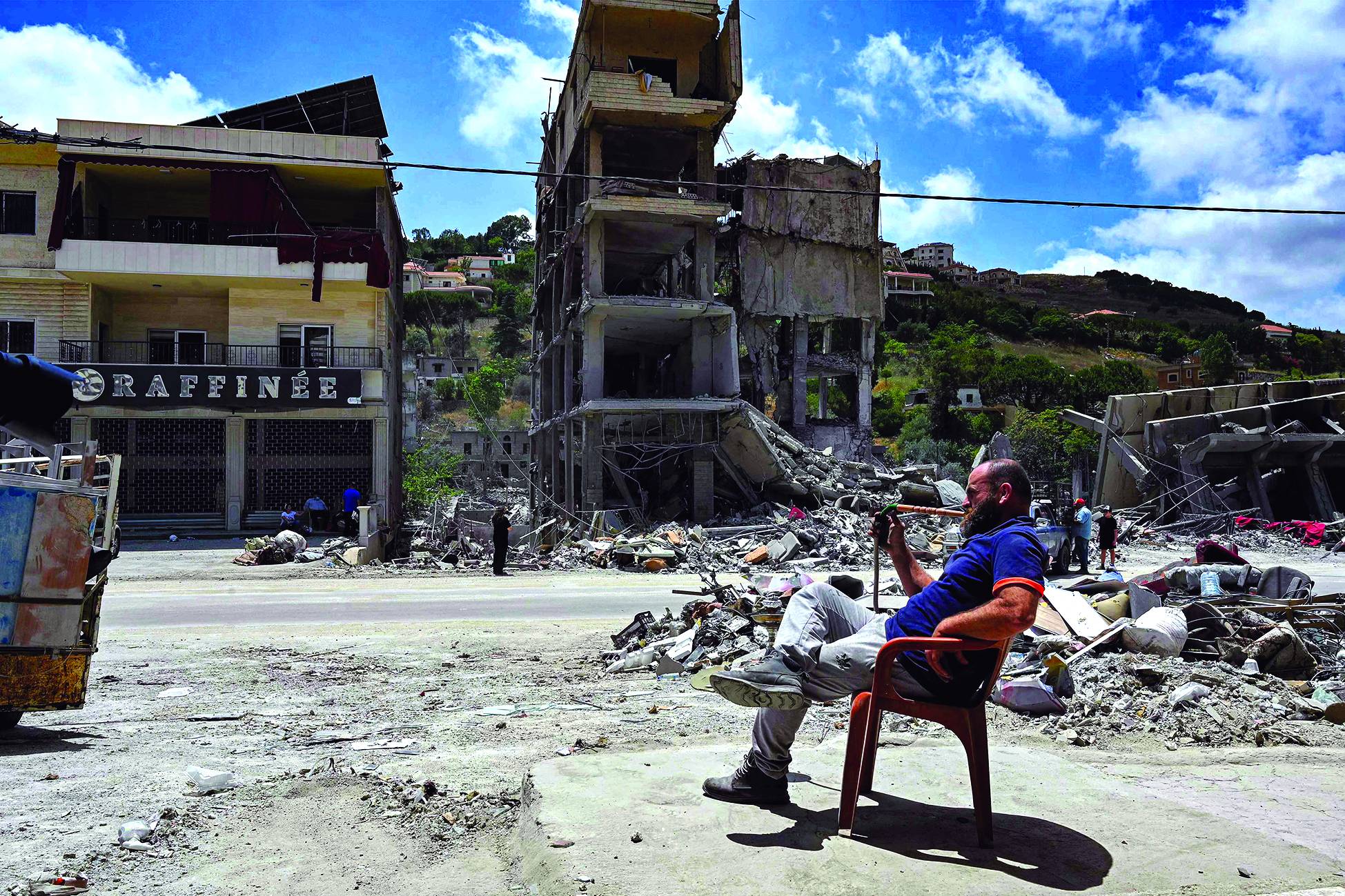
22 January 2026, Lebanon, Qnarit: People inspect the damage of a building that was destroyed by an Israeli air raid on the southern Lebanese village of Qnarit. (dpa)
TT

Lebanon Says Two Killed in Israeli Strike on Palestinian Refugee Camp

22 January 2026, Lebanon, Qnarit: People inspect the damage of a building that was destroyed by an Israeli air raid on the southern Lebanese village of Qnarit. (dpa)

Lebanon said an Israeli strike on the country's largest Palestinian refugee camp killed two people on Friday, with Israel's army saying it had targeted the Palestinian group Hamas. 

The official National News Agency said "an Israeli drone" targeted a neighborhood of the Ain al-Hilweh camp, which is located on the outskirts of the southern city of Sidon. 

Lebanon's health ministry said two people were killed in the raid. The NNA had earlier reported one dead and an unspecified number of wounded. 

An AFP correspondent saw smoke rising from a building in the densely populated camp as ambulances headed to the scene. 

The Israeli army said in a statement that its forces "struck a Hamas command center from which terrorists operated", calling activity there "a violation of the ceasefire understandings between Israel and Lebanon" and a threat to Israel. 

The Israeli military "is operating against the entrenchment" of the Palestinian group in Lebanon and will "continue to act decisively against Hamas terrorists wherever they operate", it added. 

Israel has kept up regular strikes on Lebanon despite a November 2024 ceasefire that sought to halt more than a year of hostilities with Hezbollah. 

Israel has also struck targets belonging to Hezbollah's Palestinian ally Hamas, including in a raid on Ain al-Hilweh last November that killed 13 people. 

The UN rights office had said 11 children were killed in that strike, which Israel said targeted a Hamas training compound, though the group denied it had military installations in Palestinian camps in Lebanon. 

In October 2023, Hezbollah began launching rockets at Israel in support of Hamas at the outset of the Gaza war, triggering hostilities that culminated in two months of all-out war between Israel and the Iran-backed Lebanese group. 

On Sunday, Lebanon said an Israeli strike near the Syrian border in the country's east killed four people, as Israel said it targeted operatives from Palestinian group Islamic Jihad. 


UN Says It Risks Halting Somalia Aid Due to Funding Cuts 

A Somali trader marks watermelons for sale at an open-air grocery market as Muslims start the fasting month of Ramadan, the holiest month in the Islamic calendar, within Bakara market in Mogadishu, Somalia, February 18, 2026. (Reuters)
TT

UN Says It Risks Halting Somalia Aid Due to Funding Cuts 

A Somali trader marks watermelons for sale at an open-air grocery market as Muslims start the fasting month of Ramadan, the holiest month in the Islamic calendar, within Bakara market in Mogadishu, Somalia, February 18, 2026. (Reuters)

The UN's World Food Program (WFP) warned Friday it would have to stop humanitarian assistance in Somalia by April if it did not receive new funding.

The Rome-based agency said it had already been forced to reduce the number of people receiving emergency food assistance from 2.2 million in early 2025 to just over 600,000 today.

"Without immediate funding, WFP will be forced to halt humanitarian assistance by April," it said in a statement.

In early January, the United States suspended aid to Somalia over reports of theft and government interference, following the destruction of a US-funded WFP warehouse in the capital Mogadishu's port.

The US announced a resumption of WFP food distribution on January 29.

However, all UN agencies have warned of serious funding shortfalls since Washington began slashing aid across the world following President Donald Trump's return to the White House last year.

"The situation is deteriorating at an alarming rate," said Ross Smith, WFP Director of Emergency Preparedness and Response, in Friday's statement.

"Families have lost everything, and many are already being pushed to the brink. Without immediate emergency food support, conditions will worsen quickly.

"We are at the cusp of a decisive moment; without urgent action, we may be unable to reach the most vulnerable in time, most of them women and children."

Some 4.4 million people in Somalia are facing crisis-levels of food insecurity, according to the WFP, the largest humanitarian agency in the country.

The Horn of Africa country has been plagued by conflict and also suffered two consecutive failed rainy seasons.


Hamas Says Path for Gaza Must Begin with End to ‘Aggression’ 

Makeshift tents of displaced Palestinian families among the ruins of their homes at sunset during the holy month of Ramadan in Jabaliya northern Gaza Strip on, 19 February 2026. (EPA)
TT

Hamas Says Path for Gaza Must Begin with End to ‘Aggression’ 

Makeshift tents of displaced Palestinian families among the ruins of their homes at sunset during the holy month of Ramadan in Jabaliya northern Gaza Strip on, 19 February 2026. (EPA)

Discussions on Gaza's future must begin with a total halt to Israeli "aggression", the Palestinian movement Hamas said after US President Donald Trump's Board of Peace met for the first time.

"Any political process or any arrangement under discussion concerning the Gaza Strip and the future of our Palestinian people must start with the total halt of aggression, the lifting of the blockade, and the guarantee of our people's legitimate national rights, first and foremost their right to freedom and self-determination," Hamas said in a statement Thursday.

Trump's board met for its inaugural session in Washington on Thursday, with a number of countries pledging money and personnel to rebuild the Palestinian territory, more than four months into a fragile ceasefire between Israel and Hamas.

Israeli Prime Minister Benjamin Netanyahu has insisted however that Hamas must disarm before any reconstruction begins.

"We agreed with our ally the US that there will be no reconstruction of Gaza before the demilitarization of Gaza," Netanyahu said.

The Israeli leader did not attend the Washington meeting but was represented by his foreign minister Gideon Saar.

Trump said several countries had pledged more than seven billion dollars to rebuild the territory.

Muslim-majority Indonesia will take a deputy commander role in a nascent International Stabilization Force, the unit's American chief Major General Jasper Jeffers said.

Trump, whose plan for Gaza was endorsed by the UN Security Council in November, also said five countries had committed to providing troops, including Morocco, Kazakhstan, Kosovo and Albania.