
Saudi Crown Prince Launches Investment Fund on Culture, Tourism, Entertainment, Sports

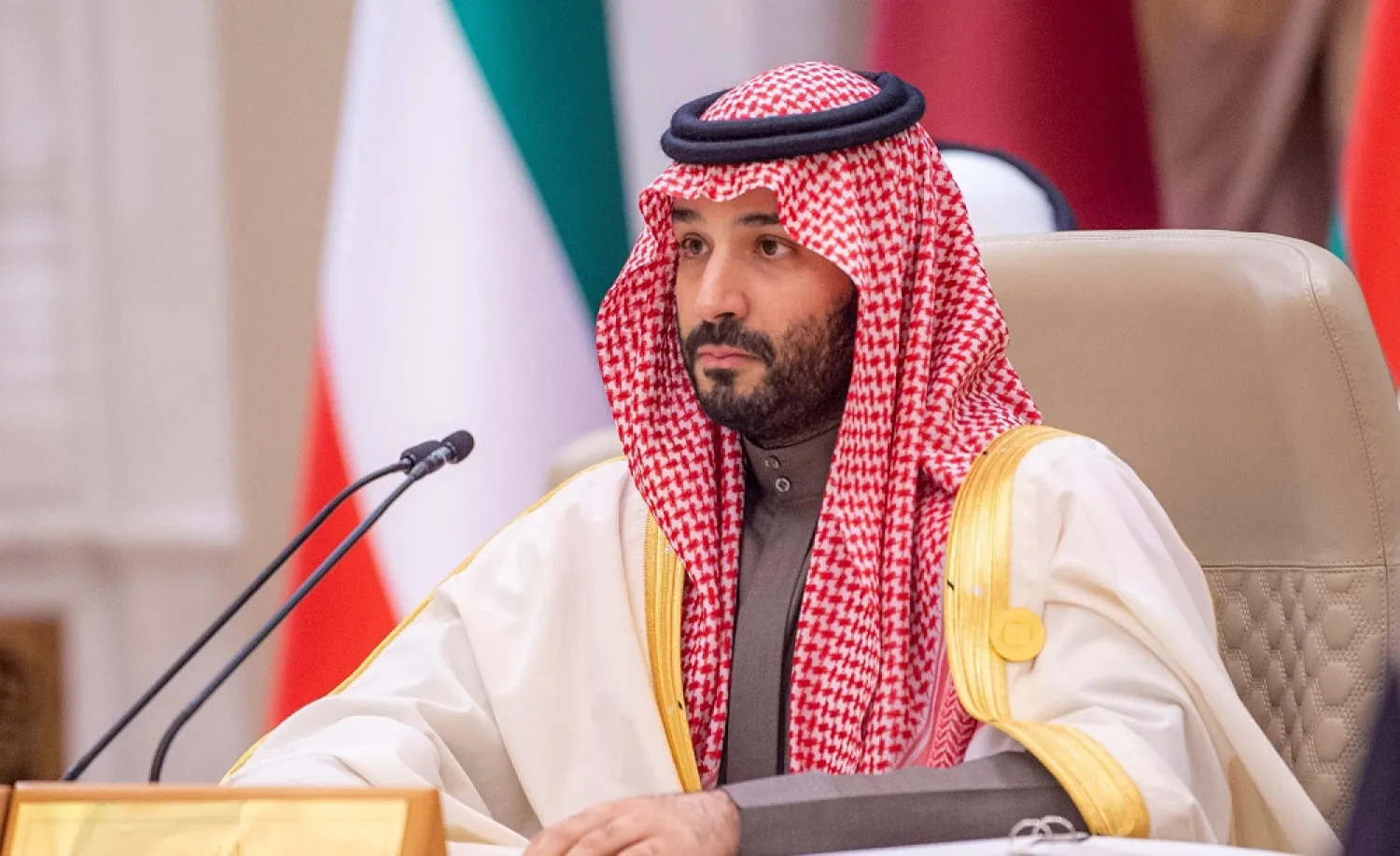
09 December 2022, Saudi Arabia, Riyadh: Saudi Crown Prince and Prime Minister Mohammed bin Salman chairs the first China-Arab summit in Riyadh. (SPA)
TT

Saudi Crown Prince Launches Investment Fund on Culture, Tourism, Entertainment, Sports

09 December 2022, Saudi Arabia, Riyadh: Saudi Crown Prince and Prime Minister Mohammed bin Salman chairs the first China-Arab summit in Riyadh. (SPA)

Prince Mohammed bin Salman, Crown Prince and Prime Minister, announced on Tuesday the launch of the Events Investment Fund (EIF) that aims to develop a sustainable infrastructure for the culture, tourism, entertainment and sports sectors across the Kingdom, reported the Saudi Press Agency.

Crown Prince Mohammed will act as chairman of the EIF.

The fund also aims to create strategic partnerships to boost local industry, increase foreign investment and contribute to Vision 2030’s aim of a vibrant society.

EIF will conceptualize, finance and oversee development of more than 35 venues by 2030. The aim of the fund is to position the Kingdom as the global hub in these various event sectors, to provide world-class sustainable infrastructure for the delivery of an ambitious national events calendar and to create sustainable financial returns to support the Kingdom’s economic diversification efforts.

EIF assets include indoor arenas, art galleries, theaters and conference centers, horse-racing tracks, auto racing tracks and other event facilities across the Kingdom, with the aim of delivering its first asset by 2023.

Aligned with the Kingdom’s sustainability agenda, the fund is committed to upholding the highest environmental, social, and governance (ESG) standards. EIF’s strategy is focused on three main pillars, which include enhancing its environment, invigorating societies and maintaining strong governance.

The fund is committed to attracting foreign investment and maintaining financial standards aimed at strengthening its investment portfolio and achieving sustainable growth in both returns and assets. EIF is also contributing to Vision 2030 with respect to diversifying the economy and increasing its share of non-oil GDP, as well as supporting the contribution of the tourism sector to annual GDP, from its current rate of 3 percent to more than 10 percent by 2030.

Additionally, EIF will support the transformation of the Kingdom into a global tourist destination, attracting more than 100 million visitors by 2030 and making it one of the world’s most visited countries. This is aligned with the Kingdom’s Quality of Life Program, which aims to improve the quality of life for individuals and families by developing the necessary sustainable venues.

The fund will focus on developing and increasing direct foreign investment opportunities for a GDP impact of SAR28 billion by 2045. The focus will be on nurturing partnerships between the private and public sectors, securing a supportive environment for strategic partnership in the events industry and increasing the number of job opportunities for citizens.

The Events Investment Fund’s vision is aligned with the National Development Fund’s strategy, launched by Crown Prince Mohammed, and aims to make the fund a pivotal enabler for the economic and social objectives of Vision 2030; overcoming existing development challenges in line with global best practices and stimulating a threefold increase in the private sector's impact on the Kingdom's economy by 2030.


Turkish Inflation Near 2% Monthly in March, Below Forecasts

A full moon rises behind Galata Tower, in Istanbul, Türkiye, Thursday, April 2, 2026. (AP)
TT

Turkish Inflation Near 2% Monthly in March, Below Forecasts

A full moon rises behind Galata Tower, in Istanbul, Türkiye, Thursday, April 2, 2026. (AP)

Turkish consumer price inflation was 1.94% month-on-month in March, while the annual figure fell to 30.87%, data from the Turkish Statistical Institute showed ‌on Friday.

In ‌a Reuters ‌poll, ⁠monthly inflation was ⁠forecast to be 2.32%, with the annual rate seen at 31.4%, driven by ⁠a rise in ‌fuel prices ‌and weather-related pressures ‌on food inflation.

In ‌February, consumer prices rose 2.96% month-on-month and 31.53% year-on-year, broadly in ‌line with estimates and reinforcing expectations that ⁠the ⁠disinflation process may be stalling.

The data also showed the domestic producer index rose 2.30% month-on-month in March for an annual increase of 28.08%.


Oil Prices Surge While Asian Share Prices Rise Moderately

FILE - Workers walk in an area at a degassing station in Zubair oil field, whose operations have being reduced due to the Mideast war triggered by the US and Israeli attacks on Iran, near Basra, Iraq, March 28, 2026. (AP Photo/Leo Correa, File)
TT

Oil Prices Surge While Asian Share Prices Rise Moderately

FILE - Workers walk in an area at a degassing station in Zubair oil field, whose operations have being reduced due to the Mideast war triggered by the US and Israeli attacks on Iran, near Basra, Iraq, March 28, 2026. (AP Photo/Leo Correa, File)

Oil prices continued to surge on worries of a prolonged Iran war but the Asian markets that were open Friday rose moderately in cautious trading, while others were closed for the Good Friday holidays.

Benchmark US crude rose 11.4% to $111.54 a barrel. The price of Brent crude, the international standard, jumped 7.8% to $109.03 per barrel, The Associated Press said.

“A more extended conflict raises the threat to physical infrastructure, extends disruptions through the Strait of Hormuz, and will entail a longer post-war recovery period, with price impacts spilling over later into the year,” according to a report from BMI, a unit of Fitch Solutions.

The US only relies on the Arabian Gulf for a fraction of the oil it imports, but oil is a commodity and prices are set in a global market.

The situation is very different in Asia. Japan, for example, relies on access to the Strait of Hormuz for much of the nation’s oil import needs and would need to rely on alternative routes. But some analysts say Japan and other nations are counting on an agreement with Iran to allow transports.

Japan’s benchmark Nikkei 225 gained 0.9% in Friday morning trading to 52,938.62. South Korea’s Kospi jumped 2.1% to 5,344.41. The Shanghai Composite sank 0.5% to 3,899.57. Trading was closed in Hong Kong, Singapore, Australia, New Zealand, the Philippines, Indonesia and India.

Wall Street, where trading is closed Friday, finished its first winning week since the start of the Iran war, although trading started out with a decline driven by a surge in oil prices.

That came after US President Donald Trump late Wednesday vowed the US will continue to attack Iran and failed to offer a clear timetable for ending the conflict in the Middle East.

The S&P 500 rose 7.37 points, or 0.1%, to 6,582.69. Several days of solid gains this week helped the benchmark index notch a 3.4% gain for the week. The Dow Jones Industrial Average fell 61.07 points, or 0.1%, to 46,504.67. The Nasdaq composite rose 38.23 points, or 0.2%, to 21,879.18. Both indexes also notched weekly gains.

Treasury yields remained relatively steady in the bond market. The yield on the 10-year Treasury fell to to 4.30% from 4.32%.

In currency trading, the US dollar edged up to 159.66 Japanese yen from 159.53 yen. The euro cost $1.1535, inching down from $1.1537.


Saudi Arabia Boosts Firms’ Readiness for Supply Chain Challenges

Container ship at King Abdullah Port (SPA)
TT

Saudi Arabia Boosts Firms’ Readiness for Supply Chain Challenges

Container ship at King Abdullah Port (SPA)

Amid mounting geopolitical tensions threatening global supply chains, particularly disruptions in the Strait of Hormuz, Saudi Arabia is stepping up efforts to shield its economy by strengthening private sector readiness to withstand external shocks.

Asharq Al-Awsat has learned that the Federation of Saudi Chambers is moving to boost companies’ preparedness, unify procedures, and keep business flowing smoothly amid rising logistical risks.

The push underscores authorities’ focus on safeguarding the domestic market by helping businesses adapt quickly and strengthen operational resilience, supporting economic stability and sustained growth.

Future decisions

As part of efforts to bolster supply chain resilience, the Federation of Saudi Chambers is mapping challenges facing companies and national institutions, aiming to present the sector’s voice directly, build a clear picture of on-the-ground obstacles, and help shape future decisions.

It is tracking operational and logistical hurdles and turning them into inputs for relevant authorities to improve regulations and support market-based decision-making.

Improving the regulatory environment

The federation has asked companies to pinpoint challenges across ports, airports, logistics hubs, and warehouses, as well as those tied to regulators.

It urged firms to specify issues such as clearance or transit delays, procedural disruptions, added costs, lack of information, conflicting instructions, and regulatory requirements, along with their impact, whether financial or operational, including delivery delays, lost clients, suspended contracts, damaged cargo, and supply chain breakdowns.

The findings are expected to feed into regulatory improvements and more informed policymaking.

Alternative routes

Saudi Arabia has rolled out proactive logistics measures to reduce reliance on the Strait of Hormuz, including new corridors linking Gulf ports through alternative land and sea routes, Red Sea options, and additional shipping services to expand port capacity.

The Transport General Authority said licensed operators will be allowed to carry goods for third parties until Sept. 25, aiming to boost fleet efficiency and flexibility.

The authority said the step will help companies make better use of capacity, support supply chain continuity, and improve cargo movement within the kingdom and to neighboring countries.

On Thursday, it also approved regulatory updates extending deadlines for land freight firms to adjust their status, aiming to raise efficiency and compliance.

The extension covers heavy and light transport activities until Aug. 27, 2026, giving companies more time to meet regulatory requirements.

It also includes cases involving the reclassification of vehicle registration from private to public use in heavy freight, in a move to better regulate the sector and improve fleet utilization.