Geagea to Asharq Al-Awsat: We Will Thwart Quorum to Prevent Election of Hezbollah Candidate

Samir Geagea. (Reuters)
TT

Geagea to Asharq Al-Awsat: We Will Thwart Quorum to Prevent Election of Hezbollah Candidate

Samir Geagea. (Reuters)

Head of the Lebanese Forces Samir Geagea believes that there are currently so solutions that can resolve the presidential vacuum in Lebanon.

“We have grown accustomed to tactics used by Hezbollah in previous presidential elections,” he told Asharq Al-Awsat.

He explained that the party will allow the situation to reach its worst possible point “so that we can relent to what it wants.”

Despite all the efforts, talks and meetings, Hezbollah has “not moved an inch” in its position over the election of its candidate, head of the Marada movement Suleiman Franjieh, as president.

“Hezbollah is insistent on its candidate and we, as the opposition, are not ready to succumb to the pressure and agree to a ‘solution’ that would deepen the crisis,” Geagea stressed.

“Unfortunately, a solution is unlikely any time soon. We are facing a major crisis and we must do what we can to resolve it,” he went on to say.

Lebanon has been without a president since late October when the term of Michel Aoun ended. Numerous elections sessions have been held, but no candidate had garnered enough votes to be declared the victor. Political parties continue to bicker over Aoun’s successor.

“We cannot simply elect any president, who may deepen the crisis. Hezbollah wants Franjieh or someone with the same mindset. Even if it changes its mind on Franjieh’s alternative, the party will propose a candidate that would be incapable of tackling the crisis,” Geagea remarked.

“Effectively, the real crisis is that Hezbollah does not really want a president for Lebanon,” he explained.

Furthermore, Geagea revealed a change in his stance on providing quorum at parliament for presidential elections to be held.

He said that the LF would not provide the needed quorum so as to prevent the election of Hezbollah’s favored candidate.

He noted that throughout the past four months since Lebanon was plunged in vacuum, the LF has followed all the rules in regards to the election. “But, when Hezbollah and its allies choose to ruin the rules of the game, we will seek a solution that will prevent them from leading the country towards more vacuum,” Geagea said.

“If they can garner 65 votes for their candidate, then we will be confronted with deeper Arab isolation, the West will drop Lebanon from its list of priorities and the country will be run the same way it has been in the past six years,” which has led it to its current crisis, he continued.

“Confronted with these possibilities, will we attend the elections? No, we will not and we will definitely boycott them,” he declared.

He lamented that at the moment, a roadmap for a solution is still not available.

Moreover, Geagea revealed that the LF has been contacted by local and international parties that proposed agreeing to Franjieh’s election as part of a package deal.

“We informed them that the problem does not revolve around Franjieh’s election, but agreeing to him would deepen, rather than resolve, the crisis. So as it stands, this option is out of the question,” he added. Geagea did not disclose the parties that approached the LF.

Asked by Asharq Al-Awsat if the LF would agree to a president who is accepted by all parties, he replied that he would agree if this candidate was “moderate and flexible and enjoyed good relations with all sides. At the same time, he needs to be an actual president.”

On the option to elect a “consensual” president, he explained that such a figure usually “does not have a voice, opinion or strong personality. They are weak and are incapable of making any accomplishment. So of course, we will not accept this option.”

Admittedly, the opposition has few candidates to choose from. Geagea said that efforts are underway to garner enough votes for Michel Mouawad. “This is the only thing we can do at the moment,” he stated.

He clarified, however, that neither Mouawad nor the LF are adamant about his election, but at the moment, no other suitable or better alternative candidate has emerged.

“So, we will continue to garner enough support for him,” he added.

Moreover, Geagea dismissed the importance of communication with Hezbollah to resolve the impasse. He cited how head of the Progressive Socialist Party Walid Jumblatt had personally met with Hezbollah officials and made proposals over a settlement, but to no avail. The situation has remained unchanged.

If communication is held on such a high level without a breakthrough being reached, then what hopes can be pinned on lower level contacts? he wondered.

“We are running around in the same empty circle,” he remarked. “Hezbollah may be calling for dialogue, but it really means dialogue over Franjieh’s elections, nothing more.”

On whether dialogue was possible between the LF and Free Patriotic Movement (FPM) given the strained relations between its leader Gebran Bassil and his ally, Hezbollah, Geagea was quick to reply: “I very much doubt that because the past six years have demonstrated how this group [FPM] acts.”

However, he acknowledged that some form of exchange of views has taken place with the FPM through the Maronite Patriarchate in Bkirki.

“So far, the FPM has not made any proposals. It has only called for agreement, but on what? Nothing,” added Geagea. “This is the sum of it.”

“The FPM is actually using Bkirki’s support to strengthen its negotiating position with Hezbollah. It is expanding its contacts to also strengthen its position with the party,” he noted.

Turning to regional developments, Geagea reiterated his rejection of Arab openness towards the Syrian regime.

He said this was a “moral stand given that no country on earth is as miserable as Syria given the actions of Bashar al-Assad.”

The Syrian people have been displaced all over the world and are enduring endless suffering in refugee camps, he added.

“Assad must be capable of returning to the Arab fold for Syria to return to the fold,” he stressed. “As it stands, Syria is not a sovereign state. Damascus’ fate lies in the hands of Russia and Iran.”

“Assad does not have a say in affairs, rather Russia or Iran speak on his country’s behalf,” he remarked, while also noting Türkiye and the United States’ involvement in Syria.

“It is very unfortunate that some officials would disregard the tragedies of the Syrian people and instead seek dialogue with Assad to return Syria to the Arab fold,” he added. “Assad, meanwhile, is indefinitely seated in the Iranian and Russian lap. He does not have the choice to leave this position. Nothing is in his hands now.”


Israel’s Security Cabinet Approves 19 New Settlements in West Bank

 A helicopter flies over the Israeli settlement of Shilo in the occupied West Bank on December 14, 2025. (AFP)
A helicopter flies over the Israeli settlement of Shilo in the occupied West Bank on December 14, 2025. (AFP)
TT

Israel’s Security Cabinet Approves 19 New Settlements in West Bank

 A helicopter flies over the Israeli settlement of Shilo in the occupied West Bank on December 14, 2025. (AFP)
A helicopter flies over the Israeli settlement of Shilo in the occupied West Bank on December 14, 2025. (AFP)

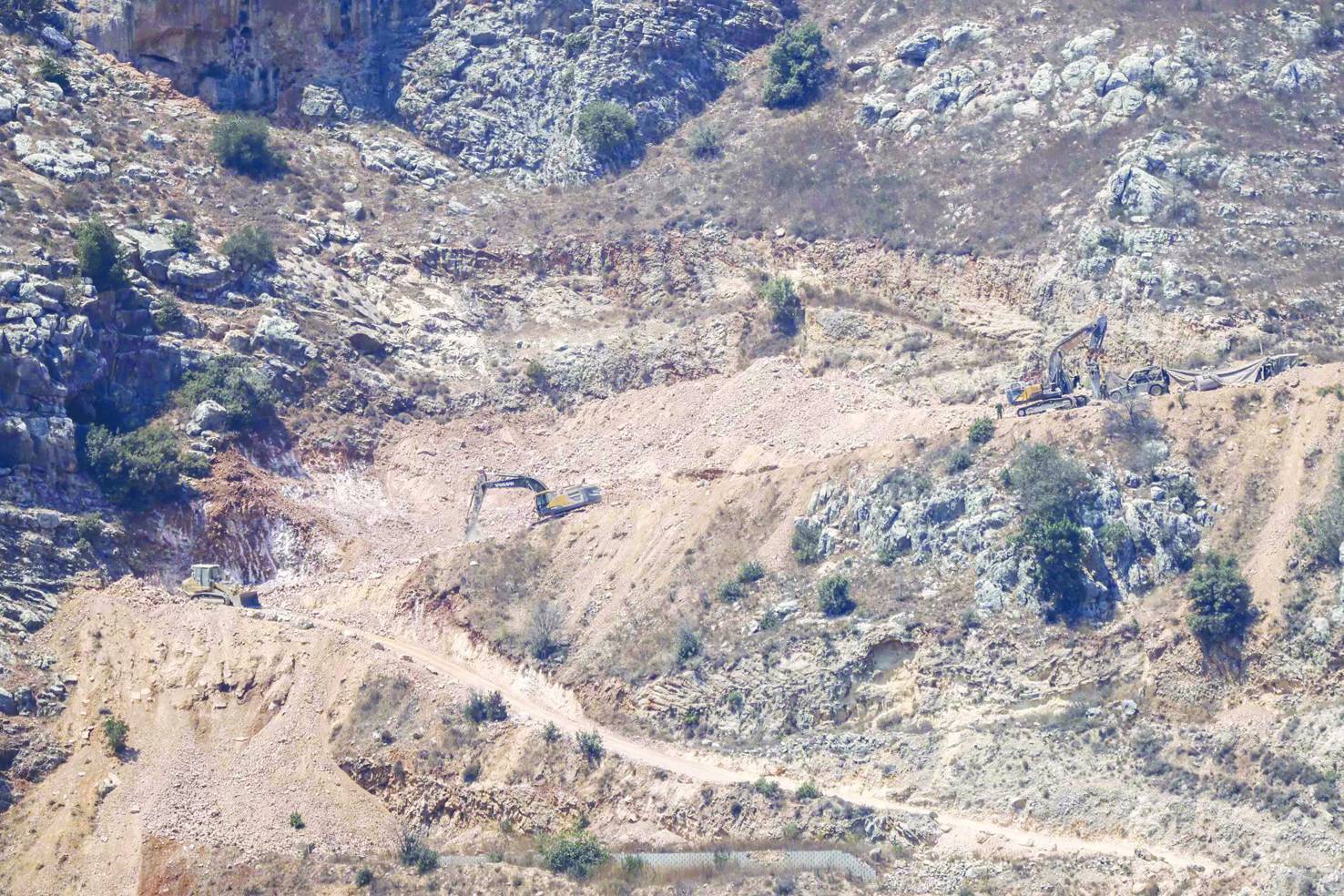
Israel's security cabinet approved the establishment of 19 new settlements in the occupied West Bank, a move the country's far-right finance minister said on Sunday was aimed at preventing the establishment of a Palestinian state.  

The decision brings the total number of settlements approved over the past three years to 69, according to a statement from the office of Finance Minister Bezalel Smotrich.  

The latest approvals come days after the United Nations said the expansion of Israeli settlements in the West Bank -- all of which are considered illegal under international law -- had reached its highest level since at least 2017.  

"The proposal by Finance Minister Bezalel Smotrich and Defense Minister Israel Katz to declare and formalize 19 new settlements in Judea and Samaria has been approved by the cabinet," the statement said, without specifying when the decision was taken. 

Smotrich is a vocal proponent of settlement expansion and a settler himself.  

"On the ground, we are blocking the establishment of a Palestinian terror state," he said in the statement.  

"We will continue to develop, build, and settle the land of our ancestral heritage, with faith in the justice of our path." 

UN Secretary-General Antonio Guterres has recently condemned what he described as Israel's "relentless" expansion of settlements in the occupied territory.  

It "continues to fuel tensions, impede access by Palestinians to their land and threaten the viability of a fully independent, democratic, contiguous and sovereign Palestinian State", he said earlier this month.  

Since the start of the war in Gaza, calls for the establishment of a Palestinian state have proliferated, with several European countries, Canada and Australia recently moving to formally recognize such a state, drawing rebukes from Israel.  

A UN report said the expansion of settlements was at its highest point since 2017, when the United Nations began tracking such data.  

"These figures represent a sharp increase compared to previous years," Guterres said, noting an average of 12,815 housing units were added annually between 2017 and 2022.  

"These developments are further entrenching the unlawful Israeli occupation and violating international law and undermining the right of the Palestinian people to self-determination." 

Excluding east Jerusalem, which was occupied and annexed by Israel in 1967, more than 500,000 Israelis live in the West Bank, along with about three million Palestinian residents.  

Smotrich's office said the 19 newly approved settlements are located in what it described as "highly strategic" areas, adding that two of them -- Ganim and Kadim in the northern West Bank -- would be re-established after being dismantled two decades ago.  

Five of the 19 settlements already existed but had not previously been granted legal status under Israeli law, the statement said.  

While all Israeli settlements in the Palestinian territory are considered illegal under international law, some wildcat outposts are also illegal in the eyes of the Israeli government.  

Many of these, however, are later legalized by Israeli authorities, fueling fears about the possible annexation of the territory. 

US President Donald Trump has warned Israel about annexing the West Bank.  

"Israel would lose all of its support from the United States if that happened," Trump said in a recent interview to Time magazine.  

Israel has occupied the West Bank since 1967, and violence there has soared since the Gaza war erupted in October 2023 following Hamas's attack on Israel.  

Israeli troops or settlers have killed at least 1,027 Palestinians in the West Bank -- both gunmen and civilians -- since the start of the fighting in Gaza, according to an AFP tally based on Palestinian health ministry figures.  

At least 44 Israelis have been killed in the West Bank in Palestinian attacks or Israeli military operations during the same period, according to Israeli data. 


Iraq Top Judge Says Armed Factions to Cooperate on Weapons

Cars drive through central Baghdad as a thick fog blankets the Iraqi capital on December 11, 2025. (AFP)
TT

Iraq Top Judge Says Armed Factions to Cooperate on Weapons

Cars drive through central Baghdad as a thick fog blankets the Iraqi capital on December 11, 2025. (AFP)

The head of Iraq's highest judicial body said Saturday that the leaders of armed factions have agreed to cooperate on the sensitive issue of the state's monopoly on weapons.

However, the powerful Kataib Hezbollah group said that it would only discuss giving up its arms when foreign troops leave the country.

"The resistance is a right, and its weapons will remain in the hands of its fighters," the group said in a statement.

The leaders of three other pro-Iran factions designated by Washington as terrorist groups said that it is time to restrict weapons to state control, although they too have stopped short of committing to disarm -- a long-standing US demand.

Faiq Zidan, the head of Iraq's Supreme Judicial Council, in a statement thanked "faction leaders for heeding his advice to coordinate together to enforcing the rule of law, restrict weapons to state control, and transition to political action after the national need for military action has ceased".

After Iraq's general elections in November, the United States demanded that the new government exclude six groups it designates as terrorists and instead move to dismantle them, Iraqi officials and diplomats told AFP.

But some of the groups have increased their presence in the new parliament and are members of the Coordination Framework, a ruling alliance of Shiite parties with varying ties to Iran that holds the majority.

The blacklisted groups are part of the pro-Iran Popular Mobilization Forces, a former paramilitary alliance that has integrated into the armed forces. But they have also developed a reputation for sometimes acting on their own.

They are also part of the Tehran-backed so-called "Axis of Resistance" and have called for the withdrawal of US troops -- deployed in Iraq as part of an anti-ISIS coalition -- and launched attacks against them.

These groups include the powerful Asaib Ahl al-Haq faction, which won 27 seats in the elections.

Earlier this week, the group's leader, Qais al-Khazali, a key figure in the Coordination Framework, said "we believe" in "the slogan to restrict weapons to the state", and "we are now part of the state".

Two other groups, Harakat Ansar Allah al-Awfiya and Kataeb Imam Ali, said on Friday that it is time to "limit weapons to the state".


Israeli Military Says Killed Two Palestinians in West Bank

A Palestinian flag flutters in front of Israeli soldiers standing near their military vehicle parked at the entrance of the Nur Shams Palestinian refugee camp, in the Israeli-occupied northern West Bank on December 15, 2025. (AFP)
TT

Israeli Military Says Killed Two Palestinians in West Bank

A Palestinian flag flutters in front of Israeli soldiers standing near their military vehicle parked at the entrance of the Nur Shams Palestinian refugee camp, in the Israeli-occupied northern West Bank on December 15, 2025. (AFP)

Israel's military said it killed two Palestinians in the north of the occupied West Bank Saturday, accusing one of throwing "a block" and the other an explosive at its soldiers.

In a statement the military said that during an operation "in the area of Qabatiya, a terrorist hurled a block toward the soldiers, who responded with fire and eliminated the terrorist".

"Simultaneously, during an additional operation in the Silat al-Harithiya area, a terrorist hurled an explosive toward the soldiers, who responded with fire and eliminated the terrorist."

Both locations are near the city of Jenin.

The Israeli military reported no injuries among its troops.

The Palestinian health ministry said that a 16-year-old boy died "from wounds caused by a bullet of the Israeli occupation forces", according to the official Wafa news agency.

It also reported that a 22-year-old man was killed by "a bullet to the chest during an occupation forces raid" on Silat al-Harithiya.

Violence in the West Bank, which Israel has occupied since 1967, has soared since the Hamas attack of October 7, 2023 triggered the Gaza war.

It has not subsided despite the truce between Israel and Hamas that came into effect in October.

Israeli troops or settlers have killed more than 1,000 Palestinians, many of them gunmen, but also scores of civilians, in the West Bank since the start of the Gaza war, according to an AFP tally based on Palestinian health ministry figures.

At least 44 Israelis, both soldiers and civilians, have been killed in Palestinian attacks or Israeli military operations, according to official Israeli figures.