


US Pentagon Says Classified Document Leak 'Serious Risk to National Security'

A Ukrainian APC seen on the road on the frontline in Bakhmut, Donetsk region, Ukraine, Sunday, April 9, 2023. (AP Photo/Libkos)
TT

US Pentagon Says Classified Document Leak 'Serious Risk to National Security'

A Ukrainian APC seen on the road on the frontline in Bakhmut, Donetsk region, Ukraine, Sunday, April 9, 2023. (AP Photo/Libkos)

The leak of highly sensitive US documents – many of them related to the Ukraine conflict – presents a "very serious" risk to US national security, the Pentagon said Monday.

The breach is being investigated by the Justice Department and appears to include secret information on the war in Ukraine as well as sensitive analyses of US allies, whom American officials are now seeking to reassure, The Associated Press said.

A steady drip of dozens of photographs of documents have been found on Twitter, Telegram, Discord and other sites in recent days, though some may have circulated online for weeks, if not months, before they began to receive media attention last week.

The documents circulating online pose "a very serious risk to national security and have the potential to spread disinformation," said Chris Meagher, assistant to the secretary of defense for public affairs, without confirming their authenticity.

"We're still investigating how this happened, as well as the scope of the issue. There have been steps to take a closer look at how this type of information is distributed and to whom," Meagher told journalists.

Many of the documents are no longer available on the sites where they first appeared, and the United States is reportedly continuing to work to have them removed.

Meagher said US Defense Secretary Lloyd Austin was not initially briefed on the issue until the morning of April 6 – the day a New York Times story on the documents was published.

White House national security spokesman John Kirby told journalists that President Joe Biden was briefed on the leak "late last week," but did not provide a specific date.

Many of the documents relate to Ukraine, such as one that provides information on the country's air defenses or another on international efforts to build up its military forces.

Reassuring allies
But other documents point to US surveillance of its allies, such as one that states that leaders of Israel's Mossad intelligence agency advocated for domestic protests against a controversial judicial reform plan.

US officials have been in touch with Washington's allies over the issue, the State Department said.

They "are engaging with allies and partners at high levels over this, including to reassure them on our commitment to safeguarding intelligence and ability to secure our partnerships," spokesperson Vedant Patel told journalists.

The Pentagon also said relevant congressional committees have been informed.

Meagher said a Pentagon team is working to determine if the documents are genuine, but noted that images circulating online seemed to show sensitive information.

"Photos appear to show documents similar in format to those used to provide daily updates to our senior leaders on Ukraine and Russia-related operations, as well as other intelligence updates," he said, but some "appear to have been altered."

This includes a document that seems to have been altered to make it show that Ukraine had suffered higher casualties than Russia, when the apparent original version said the reverse was true.

Kirby said the US government is worried that there may be more documents to come.

"We don't know who's responsible for this. And we don't know if they have more that they intend to post," Kirby said, adding: "Is that a matter of concern to us? You're darn right it is."

The fallout from the apparent leak could be significant – even deadly – potentially putting US intelligence sources at risk while giving the country's foes valuable information.

"Disclosure of sensitive classified material can have tremendous implications not only for our national security, but could lead to people losing their lives," Meagher said.



US, Israel Differ Over Timing of Strike on Iran

 Iranians drive past an anti-US billboard in Vanak Square in Tehran, Iran, 14 October 2026- EPA/ABEDIN
Iranians drive past an anti-US billboard in Vanak Square in Tehran, Iran, 14 October 2026- EPA/ABEDIN
TT

US, Israel Differ Over Timing of Strike on Iran

 Iranians drive past an anti-US billboard in Vanak Square in Tehran, Iran, 14 October 2026- EPA/ABEDIN
Iranians drive past an anti-US billboard in Vanak Square in Tehran, Iran, 14 October 2026- EPA/ABEDIN

A group of senior US military officials, including Secretary of War Pete Hegseth, is pushing to resume the war against Iran, while advisers to US President Donald Trump favor continuing to "strangle Iran" through economic sanctions.

In Israel, Prime Minister Benjamin Netanyahu claimed Wednesday that he opposed launching a preemptive strike on Tehran ahead of the Israeli elections, but insisted that he would "bring Iran down" within the next two years.

The US-Israeli differences over the timing of renewed military action coincided with reports that Iran had adopted "new tactics" to target ships transiting the Strait of Hormuz. A container ship was also reported to have caught fire and sunk after striking a mine.

Meanwhile, Iran's Revolutionary Guard Corps (IRGC) spokesperson Brig. Gen. Hossein Mohibbi said Iran had acquired far more advanced weapons following the 40-day war.

On the ground, three people were injured when an unidentified drone struck a fishing boat off Sirik in Hormozgan province, southern Iran.


US Considers Hitting Iran with 'Mother of All Bombs'

An undated handout photo of the “Mother of All Bombs” at Eglin Air Force Base in Florida, US (Reuters)
TT

US Considers Hitting Iran with 'Mother of All Bombs'

An undated handout photo of the “Mother of All Bombs” at Eglin Air Force Base in Florida, US (Reuters)

The United States is considering using its biggest non-nuclear bomb against Iran if President Donald Trump should decide to renew combat in the war that has hit a deadlock, CNN reported Thursday.

The military is planning for the potential use of the GBU-43/B Massive Ordnance Air Blast (MOAB) bomb -- better known by its nickname, the "Mother Of All Bombs" -- to target Iranian energy infrastructure and nuclear sites, according to the news outlet, which quoted officials familiar with the matter.

Trump is trying to boost his low approval ratings ahead of November's midterm elections, with polls showing the unpopular war in Iran and fuel and other price rises it has caused are hurting his Republican Party.

Diplomatic efforts to end the conflict, which erupted with US-Israeli strikes on Iran in February, have been at an impasse since the summer.

But officials have raised doubts over the efficacy of the bomb if it were deployed, particularly its ability to destroy suspected underground nuclear sites in Iran.

"The MOAB is a massive information operation type weapon that is great for huge area clearance but not much else," a source familiar with the plans told CNN.

"It is definitely not designed as a deep penetration warhead."

The United States and Israel have said the war was necessary to prevent Iran from acquiring nuclear weapons -- a goal Tehran has long denied pursuing.

There are also concerns over the possibility of civilian casualties from such a huge weapon, according to AFP.

Washington has in recent weeks dialled back military operations in favour of economic pressure.

In 2017, the US military in Afghanistan dropped the "MOAB" to target ISIS group hideouts in a complex of tunnels and bunkers, killing more than 90 militants.


Pezeshkian: Iran is Facing its Most Intense Blockade since 1979

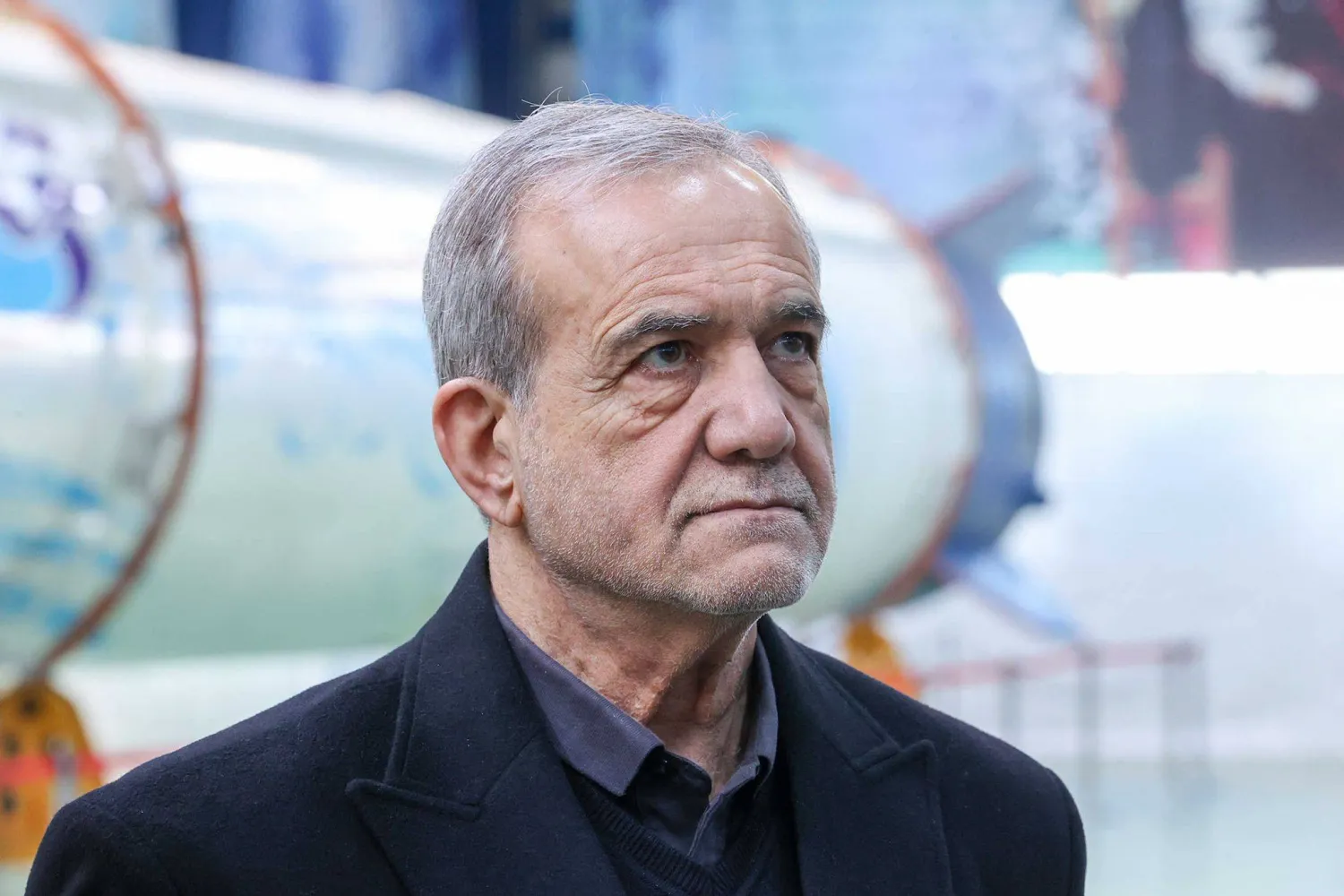
Iranian President Masoud Pezeshkian visits an exhibition that showcases the defense ministry's latest advancements in defense and space in Tehran. Photo: -/Iranian Presidency/dpa
TT

Pezeshkian: Iran is Facing its Most Intense Blockade since 1979

Iranian President Masoud Pezeshkian visits an exhibition that showcases the defense ministry's latest advancements in defense and space in Tehran. Photo: -/Iranian Presidency/dpa

Iranian President Masoud Pezeshkian said Tuesday that the country was facing its most intense blockade since the 1979 Islamic Revolution, accusing the United States of seeking to provoke public protests.

Iran and the United States have been at war since February 28, when US and Israeli strikes killed Iran's supreme leader, Ayatollah Ali Khamenei.

"Over the 48 years since the Revolution, we have never faced such intense blockade, war and difficulties as we are facing now," Pezeshkian said in a speech broadcast by state television.

He accused Washington of seeking to make life difficult for Iranians in order to fuel public anger and trigger unrest.

Pezeshkian said the US was focusing its efforts on making "the people become upset and face difficulties, and then for social protests to emerge so that they can achieve their sinister objectives".

The US imposed a blockade on Iranian ports in response to Tehran's closure of the strategic Strait of Hormuz, diverting or stopping vessels travelling to and from Iranian ports.

Iran has repeatedly accused the US and Israel of fomenting unrest inside the country, and in recent months has executed several Iranians accused of collaborating with its foes.

In late December last year, protests over the cost of living erupted in Iran, spreading nationwide and evolving into a wider anti-government movement.

Iran's rulers blamed the US and Israel for the unrest.