


Saudi Arabia Welcomes Qatari Hajj Performers, Condemns Politicizing Islamic Rites

Dr. Awwad Bin Saleh Al-Awwad, Saudi minister of culture and information during the anti-terror quartet (ATQ) meeting in Jeddah on Thursday, SPA
TT

Saudi Arabia Welcomes Qatari Hajj Performers, Condemns Politicizing Islamic Rites

Dr. Awwad Bin Saleh Al-Awwad, Saudi minister of culture and information during the anti-terror quartet (ATQ) meeting in Jeddah on Thursday, SPA

Jeddah- Saudi Arabia’s culture and information minister Dr. Awwad Bin Saleh Al-Awwad welcomed all Qataris looking forward to joining this year’s Hajj pilgrimage.

Doha’s attempts to politicize the religious rite is a step down the wrong road, said Awwad.

Speaking at the ATQ (Anti-terror Quartet) meeting in Jeddah, Awwad stressed that the Kingdom of Saudi Arabia, home to Islam’s Holiest site, takes great concern in facilitating Hajj.

The Kingdom exerts its utmost efforts to make the Hajj a success, he said.

Citing Saudi Arabia’s hosting pilgrims time and time again, Awwad said that the kingdom has proved throughout history its success in providing its services to the pilgrims.

The meeting, whose objective is to boost joint action to discuss media issues of concern to the countries calling for combating terror and coordinating stances against the tendentious Qatari media campaigns supporting violence and extremism and spreading hate speech, comes as an extension of the previous meeting in Cairo.

Awwad considered Qatar making the choice of politicizing Hajj to be equivalent to political bankruptcy by which Doha intends to create confusion and exploit the religious ritual for its own ends.

He added that throughout modern history Qatar is the second country to politicize Hajj. Before it, Iran tried and its efforts totally failed.

Awwad stressed that the Qatari people are welcome this year (for Hajj) like every year. Several options have been presented to Qatari pilgrims to perform Hajj rites with ease and comfort.

He further said the Qataris wishing to perform Hajj should not believe the false propaganda stating that they are forbidden from performing Hajj.

The Kingdom welcomes all Muslims from all over the world and spares no effort in facilitating Hajj so that the pilgrimage is comfortable and offers a peace of mind.


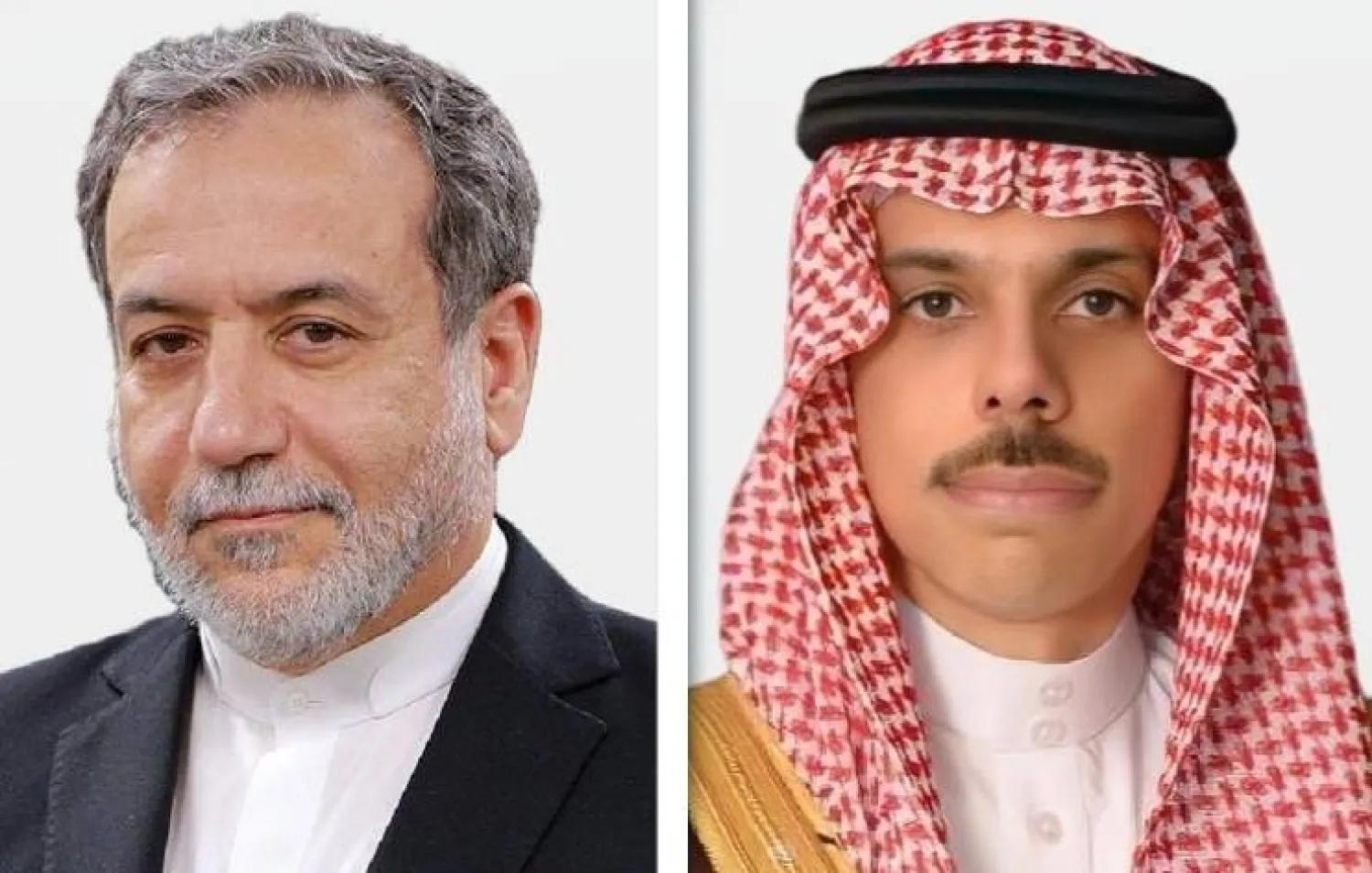

Through Lebanon… Is a New Regional Order Taking Shape?

Esmail Qaani 
Esmail Qaani 
TT

Through Lebanon… Is a New Regional Order Taking Shape?

Esmail Qaani 
Esmail Qaani 

Iran is portraying the outcome of the current war as a “victory” that forced Israel to consider withdrawal. That narrative was reinforced by a warning from Esmail Qaani, commander of the Quds Force, who said Israel would either withdraw voluntarily or “flee in defeat”, a clear attempt to present the negotiating process as the result of the resilience of Tehran’s regional axis.

While Qaani’s remarks are unmistakably mobilizing rhetoric aimed at domestic audiences and Iran’s regional allies, one fact cannot be overlooked: Tehran succeeded in making a ceasefire in Lebanon part of its understandings with Washington. Despite the military blows it has sustained, Iran has preserved both its political system and a key regional bargaining chip.

Measured against the concessions, Tehran has been forced to accept, however, the picture looks different. Lebanon is engaged in direct negotiations with Israel over the deployment of the Lebanese Army and the disarmament of Hezbollah, Iran’s most prominent regional ally. Washington has also publicly held Iran responsible for Hezbollah’s actions, while Iran-aligned factions in Iraq are facing pressure to integrate into state institutions or reduce their independent armed presence. At the same time, negotiations over sanctions and Iran’s nuclear program have become linked, to some extent, to Tehran’s ability to rein in its regional network.

Writing in Foreign Affairs, former US ambassador James Jeffrey argues that failing to achieve maximum objectives does not amount to an Iranian victory. In his view, the conflicts since 2023 have weakened Iran’s capabilities, eroded its network of proxies, and strengthened Washington’s position. That assessment remains open to debate, however, given that Hezbollah has not disappeared, Iraqi armed factions have not been disarmed, and Iran has demonstrated an ability to use the Strait of Hormuz and other regional flashpoints to compel direct negotiations.

It may therefore be more accurate to say the region is entering a transitional phase rather than witnessing the definitive end of Iran’s regional axis. Tehran appears to be shifting from reliance on large, openly organized groups with extensive arsenals to smaller, more clandestine networks, or accepting the formal integration of some factions into state institutions while preserving its influence within them.

The success of the Lebanese model will therefore carry significance far beyond Lebanon itself. If Israel withdraws, the Lebanese Army deploys, and Hezbollah is prevented from re-establishing its presence, it would set a precedent for placing arms exclusively in the hands of the state. Only then could it be said that the fifth round of negotiations marked the beginning of a new phase for Lebanon and the wider region. If, however, withdrawal remains stalled or Hezbollah returns to evacuated areas, the fifth round will amount to little more than another negotiated truce.


Burkina Faso Cuts Diplomatic Relations with France, Once a Key Ally

FILE - In this photo provided by RIA Novosti, Burkina Faso President Ibrahim Traore arrives at the Grand Palace at the Kremlin in Moscow, Russia, on May 10, 2025. (Stanislav Krasilnikov/RIA Novosti via AP, File)
TT

Burkina Faso Cuts Diplomatic Relations with France, Once a Key Ally

FILE - In this photo provided by RIA Novosti, Burkina Faso President Ibrahim Traore arrives at the Grand Palace at the Kremlin in Moscow, Russia, on May 10, 2025. (Stanislav Krasilnikov/RIA Novosti via AP, File)

Burkina Faso’s military government severed diplomatic ties with France, its former colonial ruler that had been a key security partner for the West African nation before relations fractured.

The junta said in a statement Friday it broke off relations with France effective immediately, accusing it of "blatant neo-colonial ambitions and active support for subversive networks and terrorists,” without providing evidence.

France’s Foreign Ministry spokesman Pascal Confavreux said in a statement that the country regrets the “hostile and unfounded decision, which illustrates the worrying drift of the Burkinabè authorities.”

“Necessary reciprocal measures are currently under review,” he said. Confavreux added that France is monitoring the safety of French government personnel and citizens in Burkina Faso and urged them to exercise heightened vigilance.

The West African country of 23 million people has been battered by yearslong violence perpetrated by extremist groups linked to al-Qaida and the ISIS group, as well as government forces often accused of extrajudicial killings.

It was unclear what would follow the end of diplomatic relations or how the French embassy in Burkina Faso would be affected.

“The conditions essential for fostering relations based on mutual respect, reciprocal trust, and respect for the principle of non-interference in internal affairs and national sovereignty are no longer met,” Burkina Faso’s Communications Minister Pingdwende Gilbert Ouedraogo said in a statement.

The two sides suffered broken relations for years.

Burkina Faso's military government has in the past targeted foreign diplomats, including the French, whom it has often accused of working against its interests. In 2023, the junta asked France to recall its ambassador and declared the United Nations’ resident and humanitarian coordinator in the country persona non grata, while in 2024, it expelled three French diplomats for alleged subversive activities.

France was Burkina Faso's major security partner until a 2022 coup. The junta then sacked hundreds of French forces sent to fight extremist groups.

The violence has worsened under the military government that had promised to curb it, analysts say.

In the two years following the coup, Burkina Faso forces allegedly killed twice as many civilians as extremists, according to a recent report by the Human Rights Watch, which blamed government forces for at least 1,200 of the 1,837 civilians killed in the country between January 2023 and August 2025.


World Bank Approves $1.1 Billion Emergency Financing for Bangladesh

Mohammad Yusuf, a farmer, speaks on his phone as he arrives at a fuel station to buy diesel to irrigate his paddy field, but finds none available amid a fuel crisis, in Manikganj, Bangladesh, April 8, 2026. (Reuters)
TT

World Bank Approves $1.1 Billion Emergency Financing for Bangladesh

Mohammad Yusuf, a farmer, speaks on his phone as he arrives at a fuel station to buy diesel to irrigate his paddy field, but finds none available amid a fuel crisis, in Manikganj, Bangladesh, April 8, 2026. (Reuters)

The World ‌Bank approved $1.1 billion in emergency financing for Bangladesh to help secure food supplies, support vulnerable households and businesses due to the rising prices of fertilizer, fuel and food from the Middle East conflict.

Bangladesh is also seeking additional external financing from development partners, including the International Monetary Fund (IMF), to shore up foreign exchange reserves and ease pressure on public finances following a surge in ‌energy import costs and ‌broader economic challenges.

The World Bank ‌package ⁠comprises two projects ⁠aimed at helping the country manage external shocks and maintain economic stability.

Of the total, $300 million will be provided under the Emergency Support for Food Security Project to finance imports of 600,000 metric tons of fertilizer for the upcoming ⁠rice seasons. Bangladesh imports more than 85% ‌of its fertilizer requirements, ‌making it vulnerable to disruptions in global supply chains.

"Rising ‌food, fertilizer and fuel prices stemming from ‌the Middle East conflict, coupled with tighter fiscal space, have deeply affected Bangladesh's economy, particularly smallholder farmers and poor and vulnerable households," Jean Pesme, the World Bank's ‌division director for Bangladesh and Bhutan, said in a statement.

The project will ⁠support rice ⁠cultivation across 1.4 million hectares (3.46 million acres) of farmland.

The remaining $713 million, approved under the Contingent Emergency Response Project, will finance emergency expenditures, including cash transfers and livelihood support for affected households and small businesses.

It will also help fund fuel and energy imports needed to sustain essential services, including healthcare, food distribution, electricity and water supplies.

The World Bank said the financing would help Bangladesh respond rapidly to economic shocks while protecting jobs, livelihoods and critical services.