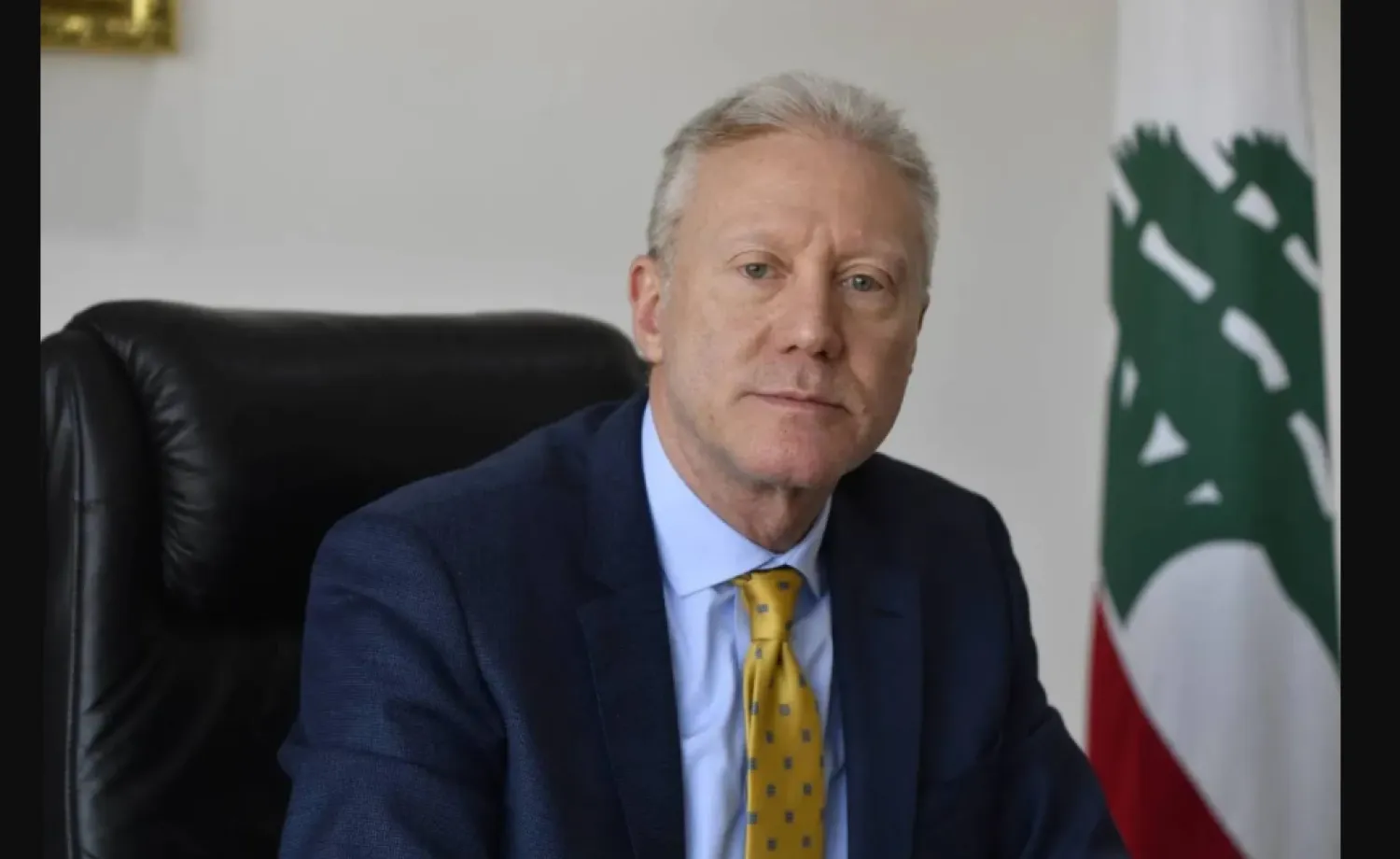

Lebanese Foreign Minister Youssef Raggi said Lebanon “has started to gradually reclaim its natural right to determine its own fate independently of others’ calculations,” stressing that the Lebanese state “alone holds the decision to negotiate,” and that Lebanon “is not subordinate to anyone and is not a card in the hands of any axis.”
He expressed regret that the state’s efforts to secure financial and political support for reconstruction “are being confronted by an internal party, Hezbollah, which continues to gamble with the fate of these villages and their residents in service of goals and agendas unrelated to the national interest or to the suffering of the people of the south.”
In an interview with Asharq Al-Awsat, Raggi said that “the national priority today is to fully restore sovereignty, without diminution,” adding that “there is no shame in the Lebanese state negotiating with Israel if the goal is to end the war and recover territory.”
He also condemned “what has been uncovered of roving sabotage networks linked to Hezbollah in a number of Arab countries,” while at the same time denouncing the targeting of brotherly Arab states and their security and stability.
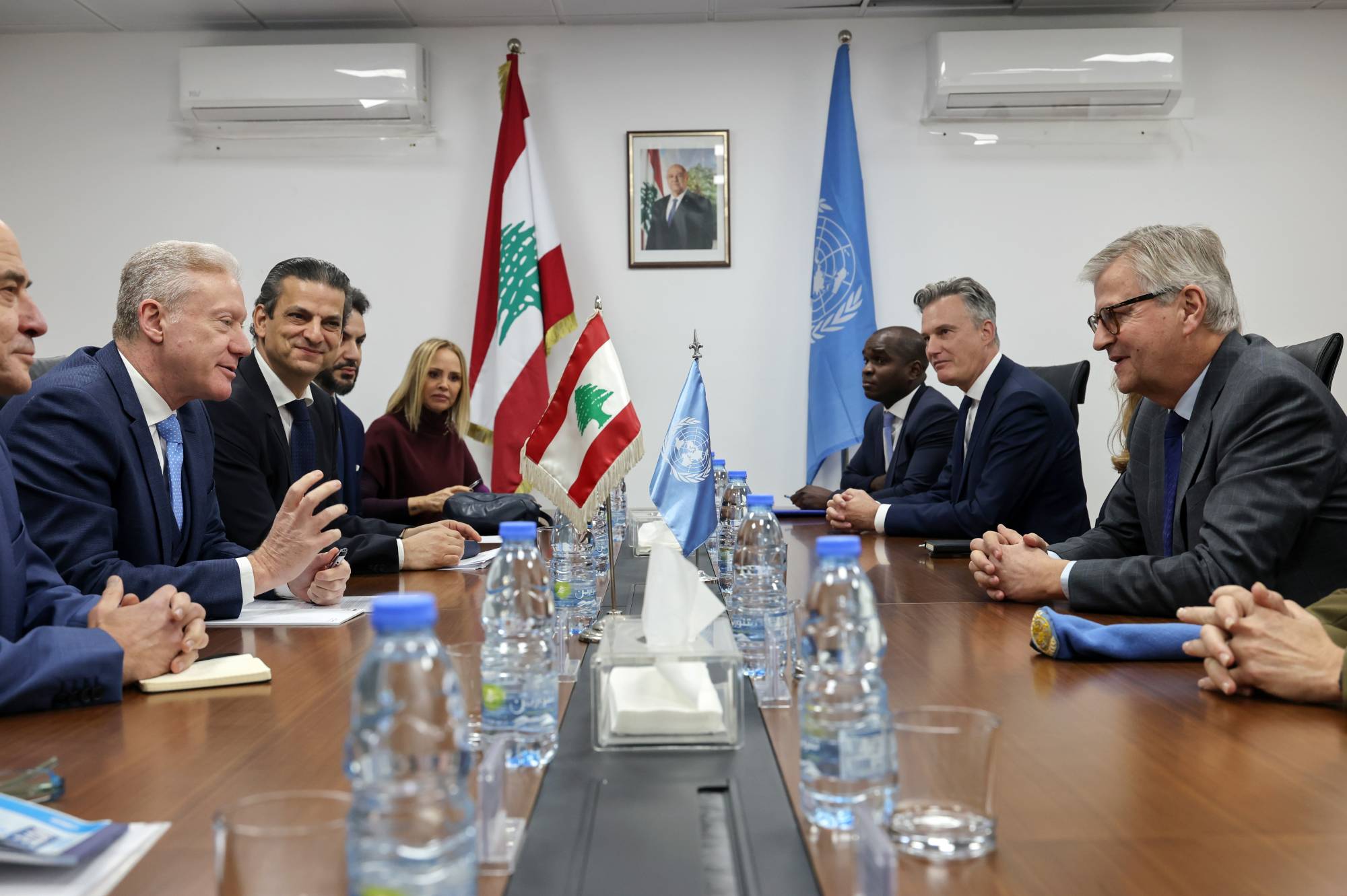
Negotiations exclusively in the hands of the state
The Lebanese ambassador to Washington, Nada Hamadeh Mouawad, held a second direct meeting with her Israeli counterpart, Yechiel Leiter, at the US State Department to discuss extending the truce and to set a date and venue for negotiations between the two delegations, in what is the first track of direct talks since 1993.
Raggi noted: “Iran dragged Lebanon into a war that was neither the choice of the Lebanese state nor of the majority of the Lebanese, but was imposed on it under an approach that treats Lebanon as a pressure card to be used at regional and international negotiating tables.”
He continued: “This led to the step taken by President Joseph Aoun to pursue a path of direct negotiations, clearly declaring that the Lebanese state alone holds the decision to negotiate, and that Lebanon is not subordinate to anyone and is not a card in the hands of any axis.” He stressed that “this step is not limited to its negotiating dimension, but lays the groundwork for restoring independent national decision-making and reinstating the concept of the state as the sole reference in war, peace, and foreign policy.”
Raggi reaffirmed that “the Lebanese track is now separate from the Iranian track,” and that “Lebanon’s interests are no longer hostage to the progress or deadlock of Iranian negotiations,” noting that “the second preparatory meeting is being held while talks related to Iran are facing stagnation and complications, which proves that Lebanon has begun to gradually reclaim its natural right to determine its own fate independently of others’ calculations.”He said: “This is a pivotal moment in Lebanon’s modern history, as it ends a long phase in which national milestones were tied to external agendas.”
No longer an arena
Raggi said: “We will no longer accept using Lebanon as an arena for settling regional scores or as a platform for military and political adventurism whose cost is borne by the Lebanese in their security, economy, and national unity.” He explained: “Experience has shown that turning Lebanon into an open arena for conflict has brought it nothing but destruction, isolation, and collapse. What is required today is to reassert its position as a sovereign state, not as a sphere of influence or a permanent front line.”
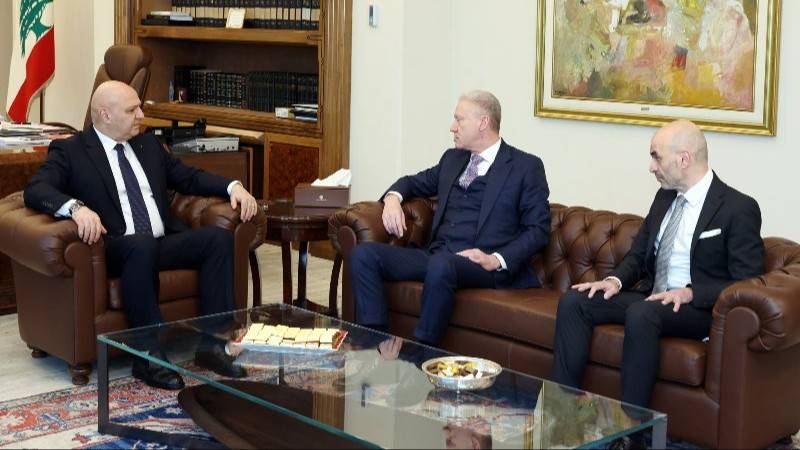
Objectives of negotiations
On the objectives of negotiations, Raggi said that “Lebanon’s move toward negotiations is intended to address outstanding issues between the two countries, foremost among them border, security, and humanitarian matters,” stressing that “negotiation is not surrender, as some try to portray it, but a tool for defending national interests when conducted from a position of state authority and with careful calculation.”He added: “The balance of power is not measured only in weapons, but also in the legitimacy of the state, unity of the national position, international support, and the ability to use law and diplomacy to protect rights.”
He noted that “it is a grave mistake to portray Lebanon as being in a position of absolute weakness, just as it is equally wrong to portray it as being in a position of surrender. The reality is that Lebanon, if its institutions are unified, can negotiate from a clear national-interest position.”
Raggi added: “The national priority today is to fully restore sovereignty, without diminution. There is no shame in the Lebanese state negotiating with Israel if the goal is to end the war, recover territory, and secure a lasting peace that preserves the dignity of the Lebanese and prevents the recurrence of tragedies, especially for our people in the south who have paid a heavy price in lives, homes, and livelihoods.”
He continued: “The futile adventures carried out through what are called ‘proxies’ have proven that their outcome was neither liberation nor victory, but further fragmentation and weakening of the Lebanese state and depletion of its society and economy.”
Monopoly of arms
Raggi said Lebanon “has long delayed implementing governmental and constitutional decisions related to restricting weapons to the state, particularly Hezbollah’s arms, at a time when the majority of Lebanese are calling for a real state that alone holds the right to use force.” He added: “Restricting arms is not a political demand by one side against another; it is the only gateway to building a modern state, because the very concept of the state fundamentally contradicts the existence of armed groups outside its authority. A state cannot exist with two sets of arms, two sovereignties, or two decisions on war and peace.”
He pointed out that “facts have shown that weapons outside state control did not liberate occupied land, did not protect Lebanese citizens, and did not prevent destruction; rather, they deepened national losses.”
He explained: “Before the ‘support for Gaza’ war and linking Lebanon to the Iranian confrontation, the disputed border points were limited and confined to known issues, including the thirteen points, the Shebaa Farms, and the Kfar Shouba hills. After October 7, 2023, Israeli occupation expanded inside Lebanese territory at five points, and after March 2, the occupied areas widened further, while dozens of villages were destroyed and vast areas suffered devastation and displacement.”
He added: “This catastrophic outcome confirms that the logic of uncontrolled arms did not produce protection; rather, Hezbollah’s war calculus ultimately imposed the path of direct negotiations as the only way to recover what Lebanon has lost.”
Targeting Arab states
Raggi strongly condemned “the discovery of roving sabotage networks linked to Hezbollah in a number of Arab countries.” He said: “This behavior is another example of the nature of the cross-border Iranian project, and its danger is not limited to Lebanon’s sovereignty but also extends to the security of sister and friendly states that have long stood by Lebanon in its most difficult times.”
He added: “We have informed our friends in the concerned countries of Lebanon’s full readiness for judicial and security cooperation, to pursue those responsible for these networks and provide all necessary assistance. We also reiterate our absolute rejection of using Lebanese territory or any Lebanese entity to harm the security of any Arab or friendly country.”
Hezbollah ‘gambling with the south’
Meanwhile, Israel continues explosions in border villages in the south. Raggi said: “We are closely following developments on the ground in the south, particularly the security belt imposed by Israel. The Foreign Ministry is working through all available diplomatic channels to achieve a full Israeli withdrawal, ensure residents can return to their villages, and launch reconstruction.”
He added: “But it is regrettable that while the state seeks to secure financial and political support for rebuilding, it faces an internal party, Hezbollah, that continues to gamble with the fate of these villages and their residents in service of goals and agendas unrelated to Lebanon’s interest or the suffering of the people of the south.”
Raggi said: “The painful scene of destroyed villages in the south, and of residents who have lost their homes, livelihoods, and sense of safety, should be a moment for courageous national reassessment,” stressing that “those who caused this war and dragged Lebanon into it against the will of its people must bear their political, moral, and historical responsibility and review their calculations before it is too late.”
Raggi affirmed that “Lebanon can no longer bear others’ wars, their projects, or illusions of victory that bring only ruin.” He concluded: “The future must belong to the state, to sovereignty, and to a just peace that protects all Lebanese.”