


Iran Arrests More Dual-Nationals after Nuclear Deal

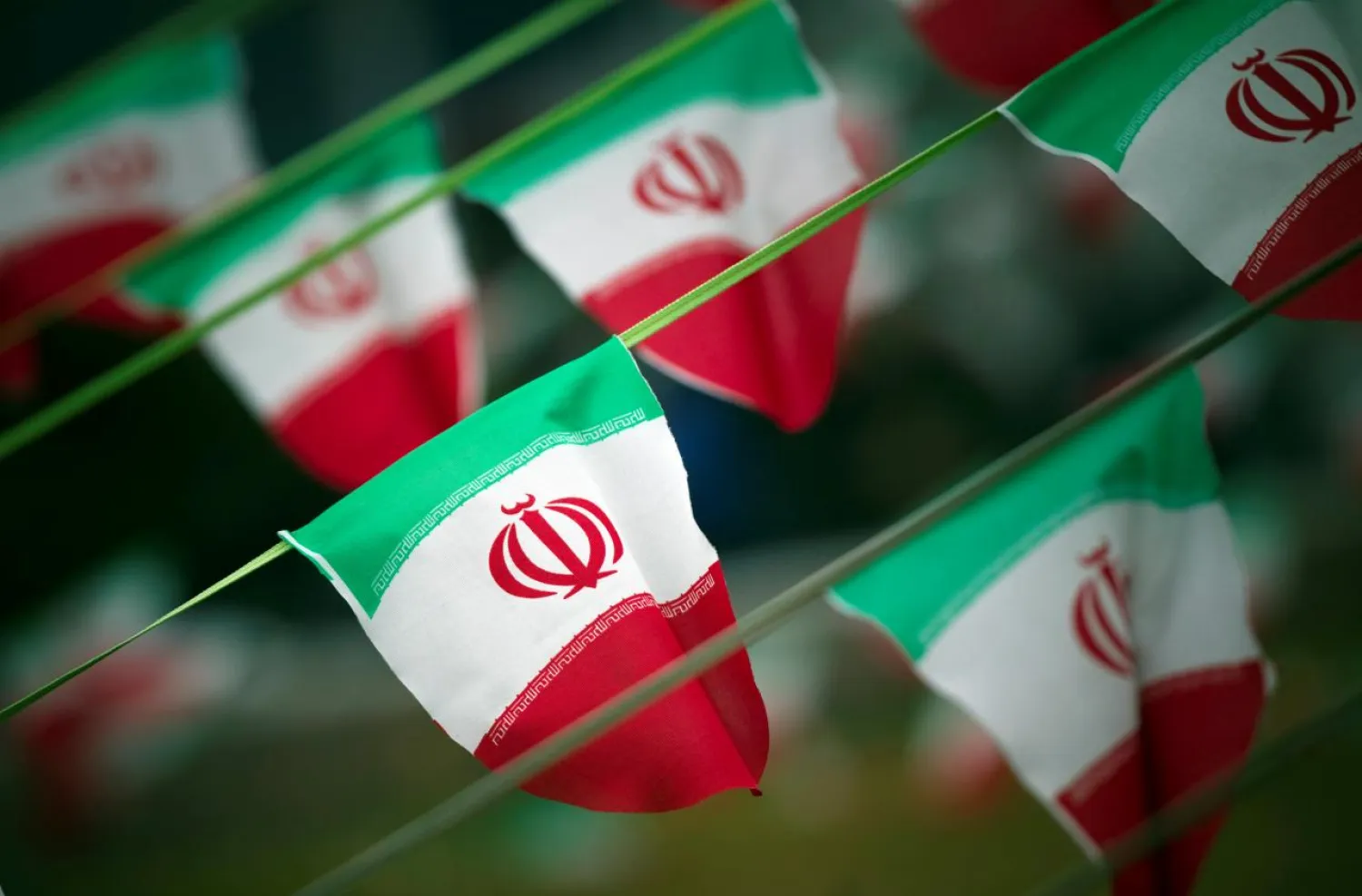
Iran's national flags are seen on a square in Tehran February 10, 2012, a day before the anniversary of the Islamic Revolution. REUTERS/Morteza Nikoubazl/File Photo
TT

Iran Arrests More Dual-Nationals after Nuclear Deal

Iran's national flags are seen on a square in Tehran February 10, 2012, a day before the anniversary of the Islamic Revolution. REUTERS/Morteza Nikoubazl/File Photo

Analysts and diplomats stated that the Revolutionary Guard Corps (IRGC) apprehended a minimum of 30 individuals holding dual nationality during the past two days for charges of espionage.

This number has been sharply increasing since 2015, which witnessed sealing the international nuclear deal and therefore hope rose in a detente with the West. During the previous years, the number of detainees holding dual nationality was less than ten.

This unveils a new approach in which since that time, 19 individuals out of 30 detainees hold European nationalities. Previously, most of the detainees were Americans of Iranian origins.

Detainees’ relatives and lawyers said the IRGC were using them as bargaining chips in international relations and to put off European firms that sought business in Iran after the government agreed the deal with world powers to lift sanctions, reported Reuters.

Iranian authorities have previously denied holding detainees for ransom and accused Western governments of holding Iranians on trumped-up charges. However, relatives of dual nationals detained in Iran, their lawyers and Western diplomats, shared information such as name, date of arrest and charges, on condition neither they nor the detainees were identified, citing fear of repercussions.

Iran does not routinely announce arrests or charges and does not recognize dual nationals, whose rights to consular assistance are enshrined in the UN Vienna Convention.

In all cases, the sources said the detainees had not carried out any espionage and were arrested only because of their second citizenship. They explained their willingness to share details by saying they had been kept in the dark by both the Iranian authorities and Western governments.

Several governments argue that maintaining a low profile is in the best interests of the detainees.

“This is very much what guides our approach,” a UK government source said. Dutch Foreign Ministry spokeswoman Daphne Kerremans said identifying detainees “could get the prisoners into trouble”.

Official information on the website of former prime minister David Cameron showed that Cameron discussed with Iranian President Hassan Rouhani the case of three UK nationals of Iranian origins detained in Iranian prisons.

In 2016, Tehran released US citizens in an exchange operation after signing the nuclear deal. Only one remained in Iran, when six more US citizens (or having permanent resistance) were arrested since then.

In return, Iran says that it has nationals detained in the West for no justified reason. Kazem Gharib Abadi, deputy of foreign affairs for the High Council for Human Rights, stated earlier that more than 56 Iranians are imprisoned in the US and an undetermined number of detainees are in other states.



Russia: Man Suspected of Shooting Top General Detained in Dubai

An investigator works outside a residential building where the assassination attempt on Russian Lieutenant General Vladimir Alexeyev took place in Moscow, Russia February 6, 2026. REUTERS/Anastasia Barashkova
TT

Russia: Man Suspected of Shooting Top General Detained in Dubai

An investigator works outside a residential building where the assassination attempt on Russian Lieutenant General Vladimir Alexeyev took place in Moscow, Russia February 6, 2026. REUTERS/Anastasia Barashkova

Russia's Federal Security Service (FSB) said on Sunday that the man suspected of shooting top Russian military intelligence officer Vladimir Alexeyev in Moscow has been detained in Dubai and handed over to Russia.

Lieutenant General Vladimir Alexeyev, deputy head of the GRU, ⁠Russia's military intelligence arm, was shot several times in an apartment block in Moscow on Friday, investigators said. He underwent surgery after the shooting, Russian media ⁠said.

The FSB said a Russian citizen named Lyubomir Korba was detained in Dubai on suspicion of carrying out the shooting.

Russian Foreign Minister Sergei Lavrov accused Ukraine of being behind the assassination attempt, which he said was designed to sabotage peace talks. ⁠Ukraine said it had nothing to do with the shooting.

Alexeyev's boss, Admiral Igor Kostyukov, the head of the GRU, has been leading Russia's delegation in negotiations with Ukraine in Abu Dhabi on security-related aspects of a potential peace deal.


Factory Explosion Kills 8 in Northern China

Employees work on an electric vehicle (EV) production line at the Volkswagen Anhui factory in Hefei, Anhui province, China, February 4, 2026. REUTERS/Florence Lo
TT

Factory Explosion Kills 8 in Northern China

Employees work on an electric vehicle (EV) production line at the Volkswagen Anhui factory in Hefei, Anhui province, China, February 4, 2026. REUTERS/Florence Lo

An explosion at a biotech factory in northern China has killed eight people, Chinese state media reported Sunday, increasing the total number of fatalities by one.

State news agency Xinhua had previously reported that seven people died and one person was missing after the Saturday morning explosion at the Jiapeng biotech company in Shanxi province, citing local authorities.

Later, Xinhua said eight were dead, adding that the firm's legal representative had been taken into custody.

The company is located in Shanyin County, about 400 kilometers west of Beijing, AFP reported.

Xinhua said clean-up operations were ongoing, noting that reporters observed dark yellow smoke emanating from the site of the explosion.

Authorities have established a team to investigate the cause of the blast, the report added.

Industrial accidents are common in China due to lax safety standards.
In late January, an explosion at a steel factory in the neighboring province of Inner Mongolia left at least nine people dead.


Iran Warns Will Not Give Up Enrichment Despite US War Threat

Traffic moves through a street in Tehran on February 7, 2026. (Photo by ATTA KENARE / AFP)
TT

Iran Warns Will Not Give Up Enrichment Despite US War Threat

Traffic moves through a street in Tehran on February 7, 2026. (Photo by ATTA KENARE / AFP)

Iran will never surrender the right to enrich uranium, even if war "is imposed on us,” its foreign minister said Sunday, defying pressure from Washington.

"Iran has paid a very heavy price for its peaceful nuclear program and for uranium enrichment," Abbas Araghchi told a forum in Tehran.

"Why do we insist so much on enrichment and refuse to give it up even if a war is imposed on us? Because no one has the right to dictate our behavior," he said, two days after he met US envoy Steve Witkoff in Oman.

The foreign minister also declared that his country was not intimidated by the US naval deployment in the Gulf.

"Their military deployment in the region does not scare us," Araghchi said.