
Saudi Crown Prince: Appeasement Doesn’t Work with 'Iran’s Hitler'

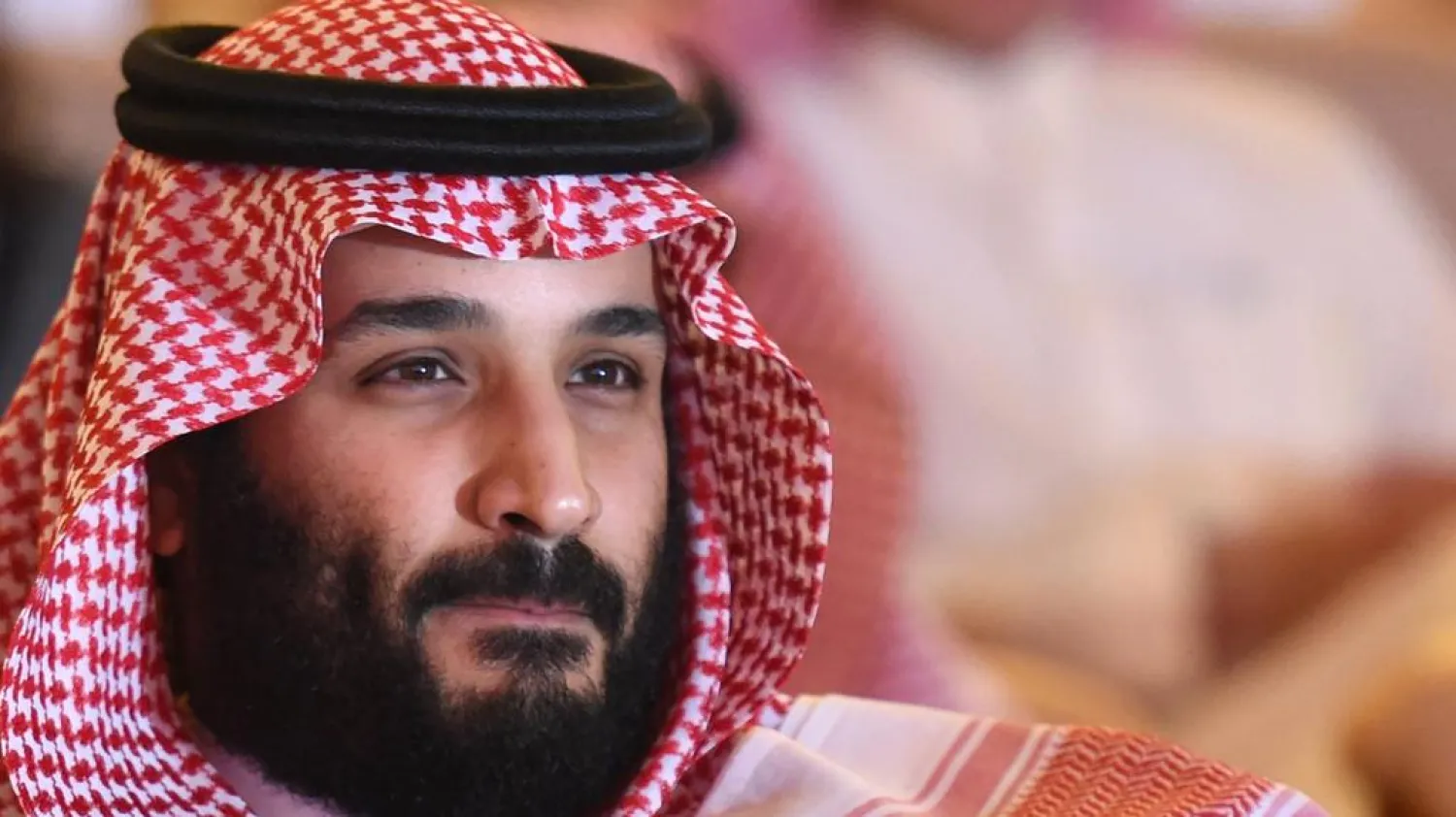
Saudi Crown Prince Mohammed bin Salman attends the Future Investment Initiative conference in Riyadh. AFP
TT

Saudi Crown Prince: Appeasement Doesn’t Work with 'Iran’s Hitler'

Saudi Crown Prince Mohammed bin Salman attends the Future Investment Initiative conference in Riyadh. AFP

I never thought I’d live long enough to write this sentence: The most significant reform process underway anywhere in the Middle East today is in Saudi Arabia. Yes, you read that right. Though I came here at the start of Saudi winter, I found the country going through its own Arab Spring, Saudi style.

Unlike the other Arab Springs — all of which emerged bottom up and failed miserably, except in Tunisia — this one is led from the top down by the country’s 32-year-old crown prince, Mohammed bin Salman, and, if it succeeds, it will not only change the character of Saudi Arabia but the tone and tenor of Islam across the globe. Only a fool would not root for it.

To better understand it I flew to Riyadh to interview the crown prince, known as “M.B.S.,” who had not spoken about the extraordinary events here of early November, when his government arrested scores of Saudi princes and businessmen on charges of corruption and threw them into a makeshift gilded jail — the Riyadh Ritz-Carlton — until they agreed to surrender their ill-gotten gains. You don’t see that every day.

We met at night at his family’s ornate adobe-walled palace in Ouja, north of Riyadh. M.B.S. spoke in English, while his brother, Prince Khalid, the new Saudi ambassador to the US, and several senior ministers shared different lamb dishes and spiced the conversation. After nearly four hours together, I surrendered at 1:15 a.m. to M.B.S.’s youth, pointing out that I was exactly twice his age. It’s been a long, long time, though, since any Arab leader wore me out with a fire hose of new ideas about transforming his country.

We started with the obvious question: What’s happening at the Ritz? And was this his power play to eliminate his family and private sector rivals before his father, King Salman, turns the keys of the kingdom over to him?

It’s “ludicrous,” he said, to suggest that this anticorruption campaign was a power grab. He pointed out that many prominent members of the Ritz crowd had already publicly pledged allegiance to him and his reforms, and that “a majority of the royal family” is already behind him. This is what happened, he said: “Our country has suffered a lot from corruption from the 1980s until today. The calculation of our experts is that roughly 10 percent of all government spending was siphoned off by corruption since the early 1980s, by both the top and bottom levels. Over the years the government launched more than one ‘war on corruption’ and they all failed. Why? Because they all started from the bottom up.”

So when his father, who has never been tainted by corruption charges during his nearly five decades as governor of Riyadh, ascended to the throne in 2015 (at a time of falling oil prices), he vowed to put a stop to it all, M.B.S. said:

“My father saw that there is no way we can stay in the G-20 and grow with this level of corruption. In early 2015, one of his first orders to his team was to collect all the information about corruption — at the top. This team worked for two years until they collected the most accurate information, and then they came up with about 200 names.”

When all the data was ready, the public prosecutor, Saud al-Mojib, took action, M.B.S. said, explaining that each suspected billionaire or prince was arrested and given two choices: “We show them all the files that we have and as soon as they see those about 95 percent agree to a settlement,” which means signing over cash or shares of their business to the Saudi state treasury.

“About 1 percent,” he added, “are able to prove they are clean and their case is dropped right there. About 4 percent say they are not corrupt and with their lawyers want to go to court. Under Saudi law, the public prosecutor is independent. We cannot interfere with his job — the king can dismiss him, but he is driving the process … We have experts making sure no businesses are bankrupted in the process” — to avoid causing unemployment.

“How much money are they recovering?” I asked.

The public prosecutor says it could eventually “be around $100 billion in settlements,” said M.B.S.

There is no way, he added, to root out all corruption from all levels. “So you have to send a signal, and the signal going forward now is, ‘You will not escape.’ And we are already seeing the impact,” like people writing on social media, “I called my middle man (to complete my pending transactions in state institutions) and he doesn’t answer.” Saudi business people who paid bribes to get services done by bureaucrats are not being prosecuted, explained M.B.S. “It’s those (arrested) who shook the money out of the government” — by overcharging and getting kickbacks.

The stakes are high for M.B.S. in this anticorruption drive. If the public feels that he is truly purging corruption that was sapping the system and doing so in a way that is transparent and makes clear to future Saudi and foreign investors that the rule of law will prevail, it will really instill a lot of new confidence in the system. But if the process ends up feeling arbitrary, aimed more at aggregating power for power’s sake and unchecked by any rule of law, it will end up instilling fear that will unnerve Saudi and foreign investors in ways the country can’t afford.

But one thing I know for sure: Not a single Saudi I spoke to here over three days expressed anything other than effusive support for this anticorruption drive. The Saudi silent majority is clearly fed up with the injustice of so many princes and billionaires ripping off their country. While foreigners, like me, were inquiring about the legal framework for this operation, the mood among Saudis I spoke with was: “Just turn them all upside down, shake the money out of their pockets and don’t stop shaking them until it’s all out!”

But guess what? This anticorruption drive is only the second-most unusual and important initiative launched by M.B.S. The first is to bring Saudi Islam back to its more open and modern orientation — whence it diverted in 1979. That is, back to what M.B.S. described to a recent global investment conference here as a “moderate, balanced Islam that is open to the world and to all religions and all traditions and peoples.”

I know that year well. I started my career as a reporter in the Middle East in Beirut in 1979, and so much of the region that I have covered since was shaped by the three big events of that year: the takeover of the Grand Mosque in Mecca by Saudi puritanical extremists — who denounced the Saudi ruling family as corrupt, impious sellouts to Western values; the Iranian Islamic revolution; and the Soviet invasion of Afghanistan.

These three events together freaked out the Saudi ruling family at the time, and prompted it to turn a blind eye to extremist clerics who imposed a much more austere Islam on the society and by launching a worldwide competition with Iran’s ayatollahs over who could export more Islam. It didn’t help that the US tried to leverage this trend by using the term Islamist fighters against Russia in Afghanistan. In all, it pushed Islam globally way to the right and helped nurture 9/11.

M.B.S. is on a mission to bring Saudi Islam back to the center. He has not only curbed the authority of the once feared Saudi religious police to berate a woman, he has also let women drive. And unlike any Saudi leader before him, he has taken the hard-liners on ideologically. As one US-educated 28-year-old Saudi woman told me: M.B.S. “uses a different language. He says, ‘We are going to destroy extremism.’ He’s not sugar-coating. That is reassuring to me that the change is real.”

This is true. M.B.S. told me: “We don’t say that we are ‘reinterpreting’ Islam — we are ‘restoring’ Islam to its origins — and our biggest tools are the Prophet’s practices and [daily life in] Saudi Arabia before 1979.” At the time of the Prophet Mohammed, he argued, there was mixing between men and women, there was respect for Christians and Jews in the Arabian Peninsula. “The first commercial judge in Medina was a woman!” So if the Prophet’s successor (Umar) embraced all of this, M.B.S. asked, “Do you mean he was not a Muslim?”

Then one of his ministers got out his cellphone and shared with me pictures and YouTube videos of Saudi Arabia in the 1950s — foreign women in their normal attire and walking with men in public, as well as concerts and cinemas. It was still a traditional and modest place, but not one where fun had been outlawed, But all this changed after 1979.

If the virus of an antipluralistic, misogynistic Islam that came out in 1979 can be reversed by Saudi Arabia, it would drive moderation across the Muslim world and surely be welcomed here where 65 percent of the population is under 30.

One middle-age Saudi banker said to me: “My generation was held hostage by 1979. I know now that my kids will not be hostages.” Added a 28-year-old Saudi woman social entrepreneur: “Ten years ago when we talked about music in Riyadh it meant buying a CD — now it is about the concert next month and what ticket are you buying and which of your friends will go with you.”

Saudi Arabia would have a very long way to go before it approached anything like Western standards for free speech and women’s rights. But as someone who has been coming here for almost 30 years, it blew my mind to learn that you can hear Western classical music concerts in Riyadh now, that country singer Toby Keith held a men-only concert here in September, where he even sang with a Saudi, and that Lebanese soprano Hiba Tawaji will be among the first woman singers to perform a women-only concert here on Dec. 6. And M.B.S told me, it was just decided that women will be able to go to stadiums and attend soccer games. The Saudi extremists have completely acquiesced.

The Saudi education minister chimed in that among a broad set of education reforms, he’s redoing and digitizing all textbooks, sending 1,700 Saudi teachers each year to world-class schools in places like Finland to upgrade their skills, announcing that for the first time Saudi girls will have physical education classes in public schools and this year adding an hour to the Saudi school day for kids to explore their passions in science and social issues, under a teacher’s supervision, with their own projects.

So many of these reforms were so long overdue it’s ridiculous. Better late than never, though.

On foreign policy, M.B.S. would not discuss the strange goings on with Prime Minister Saad Hariri of Lebanon coming to Saudi Arabia and announcing his resignation, seemingly under Saudi pressure, and now returning to Beirut and rescinding that resignation. He simply insisted that the bottom line of the whole affair is that Hariri, a Sunni Muslim, is not going to continue providing political cover for a Lebanese government that is essentially controlled by the Lebanese Shi’ite Hezbollah militia, which is essentially controlled by Tehran.

He insisted that the Saudi-backed war in Yemen, which has been a humanitarian nightmare, was tilting in the direction of the pro-Saudi legitimate government there, which, he said is now in control of 85 percent of the country, but given the fact that pro-Iranian Houthi rebels, who hold the rest, launched a missile at Riyadh airport, anything less than 100 percent is still problematic.

His general view seemed to be that with the backing of the Trump administration — he praised President Trump as “the right person at the right time” — the Saudis and their Arab allies were slowly building a coalition to stand up to Iran. I am skeptical. The dysfunction and rivalries within the Sunni Arab world generally have prevented forming a unified front up to now, which is why Iran indirectly controls four Arab capitals today — Damascus, Sana’a, Baghdad and Beirut. That Iranian over-reach is one reason M.B.S. was scathing about Iran’s supreme leader, Ayatollah Ali Khamenei.

Iran’s “supreme leader is the new Hitler of the Middle East,” said M.B.S. “But we learned from Europe that appeasement doesn’t work. We don’t want the new Hitler in Iran to repeat what happened in Europe in the Middle East.” What matters most, though, is what Saudi Arabia does at home to build its strength and economy.

But can M.B.S. and his team see this through? Again, I make no predictions. He has his flaws that he will have to control, informed sources tell me. For example his advisers don’t always challenge him sufficiently, and he has a tendency to start too many things that don’t get finished. There’s a whole list. But guess what? Perfect is not on the menu here. Someone had to do this job — wrench Saudi Arabia into the 21st century — and M.B.S. stepped up. I, for one, am rooting for him to succeed in his reform efforts.

And so are a lot of young Saudis. There was something a 30-year-old Saudi woman social entrepreneur said to me that stuck in my ear. “We are privileged to be the generation that has seen the before and the after.” The previous generation of Saudi women, she explained, could never imagine a day when a woman could drive and the coming generation will never be able to imagine a day when a woman couldn’t.

“But I will always remember not being able to drive,” she told me. And the fact that starting in June that will never again be so “gives me so much hope. It proves to me that anything is possible — that this is a time of opportunity. We have seen things change and we are young enough to make the transition.”

This reform push is giving the youth here a new pride in their country, almost a new identity, which many of them clearly relish. Being a Saudi student in post-9/11 America, young Saudis confess, is to always feel you are being looked at as a potential terrorist or someone who comes from a country locked in the Stone Age.

Now they have a young leader who is driving religious and economic reform, who talks the language of high tech, and whose biggest sin may be that he wants to go too fast. Most ministers are now in their 40s — and not 60s. And with the suffocating hand of extremism being lifted, it’s giving them a chance to think afresh about their country and their identity as Saudis.

“We need to restore our culture to what it was before the radical culture took over,” a Saudi woman friend who works with an N.G.O. said to me. ”`We have 13 regions in this country, and they each have a different cuisine. But nobody knows that. Did you know that? But I never saw one Saudi dish go global. It is time for us to embrace who we are and who we were.”

Alas, who Saudi Arabia is also includes a large cohort of older, more rural, more traditional Saudis, and pulling them into the 21st century will be a challenge. But that’s in part why every senior bureaucrat is working crazy hours now. They know M.B.S. can call them on the phone at any of those hours to find out if something he wanted done is getting done. I told him his work habits reminded me of a line in the play “Hamilton,” when the chorus asks: Why does he always work like “he’s running out of time.”

“Because,” said M.B.S., “I fear that the day I die I am going to die without accomplishing what I have in my mind. Life is too short and a lot of things can happen, and I am really keen to see it with my own eyes — and that is why I am in a hurry.”

The New York Times


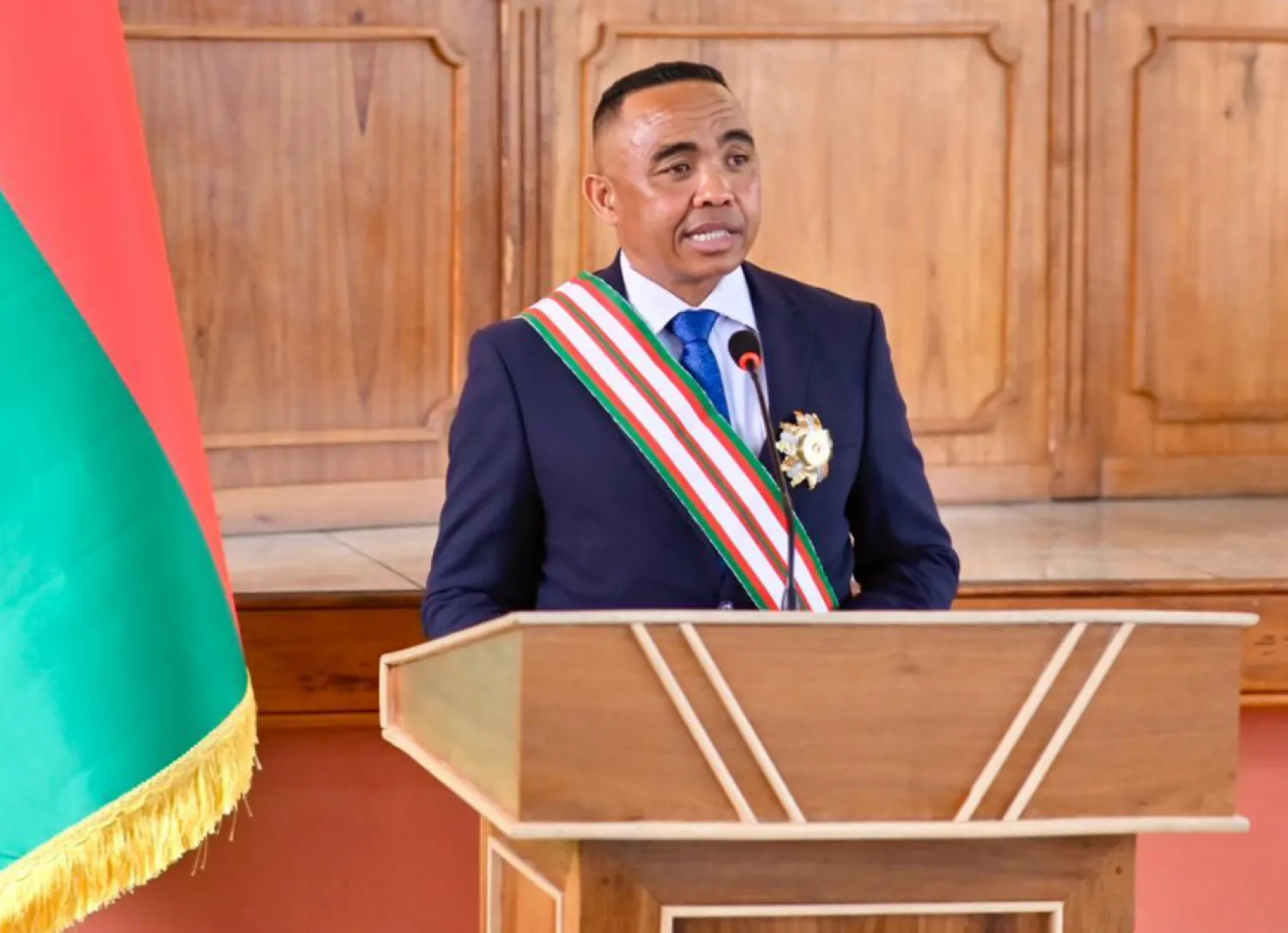
President of Madagascar to Asharq Al-Awsat: Three-Pillar Economic Plan to Revive the Country

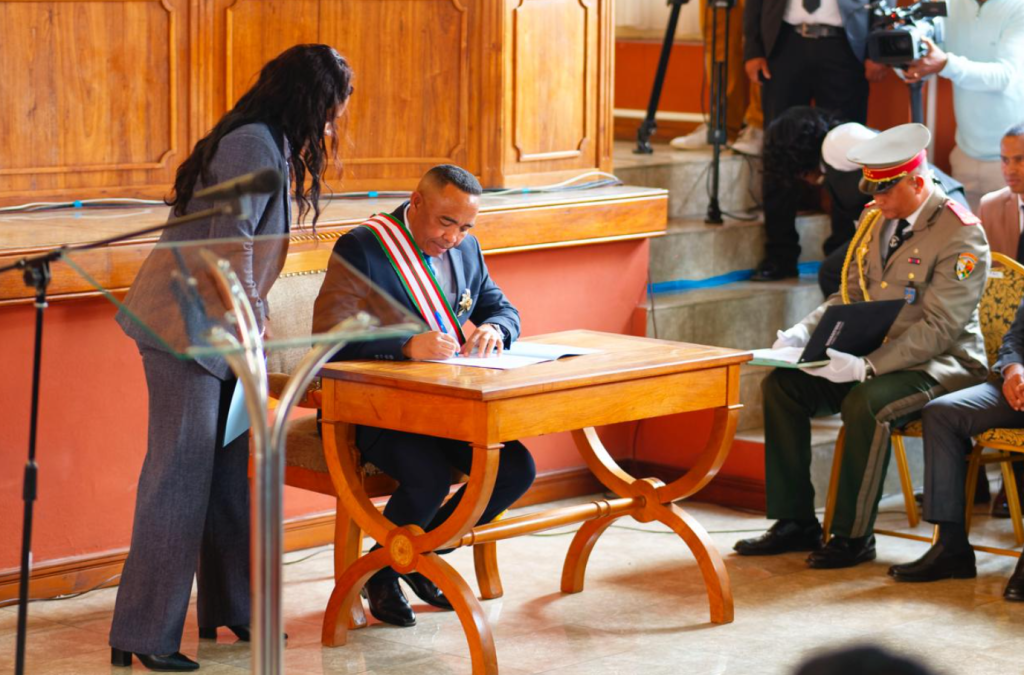
President of Madagascar Michael Randrianirina (Presidency)
TT

President of Madagascar to Asharq Al-Awsat: Three-Pillar Economic Plan to Revive the Country

President of Madagascar Michael Randrianirina (Presidency)

President of Madagascar Michael Randrianirina said his country views Saudi Arabia as its “main partner” in the phase of “refoundation” and in building a new development model, revealing to Asharq Al-Awsat a three-pillar economic plan aimed at restoring political and institutional stability, activating structural sectors, and improving the business environment to attract investment, with a focus on cooperation in mining and natural resources, including rare minerals.

In his first interview with an Arab newspaper since assuming office in October, Randrianirina said in remarks delivered via Zoom from his presidential office that Madagascar “possesses real potential in energy, agriculture, mining, tourism, and human capital,” stressing that driving national revival requires consolidating institutional stability and building balanced partnerships with countries such as Saudi Arabia in order to translate potential into tangible outcomes for citizens and youth.

Three-Pillar Economic Plan

The president explained that his plan is based on three main pillars. The first focuses on restoring political and institutional stability through a clear transitional roadmap, the establishment of an executive body to manage and review projects, and the formation of a supporting committee to ensure an orderly and transparent transition.

The second pillar centers on investment in structural sectors, including energy, ports, digital transformation, health, and mining, in partnership with Saudi Arabia and other partners, with the aim of removing the main obstacles to economic revival.

The third pillar, he said, targets creating an attractive environment for investors by improving the business climate, strengthening public-private partnerships, activating special economic zones, and leveraging regional frameworks such as the African Continental Free Trade Area (AfCFTA) and the Southern African Development Community (SADC) to open broader African markets through Madagascar.

Strategic Partnership and “Investment-Ready” Projects

On plans to enhance economic, investment, and trade cooperation between Saudi Arabia and Madagascar, Randrianirina said his objective is to build a long-term strategic partnership within a clear institutional framework and through flagship projects with tangible impact for both countries.

He proposed the creation of a joint Madagascar–Saudi investment body, to be known as “OIMS,” to coordinate and finance projects in energy, ports, health, digital governance, mining, agriculture, and tourism. He noted that Madagascar is simultaneously preparing a package of investment-ready projects aligned with Saudi Vision 2030 and Africa’s regional integration, in order to provide organized and secure opportunities for Saudi capital and expertise.

Saudi Arabia as the “Main Partner”

Randrianirina emphasized that Madagascar considers Saudi Arabia a key partner in priority sectors. In energy and refining, he said the country plans to establish a national oil refinery, supply fuel directly from the Kingdom, and jointly develop heavy oil resources in western Madagascar.

In ports and logistics, he pointed to efforts to modernize and expand the ports of Toliara and Mahajanga to position Madagascar as a logistics and energy hub in the Indian Ocean.

Regarding digital transformation and secure governance, he said Madagascar aims to launch a secure national digital platform for public administration and security, drawing on Saudi experience.

He also highlighted mining and natural resources, including rare minerals, as a cornerstone of cooperation, with the goal of improving valuation and ensuring traceability of Malagasy gold and other mineral resources in a transparent and mutually beneficial manner. He further expressed interest in the health sector, proposing the establishment of a royal health complex in Antananarivo, followed by a gradual expansion of similar facilities in other regions.

Planned Visit to Riyadh

The President said Madagascar is working with Saudi authorities to arrange an official visit in the near future, with the date to be determined in coordination with the Kingdom.

He described the visit as an important opportunity to meet and engage with Crown Prince Mohammed bin Salman, noting that Vision 2030 has brought about a qualitative transformation in the Kingdom’s image and economic trajectory. He said Saudi Arabia has strengthened its role as a major player in economic modernization, energy diversification, digital transformation, and global investment, while maintaining its central role in the Arab and Islamic worlds.

He added that the reforms and major projects achieved under the vision are a source of inspiration for Madagascar’s refoundation efforts, expressing a desire to benefit from the Saudi experience in areas including energy, infrastructure, digital transformation, health, and natural resource development.

The president said he hopes the visit will include meetings with the Custodian of the Two Holy Mosques King Salman bin Abdulaziz and Crown Prince Mohammed bin Salman, as well as sectoral meetings covering energy, ports, digital transformation, health, mining, defense and security, trade, culture, and sports, alongside discussions on establishing the joint investment body.

Historical Links with the Arab World

Randrianirina noted that Madagascar had historical links with the Arab world prior to the arrival of Western powers, explaining that Arab sailors, traders, and scholars reached its coasts and left their mark on certain languages, place names, and customs.

Three Major Challenges

The president acknowledged three main challenges facing his country: poverty and food insecurity, lack of infrastructure, and weak institutions. He said a large segment of the population still lives in poverty and that food security is not guaranteed in several regions, stressing that addressing these challenges requires investment in agriculture and rural infrastructure and the search for partners to support sustainable value chains that improve farmers’ incomes.

On infrastructure, he said the capacity of the energy and port sectors remains insufficient, hindering growth and trade, noting that upcoming discussions with Saudi Arabia focus on projects such as the refinery, heavy oil development, the ports of Toliara and Mahajanga, and digital infrastructure. He added that repeated crises have weakened institutions, and that his government is working to strengthen the rule of law, anti-corruption mechanisms, and public investment governance through independent oversight and transparent reporting to restore trust.

Combating Corruption

The President said financial corruption is a serious problem in Madagascar as it undermines public trust and diverts resources away from development. He explained that the anti-corruption strategy is based on three levels: establishing an executive body with clear procedures, independent audits, and periodic reporting; using digitalization to improve traceability and reduce misuse; and strengthening anti-corruption bodies while supporting judicial independence.

When asked about allegations of financial corruption linked to the previous leadership, he said his focus is on institutions rather than personal accusations, stressing that addressing any allegations falls under the jurisdiction of the competent judicial and oversight bodies, which must be protected from political interference and allowed to operate in accordance with the law and due process.

Duty to the Country and Its Youth

The president concluded by saying that he assumed office out of a sense of duty toward the country and its youth, noting that young people represent a significant demographic weight in Madagascar and are demanding change, dignity, and a better future through jobs, education, stability, and opportunities within their own country.


Microsoft President: Saudi Arabia is Moving from Exporting Oil to Exporting Artificial Intelligence

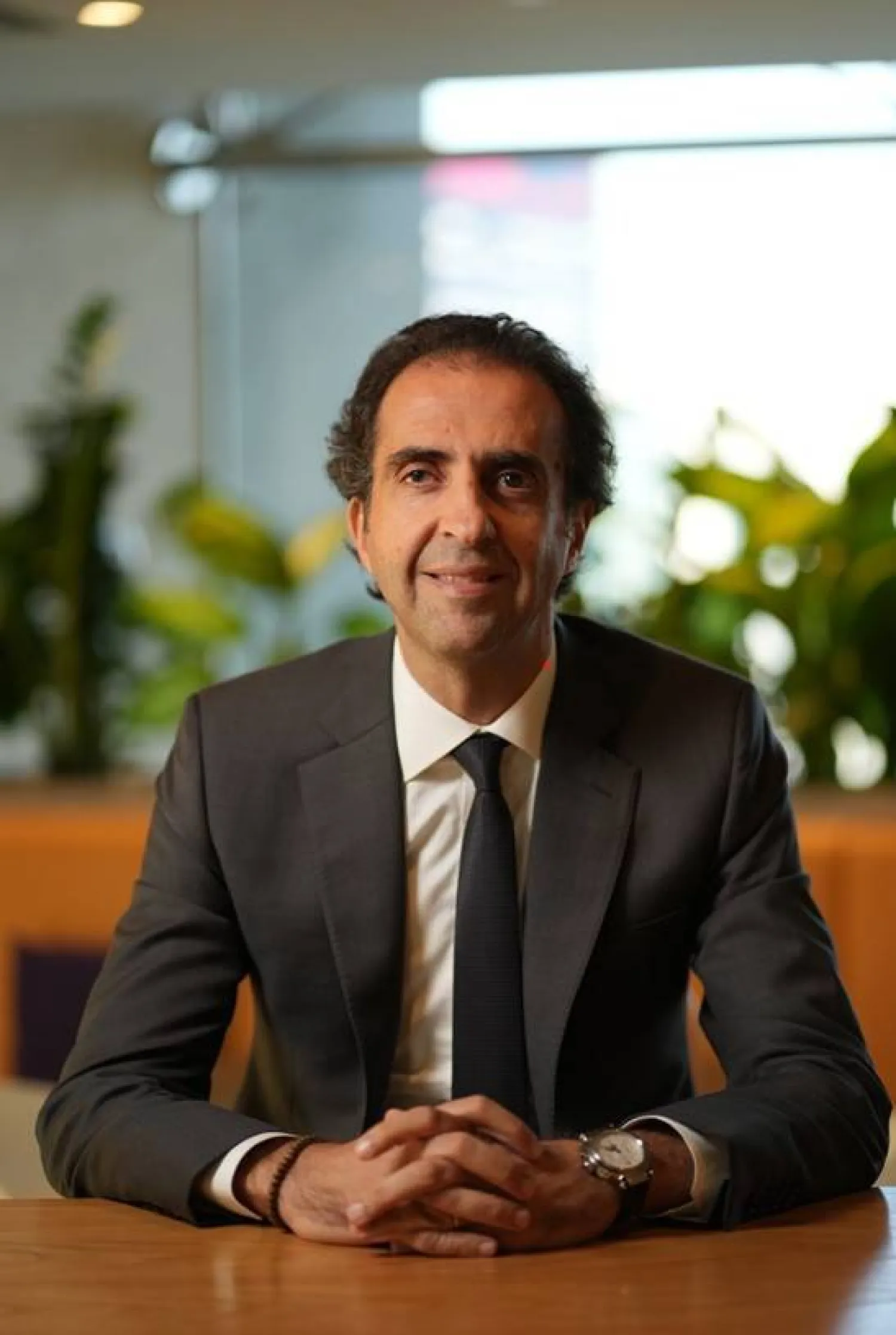
Naim Yazbeck, President of Microsoft for the Middle East and Africa (Microsoft) 
TT

Microsoft President: Saudi Arabia is Moving from Exporting Oil to Exporting Artificial Intelligence

Naim Yazbeck, President of Microsoft for the Middle East and Africa (Microsoft) 

As Saudi Arabia accelerates its national transformation under Vision 2030, the region’s technology landscape is undergoing a decisive shift. For the first time, “the region is not merely participating in a global transformation, it is clearly leading it,” said Naim Yazbeck, President of Microsoft for the Middle East and Africa, in an interview with Asharq Al-Awsat.

Yazbeck argued that Saudi Arabia now stands at the forefront of what he called “a historic turning point not seen in the past century,” defined by sovereign cloud infrastructure, artificial intelligence, and national innovation capabilities.

He noted that Saudi Arabia’s rapid progress is driven by clear political will, explaining that the state is not simply modernizing infrastructure, but views AI as a strategic pillar comparable to the historical role of oil. While oil underpinned the economy for decades, AI has emerged as the new resource on which the Kingdom is staking its economic future.

According to Yazbeck, the recent visit of Crown Prince and Prime Minister Mohammed bin Salman to the United States underscored this shift, with AI and advanced technologies taking center stage in discussions, reflecting Saudi Arabia’s intent to build a globally influential knowledge economy.

This direction marks the start of a new phase in which the Kingdom is no longer a consumer of imported AI technologies but a developer of local capabilities and a producer of exportable knowledge, strengthening technological sovereignty and laying the foundation for an innovation-driven economy.

A Distinctive Tech Market

Yazbeck stressed that the regional landscape, especially in Saudi Arabia, is witnessing an unprecedented shift. Gulf countries are not only deploying AI but also developing and exporting it. The Kingdom is building advanced infrastructure capable of running large-scale models and providing massive computing power, positioning it for the first time as a participant in global innovation rather than a mere technology importer.

He pointed to a common sentiment he encountered in recent meetings across Riyadh’s ministries, regulatory bodies, national institutions, and global companies: “Everyone wants to be ahead of AI, not behind it.” Ambition has translated into action through revised budgets, higher targets, and faster project timelines.

He added that Saudi institutions now demand the highest standards of data sovereignty, especially in sensitive financial, health, and education sectors. The regulatory environment is evolving rapidly; Saudi Arabia has modernized its cybersecurity, data governance, cloud, and AI frameworks faster than many countries worldwide, turning regulatory agility into a competitive asset.

Yazbeck emphasized that success is not measured by the number of AI projects but by their alignment with national priorities, productivity, healthcare, education, and cybersecurity, rather than superficial, publicity-driven initiatives.

The ‘Return on Investment’ Equation

According to the Microsoft official, building an AI-driven economy requires more than advanced data centers. It begins with long-term planning for energy production and the expansion of connectivity networks. He further said that running large models demands enormous electrical capacity and long-term stability, which the Kingdom is addressing through strategic investments in renewable energy and telecommunications.

Yazbeck said return on investment is a central question. Nationally, ROI is measured through economic growth, job creation, higher productivity, enhanced innovation, and stronger global standing. At the institutional level, tangible results are already emerging: with tools such as Copilot, employees are working faster and with higher quality, shedding routine tasks and redirecting time toward innovation. The next phase, he added, will unlock new business models, improved customer experiences, streamlined operations, and higher efficiency across sectors.

Sovereignty and Security

Digital sovereignty is now indispensable, Yazbeck said. Saudi Arabia requires cloud providers to meet the highest accreditation standards to host sensitive national systems, which are criteria Microsoft is working to fulfill ahead of launch. Once the new cloud regions in Dammam go live, they will become part of the Kingdom’s sovereign infrastructure, requiring maximum protection.

Microsoft invests billions annually in cybersecurity and has repelled unprecedented cyberattacks, an indicator of the threats national infrastructure faces. The company offers a suite of sovereign cloud solutions, data-classification tools, and hybrid options that allow flexible operation and expansion. Yazbeck noted that sovereignty is not a single concept but a spectrum that includes data protection, regulatory control, and local hosting all play critical roles.

Data: The Next Source of Advantage

Yazbeck identified data as the decisive factor in AI success. He warned that any model built on unclean data becomes a source of hallucinations. Thus, national strategy begins with assessing the readiness of Saudi Arabia’s data landscape.

He revealed that the Kingdom, working with SDAIA, the Ministry of Communications, and national companies, is constructing a vast, high-quality data ecosystem, laying the groundwork for competitive Arabic language models.

He also called for a robust framework for responsible AI, saying that speed alone is not enough. He stressed that safe and trustworthy use must be built from the start, noting that Microsoft is collaborating with national bodies to craft policies that prevent misuse, protect data, and ensure fairness and transparency.

Skills: A National Advantage

Human capability is the true engine of national power; Yazbeck underlined, pointing that infrastructure means little without talent to run and advance it. He stated that Saudi youth represent the Kingdom’s greatest competitive advantage.

Microsoft has trained more than one million Saudis over the past two years through programs with SDAIA, the Ministry of Communications, the Ministry of Education, and the MISK Foundation. Its joint AI Academy has graduated thousands of students from over 40 universities, and it has launched broad programs to train teachers on AI tools in education.


El-Mahboub Abdul Salam to Asharq Al-Awsat: Al-Turabi Was Shocked by Deputy’s Role in Mubarak Assassination Plot

Dr. El-Mahboub Abdul Salam speaks to Asharq Al-Awsat. (Asharq Al-Awsat)
TT

El-Mahboub Abdul Salam to Asharq Al-Awsat: Al-Turabi Was Shocked by Deputy’s Role in Mubarak Assassination Plot

Dr. El-Mahboub Abdul Salam speaks to Asharq Al-Awsat. (Asharq Al-Awsat)

This happens only in thrillers. A religious leader summons an obscure army officer and meets him for the first time two days before a planned coup. He appoints him president with an unprecedented line, “You will go to the palace as president, and I will go to prison as a detainee.”

That is what happened on June 30, 1989. The officer, Omar al-Bashir, went to the presidential palace while security forces took Dr. Hassan Al-Turabi to the notorious Kober Prison along with other political leaders.

Al-Turabi’s “ruse” aimed to conceal the Islamic nature of the coup so that near and distant governments would not rush to isolate it. Intelligence agencies in neighboring states, including Egypt, fell for the deception and assumed that Bashir had seized power at the head of a group of nationalist officers. Cairo recognized the new regime and encouraged others to follow.

This happens only in stories. A young man landed at Khartoum airport carrying a passport that said his name was Abdullah Barakat. He arrived from Amman. One day he would knock on Al-Turabi’s office door, though Al-Turabi refused to see him.

Soon after, Sudanese security discovered that the visitor was a “poisoned gift,” in Al-Turabi’s words. He was the Venezuelan militant known as Carlos the Jackal, a “revolutionary” to some and a “notorious terrorist” to others.

He led the 1975 kidnapping of OPEC ministers in Vienna under instructions from Palestinian militant Dr. Wadie Haddad, an architect of aircraft hijackings. One night, and with the approval of Al-Turabi and Bashir, French intelligence agents arrived in Khartoum. Carlos awoke from sedatives aboard the plane taking him to France, where he remains imprisoned for life.

Bashir’s government was playing with explosives. In the early 1990s, it also hosted a prickly young man named Osama bin Laden, who after Afghanistan was seeking a base for training and preparation. He arrived under the banner of investment and relief work. Mounting pressure left bin Laden with no option but to leave.

This happens only in thrillers. The leadership of the National Islamic Front gathered with its top figures, Bashir, and security chiefs. The occasion was the assassination attempt against Egyptian President Hosni Mubarak in Addis Ababa.

Ali Osman Taha, Al-Turabi’s deputy, stunned attendees by admitting that Sudanese security services were linked to the attempt. Those present understood that he had been one of its sponsors. Neither the sheikh nor the president had prior knowledge.

After the attempt, some proposed killing the operatives who had returned from the Ethiopian capital to eliminate any trail that could incriminate the Sudanese regime. Al-Turabi opposed the assassinations. The impression spread that Bashir supported the killings and signs of a rift between him and Al-Turabi began to appear.

The split later became formal in what came to be known as the “separation” among Islamists. Power is a feast that cannot accommodate two guests. Bashir did not hesitate to send to prison the man who had placed him in the palace. Al-Turabi did not hesitate to back Bashir’s handover to the International Criminal Court. Al-Turabi tasted the betrayal of his own disciples. Disciples, after all, are known to betray.

This happens only in thrillers. Through Al-Turabi’s mediation, Osama bin Laden agreed to meet an intelligence officer from Saddam Hussein’s regime named Farouk Hijazi. The meeting produced no cooperation, but it became one of the early arguments George W. Bush used in 2003 to justify the invasion of Iraq.

Hijazi also met senior Sudanese security officials who later visited Baghdad and were warmly received, and it became clear that Ali Osman Taha was among Saddam’s most enthusiastic admirers.

Sudanese blood now flows like the waters of the Nile. Bodies scattered on the streets of el-Fasher are almost making the world forget the bodies buried under the rubble of Gaza. Hard men are pouring fire onto the oil of ethnic and regional hatreds. Making corpses is far easier than making a settlement, a state, or institutions.

Since independence, Sudan has been a sprawling tragedy. Because the present is the child of the recent past, searching for a witness who knows the game and the players, and journalism leads to meeting and interviewing the experienced politician and researcher Dr. El-Mahboub Abdul Salam.

For a decade he served as Al-Turabi’s office director. For another decade, he wrote some of Bashir’s speeches.

In recent years, his bold conclusions stood out, including that Sudan’s Islamic movement has exhausted its purposes, that it shares responsibility with other elites for the country’s condition, and that it erred in dealing with others just as it erred when it chose the path of coups, violence, ghost houses, and contributed to pushing the South outside Sudan’s map.

Abdul Salam does not hesitate to scrutinize Al-Turabi’s own mistakes and his passion for wielding power. I sat down for an interview with him, and this is the first installment.

Abdul Salam was a first-year university student when Al-Turabi’s ideas caught his attention. Al-Turabi then appeared different, moving outside Sudan’s traditional social divides. He also knew the West, having studied in Paris and London. In 1990, Abdul Salam became Al-Turabi’s office director until the end of that decade.

Abdul Salam recalled: “I am often asked this question, are you a disciple of Al-Turabi? I have told them more than once, yes, I am a disciple of Al-Turabi, a devoted one. But I graduated from this school and became an independent person with my own ideas and experiences, perhaps broader than those of the Islamic movement’s earlier leaders.”

Asked about when he discovered Al-Turabi’s mistakes and developed a critical sense toward his experience Abdul Salam said that it was “perhaps in 2011, with the ‘Arab Spring’, and the Egyptian revolution in particular and the change that took place in Egypt.”

A tense beginning

Abdul Salam said Al-Turabi’s relationship with Egyptian President Hosni Mubarak began on polite terms when they met in 1986 during an Al-Azhar conference on the Prophet’s biography. At the time, he recalled, Cairo was hostile or deeply wary of the Sudanese government under Sadiq al-Mahdi. The meeting, in his words, “was more courtesy than substance.”

According to Abdul Salam, relations later deteriorated sharply because of the deception surrounding the 1989 coup, then worsened further after the 1995 assassination attempt against Mubarak in Addis Ababa.

The Addis Ababa shock

Abdul Salam recounted that a major political meeting was convened after the failed attempt, held at the home of Ali Osman Mohammed Taha and attended by Al-Turabi, Bashir and all senior leaders. He said that during this gathering, both Bashir and Al-Turabi learned “for the first time” that Sudanese security services and Al-Turabi’s own deputy had been involved in the operation without informing them, describing the moment as a “huge shock” to the leadership.

He said Taha admitted at the meeting that the security services were involved and that it later became clear he himself was implicated. When a proposal emerged to kill the operatives returning from Ethiopia to erase evidence, Abdul Salam said Al-Turabi “rose in fierce opposition,” calling the idea outside both politics and Sharia. He cited Dr. Ali al-Haj as saying this moment “marked the beginning of the split.”

Egyptian intelligence reassesses Sudan

Abdul Salam describes how the Sudanese and Egyptian intelligence services eventually moved toward reconciliation. He said Omar Suleiman, Egypt’s intelligence chief, sent a message through French intelligence stating that the attack had been carried out by Egyptian Islamist groups.

According to Abdul Salam, Suleiman maintained that Sudan had only provided what he described as logistical support including money, shelter and weapons, rather than planning or executing the attack. This understanding, he says, prevented Egypt from responding harshly.

The communication opened a door for “major repair” of relations, Abdul Salam added, as Sudan began presenting itself as a pragmatic government after distancing itself from Al-Turabi.

After 1999: Rapprochement with Cairo

The reconciliation with Egypt and the region, Abdul Salam noted, took shape after 1999. He recalled that Taha’s visit to Cairo came after that date, followed by a visit from intelligence chief Salah Gosh. Foreign Minister Mustafa Osman regularly traveled to Egypt and maintained a friendship with his Egyptian counterpart, further improving ties.

The memorandum that shifted power

Abdul Salam described the turning point in relations between Bashir and Al-Turabi as the “Memorandum of Ten” in October 1998. During a major Shura gathering attended by hundreds of party, state and tribal leaders, ten members presented a document calling for the removal of Al-Turabi and the installation of Bashir as both head of state and leader of the movement.

He said the memorandum included reform language, but its essence was ending dual leadership. Bashir, according to Abdul Salam, “conspired with the ten” and accepted the proposal, calling the conspiracy “clear and very public.”

Abdul Salam recounted that Bashir wanted to confine Al-Turabi to a symbolic role and that some officers close to Bashir even asked Al-Turabi to remain as a spiritual figure who would bless decisions made elsewhere. “Al-Turabi would not accept this,” he stressed.

Al-Turabi’s influence and gradual reemergence

Reflecting on the early years of the Salvation regime, Abdul Salam said Al-Turabi authored all strategic decisions while the government handled daily business independently. He avoided public appearances during the first five years, he recalls.

Abdul Salam added that Al-Turabi gradually reemerged and became speaker of the National Assembly in 1996. He said Al-Turabi’s influence “never truly faded” because of his charisma, knowledge and strong presence, and diminished only when he was imprisoned after the split.

The 2001 Memorandum and South Sudan

Abdul Salam said Al-Turabi was arrested after the signing of a memorandum of understanding with the Sudan People’s Liberation Movement in February 2001. He confirmed he personally signed the document.

Asked whether he felt responsible for South Sudan’s independence, Abdul Salam rejected the suggestion. He said his position was clear and aligned with Sheikh Rached Ghannouchi, who argued that unity required suspending the hudud laws introduced under President Jaafar Nimeiri. Abdul Salam told southern leaders that unity should take precedence over maintaining those laws, adding that Islamic legislation, like all legal systems, is shaped by its psychological and historical context.

Complicated relationship

Abdul Salam described the relationship between Al-Turabi and his deputy Ali Osman Taha as complex and shaped by long-standing philosophical differences. He recalled a sharp split within the Islamist movement in 1968 when Taha aligned with figures who believed Al-Turabi had grown too dominant.

He cited Taha’s personal doctrine as follows: if an individual disagrees with the organization he sides with the organization, if the organization disagrees with the state he sides with the state, and if the state disagrees with Islam he sides with Islam. Al-Turabi, Abdul Salam said, did not operate that way and pursued his own ideas regardless of circumstance.

Abdul Salam recalled that during the Salvation regime, Ahmed Osman Maki had originally been prepared to succeed Al-Turabi but later moved to the United States. He stated that Maki’s strong charisma may have made him unsuitable as number two, while Taha excelled at concealing his emotions and functioning as deputy. He said the two leaders worked in outward harmony during the early years of the regime before deep differences surfaced later.

Abdul Salam added that Taha admired Saddam Hussein’s model of governance and believed Sudanese society was not ready for liberalism or pluralism.

The Arab Spring and the Islamic movement’s decline

According to Abdul Salam, the Arab Spring was “harsh on the Islamic movement.” Although the regional wave ended around 2012, Sudan’s version of it erupted in 2019. He said the uprising struck Islamists hard and reflected the real sentiment of the Sudanese street.

He argued that during its years in power, the Islamic movement held a barely concealed hostility toward civil society, youth, women and the arts. Sudanese intellectual and cultural life, he said, naturally opposed the regime’s long authoritarian rule. The revolution’s slogans of peace, freedom and justice were not part of the movement’s vocabulary, and over time the movement evolved into a posture “contrary to Sudanese society.”

The Communist Party’s influence

Abdul Salam said the Sudanese Communist Party helped shape opposition to the Salvation regime. After the execution of its leaders in 1971, the party underwent major transformation, and after the collapse of the Soviet Union it fully embraced liberalism. He remarked that many young Sudanese seeking freedom, justice and an expanded role for women found the Communist Party closer to their aspirations than the conservative Islamist movement.

Responsibility for Sudan’s political impasse

Abdul Salam rejected the narrative that Sudan’s decades of military rule make the military solely responsible for the country’s crises. He stressed that responsibility also lies with the civilian elite. Officers were part of this elite, and civilians who supported them in government shared responsibility. Sudan’s civilian parties, he argued, lacked clear programs to address longstanding distortions inherited from the colonial era.

One of Abdul Salam’s most sensitive moments with Al-Turabi occurred on the eve of the Islamist split. He said he personally succeeded in arranging a meeting between Al-Turabi and Bashir after months of estrangement, trying to avoid complete rupture. Bashir proposed turning the party conference into a political showcase while setting aside differences. Al-Turabi agreed, but according to Abdul Salam, disagreements reappeared by the end of the day.

Writing Bashir's speeches and choosing a side

Abdul Salam described his relationship with Bashir as very good and said he wrote the president’s speeches from early 1990 until the late 1990s. The speeches reflected the movement’s overall positions.

When the split occurred, Abdul Salam aligned with Al-Turabi not on personal grounds, but because he shared his positions on democracy, public freedoms, federal governance and adherence to agreements with the South.

Abdul Salam said the relationship between Al-Turabi and Bashir resembles other regional cases involving a sheikh and a president only to a limited extent. Bashir was originally a member of the Islamist movement led by Al-Turabi and obeyed him even after becoming president.

The split emerged naturally once the visible authority of the presidency clashed with the hidden authority of the movement, “which was the one truly governing,” he said.