


Iraq: At Least 10 Killed in Two ISIS Attacks

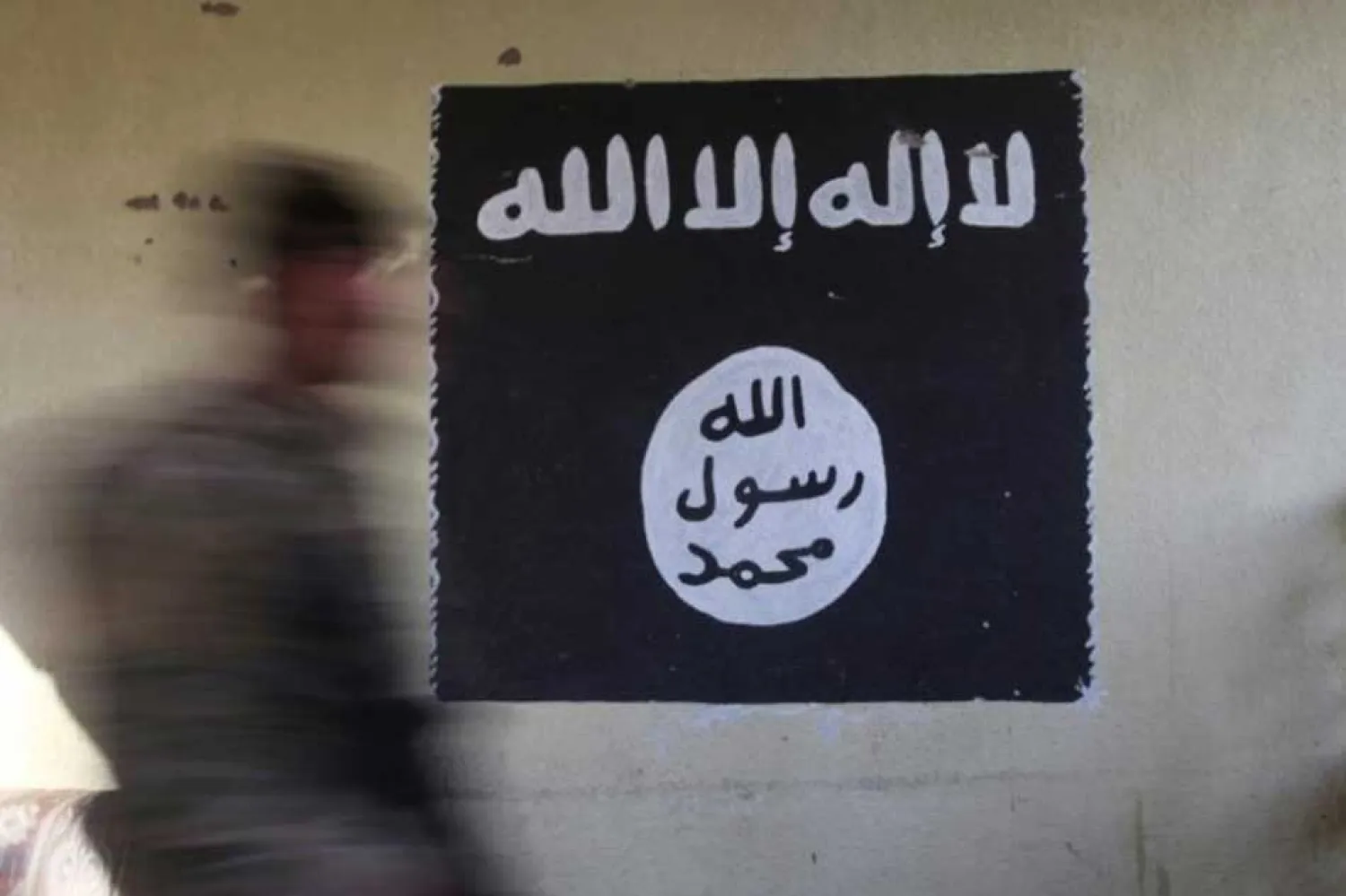
A member of the Iraqi rapid response forces walks past a wall painted with the black flag commonly used by ISIS militants, at a hospital damaged by clashes during a battle between Iraqi forces and ISIS militants in the Wahda district of eastern Mosul, Iraq, January 8, 2017. REUTERS/Alaa Al-Marjani/File Photo
TT

Iraq: At Least 10 Killed in Two ISIS Attacks

A member of the Iraqi rapid response forces walks past a wall painted with the black flag commonly used by ISIS militants, at a hospital damaged by clashes during a battle between Iraqi forces and ISIS militants in the Wahda district of eastern Mosul, Iraq, January 8, 2017. REUTERS/Alaa Al-Marjani/File Photo

ISIS militants have killed late on Sunday at least 10 people in two separate attacks in Iraq’s northern provinces of Mosul and Kirkuk, police and local officials said.

In a village near the Sunni town of Shirqat, south of Mosul, extremists stormed the house of a tribal sheikh who led a Sunni group that had fought against the ISIS terrorist group, killing him, his son and two guests, police sources said.

ISIS, which had seized control of much of northern Iraq in 2014, lost Shirqat to US-backed Iraqi security forces supported by Sunni tribal fighters in 2016. However, a small number of militants are still operating in the area and are capable of launching sporadic attacks, security officials said.

In the town of Nijana, south of the oil city of Kirkuk, five members of one family were killed by militants who set up a fake security checkpoint on a main road. The family were Shi’ite Turkmens - a father who is an Iraqi soldier, his pregnant wife, his two children and his brother-in-law.

Local police said their five charred corpses were found inside the burned-out car after the militants fled the scene. Two police officers accused ISIS militants of carrying out the attack.

Another passer-by was also killed inside his car during the attack, said police sources.

A total of 91 Iraqi civilians were killed and 208 others were injured in acts of terrorism, violence and armed conflict in February, according to the monthly report issued by the United Nations Assistance Mission for Iraq (UNAMI).

Baghdad was the worst affected Governorate, while Anbar Governorate ranked second.

Iraqi security forces launched an operation last month to consolidate control of the Hamrin mountain range near Kirkuk.

Security officials say two groups of insurgents are known to be operating in the area - one formed by remnants of ISIS, the other, known as the “White Banners”, new and little known.

Iraq declared victory in December over ISIS, which had seized control of nearly a third of the country in 2014. However, the group continues to carry out attacks and bombings in Baghdad and other parts of Iraq.

Iraqi security officials have warned that they expect a new phase of guerrilla warfare from remaining ISIS adherents.

Iraqi Prime Minister Haider al-Abadi said on Saturday that his government is seeking weapons to defeat the remnants of ISIS in Iraq.

Abadi made the remarks during his speech at the opening ceremony of the sixth edition of International Defense Exhibition held in the capital Baghdad.

“Terrorism has ended militarily, and we must eliminate its ideologies and its sectarian methodology. The weapons that we need now is not for war, but for peace and reconstruction,” Abadi said.

He also vowed to support Iraqi security forces so they can continue their mission to uproot the sleeper cells of ISIS terrorists.

“Iraq has special needs for its security, and we have expertise in combating terrorism and eliminating it,” the Iraqi prime minister noted.



Lebanon Building Collapse Toll Rises to 9

Rescue workers and residents search for survivors in the rubble of a building that collapsed in the northern city of Tripoli, Lebanon, Sunday, Feb. 8, 2026. (AP Photo)
TT

Lebanon Building Collapse Toll Rises to 9

Rescue workers and residents search for survivors in the rubble of a building that collapsed in the northern city of Tripoli, Lebanon, Sunday, Feb. 8, 2026. (AP Photo)

The death toll in a building collapse in the northern Lebanese city of Tripoli on Sunday climbed to nine, a civil defense official said Sunday-- the second such incident in weeks.

The state-run National News Agency (NNA) reported "the collapse of an old building" in Tripoli's Bab al-Tabbaneh neighborhood, the poorest in the impoverished city. Rescuers were still searching for survivors.

Security personnel evacuated adjacent buildings fearing further collapses, it added.

An AFP correspondent saw teams of rescue workers toiling into the night on the rubble of the collapsed structure, as ambulances stood by.

Civil defense director general Imad Khreish told local media that nine people had been killed but that six others who were rescued were taken to hospital.

The building consisted of two blocks, each containing six apartments, he added. Residents estimated some 22 people were inside at the time of the collapse, he said.

Local activist Jumana al-Shahal told AFP at the site that the incident was "a testament to the accumulated neglect of this forgotten city".

Mayor Abdel Hamid Karimeh told journalists "we declare Tripoli a disaster-stricken city" due to unsafe buildings.

"Thousands of our people in Tripoli are threatened due to years of neglect," he said. "The situation is beyond the capabilities of the Tripoli municipality."

- 'Years of neglect' -

This latest disaster came after another deadly building collapse in Tripoli late last month.

After Sunday's incident, the NNA reported that angry young men took to the streets on motorbikes, some heading "to the offices of some politicians" and vandalizing metal barriers there.

In January, the head of the higher relief authority, Bassam Nablusi, citing Tripoli municipality statistics, said 105 buildings required "immediate warning notices to their residents to evacuate".

Local media reported the structure that collapsed on Sunday was not included in a list of buildings at imminent risk.

Lebanon is dotted with derelict buildings, and many inhabited structures are in an advanced state of disrepair.

Many buildings were built illegally, especially during the 1975-1990 civil war, while some owners have added new floors to existing apartment blocks without permits.

Prime Minister Nawaf Salam said the government was ready to provide housing allowances to residents of buildings requiring evacuation.

In a statement, he decried a "humanitarian catastrophe" that he said was caused by "long years of accumulated neglect".

His office said he had summoned the justice and interior ministers for an emergency meeting.

- Investigation ordered -

Justice Minister Adel Nassar asked the public prosecutor in the north to open an immediate investigation into the incident, the NNA said, reporting that procedures had begun.

A recent report by research and design firm Public Works Studio said several buildings fully or partially collapsed in Tripoli in January.

It cited causes including unplanned urban expansion and a lack of proper construction oversight.

In 2024, rights group Amnesty International said "thousands of people" were still living in unsafe buildings in Tripoli more than a year after a major earthquake centered on Türkiye and neighboring Syria had had weakened the structures.

Even before the February 2023 quake, Tripoli residents "had raised the alarm about their dire housing situation, caused by decades of neglect and contractors' lack of compliance with safety regulations", it said.

The situation was compounded by Lebanon's years-long economic crisis meaning residents could not afford repairs or alternative housing, it added, urging authorities to "urgently... assess the safety of buildings across the country".


Salam Concludes Visit to South Lebanon: Region Must Return to State Authority

Lebanon's Prime Minister Nawaf Salam (L) holds bouquets of flower as he stands next to the mayor of the heavily-damaged southern village of Kfar Shouba, near the border with Israel, during his visit on February 8, 2026. (AFP)
TT

Salam Concludes Visit to South Lebanon: Region Must Return to State Authority

Lebanon's Prime Minister Nawaf Salam (L) holds bouquets of flower as he stands next to the mayor of the heavily-damaged southern village of Kfar Shouba, near the border with Israel, during his visit on February 8, 2026. (AFP)

Lebanese Prime Minister Nawaf Salam vowed on Sunday to work on rebuilding infrastructure in southern villages that were destroyed by Israel during its last war with Hezbollah.

On the second day of a tour of the South, he declared: “We want the region to return to the authority of the state.”

He was warmly received by the locals as he toured a number of border villages that were destroyed by Israel during the conflict. His visit included Kfar Kila, Marjeyoun, Kfar Shouba and Kfar Hamam. He kicked off his tour on Saturday by visiting Tyre and Bint Jbeil.

The visit went above the differences between the government and Hezbollah, which has long held sway over the South. Throughout the tour, Salam was greeted by representatives of the “Shiite duo” of Hezbollah and its ally the Amal movement, as well as MPs from the Change bloc and others opposed to Hezbollah.

In Kfar Kila, the locals raised a banner in welcome of the PM, also offering him flowers and an olive branch. The town was the worst hit during the war with Israel, which destroyed nearly 90 percent of its buildings and its forces regularly carrying out incursions there.

Salam said the town was “suffering more than others because of the daily violations and its close proximity to the border.”

He added that its residents cannot return to their homes without the reconstruction of its infrastructure, which should kick off “within the coming weeks.”

“Our visit underlines that the state and all of its agencies stand by the ruined border villages,” he stressed.

“The government will continue to make Israel commit” to the ceasefire agreement, he vowed. “This does not mean that we will wait until its full withdrawal from occupied areas before working on rehabilitating infrastructure.”

Amal MP Ali Hassan Khalil noted that the people cannot return to their town because it has been razed to the ground by Israel and is still coming under its attacks.

In Marjeyoun, Salam said the “state has long been absent from the South. Today, however, the army has been deployed and we want it to remain so that it can carry out its duties.”

“The state is not limited to the army, but includes laws, institutions, social welfare and services,” he went on to say.

Reconstruction in Marjeyoun will cover roads and electricity and water infrastructure. The process will take months, he revealed, adding: “The state is serious about restoring its authority.”

“We want this region to return to the fold of the state.”

MP Elias Jarade said the government “must regain the trust of the southerners. This begins with the state embracing and defending its people,” and protecting Lebanon’s sovereignty.

MP Firas Hamdan said the PM’s visit reflects his keenness on relations with the South.

Ali Murad, a candidate who ran against Hezbollah and Amal in Marjeyoun, said the warm welcome accorded to Salam demonstrates that the “state needs the South as much as the people of the South need the state.”

“We will always count on the state,” he vowed.

Hezbollah MP Hussein Jishi welcomed Salam’s visit, hoping “it would bolster the southerners’ trust in the state.”

Kataeb leader MP Sami Gemayel remarked that the warm welcome accorded to the PM proves that the people of the South “want the state and its sovereignty. They want legitimate institutions that impose their authority throughout Lebanon, without exception.”


Three Dead After Flooding Hits Northwest Syria

A child watches as civil defense teams open flooded roads in Idlib. (SANA)
TT

Three Dead After Flooding Hits Northwest Syria

A child watches as civil defense teams open flooded roads in Idlib. (SANA)

Two children and a Syrian Red Crescent volunteer have died as a result of flooding in the country's northwest, state media said on Sunday.

The heavy rains in Syria's Idlib region and the coastal province of Latakia have also wreaked havoc in displacement camps, according to authorities, who have launched rescue operations and set up shelters in the areas.

State news agency SANA reported "the death of a Syrian Arab Red Crescent volunteer and the injury of four others as they carried out their humanitarian duties" in Latakia province.

The Syrian Red Crescent said in a statement that the "a mission vehicle veered into a valley", killing a female volunteer and injuring four others, as they went to rescue people stranded by flash floods.

"A fifth volunteer was injured while attempting to rescue a child trapped by the floodwaters," it added.

SANA said two children died on Saturday "due to heavy flooding that swept through the Ain Issa area" in the north of Latakia province.

Authorities said Sunday they were working to clear roads in displacement camps in flooded parts of Idlib province.

The emergencies and disaster management ministry said 14 displacement camps in part of Idlib province were affected, with tents swamped, belongings swept away and around 300 families directly impacted.

Around seven million people remain internally displaced in Syria, according to the United Nations refugee agency, some 1.4 million of them living in camps and sites in the country's northwest and northeast.

The December 2024 ouster of longtime ruler Bashar al-Assad after more than 13 years of civil war revived hopes for many to return home, but the destruction of housing and a lack of basic infrastructure in heavily damaged areas has been a major barrier.