A Year after Mosul Liberation, Misery Still Looms over Iraq’s Second Largest City

The base of Mosul's famous destroyed al-Hadba leaning minaret is pictured on July 9, 2018. (AFP)
TT

A Year after Mosul Liberation, Misery Still Looms over Iraq’s Second Largest City

The base of Mosul's famous destroyed al-Hadba leaning minaret is pictured on July 9, 2018. (AFP)

The one-year anniversary of the liberation of Iraq’s second largest city from ISIS fell on July 10 at a time when politicians have warned that the factors that led to the Ninveh province’s fall in the terrorist group’s hands still persist to this day.

Prime Minister Haidar al-Abadi has vowed to pursue the remaining ISIS cells in the country and to set plans and strategies for the rebuilding process.

He said in a statement: “The liberation of Mosul has paved the way for the return of its residents back to their homes to resume their normal lives.”

“Iraq will succeed in eliminating the remnants of the criminal gangs and cells … to permanently rid the country of their evil,” he added.

On reconstruction, he said that the first steps of rebuilding liberated areas has started.

Former Nineveh governor Atheel al-Nujaifi told Asharq Al-Awsat: “The time is still not right for the residents of Mosul to frankly discuss why their city fell in the hands of ISIS and why it was liberated in such a way.”

Nineveh fell to ISIS during his tenure as governor. He had made a lengthy testimony before a parliamentary investigation committee addressing the issue.

The results of this probe have not been revealed yet due to political pressure, he revealed.

“The Iraqis have not yet addressed the post-liberation phase. I believe they have neglected to assess the previous phase and the need to prevent its recurrence. They have once again returned to the same cycle of political disputes, leaving Iraq’s strategic policy to foreign players,” Nujaifi lamented.

The authorities must instead “invest in the strengthening national sentiment that was created after ISIS’ defeat and unite the Iraqis against a common enemy,” he added.

“A new political reality in Iraq needs to be established,” he demanded.

Nineveh MP Sheikh Ahmed Madloul al-Jarba told Asharq Al-Awsat that a year after its liberation, Mosul is still facing major challenges.

Significantly, the negatives that existed before the ISIS takeover are reemerging at the hands of some security and military agencies, he warned.

He accused them of extorting the people and releasing several suspected ISIS members that were detained by civilians.

“This is very frustrating to the people,” he said.

Moreover, Jarba attributed the fall of Mosul, Salaheddine, al-Anbar and parts of Kirkuk and Diyala in ISIS hands to Iraq’s open borders with Syria.

“This dangerous issue has yet to be addressed,” he stated. “The borders are still open and the terrorists are crossing them with great ease.”

The lawmaker called on the Iraqi government to tackle this situation and send military reinforcements to control the border to avoid the recurrence of the tragedy.

Military expert Diya al-Wakil told Asharq Al-Awsat that ISIS is still active in Iraq’s desert regions and areas its believes are vital to it, such as regions between central and northwestern Iraq, specifically the Baghdad-Diyala-Kirkuk road that connects several provinces together.

A year after the liberation, much of Mosul lies in ruins and many of its residents see little reason to celebrate.

"We were liberated but what have we come back to? Our homes have been destroyed," said mother of seven Umm Mohammed, according to an Agence France Presse report.

The fiercest fighting against ISIS took place around western Mosul's Old City, where Umm Mohammed's home near the Great Mosque of Al-Nuri has been reduced to rubble.

The mosque, once a famous landmark with its leaning minaret, is where ISIS leader Abu Bakr al-Baghdadi made his only public appearance. The terrorists used explosives to blow up the famed 12th century mosque as the army closed in on them last summer.

Like many mosques, houses, schools and other buildings across Mosul, all that is left of it is a pile of rubble.

Although life has gone back to normal in some parts of eastern Mosul, the massive clean-up of the western part of the city only began a few weeks ago.

In a report released this week, the Norwegian Refugee Council bemoaned conditions in the city.

"More than 380,000 people are still displaced in and around Mosul as the city lies in ruins with a staggering eight million tons of debris," it said.

No official festivities were planned on Tuesday to mark the first anniversary of Mosul's liberation.

Residents said they had little to celebrate.

"The huge destruction has emptied our joy of any meaning," said Abu Ghassoon, a 44-year-old unemployed man who lives in east Mosul after his home in the west was destroyed.

Ghadir Ibrahim Fattah, 35, agreed.

"We had expected reconstruction to begin immediately after (the terrorists were ousted) but nothing happened, and this has demoralized the people," he said.

Residents accused the central government of dragging its feet, while the NRC has said the international community "is not doing enough".

The Norwegian aid group estimates that $874 million (750 million euros) is needed to repair basic infrastructure in Mosul.

But destruction is not the only hardship facing the people of Mosul.

Every Friday for the past year, women dressed in black have gathered in the city's Al-Minassa Square, holding up pictures of missing husbands and sons as they seek information on their fates.

Like the mothers of Argentina's Plaza de Mayo who staged similar protests to seek information on their children who vanished during the 1976-1983 military junta, the women of Mosul have continued to demand answers.

"The government is not telling us anything," said Umm Qais, a 40-year-old whose son is missing.

"What was hailed by the Iraqi authorities and the international community as a victory a year ago has not translated to relief from abject misery for many Iraqis from Mosul," said its Iraq Country Director Wolfgang Gressmann.

Ghanem Hamid, a provincial official, told AFP the "central government has neglected the province" of Nineveh, of which Mosul is the capital.

"They have not offered us anything worth mentioning," he said.


What to Know about China's Drills around Taiwan

A rocket launches from Pingtan island in eastern China's Fujian province, the closest point to Taiwan. ADEK BERRY / AFP
TT

What to Know about China's Drills around Taiwan

A rocket launches from Pingtan island in eastern China's Fujian province, the closest point to Taiwan. ADEK BERRY / AFP

China's military drills around Taiwan entered their second day on Tuesday, the sixth major maneuvers Beijing has held near the self-ruled island in recent years.

AFP breaks down what we know about the drills:

What are the drills about?

The ultimate cause is China's claim that Taiwan is part of its territory, an assertion Taipei rejects.

The two have been governed separately since the end of a civil war in 1949 saw Communist fighters take over most of China and their Nationalist enemies flee to Taiwan.

Beijing has refused to rule out using force to achieve its goal of "reunification" with the island of 23 million people.

It opposes countries having official ties with Taiwan and denounces any calls for independence.

China vowed "forceful measures" after Taipei said this month that its main security backer, the United States, had approved an $11 billion arms sale to the island.

After the drills began on Monday, Beijing warned "external forces" against arming the island, but did not name Washington.

China also recently rebuked Japanese Prime Minister Sanae Takaichi after she said the use of force against Taiwan could warrant a military response from Tokyo.

What do the drills look like?

Chinese authorities have published a map showing several large zones encircling Taiwan where the operations are taking place.

Code-named "Justice Mission 2025", they use live ammunition and involve army, navy, air and rocket forces.

They simulate a blockade of key Taiwanese ports including Keelung in the north and Kaohsiung in the south, according to a Chinese military spokesperson and state media.

They also focus on combat readiness patrols on sea and in the air, seizing "comprehensive" control over adversaries, and deterring aggression beyond the Taiwanese island chain.

China says it has deployed destroyers, frigates, fighters and bombers to simulate strikes and assaults on maritime targets.

Taipei detected 130 Chinese military aircraft near the island in the 24 hours to 6:00 am on Tuesday (2200 GMT on Monday), close to the record 153 it logged in October 2024.

It also detected 14 Chinese navy ships and eight unspecified government vessels over the same period.

AFP journalists stationed at China's closest point to Taiwan saw at least 10 rockets blast into the air on Tuesday morning.

How has Taiwan responded?

Taipei has condemned China's "disregard for international norms and the use of military intimidation".

Its military said it has deployed "appropriate forces" and "carried out a rapid response exercise".

President Lai Ching-te said China's drills were "absolutely not the actions a responsible major power should take".

But he said Taipei would "act responsibly, without escalating the conflict or provoking disputes".

US President Donald Trump has said he is not concerned about the drills.

How common are the drills?

This is China's sixth major round of maneuvers since 2022 when a visit to Taiwan by then-US House Speaker Nancy Pelosi enraged Beijing.

Such activities were rare before that but China and Taiwan have come close to war over the years, notably in 1958.

China last held large-scale live-fire drills in April, surprise maneuvers that Taipei condemned.

This time, Beijing is emphasizing "keeping foreign forces that might intervene at a distance from Taiwan", said Chieh Chung, a military expert at the island's Tamkang University.

What are analysts saying?

"China's main message is a warning to the United States and Japan not to attempt to intervene if the CCP (Chinese Communist Party) uses force against Taiwan," Chieh told AFP.

But the time frame signaled by Beijing "suggests a limited range of activities", said Ja Ian Chong, an associate professor at the National University of Singapore.

Falling support for China-friendly parties in Taiwan and Beijing's own army purges and slowing economy may also have motivated the drills, he said.

But the goal was still "to cow Taiwan and any others who might support them by demonstrating that Beijing's efforts to control Taiwan are unstoppable".


Why Do the Houthis in Yemen View Israel's Recognition of Somaliland as a Direct Threat?

People gather in front of a digital billboard featuring Houthi leader Abdulmalik al-Houthi, in Sanaa, Yemen, 28 December 2025. (EPA)
TT

Why Do the Houthis in Yemen View Israel's Recognition of Somaliland as a Direct Threat?

People gather in front of a digital billboard featuring Houthi leader Abdulmalik al-Houthi, in Sanaa, Yemen, 28 December 2025. (EPA)

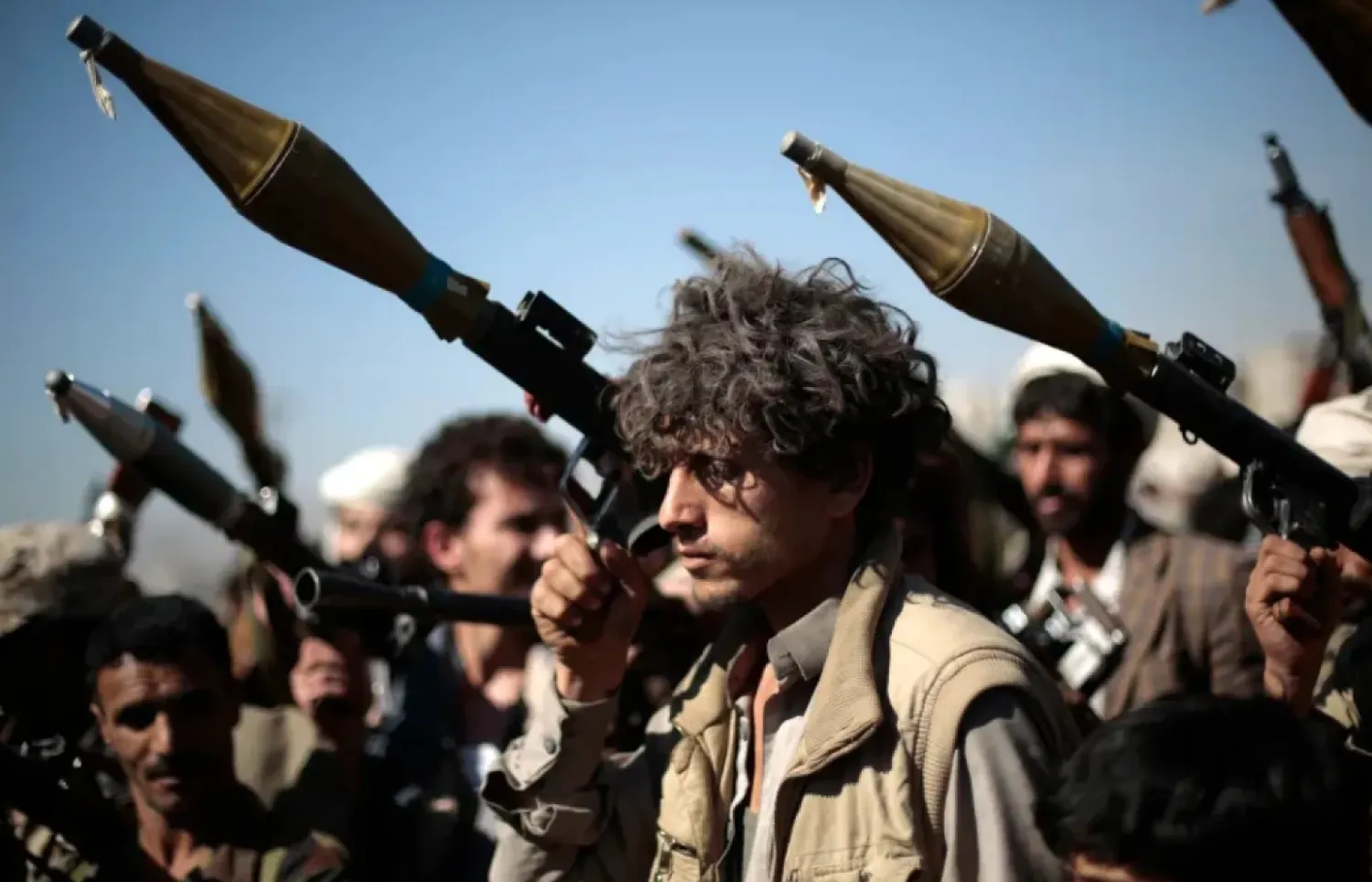
The Iran-backed Houthi militias in Yemen view Israel's recognition of Somaliland as direct threat, warning that any Israeli presence in the separatist region will be considered a military target.

Somaliland declared independence from Somalia in 1991. The region has operated autonomously since then and possesses its own currency, army and police force.

Diplomatic isolation has been the norm -- until Israel's move to recognize it as a sovereign nation, which has been criticized by the African Union, Egypt, the six-nation Gulf Cooperation Council and the Saudi-based Organization of Islamic Cooperation.

The European Union has insisted Somalia's sovereignty should be respected.

Houthi leader Abdelmalik al-Houthi said Israel's move was an "act of aggression on Somalia, Yemen and the security of the region."

In a statement, he added that Tel Aviv was seeking to establish "a military and intelligence foothold" in one of the world's most important waterways. He also warned that any Israeli presence in the region will be deemed a "legitimate target" for the Houthis.

Somaliland is strategically located at the entrance of the Gulf of Aden and close to the Mandeb Strait. It is one of the world's busiest waterways.

Analysts said that Israel's recognition gives it a direct outlet to the Red Sea, boosts its ability to monitor waterways and perhaps allows it to carry out military or intelligence strikes against its rivals, notably the Houthis in Yemen.

Since October 7, 2023, the Houthis had launched rocket and drone attacks against Israel and targeted ships affiliated with it in marine shipping lanes. Israel retaliated by carrying out attacks against Houthi targets in Yemen. The attacks by both sides ended with the announcement of the ceasefire in Gaza.

Political sources said the Houthis are alarmed at the prospect of Israel having a presence in Somaliland. In their view, this will lead to them being surrounded from the southwest. They also fear that Somaliland will be used as a platform for Israeli attacks against them in Yemen.


AI Tsunami Plunges Millions into Unemployment

“Artificial intelligence in the physical world” is displayed on a screen during a conference showcasing advances in autonomous driving technology in California on Dec. 11, 2025. (Reuters)
TT

AI Tsunami Plunges Millions into Unemployment

“Artificial intelligence in the physical world” is displayed on a screen during a conference showcasing advances in autonomous driving technology in California on Dec. 11, 2025. (Reuters)

The year 2025 brought no respite for Lebanese language editor and proofreader Hamida Al-Shaker. Before the year had run its course, her decades-long professional journey was abruptly cut short.

Nearly 60, Al-Shaker had never used artificial intelligence tools or held a conversation with ChatGPT, as millions now do. She was unaware that the technologies rapidly spreading across mobile phones and computers were already doing her job, faster and more efficiently than any human could.

That quiet technological advance proved devastating. A sweeping transformation in the labor market became a tsunami, pushing Al-Shaker and millions of workers worldwide toward unemployment, sparing no sector and few age groups. The impact has been particularly harsh on employees over 50 who failed to keep pace with the accelerating speed of technological change.

According to the website allaboutai, the adoption of artificial intelligence has already contributed to the loss of around 14 million jobs globally. And the wave is far from over. As many as 92 million jobs could disappear worldwide over the next five years.

At its core, artificial intelligence enables computer systems to mimic human thinking, make decisions, and execute complex tasks, from planning to practical application, particularly in editorial and knowledge-based work.

Shock and an uncertain future

Al-Shaker was unaware of this reality, a fact that led to a shock, followed by another, during 2025, which saw the widest spread yet of AI applications. The first shock came when she received a call from the human resources department informing her that her salary would be cut by 50 percent due to “financial difficulties facing the company.” Less than five months later, a second call informed her that she was being laid off, without explanation.

According to Al-Shaker, citing her department head, she was not alone. Half of the team lost their jobs due to the impact of artificial intelligence on client contracts, as companies increasingly turned to AI to draft their news, statements, and reports, either for free or at minimal monthly subscription costs, compared with the sums they previously paid to public relations and advertising agencies.

In this context, economic analyses published by Reuters indicate that annual subscriptions to advanced AI tools, even at the enterprise level, often do not exceed the cost of paying a single employee’s salary for a limited number of months. From a purely managerial perspective, this makes such decisions easy to justify financially.

As a result, Al-Shaker and her colleagues became just another figure in a cold equation. Companies boost profits and cut production costs, while growing numbers of workers are pushed out of the labor market, not because they lack competence, but because algorithms are cheaper than people.

Most affected sectors

Al-Shaker’s story is not an isolated case. It is part of a growing global phenomenon affecting workers across multiple sectors. Specialized reports indicate that jobs based on routine tasks or repetitive data processing are most vulnerable, as automation and generative AI tools expand. Among the most affected sectors are:

Customer service and call centers, where intelligent chat systems and text and voice analysis tools can now handle user inquiries with high efficiency, according to TechRT.

Data and administrative support tasks, such as data entry, file classification, and secretarial work, are being replaced by advanced automation tools, according to Complete AI Training.

Retail and supply chains, where self-checkout systems, smart warehouses, and inventory automation have reduced the need for cashiers and traditional warehouse workers, according to Pleeq Software and ninjatech.blog.

Manufacturing and production, where the spread of robots and automated control systems has intensified the impact of AI on manual labor jobs, according to All About AI.

Accounting and financial operations, where demand for basic roles has declined due to reliance on intelligent financial software capable of handling bookkeeping and routine processes, according to Complete AI Training.

Content creation and media, which have not been spared, are now threatened as AI is capable of writing, summarizing, and rewriting content, posing a challenge to a range of basic writing tasks.

Many workers who lost their jobs do not realize that they are victims of the so-called Fourth Industrial Revolution, which Klaus Schwab, founder and executive chairman of the World Economic Forum at the time, warned about years earlier.

Speaking at the World Government Summit in Dubai in 2016, Schwab said the world was “on the brink of a technological revolution that will fundamentally alter the way we live, work, and relate to one another.”

He added that the scale, scope, and complexity of the changes would be unprecedented, and that while their exact shape remained unclear, the response would have to be integrated and comprehensive across the public and private sectors, academia, and civil society.

Market demands and human skills

Much of what Schwab predicted has now come to pass, particularly in recent months, as companies worldwide accelerate their adoption of AI tools. Experience alone is no longer enough to remain competitive in the labor market. Traditional jobs are changing rapidly, and the required human skills have become more specialized and complex, with greater emphasis on working alongside intelligent systems and turning information into added value.

Professionals who understand how to integrate AI tools into their daily work without sacrificing quality or analytical depth are increasingly in demand, according to Maziad Hijaz‏, Editor-in-Chief at Hewar Group‏ in Riyadh.

Hijaz told Asharq Al-Awsat that artificial intelligence has become an essential part of daily work in terms of speed and volume, while review, editing, and analysis remain entirely human responsibilities to ensure quality.

He added that the sector now requires new skills, and those who fail to adapt will be left behind. These include utilizing AI tools for writing and analysis, developing data literacy, employing predictive analysis, and transforming information into compelling narratives. Combining human skills with AI tools is what ensures excellence.

Firas Barakat, a strategic communications expert in Saudi Arabia, said AI represents a pivotal turning point in labor markets, enhancing efficiency while reshaping the nature of jobs and required skills.

Speaking to Asharq Al-Awsat, Barakat said AI has undoubtedly caused the loss of traditional roles involving routine tasks, but at the same time, it is a major engine for generating new jobs in advanced fields such as data analysis, cybersecurity, smart systems management, and digital solutions engineering, roles that did not exist just a few years ago.

History repeats itself

Technology expert Hassan Yahya, based in the United States, offered a historical perspective. He said this is not the first time the world has been stunned by technological advances, noting that similar fears over job losses have accompanied every major innovation.

He pointed to 1959, when General Motors introduced the industrial robot Unimate, triggering widespread warnings about threats to employment.

Yahya said that AI is already affecting millions of jobs, with projections from the World Economic Forum indicating that 92 million jobs will disappear over the next five years. However, more than 170 million new jobs are expected to be created, meaning a fundamental transformation of work rather than mass unemployment.

He added that eliminating jobs without replacing them does not serve companies or economies, making the creation of new roles inevitable. However, this requires learning how to work with AI, as ignoring the shift could leave many people outside a rapidly changing labor market.

Cost-cutting and profit maximization

The experiences of employees cannot be separated from a recurring economic equation that is evident in thousands of companies worldwide. Instead of retaining experienced staff with associated salaries, insurance, and end-of-service benefits, many firms are opting to replace them with AI.

A World Economic Forum report found that 41 percent of global companies plan to reduce their workforce by 2030 due to increased reliance on AI and automation.

Hijaz said AI adoption has also reshaped relationships with clients, accelerating work and significantly improving quality. He cited a Deloitte study showing that integrating AI into public relations reduced content production time by 25 to 35 percent while improving accuracy.

A market worth billions

The gains are split between business owners and AI companies, whose financial returns contrast sharply with the reality faced by thousands of displaced workers. In mid-2025, a Reuters report stated that OpenAI, the developer of ChatGPT, had reached annual revenues of around $10 billion by the end of the first half of the year, on track to exceed $12.7 billion by year's end, driven by surging demand for its services.

This growth is not limited to OpenAI. A Forbes report showed that other global technology companies with AI divisions are generating billions of dollars in additional annual revenue, making AI one of the most important profit sources for major tech firms, even as some lay off staff to improve cost efficiency.

Key players

The main players in the sector include OpenAI, best known for ChatGPT and a leader in large language models, with a strategic partnership with Microsoft.

Google DeepMind follows, having developed powerful models such as Gemini and AlphaGo, and leading in scientific, medical, and research-oriented AI.

Microsoft itself has become a global force in AI, investing billions in OpenAI and integrating AI across Windows, Office through Copilot, and Azure AI.

NVIDIA focuses on developing the chips and processors that power AI, while Meta offers open-source models such as LLaMA. Amazon Web Services leads in cloud-based AI, and Anthropic has emerged as a strong competitor in the field of language models.

The global AI market was estimated at around $747.9 billion in 2025 and is projected to grow to $2.74 trillion by 2032, according to AffMaven.

Concerns over consequences

The stark contrast between multibillion-dollar AI revenues and the growing risk facing millions of workers raises a central ethical and economic question. Why do companies benefit from technology to cut costs and boost profits while often postponing or ignoring their social responsibility toward displaced employees?

Economists warn that such savings are frequently achieved without genuine retraining efforts or alternative job creation, deepening global unemployment rather than addressing it.

Islam Al-Shafii, an economist based in New York, cited remarks by US Federal Reserve Chair Jerome Powell on Dec. 20, warning of waves of layoffs linked to AI or companies halting job postings for the same reason.

Al-Shafii said the current fear of AI remains precautionary, as it has not yet fully replaced humans. The real risk, he said, is that work previously requiring five employees can now be done by one person using AI.

He added that while some professions remain relatively safe for now, such as skilled trades, concerns persist over safety and decision-making, with international organizations expressing reservations.

Breaking monopolies

Yahya argued that confronting these changes requires breaking three major monopolies: the monopoly of university degrees in hiring, as companies like Google and Dell focus on skills rather than diplomas; the technological monopoly, as AI empowers individuals to execute ideas without large teams; and the language monopoly, as AI allows interaction in native languages, opening the digital economy to millions.

The digital economy is expected to exceed $24 trillion by 2025, accounting for approximately 21 percent of the global economy and growing faster than traditional sectors.

Capitalism under strain

Al-Shafii warned that advanced capitalist societies, which rely heavily on tax revenues from employees, could face systemic strain if jobs are replaced by AI. Without a sufficient tax base, governments may struggle to fund essential services, which can potentially lead to social instability and collapse.

He noted that business owners who once built factories in East Asia for cheap labor are now returning home to rely on robots for production.

United Nations concern

The issue has also reached the United Nations, particularly at its headquarters in New York. Al-Shafii stated that there is a deep concern over AI, but institutions often focus on gains while overlooking the associated losses.

He noted that AI supports many sustainable development goals and cybersecurity efforts, but its negative aspects, including cyber fraud and surveillance risks, have yet to be fully addressed. UN Secretary-General Antonio Guterres has repeatedly warned against militarizing AI and entrusting humanity’s future to algorithms.

Threat or opportunity?

Concerns over AI extend beyond job losses to issues of transparency and information security. Hijaz said AI requires greater responsibility to ensure accuracy and disclosure.

Asked whether AI is a threat or an opportunity, he said it is an inevitable development that must be harnessed. Like the computer and the internet before it, initial fears will likely give way to empowerment.

He added that creativity remains a uniquely human value that AI cannot replace, and that technology enhances rather than eliminates it.

Not a replacement

Translation professor Mohammed Khair Nadman told Asharq Al-Awsat that AI tools now save around 60 percent of time in translation and writing, supporting but not fully replacing human work. He warned that AI can still make serious errors, making human oversight essential.

A final attempt

Al-Shaker, living in crisis-hit Lebanon without a private sector pension system, believed her regional company job was secure. After losing it, she tried to catch up, creating a LinkedIn account, registering on job platforms, taking free online courses, and sending dozens of resumes, often receiving automated or no responses.

Her story reflects the dilemma of an entire generation pushed out of the market, not due to lack of competence, but because the rules changed abruptly.

She ended with a bitter question: Nearly two centuries after the Industrial Revolution sparked the call, “Workers of the world, unite,” will there now be a call saying, “Employees of the world, unite?”