Makkah Governor Hands Over Holy Kaaba’s New ‘Kiswah’ to Senior Keeperhttps://english.aawsat.com/home/article/1361871/makkah-governor-hands-over-holy-kaaba%E2%80%99s-new-%E2%80%98kiswah%E2%80%99-senior-keeper
Makkah Governor Hands Over Holy Kaaba’s New ‘Kiswah’ to Senior Keeper
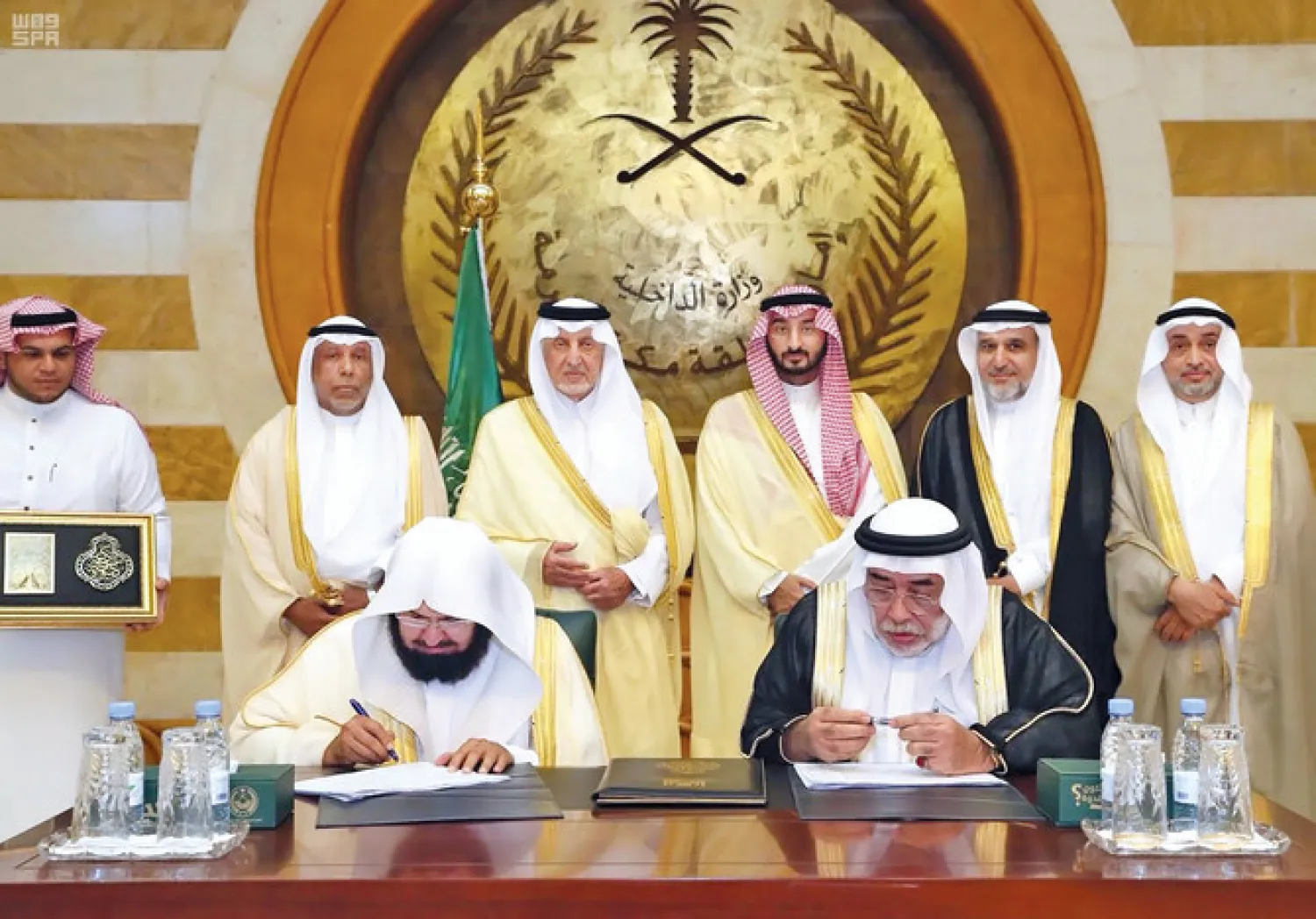
Makkah Gov. Prince Khaled Al-Faisal hands over the new Kaaba Kiswa to the senior caretaker of the Kaaba, Saleh bin Zain Al-Abidin Al-Shaibi. SPA
Makkah, Medina- Asharq Al Awsat
TT
TT
Makkah Governor Hands Over Holy Kaaba’s New ‘Kiswah’ to Senior Keeper
Makkah Gov. Prince Khaled Al-Faisal hands over the new Kaaba Kiswa to the senior caretaker of the Kaaba, Saleh bin Zain Al-Abidin Al-Shaibi. SPA
Saudi Makkah Region Governor Prince Khalid Al-Faisal handed over on Sunday the new Kaaba cover, known as Kiswah in Arabic, to senior keeper of the Holy Kaaba Dr. Saleh Al-Shaibi. The handover is part of an annual custom which takes place on the 9th day of the lunar calendar month of Dhu al-Hijjah each year in Jeddah.
Kiswah is the cloth that covers the Kaaba in Makkah, Saudi Arabia, one of Islam’s holiest sites. It is draped annually, the day pilgrims leave for the plains of Mount Arafat during the Hajj.
Preparing the Kiswa takes several months and needs large amounts of precious metals and pure silk. Around 170 craftsmen are involved in the process, which passes through various stages until the Kiswa is ready. The Kiswa is usually placed on the Kaaba on the day of Arafat.
Makkah Deputy Gov. Prince Abdullah bin Bandar bin Abdul Aziz and Sheikh Abdulrahman Al-Sudais, the chief of the Presidency of the Two Holy Mosques, were also present on the occasion.
For his part, Madinah province governor Prince Faisal bin Salman, also head of the region’s Hajj Committee, stressed the importance of the role played by civil defense taskforces in avoiding dangers and keeping pilgrims out of harm’s way.
Prince Faisal has recently welcomed army commander Lt. Gen. Mazyad bin Sulaiman bin Mazyad Al-Amro, accompanied by a number of Civil Defense officials. The security officials presented a detailed review of the safety plan for Hajj pilgrimage 2018.
Headed by Lt.Gen. Amro, the team inspected Madinah’s civil defense sectors, reasserting that city taskforces are fully ready to implement the general emergency plan for Hajj.
For his part, Saudi Arabia’s Grand Mufti Abdul-Aziz ibn Abdullah Al ash-Sheikh hailed the national guest program of the Custodian of the Two Holy Mosques for Hajj and Umrah carried out by the Ministry of Islamic Affairs, Da'wah and Guidance, which attracts pilgrims every year during the Hajj season.
Scholars, officials and leaders in Islamic countries worldwide perform the Hajj pilgrimage under the guidance and sponsorship of the program.
More than 1.3 million pilgrims are expected to arrive in Saudi Arabia for this year’s Hajj season, and more than 200,000 “domestic pilgrims” have also registered for services including the “low-cost Hajj,” “affordable Hajj,” and “general program,” the Ministry of Hajj and Umrah announced on Sunday.
The number of pilgrims registered for the general program is 160,221, with 37,891 signing up for low-cost Hajj and 10,016 for the affordable Hajj.
Saudi FM Receives French President's Adviser, Holds Phone Call with Portuguese Counterparthttps://english.aawsat.com/gulf/5283127-saudi-fm-receives-french-presidents-adviser-holds-phone-call-portuguese-counterpart
Saudi FM Receives French President's Adviser, Holds Phone Call with Portuguese Counterpart
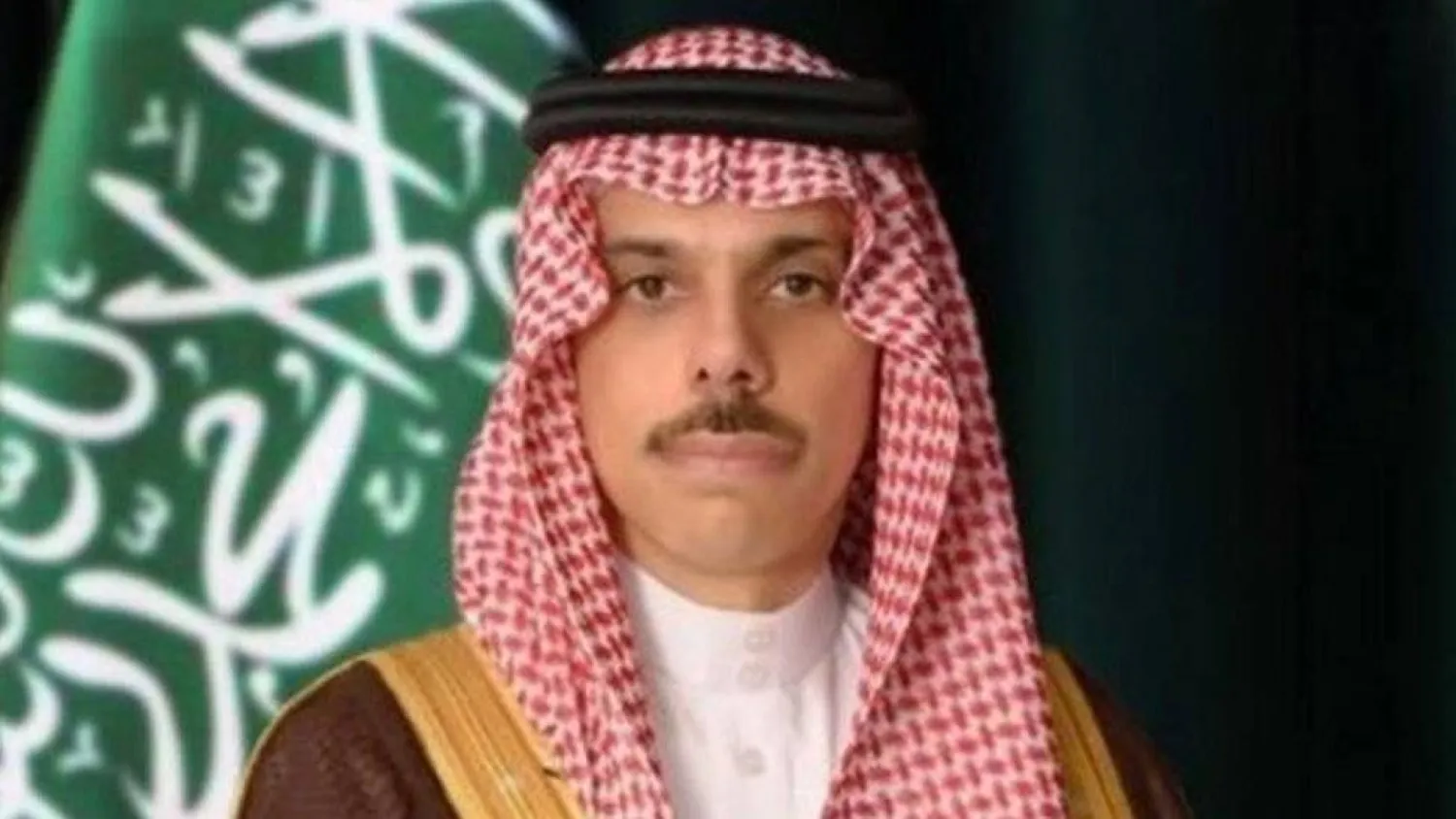
Prince Faisal bin Farhan, Saudi Foreign Minister (Asharq Al-Awsat)
Saudi Minister of Foreign Affairs Prince Faisal bin Farhan bin Abdullah received Dora Cattuti, the Adviser to the French President for the Middle East and North Africa, in Riyadh on Thursday, the Saudi Press Agency reported.
The two officials reviewed bilateral relations between their countries, regional developments, and issues of mutual interest.
The Saudi FM also held a phone call with Portuguese Minister of State and Foreign Affairs Paulo Rangel.
During the call, Prince Faisal congratulated Rangel on Portugal's election as a non-permanent member of the United Nations Security Council for the 2027-2028 term.
He expressed his aspiration to strengthen coordination and cooperation between the two countries in a manner that contributes to regional and international security and stability.
The two ministers also discussed regional developments and issues of mutual interest.
Saudi Crown Prince Unable to Attend G7 Summit Due to Prior Commitmentshttps://english.aawsat.com/gulf/5283122-saudi-crown-prince-unable-attend-g7-summit-due-prior-commitments
Saudi Crown Prince Unable to Attend G7 Summit Due to Prior Commitments
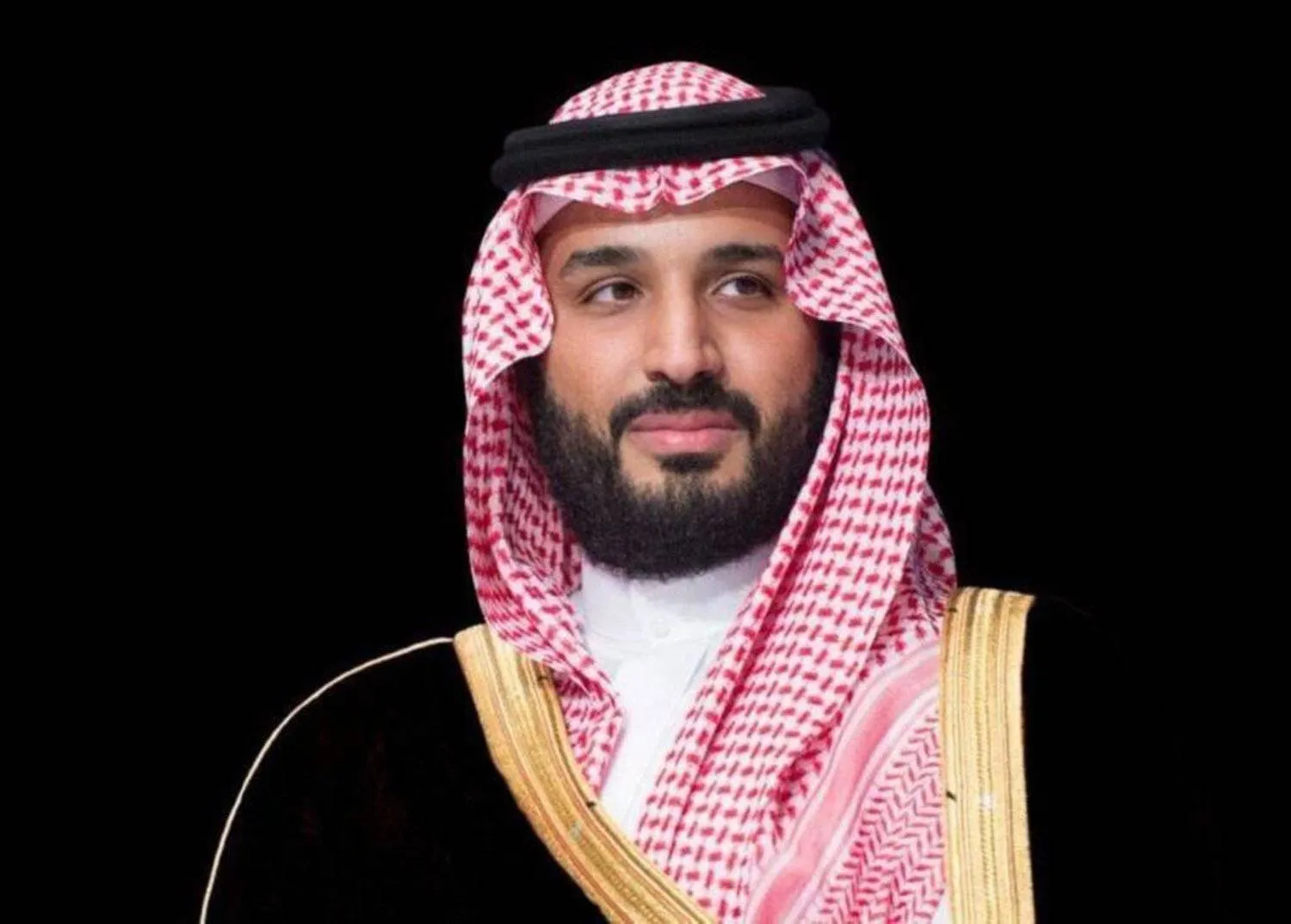
Saudi Crown Prince Mohammed bin Salman (SPA)
Saudi Crown Prince and Prime Minister, Prince Mohammed bin Salman, sent a message on Thursday to France’s President Emmanuel Macron apologizing for his inability to attend the Group of Seven summit gathering citing prior commitments.
In his letter, the Crown Prince thanked Macron for the invitation to participate in the June 15–17 G7 summit in Evian-les-Bains, on the shore of Lake Geneva.
Prince Mohammed said he would be unable to attend because of prior commitments, reaffirming the strength of bilateral strategic relations between the two countries and extending his best wishes for a successful summit.
Lebanon’s Ambassador to Asharq Al-Awsat: Saudi Decision on Exports Came after Beirut Met Standardshttps://english.aawsat.com/gulf/5282994-lebanon%E2%80%99s-ambassador-asharq-al-awsat-saudi-decision-exports-came-after-beirut-met
Lebanon’s Ambassador to Asharq Al-Awsat: Saudi Decision on Exports Came after Beirut Met Standards
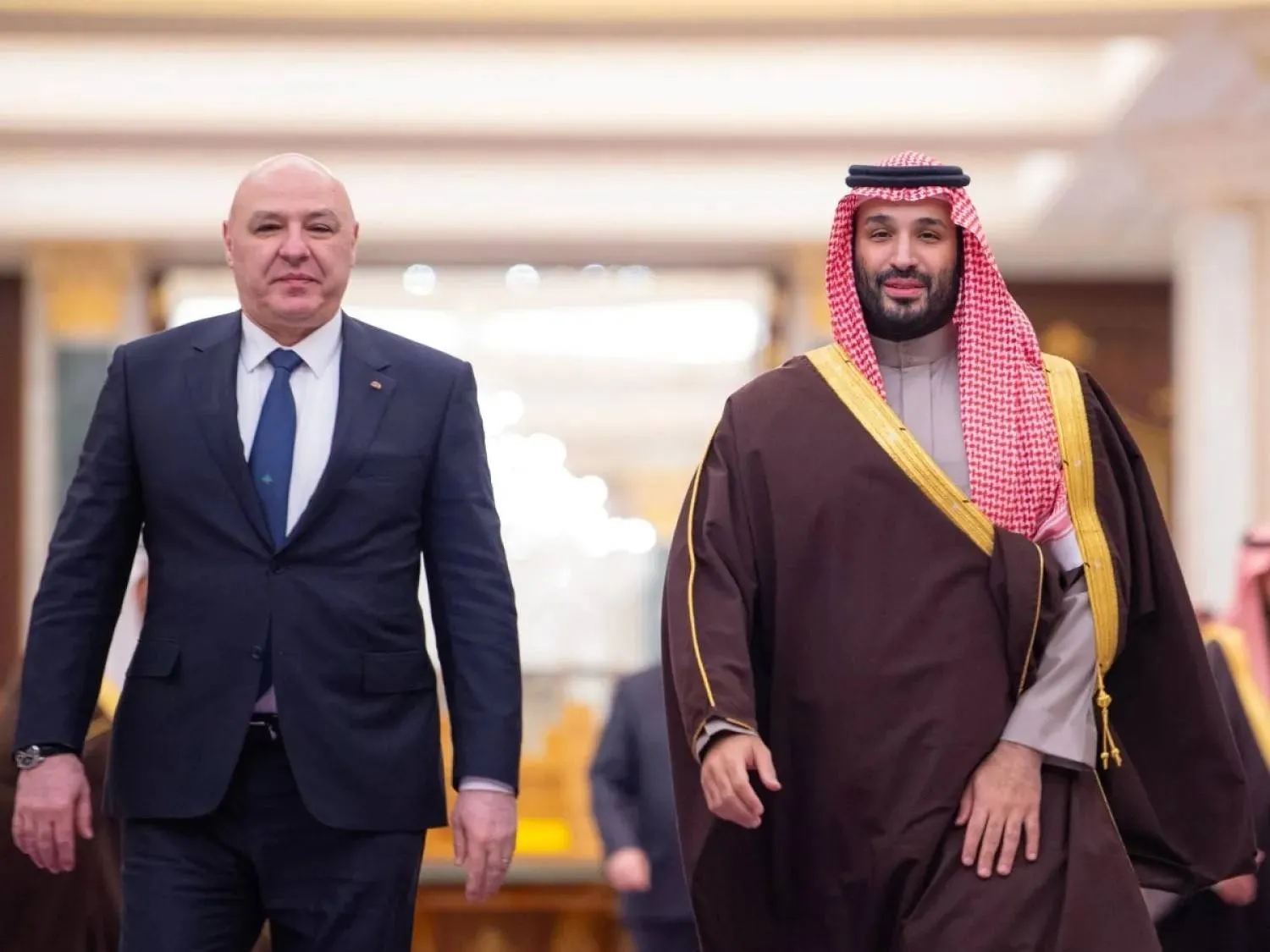
Saudi Crown Prince Mohammed bin Salman and Lebanese President Joseph Aoun at Al-Yamamah Palace in Riyadh, Nov. 3, 2025 (SPA)
Lebanon’s ambassador to Riyadh said Saudi Arabia’s decision to resume imports from Lebanon came after Beirut met the required standards to ensure the goods posed no risk.
The diplomat said the fight against drugs had involved intensive work and high-level security and political coordination between the two countries.
Saudi Crown Prince and Prime Minister Mohammed bin Salman on Wednesday ordered the resumption of Lebanese exports to the Kingdom at the request of Lebanese President Joseph Aoun and Prime Minister Nawaf Salam.
The move followed what were described as positive steps by Lebanon’s government to rebuild state institutions, work by specialist teams over the past year, Beirut’s cooperation and the required pledges it had made.
In a phone interview with Asharq Al-Awsat on Thursday, Ambassador Ali Karanouh welcomed the Crown Prince’s decision, saying it reflected “the depth of the brotherly and historic relations between the two countries, and the Saudi leadership’s keenness to support Lebanon, its institutions, economy, and people, especially in these difficult circumstances.”
‘A lifeline’
Karanouh said Lebanon was going through a period in which it needed “a lifeline,” adding that the step “is not surprising from Saudi Arabia, which has always stood by Lebanon.”
He cited Riyadh’s role in the Taif Agreement that ended Lebanon’s civil war, as well as its support during reconstruction and recovery.
The ambassador said Lebanese people were grateful for the decision, which he said would benefit agriculture, industry, trade, and services, and help Lebanon regain access to one of the most important Arab and Gulf markets at a time when it badly needs support.
He said the decision was the result of efforts that began with Aoun’s election and the formation of Salam’s government.
Saudi Crown Prince Mohammed bin Salman and Lebanese Prime Minister Nawaf Salam in Makkah on March 30, 2025. SPA
Intensive security coordination on drugs
Karanouh said the new Lebanese government “showed from the first day its determination to return Lebanon to its natural place among its Arab brothers, after a period of distance caused by political choices that were not in its interest.”
He said the government had repaired relations with Arab states, especially Gulf countries, on the basis that Lebanon is an integral part of its Arab surroundings.
He said Beirut was determined from the start not to allow Lebanon to be used as a platform to harm Arab countries. The anti-drug file, he added, had seen intensive work and security and political coordination at the highest levels between Lebanese and Saudi authorities.
Karanouh said Saudi authorities had appreciated Lebanon’s efforts, including tighter controls at border crossings, airports and ports.
Those efforts, he said, continued for about 18 months and helped restore confidence in Lebanon and its institutions, turning the page on a period that had damaged the country’s reputation and foreign relations.
Lebanon, he said, was now on the right path.
Karanouh said the decision to resume Lebanese exports to Saudi Arabia was a major step that would benefit Lebanon’s economy and economic cooperation between the two countries. He said it came after Lebanon met the required standards, ensuring Lebanese exports posed no danger to brotherly countries.
The ambassador said Lebanese exporters were ready to enter the Saudi market and that the remaining technical and procedural issues were minor and could be resolved easily.
He said the Saudi decision would push bilateral ties into a broader phase, whether through the signing and activation of partnership agreements or through the Saudi-Lebanese Business Council, whose formation was completed months ago.
He expressed hope that the move would be followed by the return of Saudi flights and Saudi tourism to Lebanon when conditions allow.
Broad welcome in Lebanon
The Crown Prince’s decision was widely welcomed across Lebanon, nearly five years after Saudi Arabia halted all Lebanese imports, citing at the time “the importance of taking all necessary measures to protect the security of the Kingdom and its people.”
Saudi Foreign Minister Prince Faisal bin Farhan conveyed the Crown Prince’s directive in a phone call with Salam on Wednesday. He affirmed Saudi Arabia’s support for Lebanon’s stability, sovereignty over all its territory and the well-being of its people, as well as Riyadh’s confidence that Lebanon would take all necessary measures to ensure it is not used as a platform to harm its brothers.
Aoun expressed deep gratitude to Prince Mohammed bin Salman, saying the decision was “a sincere expression of the depth of Arab brotherhood that binds the two brotherly countries, and an embodiment of the wise Saudi leadership’s keenness to support Lebanon and its people during the phase of recovery and revival it is undergoing.”
Aoun said: “This kind step will make a tangible contribution to reviving the national economy and supporting broad segments of Lebanese producers and exporters.”
He added that the entire Lebanese people appreciates the decision, and “views it as a gesture that strengthens the path of Lebanese-Saudi relations rooted in the bonds of history and shared destiny.”
Salam said the decision to lift the ban on Lebanese exports reflected the depth of the brotherly and historic ties between the two countries. He said it embodied Saudi confidence in Lebanon and a shared desire to strengthen economic and trade cooperation.
Salam said the move was an important step that would support Lebanon’s economy, open new opportunities for Lebanese producers and exporters, and help promote growth and stability.
He said Lebanon looked forward to continued work and coordination with Saudi Arabia to strengthen cooperation and partnership in various fields for the benefit and prosperity of both countries.
لم تشترك بعد
انشئ حساباً خاصاً بك لتحصل على أخبار مخصصة لك ولتتمتع بخاصية حفظ المقالات وتتلقى نشراتنا البريدية المتنوعة