Lavrov Says Idlib’s ‘Festering Abscess Needs to be Liquidated’https://english.aawsat.com/home/article/1378071/lavrov-says-idlib%E2%80%99s-%E2%80%98festering-abscess-needs-be-liquidated%E2%80%99
Lavrov Says Idlib’s ‘Festering Abscess Needs to be Liquidated’
Russian Foreign Minister Sergei Lavrov, right, welcomes Saudi Arabia's Foreign Minister Adel al-Jubeir for talks in Moscow, Russia, Wednesday, Aug. 29, 2018. (AP Photo/Alexander Zemlianichenko)
Lavrov Says Idlib’s ‘Festering Abscess Needs to be Liquidated’
Russian Foreign Minister Sergei Lavrov, right, welcomes Saudi Arabia's Foreign Minister Adel al-Jubeir for talks in Moscow, Russia, Wednesday, Aug. 29, 2018. (AP Photo/Alexander Zemlianichenko)
Russian Foreign Minister Sergei Lavrov on Wednesday described militants in Syria's Idlib province as a "festering abscess" that needed to be liquidated.
Speaking after talks with his Saudi counterpart Adel al-Jubeir in Moscow, Lavrov said militants were also using civilians as a human shield.
"This is the last hotbed of terrorists who are trying to speculate on the region's status as a de-escalation zone, who are trying to hold the civilian population hostage as human shields and bend to their will those armed groups ready to engage in dialogue with the government," Lavrov said.
"So from all points of view, this festering abscess needs to be liquidated," he said.
As for Jubeir, he said discussions with Lavrov covered Syria and the importance of implementing United Nations Security Council Resolution 2254 and reaching a political solution that would maintain the country’s territorial integrity, withdrawal of foreign militias and ensuring the rights of the people.
He said Saudi Arabia believed the Iran nuclear deal with world powers was weak, “particularly with regard to the time period that prevents Iran from enriching uranium.”
Jubeir also said that he supported more sanctions being imposed on Iran.
Addressing the conflict in Yemen, the Saudi minister stressed that the political solution there should be based on the three references - the Gulf initiative, national dialogue outcomes and Security Council Resolution 2216.
Arab League Condemns Opening of Embassy for So-Called 'Somaliland Region' in Occupied Jerusalemhttps://english.aawsat.com/arab-world/5284813-arab-league-condemns-opening-embassy-so-called-somaliland-region-occupied
Arab League Condemns Opening of Embassy for So-Called 'Somaliland Region' in Occupied Jerusalem
The Arab League headquarters in Cairo (Asharq Al-Awsat)
The General Secretariat of the Arab League strongly condemned the move by the so-called "Somaliland Region" to open an embassy in occupied Jerusalem. It described the step as a challenge to international law and international legitimacy resolutions concerning the legal status of the city.
In a statement issued by the Palestine and Occupied Arab Territories Sector, the Arab League said the move further entrenches the illegal occupation and forms part of attempts to alter the legal, historical, and demographic status quo of Jerusalem and isolate it from its Palestinian surroundings. It stressed that such measures are null and void and carry no legal effect, SPA reported.
The Arab League reiterated that East Jerusalem is an integral part of the Palestinian territories occupied since 1967. It also reaffirmed its commitment to the legitimate rights of the Palestinian people, foremost among them the establishment of an independent state along the pre-1967 borders, with East Jerusalem as its capital.
The organization further reaffirmed its support for the unity, sovereignty, and territorial integrity of the Federal Republic of Somalia and rejected any measures that undermine those principles. It called on the international community to uphold its responsibilities in preserving the legal and historical status quo of Jerusalem and preventing attempts to impose a new reality or legitimize the Israeli occupation and its illegal practices.
The Arab League stressed that establishing diplomatic missions in occupied Jerusalem or recognizing the city as a location for foreign missions violates the international consensus regarding the city's status. It added that such actions undermine efforts to achieve a just and comprehensive peace based on the two-state solution and international legitimacy resolutions.
Hezbollah's Financial Arm Referred to Lebanese Prosecutorshttps://english.aawsat.com/arab-world/5284806-hezbollahs-financial-arm-referred-lebanese-prosecutors
Hezbollah's Financial Arm Referred to Lebanese Prosecutors
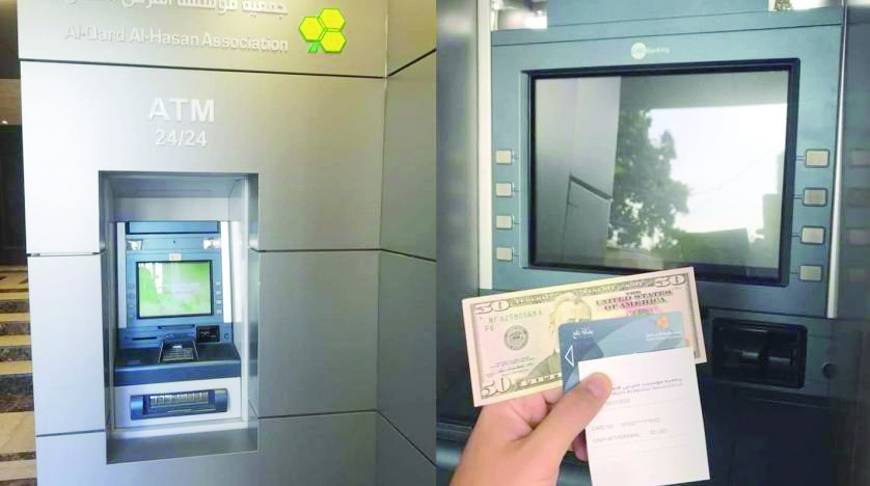
A photo circulating on social media showing an Al-Qard Al-Hassan ATM installed in Beirut's southern suburbs in 2018 (file photo).
In a move carrying legal, financial, and political implications, Lebanon's justice minister has referred Al-Qard Al-Hassan, Hezbollah's financial arm, to the Public Prosecutor's Office, requesting the opening of an investigation into its financial activities.
The step revives a longstanding dispute between Hezbollah and state institutions over financial operations that function outside Lebanon's banking system and the extent to which they comply with the country's laws and regulations.
The referral comes as Lebanon faces growing international pressure over anti-money laundering and counterterrorism financing measures, alongside repeated calls for all financial and lending activities to be brought under the supervision of Banque du Liban and the relevant regulatory authorities.
Justice Minister Adel Nassar said the decision followed a ministry review of the matter.
"Based on a study conducted by the ministry, we reached conclusions and identified grounds that warranted placing the case before the Public Prosecutor's Office, which will now take the necessary steps," Nassar told Asharq Al-Awsat.
He added that the ministry had examined more than one issue and found sufficient reasons to make the referral, stressing that determining whether any offense had been committed was a matter for prosecutors.
"The ministry's role is limited to making a referral when information emerges that warrants an investigation," he said.
Internal Initiative, Not External Pressure
Al-Qard Al-Hassan has for years been subject to sanctions imposed by the US Treasury Department, which accuses it of providing financial services that support Hezbollah and its illicit activities. The institution is neither licensed nor recognized by Lebanon's banking authorities, while Banque du Liban has previously issued directives prohibiting licensed banks and financial institutions from dealing with it.
Asked whether the move resulted from requests by foreign parties, Nassar insisted that it stemmed from the ministry's own responsibilities and was not prompted by any external approach or demand.
"This is not limited to Al-Qard Al-Hassan," he said. "It also involves other entities, including Joud."
Nassar said the ministry's internal review had identified questions regarding the nature of the activities carried out by these entities and the financial operations that could stem from them.
He stressed that the judiciary would independently determine whether any violations or crimes had occurred and whether prosecution was warranted.
"That is a matter for the courts to decide, independently and without interference from any authority, including the Ministry of Justice," he said.
Investigation Taking Shape
Attention is now focused on the course of the judicial proceedings and whether they will lead to concrete decisions or legal measures against the institution or those responsible for running it.
A judicial source said Public Prosecutor Judge Rami Hajj received the referral on Monday and is currently reviewing it before setting dates for investigative sessions.
The source said the inquiry was likely to be complex and involve multiple authorities.
"Part of it may fall within the jurisdiction of General Security, while another part may involve the Interior Ministry in order to determine whether Al-Qard Al-Hassan's association license remains valid or has been suspended," the source told Asharq Al-Awsat.
The source added that if financial violations are established, part of the investigation would involve Banque du Liban and the Special Investigation Commission to determine the origin of the funds involved.
The move is widely seen as an important test of the Lebanese state's ability to enforce regulatory oversight over all financial institutions operating within the country, particularly after the financial collapse that struck the traditional banking sector in 2019.
That collapse was accompanied by the expansion of alternative financial networks, most notably Al-Qard Al-Hassan, which Hezbollah used to circumvent US sanctions. Over time, the institution developed into a de facto banking system serving the party and its support base, providing loans to thousands of clients in exchange for collateral including jewelry and real estate.
A photo circulating on social media showing an Al-Qard Al-Hassan ATM installed in Beirut's southern suburbs in 2018 (file photo).
ATMs and Transfers Under Scrutiny
The case is also expected to trigger political controversy and draw a response from Hezbollah, which views mounting pressure on Al-Qard Al-Hassan as part of a broader campaign of sanctions and financial restrictions imposed on the group and its constituency for years.
That perception has been reinforced during the recent conflict, as the institution played a role in providing assistance to large numbers of displaced residents from southern Lebanon, Beirut's southern suburbs, and the Bekaa Valley.
The judicial source said Hezbollah was expected to cooperate with the investigation and provide evidence to demonstrate that the institution had not engaged in unlawful activity.
The source also disclosed that a delegation of Hezbollah lawmakers met the Public Prosecutor around two weeks ago and pledged to suspend the institution's ATM operations, as well as any transfer or deposit activities that might conflict with the scope of its authorized license.
After 'Blank Ballot' Round, Hamas Resumes Vote for New Leaderhttps://english.aawsat.com/arab-world/5284797-after-blank-ballot-round-hamas-resumes-vote-new-leader
After 'Blank Ballot' Round, Hamas Resumes Vote for New Leader
Hamas leaders, from right: Rawhi Mushtaha, Saleh al-Arouri and Ismail Haniyeh (all of whom were killed), alongside Khaled Meshaal and Khalil al-Hayya (file photo - Hamas-affiliated media).
Hamas has resumed voting to elect the head of its political bureau, the movement’s highest leadership position, after an initial round last month failed to produce a winner. The process was delayed after some voters submitted blank ballots rather than backing any candidate.
Former political bureau chief Khaled Meshaal and Khalil al-Hayya, the movement’s chief in Gaza and head of its negotiating team in ceasefire talks, are competing for the post.
Two Hamas sources in Gaza told Asharq Al-Awsat that voting in the runoff round has begun in the enclave. One source said eligible voters are participating through a more secretive and complex process because of difficult security conditions and ongoing targeted killings.
Hamas is facing its most severe crisis since its founding in 1987. Israeli operations launched after the October 7, 2023 attack have targeted the movement across multiple levels and branches, creating significant organizational and financial challenges.
The two sources, speaking separately, said ballots are being delivered to eligible voters in sealed envelopes. After selecting a candidate, voters return their ballots through channels governed by strict security procedures designed to protect both participants and those overseeing the election process.
The political bureau chief is elected by the movement’s Shura Council, a 71-member body representing Hamas’s three main constituencies: Gaza, the West Bank, and the external leadership. The council had 50 members about a decade ago, but its size was later expanded following amendments to the movement’s internal regulations.
The sources said voting is also expected to take place in the West Bank and among Hamas officials abroad, although neither could confirm whether the process has already begun in those arenas.
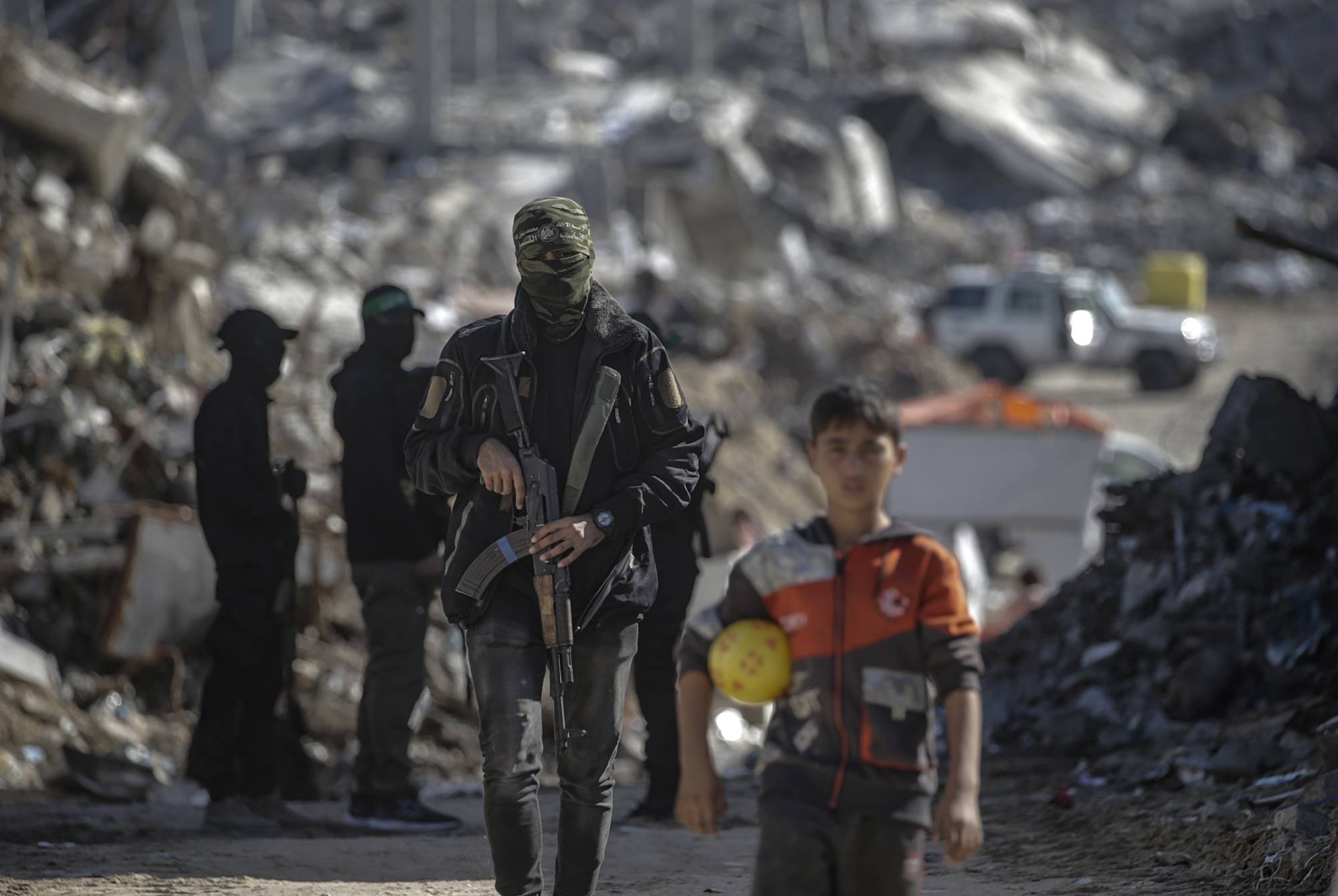
Fighters of the Al-Qassam Brigades, the military wing of the Hamas movement, stand guard as they search for the bodies of Israeli hostages alongside Red Cross workers in Jabaliya refugee camp in the northern Gaza Strip, 01 December 2025. EPA/MOHAMMED SABER
A More Secretive Runoff
On May 16, Hamas announced that the first round of voting had failed to determine a winner and said a second round would be held in accordance with the movement’s internal rules.
Under Hamas regulations, the runoff was expected to take place within 20 days. However, sources within the movement said security and political developments, including assassinations in Gaza and meetings between Hamas leaders abroad and regional mediators, delayed the process. They said the new round is being conducted under tighter secrecy than the first to prevent security breaches or media leaks.
Hamas leaders agreed to elect only a political bureau chief for now, postponing broader elections for the political bureau, the Shura Council, and other administrative bodies until early next year.
Israel killed Hamas political bureau chief Ismail Haniyeh in Tehran in July 2024. He was succeeded by Yahya Sinwar, who was killed in Gaza in October of the same year.
For roughly the past year and a half, Hamas has been run by a collective leadership council. Earlier this year, the movement launched a new effort to elect a leader to serve out the remainder of the current political bureau’s term, which was due to end in 2025 but was extended by an additional year, pending broader elections expected late this year or early next year.
Sources told Asharq Al-Awsat on May 21 that some voters had cast blank ballots as a way of declining to endorse either candidate, al-Hayya or Meshaal. According to the sources, this was the first known instance of blank ballots being used in a vote for the movement’s top leadership post.
At the time, some sources interpreted the blank ballots as a sign of dissatisfaction with both candidates and possibly with the movement’s handling of certain issues, as well as an effort to encourage the emergence of a younger generation of leaders. Others said the move was not necessarily directed at the candidates themselves but reflected broader objections to some existing policies, or a preference for postponing the election of an interim leader until comprehensive elections are held and the current leadership council remains in place.
لم تشترك بعد
انشئ حساباً خاصاً بك لتحصل على أخبار مخصصة لك ولتتمتع بخاصية حفظ المقالات وتتلقى نشراتنا البريدية المتنوعة