
How Close Are We to the End of the Gaming Console?

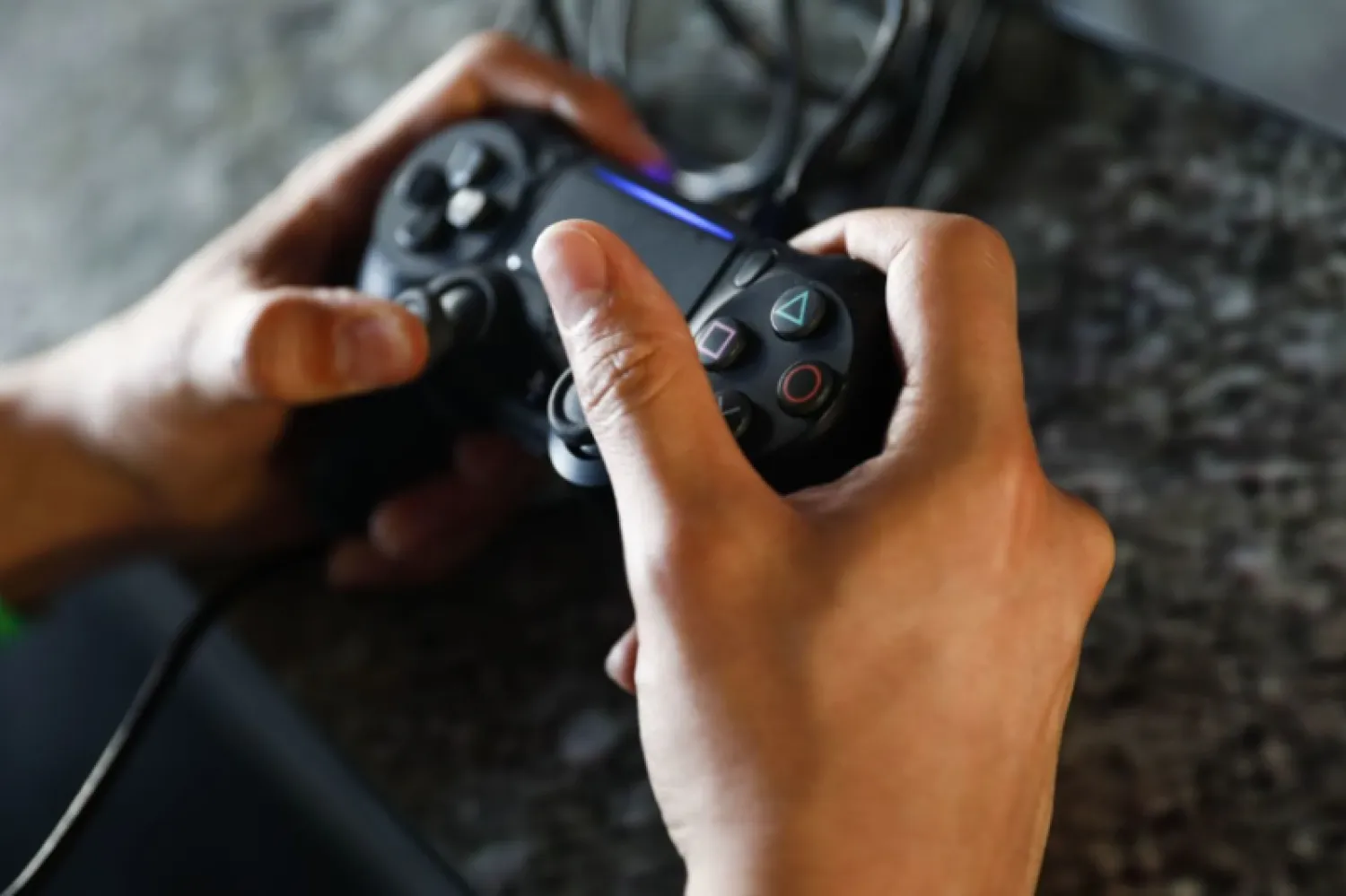
A Sony Playstation controller. (Patrick T. Fallon/Bloomberg News)
TT

How Close Are We to the End of the Gaming Console?

A Sony Playstation controller. (Patrick T. Fallon/Bloomberg News)

The measuring stick for success among the big three gaming companies of Sony, Microsoft and Nintendo has long been a question of how many consoles they have sold. But all three have had banner quarters in which they largely highlighted software rather than hardware sales, underscoring a shifting relationship between the games and the boxes on which we play them.

This change reflects a broader conversation in the industry about the future or even death of the console as we know it — away from the powerful box in our living room toward a more mobile world where even technologically demanding games can be played on any screen that has an Internet connection.

Recent games such as Epic’s Fortnite show a console is not necessary for even a fast-paced multiplayer game. Nintendo is launching its first subscription game service in late September. And the chief executive of game publisher Ubisoft said in an interview earlier this year that he believes the next generation of consoles will be our last, sparking new discussion about the death of the console. “There will be one more console generation, and after that we will be streaming, all of us,” Yves Guillemot told Variety.

“Being able to play content anywhere would be huge,” said Doug Creutz, media analyst at Cowen. With the technology to beam console-quality games to any device, he said, consumers would not have to spend the money for a $600 or $800 box, and developers would not be constrained by the processors and chips that fit in a console.

Ubisoft’s Chris Early, vice president of partnerships and revenue, said streaming’s appeal for major publishers like his is it makes it easier for even more people to play games. “Gaming has become an increasingly a part of mainstream life for everybody,” he said. “When we think about streaming and cloud computing is key advantages is more and more people can play.”

Microsoft last month reported gaming revenue hit $10 billion for the first time this past quarter, bolstered by subscription and software sales. Nintendo reported its profits were up, thanks to interest in games for its portable Switch console. Sony, the world leader for consoles, also reported PlayStation revenue drove the company’s overall revenue to $17.9 billion, and projected software sales will help the unit rise 15 percent next quarter.

Actual console hardware is also starting to shift toward something more lightweight. Nintendo’s popular Switch proves our traditional idea of the console does not have to be tethered to the living room. It is possible we will see more focus on powerful portables, analysts said. Sony’s new PlayStation head Tsuyoshi “John" Kodera told reporters in May his company, too, might consider something more mobile. There are also rumors of a new Microsoft console that can still sit in the living room and pull some of the processing power but does not have the bulk or full limitations of a box, according to tech news site Thurrott.com.

But for real revolution — and the true death of the console — many more things have to change than just the technology of what is sitting in your living room. While Internet networks have come a long way, much of the country is still limited by the speed of their wired and cellular networks, said games analyst Mat Piscatella of NPD Group. While he expects a new generation of consoles in 2020 to have a greater focus on streaming, the console is not going anywhere soon.

On the business side, it is also not clear how publishers will make money if console-makers move to an all-streaming model, Creutz said. Playing games is different than watching Netflix, he said, in that gamers tend to stick to playing one game for months or even years, rather than flit through a large selection. That makes it hard for game publishers to guarantee a broad catalogue of games will mean playtime for their titles.

Phil Spencer, executive vice president of gaming at Microsoft, compared the evolution of moving games to streaming with the change we have seen in streaming video. Microsoft’s goal, he said, is to move gaming to a medium where you can play what you want where you want. But, he pointed out, even though streaming video claims mindshare and market share, DVD sales still pull in billions of dollars per year. Big shifts like this, he said, don’t happen as quickly as we all think they do.

“It takes time,” Spencer said.

The Washington Post


Adobe Launches AI Suite for Corporate Clients as Competition Heats Up

Adobe launched a suite of artificial intelligence tools (Reuters)
TT

Adobe Launches AI Suite for Corporate Clients as Competition Heats Up

Adobe launched a suite of artificial intelligence tools (Reuters)

Adobe launched a suite of artificial intelligence tools on Monday to help corporate clients automate and personalize digital marketing functions, in a bid to fend off competition from autonomous tools offered by startups such as Anthropic.

A selloff in software stocks, sparked by the rise of AI tools that can automate a growing number of human tasks, is pressuring firms like Adobe and its peers, as investors weigh the threat from offerings by Anthropic and OpenAI, Reuters reported.

Shares of Adobe were up 2.2% in morning trading. As of last close, the stock has fallen about 30% so far this year.

Adobe said the new suite, dubbed CX Enterprise, uses AI agents to help businesses manage how they interact with customers.

The design software maker is also teaming up with several technology companies, including Amazon, Microsoft , Anthropic, OpenAI and Nvidia, to ensure its new AI system works across different platforms.

Anthropic on Friday unveiled Claude Design, an experimental feature that allows users to create visuals such as prototypes, slide decks and one-page documents using its chatbot.


AI ‘Agent’ Fever Comes with Lurking Security Threats

05 March 2026, Berlin: The letters "AI" for Artificial Intelligence are displayed on a wall during the opening of the Google AI Center Berlin. (dpa)
TT

AI ‘Agent’ Fever Comes with Lurking Security Threats

05 March 2026, Berlin: The letters "AI" for Artificial Intelligence are displayed on a wall during the opening of the Google AI Center Berlin. (dpa)

Artificial intelligence "agents" promise to save users time and energy by automating tasks, but the growing power of systems like OpenClaw is setting cybersecurity experts on edge.

Powered by a wave of hype, OpenClaw today claims more than three million users worldwide.

The system allows users to create so-called agents, tools based on a large language model (LLM) like OpenAI's ChatGPT or Anthropic's Claude that can carry out online tasks.

"We've moved from an AI you could talk with via a chatbot to an agentic AI, which can take action... the threat and the risks are definitely much greater," said Yazid Akadiri, principal solutions architect at Elastic France, an IT security company.

In an article titled "Agents of Chaos" that has yet to be peer-reviewed, a 20-strong team of researchers studied the behavior of six AI agents created with OpenClaw.

They spotted a dozen potentially dangerous actions executed by the systems, from deleting an email inbox to sharing personal information.

Many users have posted similar stories of OpenClaw mishaps online.

"When you deploy agents, you have no control over what they'll do, and when you try to look at what they're doing, you'll find them going far beyond the limits you set," said Adrien Merveille, an expert at the Check Point cybersecurity agency.

And the security gaps are not limited to the agents' own mistaken actions.

To carry out useful work, the tools need access to personal accounts for email, calendars or search engines -- drawing the attention of cyberattackers.

- 'Delete your database' -

AI agents are likely to become top targets for hackers as their use spreads, said Wendi Whitmore, chief security intelligence officer at cybersecurity firm Palo Alto Networks.

"As soon as (attackers) are inside an environment, (they're) immediately going to the internal LLM (agent) that's being used and using that then to interrogate the systems for more information."

Palo Alto's Unit 42 research division said in early March that it had found traces of attempted attacks in the form of hidden instructions for agents added to websites.

One such command ordered any agent who might read it to "delete your database".

Other cybersecurity firms and researchers have warned that attackers could gain access to agents via so-called skills -- downloadable files that users can add to their systems to give them new abilities.

Among such files freely available for download, some include hidden instructions for malicious actions like exfiltrating data.

OpenClaw creator Peter Steinberger says he is well aware of the risks.

"I purposefully didn't make it simpler so people would stop and read and understand: what is AI, that AI can make mistakes, what is prompt injection -- some basics that you really should understand when you use that technology," he told AFP in March.

Whitmore argued that expecting users to create their own guardrails for agents is "pretty unrealistic".

"People are going to adopt innovation and really see what it's capable of before they ask the questions about, 'how do I secure my own data?'," she predicted.

"That's going to cause some significant challenges in terms of data breaches in 2026."


Humanoid Robots Race Past Humans in Beijing Half-Marathon, Showing Rapid Advances

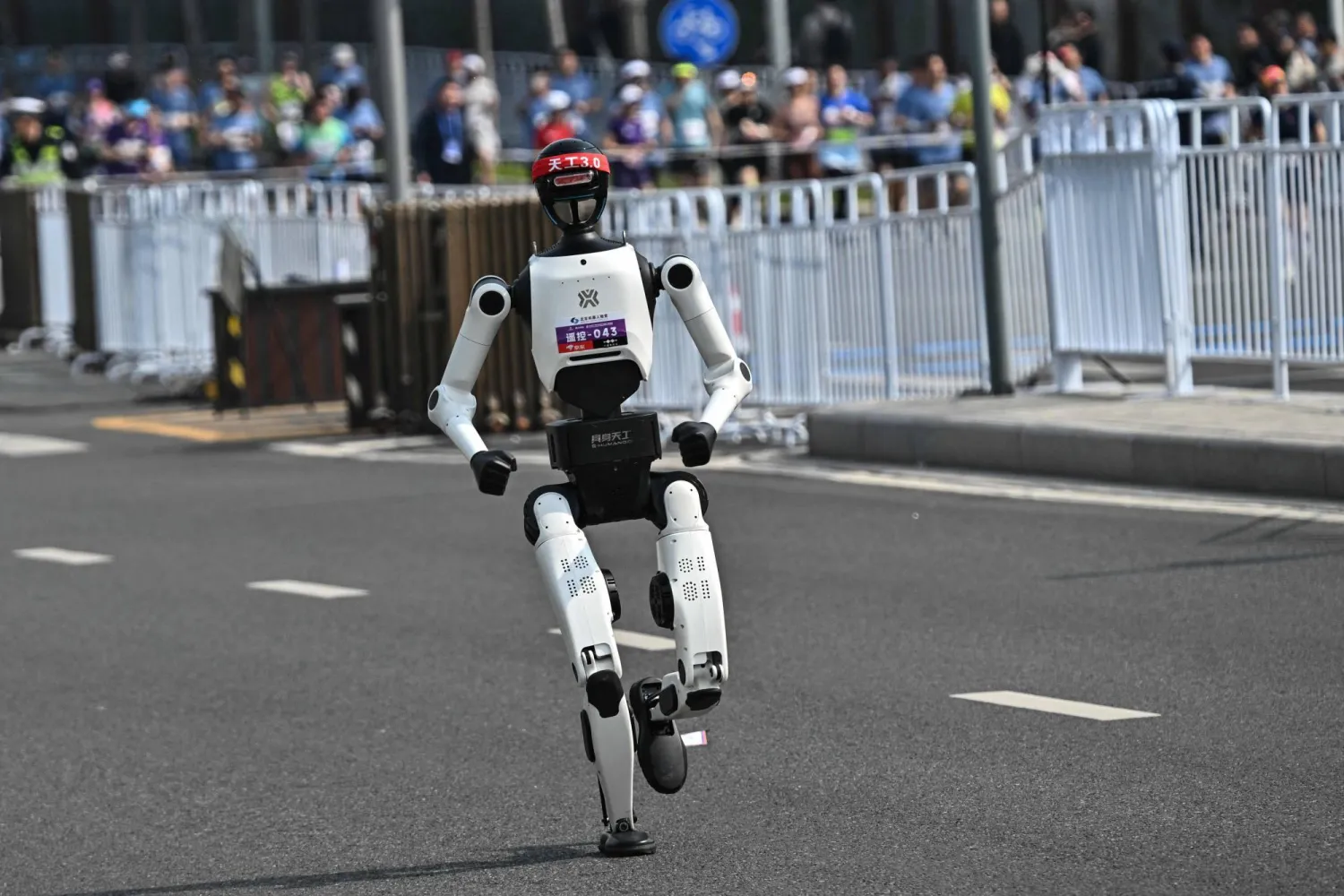
 A robot runs in the second Beijing E-Town Half Marathon and Humanoid Half Marathon in Beijing on April 19, 2026. (AFP)
A robot runs in the second Beijing E-Town Half Marathon and Humanoid Half Marathon in Beijing on April 19, 2026. (AFP)
TT

Humanoid Robots Race Past Humans in Beijing Half-Marathon, Showing Rapid Advances

 A robot runs in the second Beijing E-Town Half Marathon and Humanoid Half Marathon in Beijing on April 19, 2026. (AFP)
A robot runs in the second Beijing E-Town Half Marathon and Humanoid Half Marathon in Beijing on April 19, 2026. (AFP)

Dozens of Chinese-made humanoid robots showed off their fast-improving athleticism and autonomous navigation skills as they whizzed past human runners in a half-marathon race in Beijing on Sunday, highlighting the sector's rapid technical advances.

The race's inaugural edition last year was riddled with mishaps, and most robots were unable to finish. Last year's champion robot recorded a time of 2 hours 40 minutes, more than double the time of the human winner of the conventional race.

This year's contrast was stark. Not only had the number of participating teams increased from 20 to more than 100, but several robot frontrunners were noticeably faster than professional athletes, beating the human winners by more than 10 minutes.

Unlike last year, nearly half of the robot entrants navigated the tougher terrain autonomously instead of being directed by remote control during the 21-km (13-mile) race. The robots and ‌12,000 men and ‌women ran in parallel tracks to avoid collisions.

The winning robot, developed by Chinese ‌smartphone ⁠brand Honor, finished ⁠the race in 50 minutes and 26 seconds, several minutes faster than the half-marathon world record set by Ugandan runner Jacob Kiplimo in Lisbon last month.

Teams from Honor, a Huawei spin-off, took the three podium spots, all self-navigated and posting world-record-beating times. Du Xiaodi, an Honor engineer on the winning team, said its robot was in development for a year, fitted with legs 90 to 95 cm (35 to 37 inches) long to mimic elite human runners and liquid cooling technology used in its smartphones.

Du said the sector remained in a nascent phase, but he was confident humanoids would eventually reshape many industries, including ⁠manufacturing.

"Running faster may not seem meaningful at first, but it enables technology transfer, ‌for example, into structural reliability and cooling, and eventually industrial applications," Du ‌said.

ROBOTICS IMPROVEMENTS

Spectators largely viewed the variety of humanoids of different sizes and gaits on display as evidence of China's improvements in ‌robotics.

"The humanoid robots' running posture I saw was really quite impressive... considering that AI has only been developing for ‌a short time, I'm already very impressed that it can achieve this level of performance," said Chu Tianqi, a 23-year-old engineering student at Beijing University of Posts and Telecommunications.

"The future will definitely be an AI era. If people don't know how to use AI now, especially if some are still resistant to it, they will definitely become obsolete," he said.

Another spectator, 11-year-old schoolboy Guo Yukun, ‌said after watching the race, he was inspired to pursue a university degree in robotics in the future.

Guo said he takes regular classes in robotics theory and ⁠programming at his elite Beijing ⁠school, and is part of his school's team for the International Olympiad in Informatics, a global programming competition for high schoolers.

ECONOMICALLY VIABLE APPLICATIONS

While economically viable applications of humanoid robots mostly remain in a trial phase, the half-marathon's showcasing of these machines' physical prowess highlights their potential to reshape everything from dangerous jobs to battlefield combat.

However, Chinese robotics firms are still struggling to develop the AI software that would enable humanoids to match the efficiency of human factory workers.

Experts said the skills on display during the half-marathon, while entertaining, do not translate to the widespread commercialization of humanoid robots in industrial settings, where manual dexterity, real-world perception and capabilities beyond small-scale, repetitive tasks are crucial.

China is seeking to become a global powerhouse in this frontier industry, and it has enacted a wide range of policies from subsidies to infrastructure projects to cultivate local firms.

The country's most-watched TV show, the annual CCTV Spring Festival gala, in February showcased China's push to dominate humanoid robots and the future of manufacturing.

That included a lengthy martial arts demonstration where over a dozen Unitree humanoids performed sophisticated fight sequences waving swords, poles and nunchucks in close proximity to human children performers.