


Lebanon: Modern Art, Antiques on Show at Nabu Museum

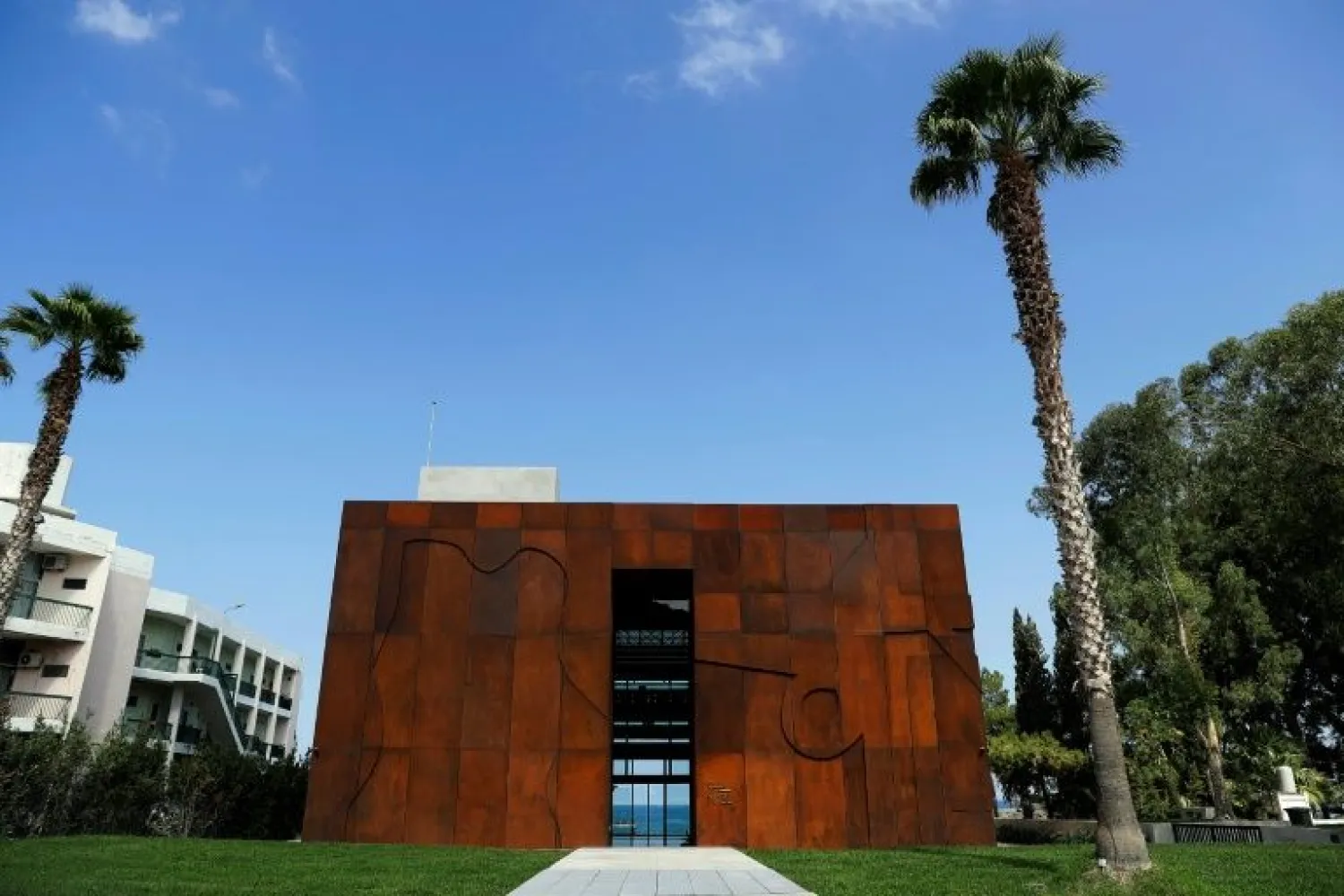
The Nabu Museum is a new private museum in northern Lebanon showcasing contemporary art alongside antiquities | AFP
TT

Lebanon: Modern Art, Antiques on Show at Nabu Museum

The Nabu Museum is a new private museum in northern Lebanon showcasing contemporary art alongside antiquities | AFP

At a new private museum in Lebanon, a contemporary sculpture of a mortar missile is displayed alongside millennia-old statues retrieved from the bottom of the sea.

Named after the Mesopotamian god of wisdom, the Nabu Museum opened in late September to showcase the cultural wealth of an ancient region devastated by conflict.

Its inaugural exhibition includes 60 contemporary works, as well as around 400 antiquities from Lebanon, Iraq, Syria, Egypt, and Yemen.

"We have a more or less complete picture of what was once the cradle of civilization," says French curator Pascal Odille.

Next to a private beach in the village of El-Heri in Lebanon's north, the museum's collection sits in an impressive futuristic cube of steel, coated with a rusty orange patina.

A tall glass opening in the metal and concrete structure provides a view straight through the museum's interior and out to the sea.

Designed by Iraqi artists, the museum for the first time opens up the private art and antiquities collections of wealthy businessmen to the public for free.

Drawn from the homes and warehouses of its patrons, the exhibits are displayed on two floors, floodlit by the sunlight streaming through the tall windows.

There are "ushabti" from Ancient Egypt, finely carved turquoise figurines traditionally placed in coffins to ensure passage to the afterlife.

Nearby, a contemporary sculpture of a mortar missile by Lebanese artist Katya Traboulsi is adorned with hieroglyphs.

The artwork is topped by a sculpted bust of the Ancient Egyptian god of the sky, Horus, instead of a warhead.

Visitors can see Lebanese artist Saliba Douaihy's abstract landscape paintings, one largely red, the other bright blue.

But they can also admire terracotta statues harking back to the Phoenician period found during marine excavations off the southern coast of Lebanon.

"You can see the seashell and limescale deposits on them," says Odille, of the figures from the sixth or seventh century BC.

The museum's founders -- two Lebanese and a Syrian -- want it to be a beacon of hope in a region scarred by conflict and the brutality of extremists.

"Nabu is the god of writing and wisdom. Not the god of war," says Lebanese co-founder Jawad Adra.

"We're a ray of optimism in this region, amid all this obscurity," says the 64-year-old, whose colorful, modern-art inspired tie contrasts with his grey suit.

The project cost $7 million, the organizers say.

But the works on show only represent a fraction of its founders' private collections, and there are plans to switch the exhibits every few months.

Adra's personal collection includes 2,000 items from the Levant and Mesopotamia regions, according to the exhibition's catalog.

The businessman says his hobby dates back to his childhood.

"I've been collecting stamps and coins since I was 10," says Adra, who now heads a Beirut-based polling company and owns quality control labs in the Gulf.

He says it is time to give back.

To set up the museum, he banded together with Syrian business partner Fida Jdeed, and fellow Lebanese entrepreneur Badr El-Hage, who runs a rare book firm in London.

"We've all reached an age where we're starting to ask ourselves, 'What have you done? What have you given your country?'," he says.

Lebanon's interior minister recently attended an evening inauguration ceremony at the Nabu Museum.

In Lebanon, a 2016 law demands all private owners of antiquities register their items with the ministry as part of its efforts to combat illegal trafficking.

Adra says that "a large part" of his collection has been declared to the authorities, and he is registering the rest.

In recent years, part of the region's cultural heritage has been damaged, destroyed or looted by armed groups.

The ISIS terrorist group in particular swept across large parts of Syria and neighboring Iraq in 2014, wrecking countless historical sites in territory it controlled.

Mahmud Al-Obaidi, who designed the museum building with fellow Iraqi artist Dia Azzawi, sees the project as compensation for years of loss.

"I feel this place is payback for everything that has been destroyed," says the 53-year-old, who left Iraq in 1991 for Canada.

With governments in the region busy battling troubled economies and poverty, personal initiatives are key to preserving culture, he says.

"Our states don't take culture seriously," says the artist, dressed in a light blue linen shirt and dark blue jacket, whose work is on show inside the museum.

Yet, passing civilizations live on in their art, Obaidi says.

"They don't realize that everything fades away, but it's the books, paintings, and antiquities that remain," he adds.



Deforestation in Brazil's Amazon Drops to Lowest Level Since 2019

(FILES) Smoke from illegal fires lit by farmers rises in Manaquiri, Amazonas state, on September 6, 2023. (Photo by MICHAEL DANTAS / AFP)
TT

Deforestation in Brazil's Amazon Drops to Lowest Level Since 2019

(FILES) Smoke from illegal fires lit by farmers rises in Manaquiri, Amazonas state, on September 6, 2023. (Photo by MICHAEL DANTAS / AFP)

Deforestation in the Brazilian Amazon fell last year to its lowest level since 2019, according to a report published Wednesday that will be seen as good news for leftist President Luiz Inacio Lula da Silva.

South America's biggest country lost 985,000 hectares (2.4 million acres) of native vegetation last year, down 20.6 percent from 2024, the MapBiomas monitoring network announced.

The figure is the lowest since the network began keeping records in 2019, AFP reported.

It notably does not include forest lost to fires, but after a record fire season in 2024, the country was relatively spared major infernos last year.

Lula, who is seeking a fourth term in October elections, has made the fight against deforestation a central tenet of his administration.

Preserving forest cover is essential to fighting climate warming as trees act as a natural carbon sink.

After four years of widespread logging under his far-right predecessor Jair Bolsonaro, Lula has pledged to eradicate illegal deforestation altogether by 2030.

The reduction in deforestation was noted across Brazil's six major ecosystems.

"We are seeing an increase in enforcement actions and sanctions (...) which have a direct correlation with the drop in deforestation in all Brazilian biomes," Marcos Rosa, MapBiomas's technical coordinator, told AFP.

Even so, the rate of destruction remains breathtaking.

In the Amazon, the world's largest rainforest, where deforestation slowed by 23.5 percent, five trees are still felled every second.

The hardest-hit biome last year was once again the Cerrado, a vast, biodiverse savanna south of the Amazon.

It alone accounted for more than half of the deforestation.

MapBiomas -- a consortium of universities, NGOs and technology companies -- said agriculture accounted for 99 percent of vegetation loss.

Lula is keen to showcase his environmental achievements ahead of the election.

Last year, he hosted the COP30 climate summit in the Amazonian city of Belem.

He has however been criticized by environmentalists for his support of a massive oil exploration project near the mouth of the Amazon River.


Putin Gifts 4 Amur Tigers to Kazakhstan Ahead of Visit

In this pool photograph distributed by the Russian state agency Sputnik, Russia's President Vladimir Putin meets with graduates of the "Time of Heroes" program, at the Kremlin in Moscow on May 22, 2026. (Photo by Alexey NIKOLSKY / POOL / AFP)
TT

Putin Gifts 4 Amur Tigers to Kazakhstan Ahead of Visit

In this pool photograph distributed by the Russian state agency Sputnik, Russia's President Vladimir Putin meets with graduates of the "Time of Heroes" program, at the Kremlin in Moscow on May 22, 2026. (Photo by Alexey NIKOLSKY / POOL / AFP)

Russia has handed Kazakhstan four Amur tigers, two of them cubs, to help the country restore its numbers of the animals, President Vladimir Putin said in an article issued ahead of his visit to the Central Asian nation this week.

Rich in energy resources and critical minerals, Kazakhstan shares a border with Russia and is a close ally of Moscow in a region where China and the ⁠United States are ⁠also expanding their influence.

The four animals captured in Russia's far eastern region of Khabarovsk were flown to Kazakhstan, Putin said on the Kremlin's website on Tuesday, and are soon to be released into the wild.

Putin ⁠is no stranger to using animals to advance diplomatic efforts.

In 2022, Russia sent 30 grey thoroughbred horses to North Korea, as the nations have boosted ties since Ukraine's invasion that year. North Korean leader Kim Jong Un is a keen horseman.

Kazakhstan, which is trying to restore the tiger population in Central Asia, sees the Amur tiger as a ⁠close ⁠relative of the extinct Caspian tiger. The Russian gesture boosts the country's tally of the animals previously sent by the Netherlands, Reuters reported.

On his visit, Putin will oversee the signing of a deal for a nuclear power project in Kazakhstan, which has no nuclear power generation now, and will discuss efforts to boost the transit of Russian oil to China through the country, the Kremlin has said.


RFK Jr. Snatches Snakes in Viral Video, the Latest of his Many Animal Encounters

Health and Human Services Secretary Robert F. Kennedy Jr. speaks as Centers for Medicare & Medicaid Services Administrator Dr. Mehmet Oz, right, and Assistant Attorney General for the Fraud Division Colin McDonald listen during a press conference Thursday, May 21, 2026, in Minneapolis. (AP Photo/Glen Stubbe)
TT

RFK Jr. Snatches Snakes in Viral Video, the Latest of his Many Animal Encounters

Health and Human Services Secretary Robert F. Kennedy Jr. speaks as Centers for Medicare & Medicaid Services Administrator Dr. Mehmet Oz, right, and Assistant Attorney General for the Fraud Division Colin McDonald listen during a press conference Thursday, May 21, 2026, in Minneapolis. (AP Photo/Glen Stubbe)

A video of Robert F. Kennedy Jr. wrangling two snakes bare-handed captured the internet’s fascination Tuesday, the latest animal encounter the US health secretary has shared publicly that has sparked intrigue and in some cases concern.

Kennedy shared the clip of himself grabbing the tails of the non-venomous black racer snakes on his personal social media accounts, noting in the caption that he was removing them from the patio of Centers for Medicare and Medicaid Services Administrator Dr. Mehmet Oz.

An avid outdoorsman, Kennedy has posted numerous photos and videos over the years of himself interacting with wild animals, The Associated Press reported. He's also shared tales of such interactions, including admitting once planting a bear carcass in New York's Central Park as a prank.

Internet users reacted with joy, incredulity and outcry at Kennedy's latest clip, which shows the snakes biting in the direction of his fingers as Oz asks questions about the snakes.

Kennedy’s wife, actress Cheryl Hines, can be heard saying “Why?” and telling her husband to let them go.

Herpetologists said the species in the clip is largely harmless to humans, even if it bites. But they said people should be mindful of the stress that handling snakes can put on the creatures, and to avoid grabbing them by the tails as Kennedy does in the video, because it can cause injuries to their spines.

“That is not how I would handle the snakes, but I’m a trained professional,” said Bonnie Keller, a herpetologist and former board member of the Virginia Herpetological Society.

Sean McKnight, director of programs at the nonprofit Rattlesnake Conservancy, said he encourages people to minimize the duration that they’re handling any kind of wildlife, because they are “potentially stressing out the animals more than needed.”

Earlier this month, Kennedy posted a snapshot of himself holding a bird in his enclosed hand in what he wrote was the rescue of a starling at Dulles Airport in northern Virginia.

In 2024, while running for president, he posted a video of himself using a small net and a trowel to capture a rattlesnake in his California driveway. In that video, he cautiously secures the venomous snake in his bare hands and displays its fangs to the camera. McKnight said he doesn’t advise anybody to handle rattlesnakes like that, because there’s no way to restrain them safely with your hands.

Also in 2024, Kennedy generated criticism when he admitted to taking a bear carcass from the side of the road and placing it in Central Park as a prank in 2014. He said at the time that he had been picking up roadkill his “whole life” and once had a “freezer full of it” at home. His campaign spokesperson Stefanie Spear, now a top adviser at the nation's health department, said roadkill was how Kennedy, a longtime falconer, fed his birds.