Exclusive – Deserters Wary of Syrian Regime’s Pledge of Pardon

Destruction in Syria. (Reuters)
TT

Exclusive – Deserters Wary of Syrian Regime’s Pledge of Pardon

Destruction in Syria. (Reuters)

Syrian refugees, who shirked army conscription, have voiced skepticism of the regime’s amnesty from military service.

In October, the regime announced an amnesty for men who deserted the army or have avoided military service, giving them several months to report for duty without facing punishment.

The fear of conscription, and potential punishment for ducking it or for desertion, is frequently cited by aid groups as one of the main reasons refugees give for not wanting to return home.

Ahmed, 26, completed his university degree during the second year of the Syrian war and is wanted for mandatory military enlistment.

However, along with a group of his university friends, he sought refuge in any country out of fear of being forced to report to duty.

He said that the majority of his friends would like to return to their homeland, “but the regime cannot be trusted.”

“It had previously issued similar pardons. Some were fooled and turned themselves over to the authorities or were sent to the frontline where they were killed,” he explained.

“Ending mandatory enlistment and a regime change are the only ways I will return,” he added, saying that this sentiment is shared with many others.

Millions of Syrians fled their country with the eruption of the war in 2011. Many sought refuge in neighboring countries and Europe in search of a better life. The United Nations estimates that some 5.6 million Syrians are displaced abroad and some 7 million are internally displaced.

Many of the refugees fled out of fear of being forced to enlist in regime forces. The Syrian Observatory for Human Rights estimated that some 150,000 Syrian deserted conscription since the beginning of the war.

Enlistment is mandatory for every man who turns 18. Prior to the war, conscription lasted some two years. Now and as the war rages on, it could last an indefinite time.

The regime often tries to convince deserters to head to service, resorting to various means, such as the pardon that was announced in October.

Syria’s al-Watan newspaper estimated that some 800,000 were wanted for conscription in the reserves.

Samer, an English teacher in his 30s, fled Syria to Turkey in 2014 once he found out that he was soon going to be called up to enlist in the reserves.

“Many deserters who believed the previous pardons were arrested by the regime and many have gone missing,” he told Asharq Al-Awsat.

“Assuming many of them do return, how will the regime treat them? Will they be lavished with care or treated as traitors?” he wondered.

Sources from Syrian border crossings told Asharq Al-Awsat that “very few” Syrians responded to the regime’s promise of amnesty.

Under Syrian military law, deserters can face years of prison if they leave their posts and do not report for service within a set amount of time.

Syria’s conflict began in 2011 after mass protests against the regime, eventually leading to half a million deaths and drawing in world and regional powers.

Many soldiers deserted, some to join the opposition and others to escape the fighting. More than half the pre-war population fled their homes.

While the amnesty covers desertion, it does not cover fighting against the regime or joining the opposition factions, who are regarded by the regime as terrorists.


What is the Two-state Solution to the Israel-Palestinian Conflict?

FILE PHOTO: Smoke rises following an explosion, within the "yellow line" zone, which is controlled by Israel, in Khan Younis in the southern Gaza Strip, February 10, 2026. Picture taken with a phone. REUTERS/Haseeb Alwazeer/File Photo
TT

What is the Two-state Solution to the Israel-Palestinian Conflict?

FILE PHOTO: Smoke rises following an explosion, within the "yellow line" zone, which is controlled by Israel, in Khan Younis in the southern Gaza Strip, February 10, 2026. Picture taken with a phone. REUTERS/Haseeb Alwazeer/File Photo

Israel has taken steps ‌to help settlers acquire land in the occupied West Bank and widen its powers in parts of the territory where Palestinians have some self-rule - measures they said aimed to undermine the two-state solution.

It marks the latest blow to the idea of establishing a Palestinian state co-existing peacefully alongside Israel in territory Israel captured in the 1967 Middle East war. Long backed by world powers, this vision formed the bedrock of the US-backed peace process ushered in by the 1993 Oslo Accords.

But the obstacles have only grown with time. They include accelerating Jewish settlement on occupied land and uncompromising positions on core issues including borders, the fate of Palestinian refugees and the status of Jerusalem.

WHAT ARE ISRAEL'S NEW DECISIONS?

They would expedite settler land purchases by making public previously confidential West Bank land registries, and also repeal a Jordanian law governing land purchases in the West Bank, which was controlled by Jordan from 1948 until 1967.

Further, Israel would expand "monitoring and enforcement actions" to parts of the West Bank known as areas A and B, specifically "regarding water offences, damage to archaeological sites and environmental hazards that pollute the entire region", a statement by the finance and defense ministers said.

The West Bank was split into Areas A, B and C under the Oslo Accords. The Palestinian Authority has full administrative and security control in Area A - 18% of the territory. In Area B, around 22%, ‌the PA runs civil ‌affairs with security in Israeli hands. Most Palestinians in the West Bank live in areas A and B.

Israel ‌has ⁠full control over ⁠the remaining 60% - Area C, including the border with Jordan.

Palestinian President Mahmoud Abbas said the measures violate international law and aim to undermine Palestinian institutions and a future two-state solution.

Ultranationalist Israeli Finance Minister Bezalel Smotrich called the decision a "real revolution" and said, "We will continue to kill the idea of a Palestinian state."

WHAT ARE TWO-STATE SOLUTION'S ORIGINS?

Conflict ignited in British-ruled Palestine between Arabs and Jews who had migrated there, seeking a national home as they fled antisemitic persecution in Europe and citing biblical ties to the land throughout centuries in exile.

In 1947, the United Nations agreed on a plan partitioning Palestine into Arab and Jewish states with international rule over Jerusalem. Jewish leaders accepted the plan, which gave them 56% of the land. The Arab League rejected it.

The state of Israel was declared on May 14, 1948. A day later, five Arab states attacked. The war ended with ⁠Israel controlling 77% of the territory.

Some 700,000 Palestinians fled or were driven from their homes, ending up in Jordan, Lebanon ‌and Syria as well as in the Gaza Strip, the West Bank and East Jerusalem.

In the 1967 ‌war, Israel captured the West Bank, including East Jerusalem, from Jordan and Gaza from Egypt.

Although 157 of the 193 UN member states already recognize Palestine as a state, it is ‌not itself a UN member, meaning most Palestinians are not recognized by the world body as citizens of any state. About nine million live as ‌refugees in Syria, Lebanon, Jordan and territories captured by Israel in 1967. Another 2 million live in Israel as Israeli citizens.

HAS A DEAL EVER BEEN CLOSE?

The Oslo Accords, signed by Israeli Prime Minister Yizhak Rabin and Palestine Liberation Organization Chairman Yasser Arafat, led the PLO to recognize Israel's right to exist and renounce violence. Palestinians hoped this would be a step towards independence, with East Jerusalem as their capital.

The process suffered multiple reverses on both sides.

Hamas killed more than 330 Israelis in suicide attacks from 1994 to 2005, according ‌to Israel's government. In 2007, the group seized Gaza from the PA in a brief civil war. Hamas' 1988 charter advocates Israel's demise, though in recent years it has said it would accept a Palestinian state along 1967 borders. ⁠Israel says that stance is a ⁠ruse.

In 1995, Rabin was assassinated by an ultranationalist Jew seeking to derail any land-for-peace deal.

In 2000, US President Bill Clinton brought Arafat and Israeli Prime Minister Ehud Barak to Camp David to clinch a deal, but it failed, with the future of Jerusalem, deemed by Israel as its "eternal and indivisible" capital, the main obstacle.

The conflict escalated with a second Palestinian intifada (uprising) in 2000 to 2005. US administrations sought to revive peacemaking, to no avail, with the last bid collapsing in 2014.

HOW BIG ARE THE OBSTACLES TODAY?

While Israel withdrew settlers and soldiers from Gaza in 2005, settlements expanded in the West Bank and East Jerusalem, their population rising from 250,000 in 1993 to 700,000 three decades later, according to Israeli organization Peace Now. Palestinians say this undermines the basis of a viable state.

Jewish settlement in the West Bank accelerated sharply after the 2023 start of the Gaza war.

During the Second Intifada two decades ago, Israel also constructed a barrier in the West Bank it said was intended to stop Palestinian suicide bombers from entering its cities. Palestinians call the move a land grab.

The PA led by President Mahmoud Abbas administers islands of West Bank land surrounded by a zone of Israeli control comprising 60% of the territory, including the Jordanian border and the settlements, arrangements set out in the Oslo Accords.

Prime Minister Benjamin Netanyahu's government is the most right-wing in Israeli history and includes religious nationalists who draw support from settlers. Smotrich has said there is no such thing as a Palestinian people.

Hamas and Israel have fought repeated wars over the past two decades, culminating in the attacks on communities in southern Israel on October 7, 2023, that ignited the Gaza war.


Palestinians Look to Salvage Gaza's History from the Ruins of Israel's Military Offensive

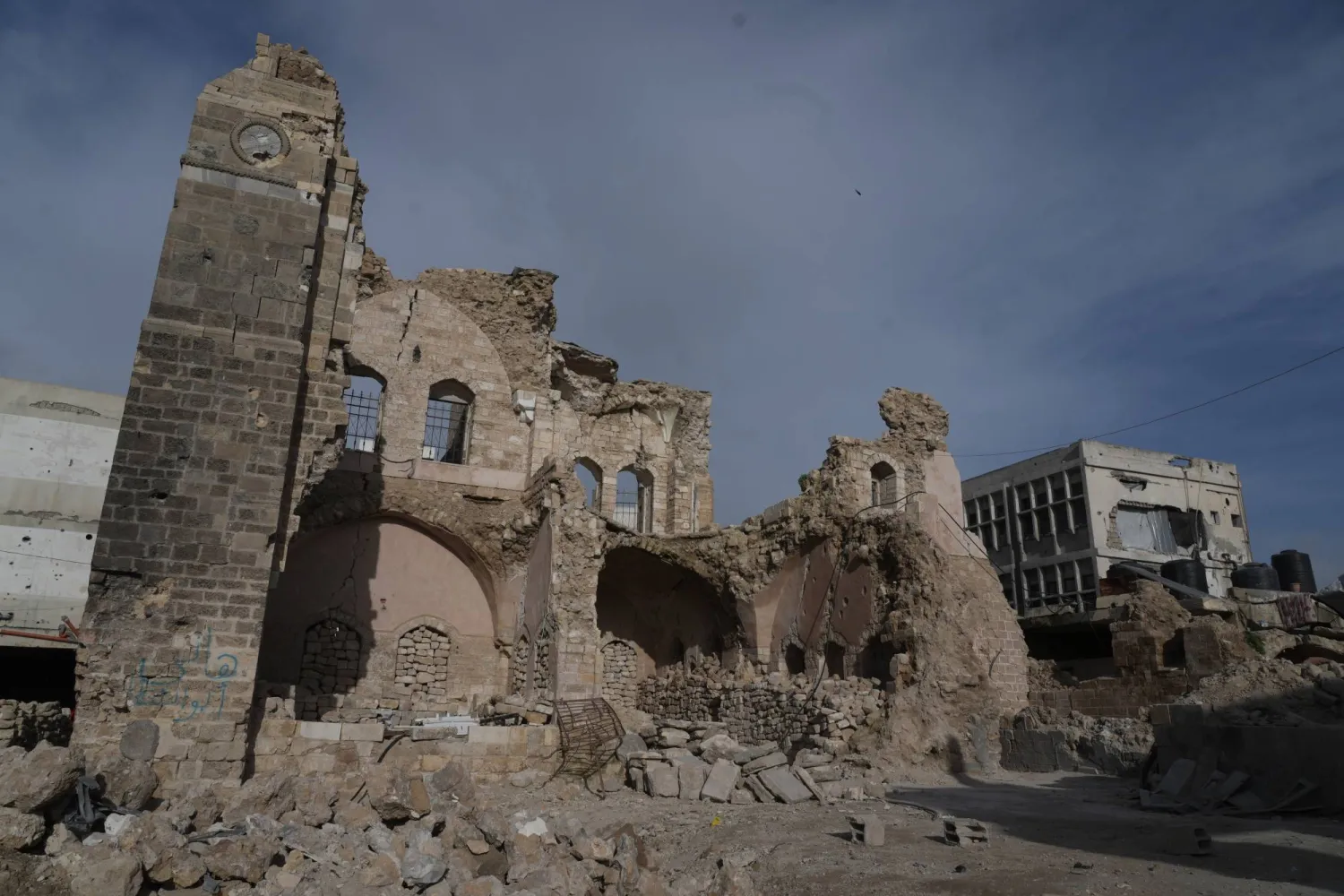
A view of the historic Pasha Palace in Gaza City after an Israeli airstrike badly damaged the building during the war in the Gaza Strip, Wednesday, Jan. 28, 2026. (AP Photo/Jehad Alshrafi)
TT

Palestinians Look to Salvage Gaza's History from the Ruins of Israel's Military Offensive

A view of the historic Pasha Palace in Gaza City after an Israeli airstrike badly damaged the building during the war in the Gaza Strip, Wednesday, Jan. 28, 2026. (AP Photo/Jehad Alshrafi)

Muneer Elbaz remembers the joy of visiting the Great Omari Mosque in Gaza with his family, praying at a site where people have worshipped over centuries as empires came and went.

“These were the best days,” Elbaz said, as he recalled promenading through the lively markets around the mosque before the Israel-Hamas war. “This place transports us from one era to another.”

Today, much of the mosque stands in ruins — like most of Gaza — after being hit by Israeli strikes in the two-year war muffled by an uncertain ceasefire. The sight of the rubble brings to mind “a tree that had been uprooted from the land,” said Elbaz, a Palestinian heritage consultant involved with recovery work at the site.

Israel’s military offensive killed over 72,000 Palestinians, according to Gaza's Health Ministry, and erased entire extended families.

Gone too is some of the heritage of a land with a rich history going back to ancient times. The mosque was built on a site where a Byzantine church had stood, and changed hands and even religions as one invader followed another, The Associated Press said.

With major military operations halted, Palestinians are gaining a clearer picture of the destruction. Some organizations are trying to save what they can at historical sites, even as full-scale restoration — and the broader reconstruction of the territory — face major obstacles.

Dozens of sites were damaged Israel launched its offensive after Hamas-led militants killed some 1,200 people, mostly civilians, and took another 251 hostage in the Oct. 7, 2023, attack. The military accuses Hamas of concealing military assets beneath or near heritage sites, as well as other civilian structures.

The UN cultural agency, in an ongoing assessment based on satellite images, says it has verified damage to at least 150 sites since the start of the war. They include 14 religious sites, 115 buildings of historical or artistic interest, nine monuments and eight archaeological sites.

They are fragments of Gaza’s soul, connecting Palestinians to a place and a history that many fear is at risk of being erased.

“These sites were an important element that solidifies the presence of the Palestinian people on this land and that represents the continuity of their cultural identity,” said Issam Juha, co-director of the Center for Cultural Heritage Preservation, based in the Israeli-occupied West Bank.

“They want to erase the Palestinian identity and Palestinian heritage and ... to remove any connection that keeps the Palestinian society clinging to this land,” he said.

The center is doing urgent rescue work at the badly damaged Pasha Palace, which housed centuries-old artifacts, many of which appear to have been looted, Juha said. Among the missing items are an Ottoman-era Quranic manuscript, jewelry from the medieval Mamluk era and a Roman-era sarcophagus from which only some fragments have been recovered, according to Hamouda al-Dohdar, an expert working at the site.

The Israeli military said it struck “a Hamas military compound and an anti-tank missile array” at the site. It said its forces struck a “terror tunnel” at the Omari mosque. It did not provide evidence in either case.

Amir Abu al-Omrain, an official with Gaza's endowments ministry, part of the Hamas-run government, denied the allegation about the mosque.

UNESCO does not have a mandate to assign responsibility for the damage it assesses.

An independent commission established by the UN’s Human Rights Council said it was not aware of any evidence of a tunnel shaft in the mosque. Noting the Israeli allegations about the mosque, it said that even the presence of a "legitimate military objective ... would not have justified the resulting damage.” Israel has previously accused the commission of bias.

The centuries-old Saint Porphyrius Orthodox church complex, which had been sheltering displaced Palestinians, was also hit in an Israeli attack early in the war, causing deaths and injuries. The military said it had targeted a nearby Hamas command center. UNESCO said the church complex was moderately damaged.

Some of Gaza's heritage sites appear to have been spared. UNESCO said it has found no evidence of damage at the Saint Hilarion Monastery, dating to the 4th century.

Under international law, cultural property should not be targeted or used for military purposes.

The Israeli military says it takes the sensitivity of cultural and religious sites into account, aims to minimize damage to civilian infrastructure and adheres to international law.

A rich history

Artifacts and accounts stretching back thousands of years testify to Gaza’s long history of commerce and conflict. Egypt’s pharaohs sent chariots through the low-lying coastal strip in their wars with the Hittites in modern-day Türkiye. Traders in Gaza did brisk business with the ancient Greeks.

The Omari mosque, named for Islam’s second caliph, was initially built in the seventh century. Centuries later, the Crusaders converted it into a cathedral, and it went back to being a mosque after they were expelled, said Stephennie Mulder, associate professor of Islamic art at the University of Texas at Austin.

The mosque was damaged during World War I, when the British shelled Gaza in their campaign against the Ottoman Turks, and was later rebuilt.

“The building itself told the story of Gaza’s past as a crossroads of trade, armies, empires, and religious traditions,” said Mulder. “For many Gazans, the Omari mosque stood as a beloved symbol of multiplicity, resilience and persistence.”

More than stones

Mohammad Shareef, 62, remembers attending prayers at the mosque with his father when he was a child, and studying for exams in its quiet confines. Years later, he would bring his own children there. He wept when it was hit.

“We were raised in it and around it, and there’s no stone here that we haven’t stepped on,” he said. “For the people of Gaza, this is their history.”

The loss will feel particularly acute during the Muslim holy month of Ramadan, which begins later this month. Before the war, thousands converged on the mosque for Ramadan prayers amid a festive atmosphere. This year, a large tented structure has been erected.

In recent days, workers have been filling wheelbarrows in the shadow of a damaged minaret.

Hosni Almazloum, an engineer working at the site, said the mosque’s prayer hall ceiling had collapsed and columns had crumbled. He said it could be rebuilt, if construction supplies are allowed in. For now, teams have been focused on recovery and preventing further damage, sifting through and storing stones.

The US-brokered ceasefire agreement, which halted most of the fighting in October, gives no timeline for Gaza’s reconstruction, which may prove impossible if Israel maintains the blockade it imposed on the territory when Hamas seized power in 2007, after the militant group won Palestinian elections in 2006.

Many historic sites suffered from neglect before the war. The blockade and previous Israel-Hamas wars, along with a lack of resources and urban sprawl, posed challenges. Hamas-run authorities have leveled parts of what archaeologists believe was a Bronze Age settlement to make way for construction projects.

Elbaz says that before the ceasefire, grief was a luxury he couldn’t afford — his family was just trying to survive.

“What would you begin to cry over?” he asked. “The historic mosques or your home or your history or your children’s schools or the streets?”

Now, as he processes the war’s toll, he sometimes weeps, away from the eyes of his children.

“Gaza is our mother,” he said. “We have memories everywhere — in this tree, this flower, this garden and this mosque. Yes, we cry over every part of Gaza.”



Ethiopia Builds Secret Camp to Train Sudan RSF Fighters 

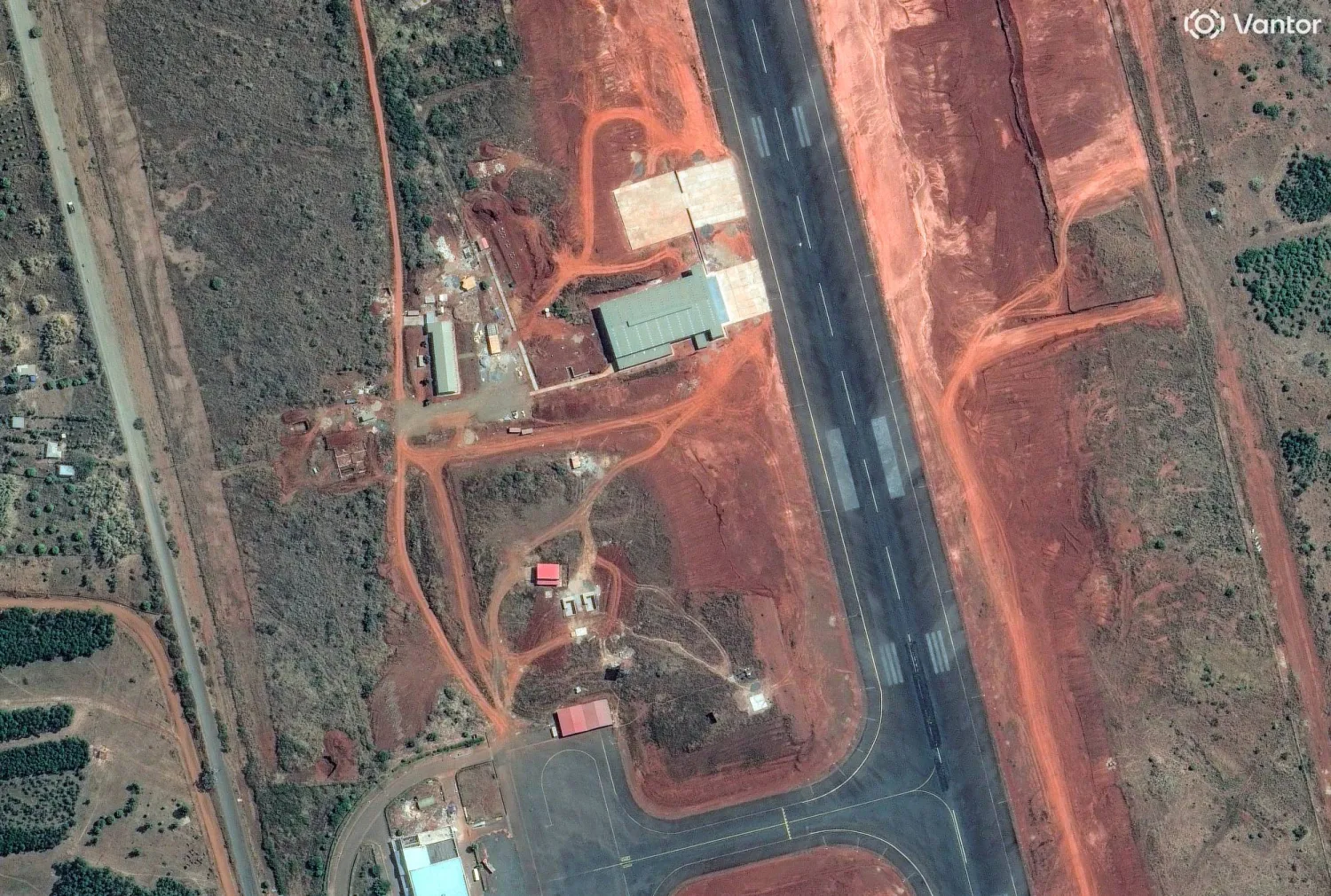
Satellite imagery shows new construction and drone support infrastructure at Asosa airport in Benishangul-Gumuz, Ethiopia, January 28, 2026. (Vantor/Handout via Reuters)
TT

Ethiopia Builds Secret Camp to Train Sudan RSF Fighters 

Satellite imagery shows new construction and drone support infrastructure at Asosa airport in Benishangul-Gumuz, Ethiopia, January 28, 2026. (Vantor/Handout via Reuters)

Ethiopia is hosting a secret camp to train thousands of fighters for the paramilitary Rapid Support Forces in neighboring Sudan, Reuters reporting has found, in the latest sign that one of the world’s deadliest conflicts is sucking in regional powers from Africa and the Middle East.

The camp is the first direct evidence of Ethiopia’s involvement in Sudan’s civil war, marking a potentially dangerous development that provides the RSF a substantial supply of fresh soldiers as fighting escalates in Sudan’s south.

Eight sources, including a senior Ethiopian government official, said the United Arab Emirates financed the camp’s construction and provided military trainers and logistical support to the site, a view also shared in an internal note by Ethiopia’s security services and in a diplomatic cable, reviewed by Reuters.

The news agency could not independently verify UAE involvement in the project or the purpose of the camp. In response to a request for comment, the UAE foreign ministry said it was not a party to the conflict or “in any way” involved in the hostilities.

Reuters spoke to 15 sources familiar with the camp's construction and operations, including Ethiopian officials and diplomats, and analyzed satellite imagery of the area. Two Ethiopian intelligence officials and the satellite images provided information that corroborated details contained in the security memo and cable.

The location and scale of the camp and the detailed allegations of the UAE’s involvement have not been previously reported. The images show the extent of the new development, as recently as in the past few weeks, along with construction for a drone ground control station at a nearby airport.

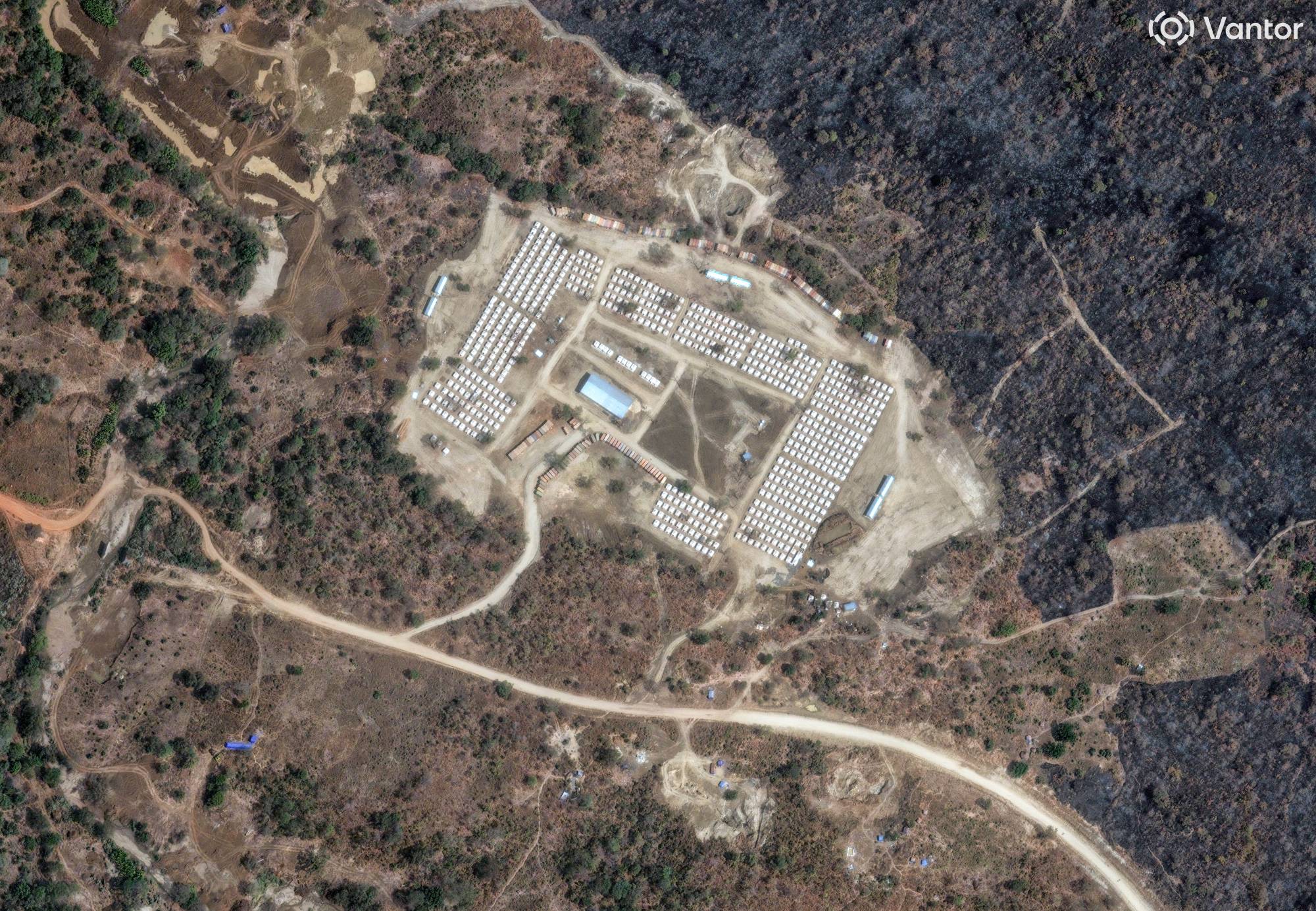
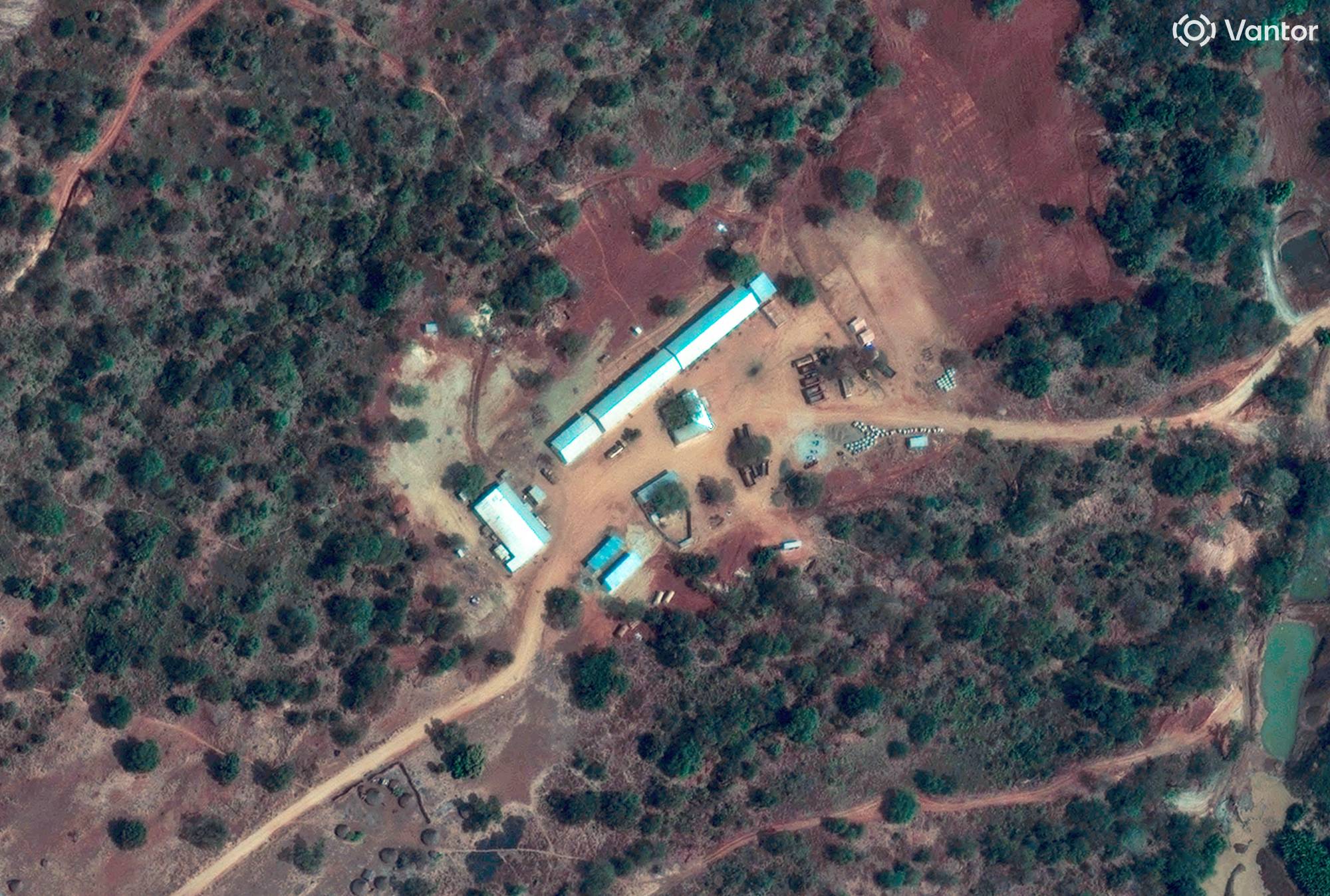
Satellite imagery shows a camp with hundreds of tents in Benishangul-Gumuz, Ethiopia, January 22, 2026. (Vantor/Handout via Reuters)

Activity picked up in October at the camp, which is located in the remote western region of Benishangul-Gumuz, near the border with Sudan, satellite images show.

Ethiopia’s government spokesperson, its army and the RSF did not respond to detailed requests for comment about the findings of this story.

On January 6, UAE and Ethiopia issued a joint statement that included a call for a ceasefire in Sudan, as well as celebrating ties they said served the defense of each other’s security.

The Sudanese Armed Forces did not respond to a request for comment.

As of early January, 4,300 RSF fighters were undergoing military training at the site and “their logistical and military supplies are being provided by the UAE,” the note by Ethiopia’s security services seen by Reuters read.

Sudan's army has previously accused the UAE of supplying the RSF with weapons, a claim UN experts and US lawmakers have found credible.

The camp’s recruits are mainly Ethiopians, but citizens from South Sudan and Sudan, including from the SPLM-N, a Sudanese rebel group that controls territory in Sudan’s neighboring Blue Nile state, are also present, six officials said.

Reuters was unable to independently establish who was at the camp or the terms or conditions of recruitment.

A senior leader of the SPLM-N, who declined to be named, denied his forces had a presence in Ethiopia.

The six officials said the recruits are expected to join the RSF battling Sudanese soldiers in Blue Nile, which has emerged as a front in the struggle for control of Sudan. Two of the officials said hundreds had already crossed in recent weeks to support the paramilitaries in Blue Nile.

The internal security note said General Getachew Gudina, the Chief of the Defense Intelligence Department of the Ethiopian National Defense Force, was responsible for setting up the camp. A senior Ethiopian government official as well as four diplomatic and security sources confirmed Getachew’s role in launching the project.

Getachew did not respond to a request for comment.

The camp was carved out of forested land in a district called Menge, about 32 km from the border and strategically located at the intersection of the two countries and South Sudan, according to the satellite imagery and the diplomatic cable.

The first sign of activity in the area began in April, with forest clearing and the construction of metal-roofed buildings in a small area to the north of what is now the area of the camp with tents, where work began in the second half of October.

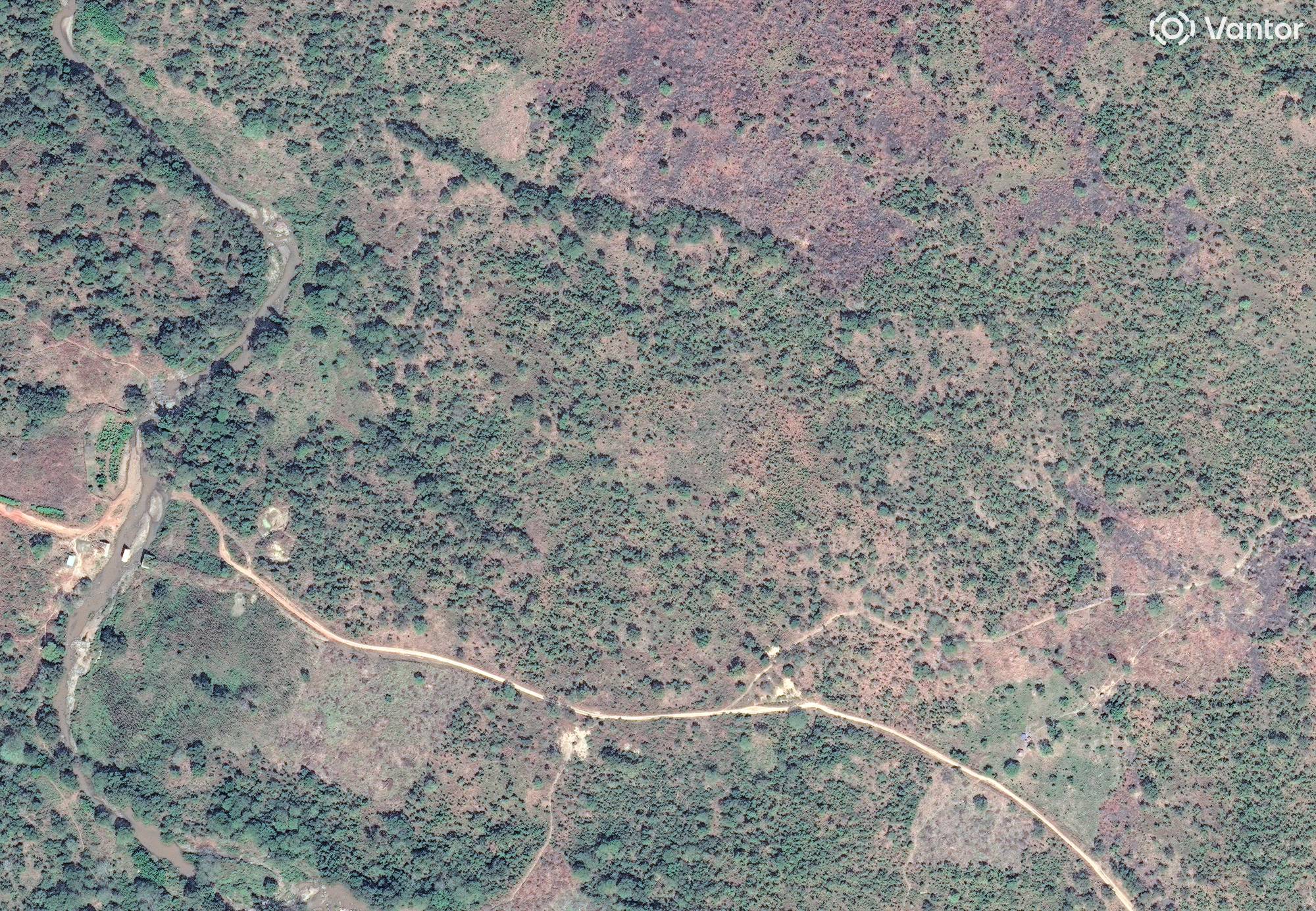
Satellite imagery shows a forested area where, ten months later, a camp with hundreds of tents was built in Benishangul-Gumuz, Ethiopia, December 15, 2024. (Vantor/Handout via Reuters)

The diplomatic cable, dated November, described the camp as having a capacity of up to 10,000 fighters, saying activity began in October with the arrival of dozens of Land Cruisers, heavy trucks, RSF units and UAE trainers. Reuters is not revealing the country that wrote the cable, to protect the source.

Two of the officials described seeing trucks with the logo of the Emirati logistics company Gorica Group heading through the town of Asosa and towards the camp in October. Gorica did not respond to a request for comment.

The news agency was able to match elements of the timeframe specified in the diplomatic cable with satellite imagery. Images from Airbus Defense and Space show that after the initial clearing work, tents began filling the area from early November. Multiple diggers are visible in the imagery.

An image taken by US space technology firm Vantor on November 24 shows more than 640 tents at the camp, approximately four meters square. Each tent could comfortably house four people with some individual equipment, so the camp could accommodate at least 2,500 people, according to an analysis of the satellite imagery by defense intelligence company Janes.

Janes said it could not confirm the site was military based on their analysis of the imagery.

New recruits were spotted travelling to the camp in mid-November, two senior military officials said.

Satellite imagery shows an area where trucks come and go at a camp in Benishangul-Gumuz, Ethiopia, January 22, 2026. (Vantor/Handout via Reuters)

On November 17, a column of 56 trucks packed with trainees rumbled through dirt roads of the remote region, the officials, who witnessed the convoys, told Reuters, with each truck holding between 50 and 60 fighters, the officials estimated.

Two days later, both officials saw another convoy of 70 trucks carrying soldiers driving in the same direction, they said.

The November 24 image shows at least 18 large trucks at the site. The vehicles’ size, shape and design match those of models frequently used by the Ethiopian military and its allies to transport soldiers, according to Reuters analysis.

Development continued in late January, the Vantor images show, including new clearing and digging in the riverbed just north of the main camp and dozens of shipping containers lined around the camp visible in a January 22 image. A senior Ethiopian government official said construction on the camp was ongoing but did not elaborate on future building plans.

Sudan’s civil war erupted in 2023 after a power struggle between the Sudanese army and the RSF ahead of a planned transition to civilian rule.