Tunisian Government Estimates Tax Evasion at USD8.3 Billion https://english.aawsat.com/home/article/1574476/tunisian-government-estimates-tax-evasion-usd83-billion
Tunisian Government Estimates Tax Evasion at USD8.3 Billion
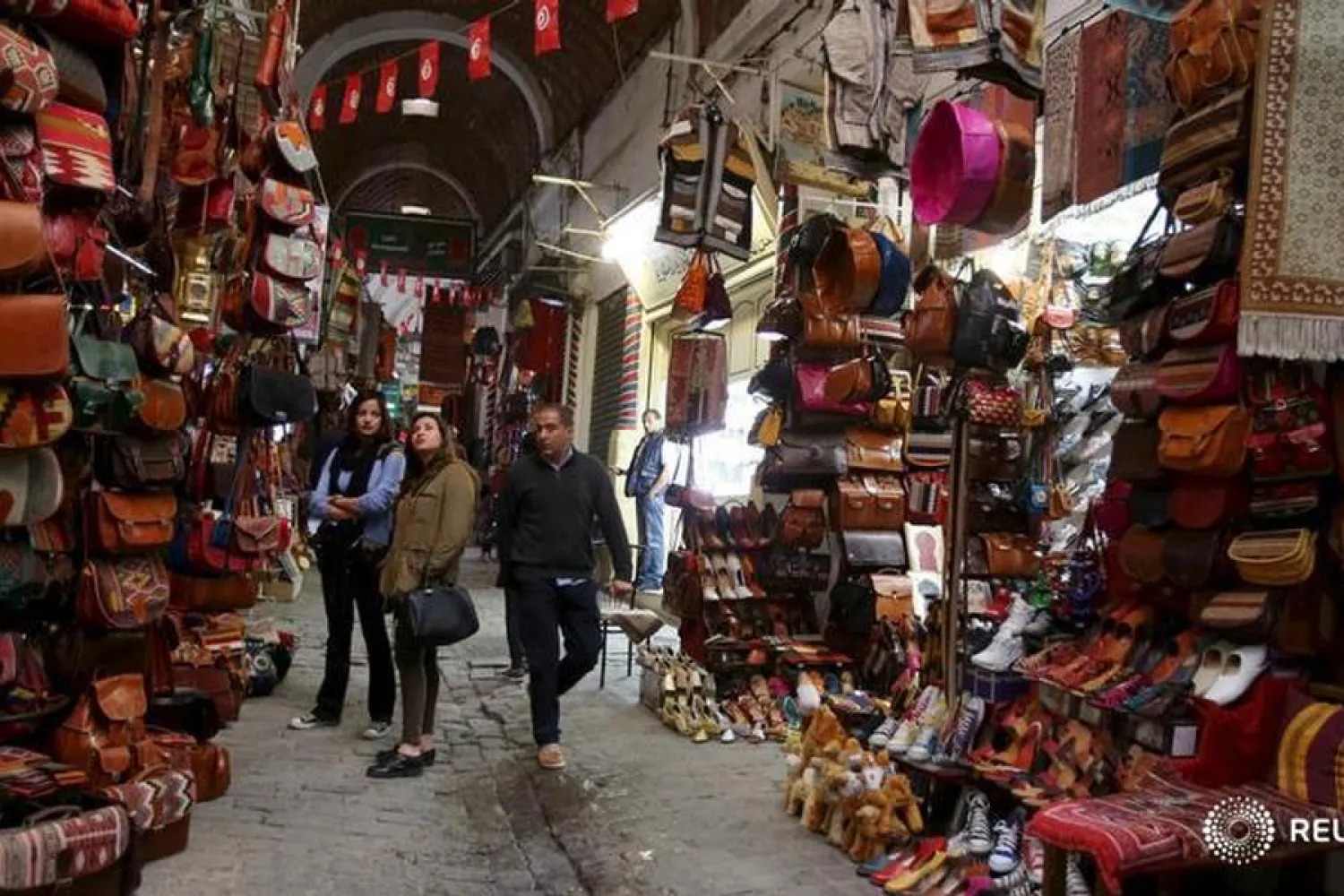
Tunisians walk near a souvenir shop in the medina in Tunis, Tunisia, April 2, 2016. REUTERS/Zoubeir Souissi
Prime Minister's adviser in charge of tax reform Faisal Derbal has revealed that tax evasion is estimated to reach TND25 billion (around USD8.3 billion) in Tunisia.
He denied, during a press conference in the government’s headquarters, rumors circulating about the tax evasion value rising to double of the mentioned number in which it reaches TND50 billion (USD16.6 billion).
Derbal continued that the tax evasion value can’t be equal to incomes of the organized sector that includes petroleum companies, banks, phosphate production companies, and transportation firms.
In the same context, he expected tax incomes to be a minimum of TND27 billion (USD9 billion) this year – these incomes would contribute to sustaining the state’s efforts in providing resources to fund the current year’s budget (around TND41 billion).
Tunisian authorities seek to limit tax evasion phenomenon that has mounted after 2011 due to the growth of equivalent commercial activities, representing around 53 percent of local commerce.
In this context, Tunisian Economic and Financial Expert Saad Boumakhla stated that unsupervised equivalent commerce and economic activities have mounted during the past years. This caused the local economy to suffer enormously on the level of providing self-resources for the state.
Tunisia's Former Minister of Public Functions Abid Briki affirmed that he handed out a list to Tunisia's Prime Minister Youssef Chahed – the list included a hundred names of merchants and suppliers who evaded customs fees.
Briki noted that a Tunisian merchant who exports used clothes and corals owes the state up to TND211 million (more than USD70 million) as debts.
Saudi Industrial Production Ends 2025 with Strong 8.9% Growthhttps://english.aawsat.com/business/5239565-saudi-industrial-production-ends-2025-strong-89-growth
Saudi Industrial Production Ends 2025 with Strong 8.9% Growth
Workers are seen at a Saudi Aramco facility. (Aramco)
Saudi Arabia’s industrial sector posted an exceptional performance at the end of 2025, with the Industrial Production Index recording annual growth of 8.9 percent in December compared with the same month a year earlier, according to data released by the General Authority for Statistics (GASTAT).
The increase reflects a broad-based recovery in key economic activities, led by mining and quarrying as well as manufacturing, reinforcing the sector’s role as a major pillar of the national economy.
Oil production
Mining and quarrying was the main driver of the overall index, posting a strong annual increase of 13.2 percent by December. The surge was largely attributed to higher crude oil output, which rose to 10.1 million barrels per day, compared with 8.9 million barrels per day in the same period last year.
On a monthly basis, the index remained relatively stable, edging up by just 0.3 percent from November.
Manufacturing
The manufacturing sector also showed resilience, recording annual growth of 3.2 percent, supported by strong performance in chemical and food-related activities.
The manufacture of chemicals and chemical products emerged as a key growth engine, rising by 13.4 percent, followed by food manufacturing, which grew by 7.3 percent year on year.
Month on month, the manufacturing index maintained positive momentum with a 0.3 percent increase. Food manufacturing alone jumped by 9.6 percent, while chemical products rose by 2.8 percent compared with November 2025.
Utilities and public services
In utilities, water supply, sewerage, waste management, and remediation activities posted robust annual growth of 9.4 percent.
In contrast, electricity, gas, steam, and air-conditioning supply declined by 2.5 percent compared with December 2024.
On a monthly basis, both sectors contracted, with water-related activities falling by 7.2 percent and electricity and gas by 13.1 percent compared with November 2025, suggesting the impact of seasonal factors or scheduled maintenance.
Oil and non-oil balance
Overall, the data point to a balanced distribution of growth across Saudi Arabia’s economic pillars. Oil-related activities recorded annual growth of 10.1 percent, while non-oil activities expanded by a steady 5.8 percent.
In the short term, non-oil activities outperformed on a monthly basis, rising by 0.4 percent, while oil activities slipped slightly by 0.3 percent, underscoring the Kingdom’s ongoing economic diversification strategy.
BP Announces 86% Drop in Annual Net Profit, Shocks Shareholders by Suspending Buybacks Programhttps://english.aawsat.com/business/5239551-bp-announces-86-drop-annual-net-profit-shocks-shareholders-suspending-buybacks
BP Announces 86% Drop in Annual Net Profit, Shocks Shareholders by Suspending Buybacks Program
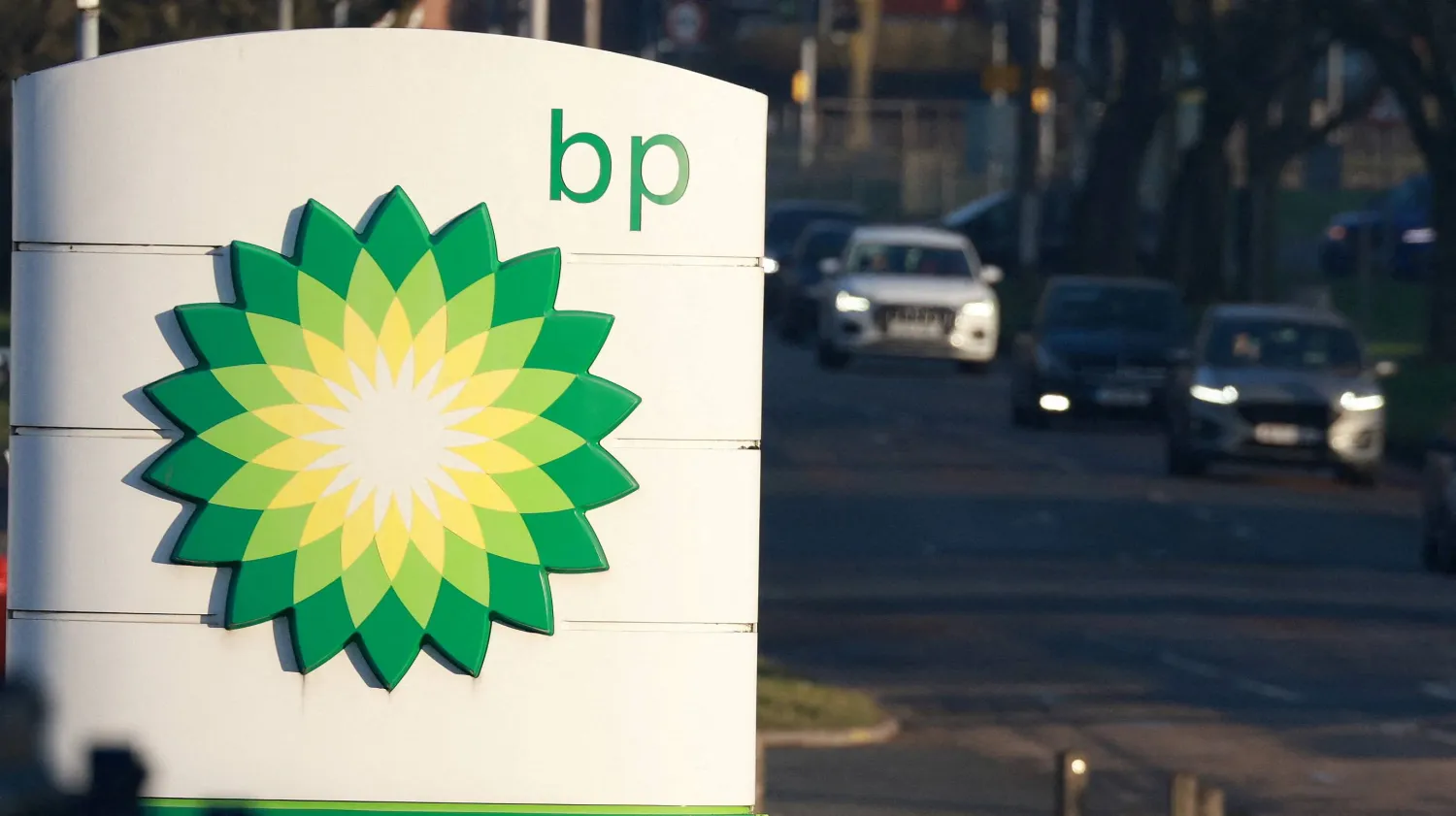
FILE PHOTO: Vehicles drive past a BP (British Petroleum) petrol station in Liverpool, Britain, February 7, 2023. REUTERS/Phil Noble/File Photo
British oil giant BP announced Tuesday a sharp 86% drop in annual net profit and a surprise decision to suspend the entire share buyback program to save cash and trim debts.
The financial setback comes at a sensitive time, as the company prepares to welcome its new CEO, Meg O'Neill, in April and while it hopes to strengthen the balance sheet which is hit by lower crude prices and a huge write-down linked to its green energy transition.
Profit after tax dropped to $55 million last year from $381 million a year earlier, BP said in a statement.
The company said the annual results included an impairment totaling around $4 billion linked to its “transition businesses in the gas and low carbon energy segment.”
It added that its annual performance was “delivered against a weaker oil price environment.”
Underlying earnings, which strip out some energy price movements and one-off charges, fell 16% to $7.5 billion last year, slightly below the market expectations of $7.58 billion.
Meanwhile, BP surprised shareholders by a decision to suspend its share buyback program, as the company intensifies its efforts to shore up its balance sheet.
BP said it would “fully allocate excess cash” to cutting its $22 billion debt pile, acknowledging that “urgency” was needed to revive the fortunes of one of the UK’s best-known companies.
The move sent the company’s shares down more than 5% in London, to become one of the worst performers in the pan-European STOXX 600 index.
Carol Howle, BP interim CEO, said in a statement, “We have made progress against our four primary targets - growing cash flow and returns, reducing costs, and strengthening the balance sheet - but know there is more work to be done, and we are clear on the urgency to deliver.”
Internal factors were not alone responsible for the company’s decline in net profit, as BP said its performance was driven by a weaker oil price environment that clouded 2025.
Energy prices have been under pressure on concerns that US President Donald Trump's tariffs will crimp economic growth.
The international oil price benchmark, Brent North Sea crude, was steady Tuesday at $69 per barrel.
Contrary to BP, British rival Shell last week said its net profit rose 11% last year as higher volumes and lower costs helped to offset falling oil and gas prices.
Profit after tax climbed to $17.84 billion in 2025 from $16.1 billion a year earlier.
Analysts had raised the prospect of European oil majors' buyback programs shrinking due to lower oil and gas prices. Indeed, Norway's Equinor slashed its buyback program by 70% last week.
Meg O'Neill is taking over as BP's chief executive in April, becoming the first woman to lead an oil major. Her appointment comes following Murray Auchincloss’ decision to step down late last year.
O'Neill, an American who spent 23 years working for ExxonMobil, is also the first external candidate to be appointed CEO of BP in the group's 116-year history.
She has led the Australian group Woodside Energy since April 2021.
Carole Howle, who has served as interim CEO since Auchincloss unexpectedly stepped down in December, said on Tuesday, “We look forward to Meg O'Neill joining as CEO in April as we accelerate our progress to build a simpler, stronger and more valuable BP for the future.”
“We can and will do better for our shareholders,” she added as the group suspended share buybacks.
That news hit BP's share price, which shed 5% in Tuesday’s morning trading in London.
‘AlUla Manifesto’ Ends Era of ‘Economic Dependency’https://english.aawsat.com/business/5239542-%E2%80%98alula-manifesto%E2%80%99-ends-era-%E2%80%98economic-dependency%E2%80%99
‘AlUla Manifesto’ Ends Era of ‘Economic Dependency’
Group photo of participants at the Conference for Emerging Market Economies held in AlUla. X
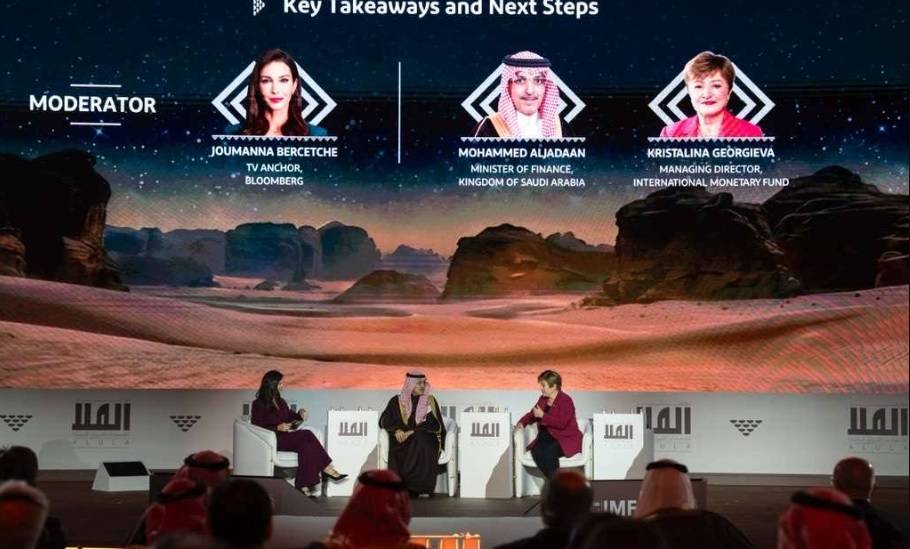
A joint statement issued by Mohammed Aljadaan, the Saudi Minister of Finance, and International Monetary Fund (IMF) Managing Director Dr. Kristalina Georgieva following the second annual Conference for Emerging Market Economies held in AlUla could be described as the “AlUla Manifesto.”
A manifesto is a public, written declaration of intentions, and acts as a guide for action. At the heart of AlUla, this statement was not merely words; it was a “charter” laying out a roadmap to end the era of “economic dependency” and to establish a new phase in which emerging economies are the leaders, not the followers.
For an in-depth analysis of the outputs of this “manifesto,” a fundamental shift is revealed:
Emerging economies are no longer the “weak link” groaning under the weight of crises in advanced countries; rather, they have transformed into a “safety valve” now driving 70 percent of global growth.
The conference highlighted the exceptional resilience of emerging economies in the face of geopolitical storms, while issuing a firm warning that “this is no time for complacency.”
The closing statement issued by Aljadaan and Georgieva stressed that the conference, in its second edition, has “reaffirmed the value of a dedicated global forum focused on the shared challenges, opportunities, and aspirations of emerging market economies.”
They said “discussions focused on how emerging markets can navigate a global environment marked by persistent uncertainty, geopolitical shifts, evolving trade patterns, and rapid technological change.”
“These transformative trends highlight the urgency of strengthening policy frameworks and institutions to support resilience and leverage opportunities ahead,” they added.
According to Aljadaan and Georgieva, “the experience across many emerging markets shows that credible policy frameworks and institutional upgrades have helped achieve better inflation outcomes, maintain financial stability, and preserve market access, even amid heightened uncertainty.”
Aljadaan and Georgieva in the closing session of the conference. X
The joint statement also stressed that the real challenge is moving to the next phase of reforms that deliver higher, more sustained, and more job-rich growth.
“Unleashing the private sector will be central to this effort, including through deepening financial markets, reducing barriers to entrepreneurship and investment, and harnessing artificial intelligence by investing in digital infrastructure and equipping young people with skills necessary to thrive in the evolving global job market,” it said.
The conference also sent a message that in a world of shifting trade and investment patterns, deeper intra-regional and inter-regional integration offers big opportunities.
“Boosting trade and strengthening regional cooperation remain critical for emerging markets as they adapt to the changing global economic landscape,” said Aljadaan and Georgieva.
The Saudi minister and the IMF managing director also wrote an analysis published by “Project Syndicate” that said: “It used to be that when advanced economies sneezed, emerging markets caught a cold.”
“That is no longer true,” they added.
According to the analysis, “following recent global shocks, such as the post-pandemic inflation surge and a new wave of tariffs, emerging markets have held up well. Inflation has continued to slow, currencies have generally retained their value, and debt issuance costs have remained at manageable levels.”
But Aljadaan and Georgieva warned that “while emerging markets have made great strides in improving their policy frameworks and enhancing credibility, this is no time for complacency.”
They called for reforms in a turbulent world and urged policymakers to position their economies to take advantage of the potential productivity gains from AI. “Saudi Arabia, India, and other members of the Gulf Cooperation Council, for example, have unveiled impressive infrastructure investments that will lay the foundation for AI adoption for decades to come.”
They concluded their statement by saying that emerging market economies are coming together to discuss how they can leverage their growing scale and build on their hard-won resilience.
لم تشترك بعد
انشئ حساباً خاصاً بك لتحصل على أخبار مخصصة لك ولتتمتع بخاصية حفظ المقالات وتتلقى نشراتنا البريدية المتنوعة