Astana Guarantors Agree on Syria Constitutional Committee
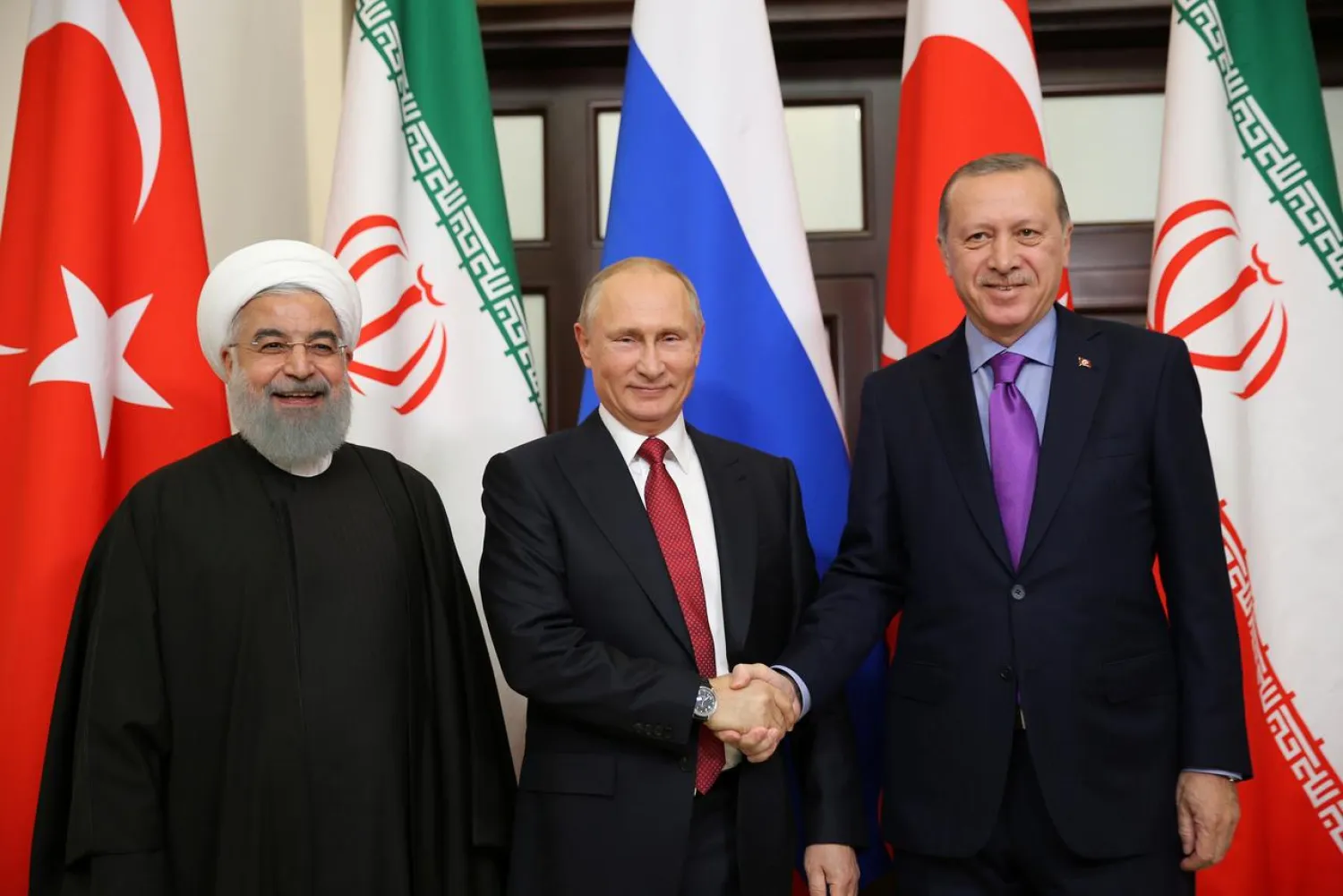
The leaders of Russia, Turkey and Iran meet in Sochi in November. (Reuters)
The Kremlin stressed on Monday that the presidents of the three guarantor states of Syrian peace, Russia, Turkey and Iran, will meet in Sochi in February 14.
The three countries appeared to have reached consensus on the composition of the Syrian constitutional committee, which will be proposed to the UN.
Kremlin spokesman Dmitry Peskov said Presidents Vladimir Putin, Recep Tayyip Erdogan and Hassan Rouhani will meet in Sochi.
He explained that a meeting between Putin and Erdogan will directly precede the summit, in an apparent reference to the intention of the two presidents to finalize Russian-Turkish understandings on Syria, especially in Idlib, before discussing them in the tripartite framework.
Peskov did not disclose details of the summit agenda.
Russian foreign ministry contacts with a number of regional parties and talks in Moscow and Ankara had focused on the formation of the constitutional committee and mechanisms for dealing with the situation in Idlib. These two issues will likely top the agenda of the Sochi talks.
“In parallel with the war against terrorism, there is a current political track in which Russia, Iran, and Turkey adopted an initiative based on the decisions of the Syrian national dialogue congress held a year ago in Sochi to set up a committee to discuss the constitution,” Russian Foreign Minister Sergei Lavrov said during a speech in Kyrgyz capital, Bishkek, on Monday.
His remarks were made one day after Turkish Foreign Minister Mevlut Cavusoglu said that the constitutional committee will be set up in the coming days.
“In the coming days, the constitutional committee will be set up comprising representatives of the civil society, supporters of [Syrian President] Bashar al-Assad and the opposition,” Cavusoglu said.
Schneider to Asharq Al-Awsat: Marib Offers Ideal Model for International Cooperation in Yemenhttps://english.aawsat.com/arab-world/5284986-schneider-asharq-al-awsat-marib-offers-ideal-model-international-cooperation
Schneider to Asharq Al-Awsat: Marib Offers Ideal Model for International Cooperation in Yemen
German Ambassador to Yemen Thomas Schneider speaks during an interview at the Belqis Hotel in Marib. (Asharq Al-Awsat)
Hours before leaving Marib, German Ambassador to Yemen Thomas Schneider was still taking in the scenes from his first visit to the governorate: camps for displaced people, humanitarian project sites, meetings with officials and tribal sheikhs.
At every stop, one image seemed to follow him: the smile.
In a governorate that has taken in millions of displaced people and spent years on the front line of Yemen’s war, Schneider found a reality different from the one suggested by headlines of conflict and humanitarian crisis. Here, hardship was unmistakable, but so was optimism and a stubborn insistence on life.
Inside the Sabaean-style Belqis Hotel, built in the 1980s in central Marib, Schneider spoke to Asharq Al-Awsat shortly before leaving the governorate about a visit that appeared, at first, humanitarian and developmental. But it also revealed to him a political and social dimension he sees as important to Yemen’s future.
The German ambassador said the visit was meant to express solidarity with the people of Marib and with Yemenis more broadly as the country endures difficult conditions. The German delegation, he said, wanted to visit humanitarian projects and camps for displaced people and refugees, see residents’ needs firsthand and assess the impact of programs supported by Germany and its international partners.
Yet what struck him most, he said, was the relationship that has taken shape in Marib between local authorities, international organizations and UN agencies.
“We saw a positive model of cooperation between the Yemeni government and donor countries, and, more importantly, close cooperation between the local authorities in the governorate and UN agencies and organizations,” he said.
For Schneider, the importance of that experience lies not only in the number or scale of projects carried out, but in the partnership it has created among those working on the ground. That, he said, has made Marib a model that could be useful elsewhere.
“This partnership is an extremely important point, and we sensed that Marib’s experience represents a successful model that can be followed by all parties involved in humanitarian and development work,” he said.
Over the years of war, Marib has become Yemen’s largest hub for displaced people, absorbing successive waves of families fleeing the fighting. Schneider said the way the governorate’s people have handled that burden stands out as one of Yemen’s most important success stories during the conflict.
“Marib has received large numbers of displaced people from across Yemen, as well as refugees from other countries, and this reflects the generosity of its people and their humanitarian spirit. We saw very positive examples of how these challenges are being handled,” he said.
During the visit, the German delegation met displaced people and listened to their stories and needs. It also held meetings with UN representatives and local authorities, reinforcing Schneider’s belief that coordination and continuous communication among the various parties remain the most important factors in responding to complex humanitarian challenges.
But perhaps the most distinctive stop was the meeting with tribal sheikhs in Marib. In a country where tribes are often viewed through a security or traditional lens, Schneider came away with a different impression. He saw Yemen’s tribes as a wide social network whose role goes beyond local customs, helping preserve social cohesion, stability and the future of the country as a whole.
“Sitting with the tribal sheikhs was a very important experience. I felt that they do not only play a social role, but also have a clear political awareness of the challenges facing Yemen,” he said.
He said the discussions revealed important visions and ideas about the country’s future, stressing that tribes would be an essential party in any serious political process aimed at achieving peace.
“I believe the tribes will play a central role in any path leading to peace in Yemen. I came away from this visit with a firm conviction that they represent a real national asset and an important element that can be built upon to strengthen stability,” he said.
Between the political and humanitarian messages, Schneider’s strongest personal impression remained tied to the people of Marib themselves. Despite years of war, economic pressure and the burden of displacement, he said he found, everywhere he went, an optimistic spirit and a positive view of the future.
“I saw a smile everywhere in Marib despite the difficult conditions people are living through. This optimistic spirit and warm welcome made the visit a very important experience for me,” he said.
He said he would carry that image back to his children and family, to his ministry in Berlin, and to his partners in the European Union and international organizations. What he saw in Marib, he said, offers an important lesson in resilience and overcoming crises.
At the end of the interview, I asked the ambassador to sum up Marib in just three words. He did not hesitate long before smiling and answering: “The smile, coffee and welcome.”
The words seemed to capture a city standing on the edge of war, yet still determined to greet its guests with a smile, serve coffee and believe Yemen’s future can be better.
Iran Races against Lebanese Negotiators to Secure Israeli Withdrawal from Southhttps://english.aawsat.com/arab-world/5284935-iran-races-against-lebanese-negotiators-secure-israeli-withdrawal-south
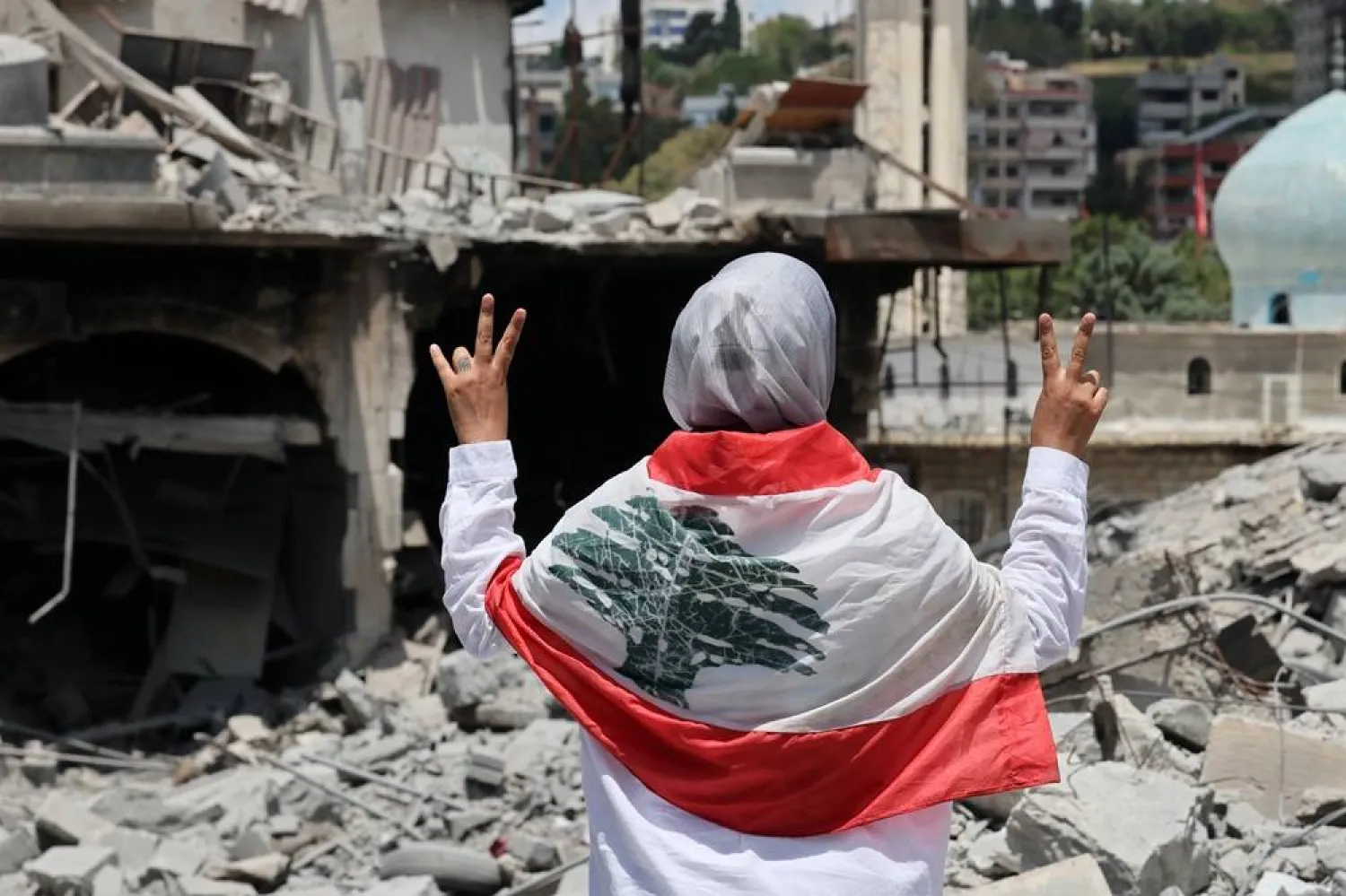
A woman flashes the victory sign next to destroyed buildings following Israeli strikes on the historic old market in the town of Nabatieh, southern Lebanon, 15 June 2026, after the announcement of a US-Iran mediated preliminary framework to end regional military hostilities and lift the naval blockade on the Strait of Hormuz. (EPA)
Iran Races against Lebanese Negotiators to Secure Israeli Withdrawal from South
A woman flashes the victory sign next to destroyed buildings following Israeli strikes on the historic old market in the town of Nabatieh, southern Lebanon, 15 June 2026, after the announcement of a US-Iran mediated preliminary framework to end regional military hostilities and lift the naval blockade on the Strait of Hormuz. (EPA)
Two tracks are moving in parallel to secure Israel’s withdrawal from occupied Lebanese territory. The first is Lebanon’s direct negotiations with Israel, which are scheduled for their fifth session next Monday in Washington.
The second is Iranian pressure to complete the withdrawal before Tehran reaches a nuclear agreement with Washington within a 60-day window.
Iran has told Hezbollah it will not sign the agreement before Israel fully withdraws from Lebanese territory, a source from the “Shiite duo” in Lebanon told Asharq Al-Awsat. The duo is comprised of Hezbollah and its ally the Amal movement headed by parliament Speaker Nabih Berri.
Lebanon has insisted from the start that direct talks with Israel address a package of demands, led by the full withdrawal of Israeli forces from Lebanese territory they occupied during the war.
The declared understanding between Washington and Tehran made no mention of the issue, according to leaks. But Iranian Foreign Minister Abbas Araghchi said on Tuesday that ending the war would not be complete “without the withdrawal of Israeli forces from the territories they occupied in this war.”
“Any military attack by the Zionist entity against Lebanon from now on, and any continued occupation of Lebanese territory from now on, will be considered, from our point of view, a violation of the memorandum of understanding,” he told a meeting with foreign diplomats broadcast by state television.
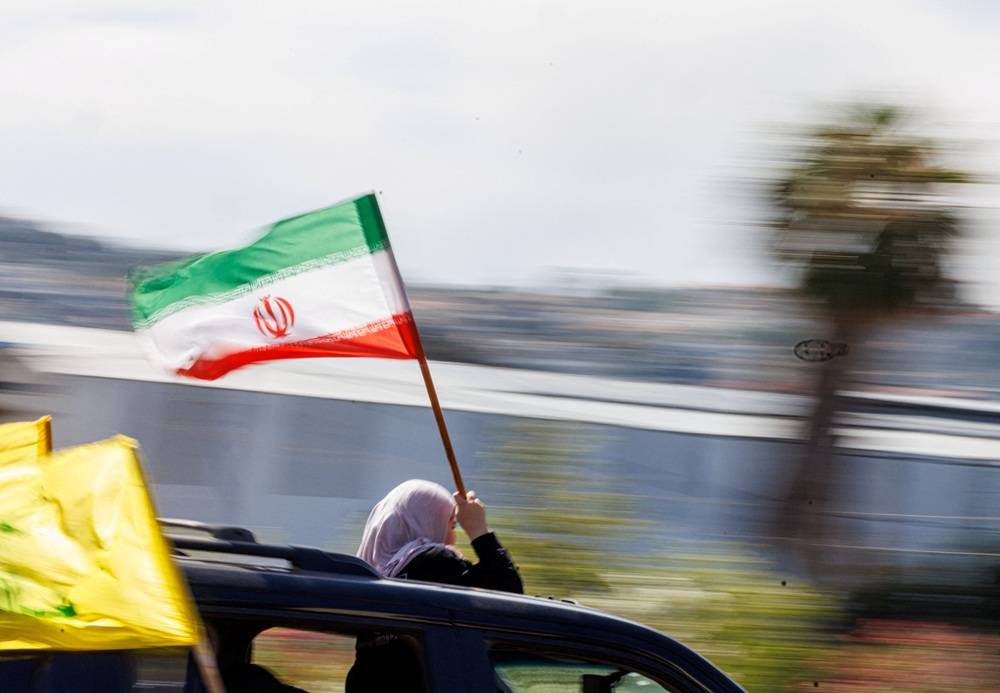
A displaced woman holds an Iranian flag as she makes her way back to her home in southern Lebanon, on the highway of Sidon, Lebanon, June 16, 2026. (Reuters)
Lebanon’s negotiation track
The Lebanese state, meanwhile, is pressing ahead with a new round of negotiations due to open next Monday in Washington and run until Wednesday, with developments to be discussed in security and diplomatic sessions.
The Lebanese presidency said President Joseph Aoun and Prime Minister Nawaf Salam discussed the preparations on Tuesday.
Aoun and Salam described the US-Iranian understanding as “a positive factor” in easing regional tensions and pushing toward peaceful solutions and an end to the war.
At the same time, they reaffirmed “Lebanon’s firm position in the Washington negotiations” on a final ceasefire, the withdrawal of Israeli forces, the deployment of the Lebanese army up to the international border, the release of Lebanese prisoners and the start of reconstruction.
Gradual withdrawal within 60 days
Iran and Hezbollah are pursuing a parallel track.
A source, who requested anonymity, told Asharq Al-Awsat that the agreement between Iran and the United States “stipulates a ceasefire, a halt to Israeli attacks and a guarantee of Lebanon’s territorial integrity.”
The source said this would require Israeli commitment, “guaranteed by the United States.”
“Hezbollah was informed by the Iranian side that Israel, after the agreement is signed next Friday, must begin a gradual withdrawal from inside occupied Lebanese territory and complete the withdrawal before the date of signing the nuclear agreement with Iran,” the source said, referring to the 60-day deadline.
“The party was informed that Tehran will not sign the nuclear agreement with Washington before Israel’s full withdrawal,” the source added.
Hezbollah Secretary-General Naim Qassem on Tuesday sent a message of thanks to Iranian parliament Speaker Mohammad Baqer Ghalibaf “for obliging the Israeli entity to immediately and permanently halt military operations on all fronts, including Lebanon, in connection with the end of the war on Iran, as the first and fundamental clause of the agreement between Iran and America.”
Lebanese Speaker Nabih Berri and Ghalibaf discussed, in a phone call, field and political developments linked to the deal between the United States and Iran, especially the clause on ending Israel’s war on Lebanon.
A statement from the Lebanese parliament said Ghalibaf and Berri “stressed the need for the United States, the guarantors of the memorandum of understanding and the international community to assume their responsibility to compel Israel to end its war, stop demolishing villages, respect Lebanon’s sovereignty and withdraw immediately from the territories it occupied.”
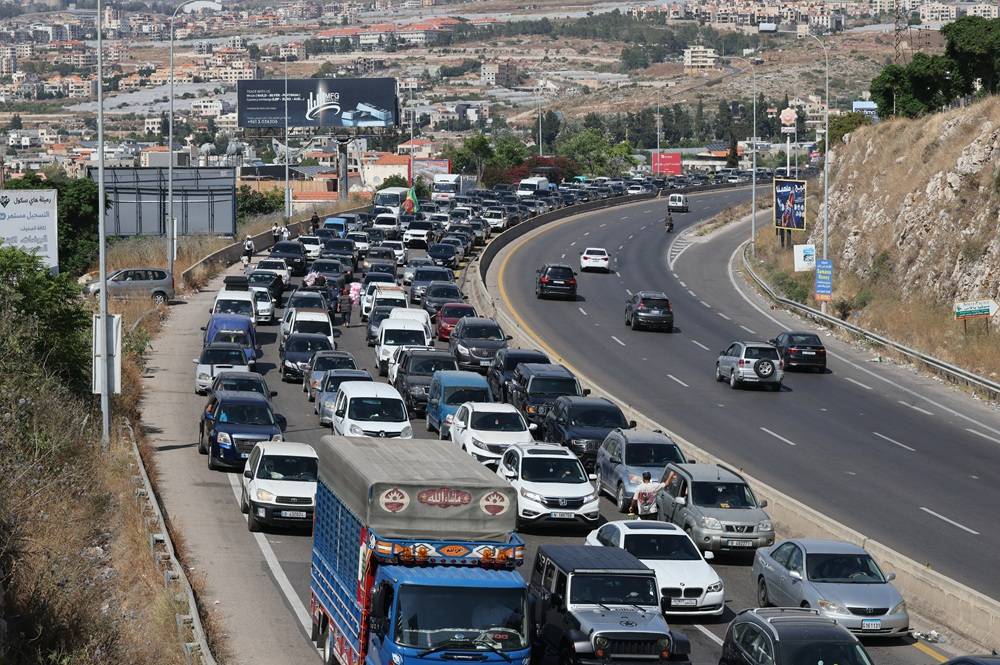
Vehicles line up on the Rmeileh highway as displaced Lebanese return to their villages in southern Lebanon, 15 June 2026, after the announcement of a US-Iran mediated preliminary framework to end regional military hostilities and lift the naval blockade on the Strait of Hormuz. (EPA)
Hezbollah’s opponents doubtful
Inside Lebanon, Hezbollah’s opponents questioned Iran’s ability to force an Israeli withdrawal from Lebanon.
Members of the Strong Republic parliamentary bloc and the executive body of the Lebanese Forces party said after an extraordinary meeting that any agreement between the United States and Iran “remains a matter concerning the two states involved.”
“The ceasefire mentioned in the agreement is general and concerns the Middle East region. It has no practical repercussions for Lebanon because the party fighting in Lebanon is Israel, not the US,” they said in a statement.
They accused Tehran of “providing verbal services to Hezbollah so that it can continue fighting to achieve Iran’s objectives.”
They said that “what is required after all the suffering endured by the Lebanese people is not merely a ceasefire while keeping the old order in place, with Iran and Hezbollah forming an essential part of that old order, but a complete end to the successive wars that have torn Lebanon apart and impoverished it.”
They said the time had come to achieve that by dissolving illegal military organizations, “foremost among them Hezbollah.”
They also backed the direct negotiation track with Israel, describing it as “the only gateway to ending the wars in Lebanon and reaching an actual state that restores Lebanon’s Arab and international relations.”
The Kataeb Party stressed that Lebanon “is not concerned with any agreement involving Lebanon except one in which the Lebanese state and its legitimate institutions elected by the Lebanese people are involved, through the parties officially authorized to negotiate on their behalf in Washington.”
The party said those representatives were carrying out their role to restore Lebanon’s sovereignty and free decision-making, secure the Israeli withdrawal, halt attacks and complete government decisions to confine arms to the state and restore security decision-making to the official authorities.
At G7, Egypt’s Sisi Urges Israel to Halt Gaza Seizurehttps://english.aawsat.com/arab-world/5284913-g7-egypt%E2%80%99s-sisi-urges-israel-halt-gaza-seizure
President Donald Trump speaks with Egyptian President Abdel Fattah al-Sisi, center, and French President Emmanuel Macron, right, at a working lunch with leaders of G7 and the Middle East in Evian-les-Bains, France, Tuesday, June 16, 2026. (AP)
TT
TT
At G7, Egypt’s Sisi Urges Israel to Halt Gaza Seizure
President Donald Trump speaks with Egyptian President Abdel Fattah al-Sisi, center, and French President Emmanuel Macron, right, at a working lunch with leaders of G7 and the Middle East in Evian-les-Bains, France, Tuesday, June 16, 2026. (AP)
Egyptian President Abdel Fattah al-Sisi on Tuesday urged Israel to abandon its plan to take control of 70 percent of Gaza, as he attended the G7 summit in France.
Last month, Israeli Prime Minister Benjamin Netanyahu ordered the military to take control of more territory in the battered Gaza Strip, flouting the terms of a fragile ceasefire that took effect in October.
He said Israeli forces initially controlled about 50 percent of the enclave under the truce before advancing to around 60 percent and then directing a move towards 70 percent.
Under the ceasefire, Israeli forces were meant to pull back behind a so-called "yellow line," separating areas controlled by Palestinian group Hamas from those held by the Israeli army.
"Only 30 percent of the Strip is effectively left for the Palestinian people," Sisi said, at a G7 summit session on Middle East stability in the French resort of Evian.
This approach "must stop immediately", he added at the session which was also attended by G7 and EU leaders as well as the leaders of the United Arab Emirates and Qatar.
Sisi said there was "no alternative to reaching a just and lasting settlement to the Palestinian cause based on the two-state solution" and urged "the implementation of US President Donald Trump's plan for peace in the Gaza Strip".
Egypt, which shares a border with Gaza, has been a key mediator between Israel and Hamas since the group's October 7, 2023, attacks on Israel triggered the war in the enclave.
The first phase of the Gaza truce saw the release of the remaining hostages seized in the October 7 attacks, in exchange for Palestinians held by Israel.
The transition to the second phase, which was supposed to involve Hamas's disarmament and a gradual withdrawal of the Israeli army, has been stalled for months.
Gaza remains gripped by daily violence, with both the Israeli military and Hamas accusing one another of violating the truce.
لم تشترك بعد
انشئ حساباً خاصاً بك لتحصل على أخبار مخصصة لك ولتتمتع بخاصية حفظ المقالات وتتلقى نشراتنا البريدية المتنوعة