


Deadly ISIS Legacy in Raqqa: 3,500 Believed to be Buried in Mass Grave

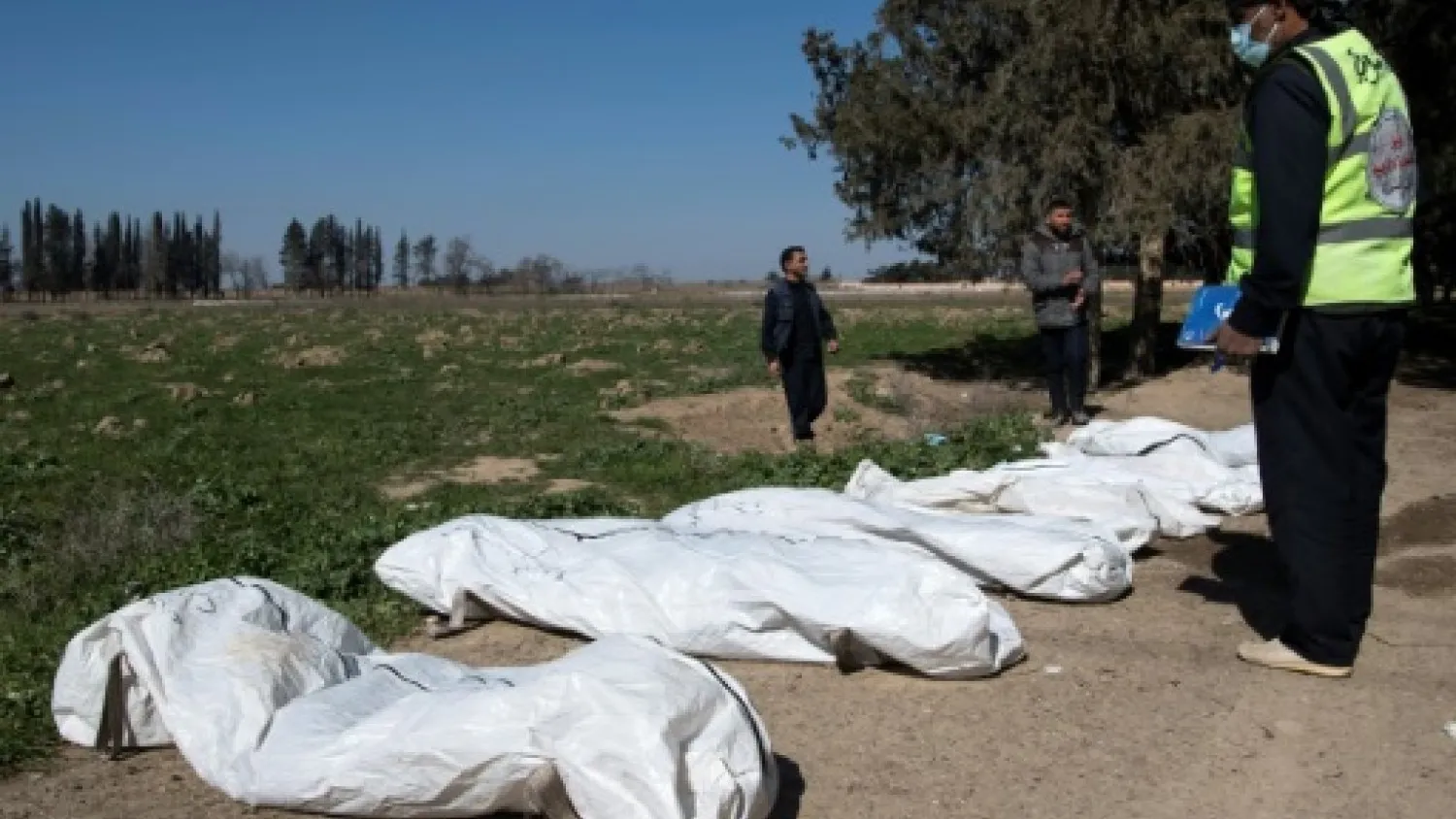
Raqqa civil defense workers survey bodies excavated from a mass grave in the northern Syrian city. AFP
TT

Deadly ISIS Legacy in Raqqa: 3,500 Believed to be Buried in Mass Grave

Raqqa civil defense workers survey bodies excavated from a mass grave in the northern Syrian city. AFP

Two feet deep, below a plot of farmland outside the Syrian city of Raqqa, lies a large and deadly legacy of ISIS: a mass grave holding an estimated 3,500 people.

First responders learned of the burial site in the al-Fukheikha agricultural suburb last month, more than a year after US-backed forces captured Raqqa from ISIS and as they closed in on the group's final redoubt of Baghouz further south, Agence France Presse reported.

The belated discovery is the biggest example yet of how the violence ISIS sowed during its rule will be harvested for years to come, diggers and activists said.

Several dozen mounds of dirt line one side of the al-Fukheikha plot, marking the more than 120 bodies already dug up by the Rapid Response Division of Raqqa's civil defense service.

"These are individual graves, but behind us, by the trees, are the mass graves of those executed by ISIS," said Asaad Mohammad, the 56-year-old forensic assistant at the site.

"There are some 2,500-3,000 bodies estimated there, plus between 900 and 1,100 bodies in the individual graves, so at least 3,500 total," he said.

Eight other mass graves have already been identified around the northern Syrian city, including one nicknamed "Panorama," from which more than 900 bodies had been exhumed.

"Al-Fukheikha is the largest grave since ISIS came to Raqqa" in 2014, Mohammad told AFP.

Earlier this week, diggers in flimsy medical masks excavated a small bundle wrapped in greying, damp cloth.

They peeled away the fabric to reveal a decomposing body with a detached blackened jawbone, which Mohammad examined.

"Estimated 35 years. Third-degree burns," he said.

Apart from his stoic partial-autopsy, the only sounds to be heard were the grating of hand shovels against the dirt, and the rustle of the wind through the nearby fir trees.

His colleagues carefully placed the bundle in a white tarpaulin body bag onto which Mohammad scrawled the date, location, and a word he has become accustomed to writing: "Unidentified."

By noon, his team of 10 had dug up eight bodies. Some had been dead so long there was little left of them, and the diggers had to weigh down the body bags with rocks to keep them from flying away in the wind.

They logged any identifying details into a ledger and loaded the bodies into a white pickup to be re-buried about 10 kilometers away at a proper cemetery.

It has become a macabre routine, said Mohammad -– one he was sure will eventually be played out again in Baghouz, the last speck of ISIS territory further south.

"The same thing that happened here will have happened there," he said.

"Maybe it's even worse there, because the fighting is more intense as they've got nowhere else to go."

Since the Raqqa division began its work in January 2018, it has exhumed more than 3,800 bodies, said the force's supervisor Turki al-Ali.

Among them are 560 that were identifiable and were handed over to their families for a proper burial, he told AFP.

The site at al-Fukheikha could help identify even more of the several thousand people whose fates remain unknown, including foreigners imprisoned by the terrorist group.

"We've heard accounts from residents of al-Fukheikha that they would see people gathering with someone in an orange suit," said Ali, referring to the garb in which ISIS would typically dress its executed captives.

US journalist James Foley was wearing such a suit when he was killed, and analysts believe footage of his death indicates he may have been killed around Raqqa.

Another American captive, Kayla Mueller, is thought to have died near Raqqa as well. Their bodies have never been recovered.

"These mass graves hold the answers to the fate of people who had been executed by ISIS fighters, who died in coalition air strikes, or who have been missing," said Sara Kayyali of Human Rights Watch.

Even as the battle against ISIS as a territorial force comes to an end, she told AFP, there was much more to be done.

"No matter how much we try to deny it, the work against ISIS is by no means over. It's likely the hard work is just starting."

US Air Force Pilot Recounts Survival After Jet Shot Down Over Iran Mountains

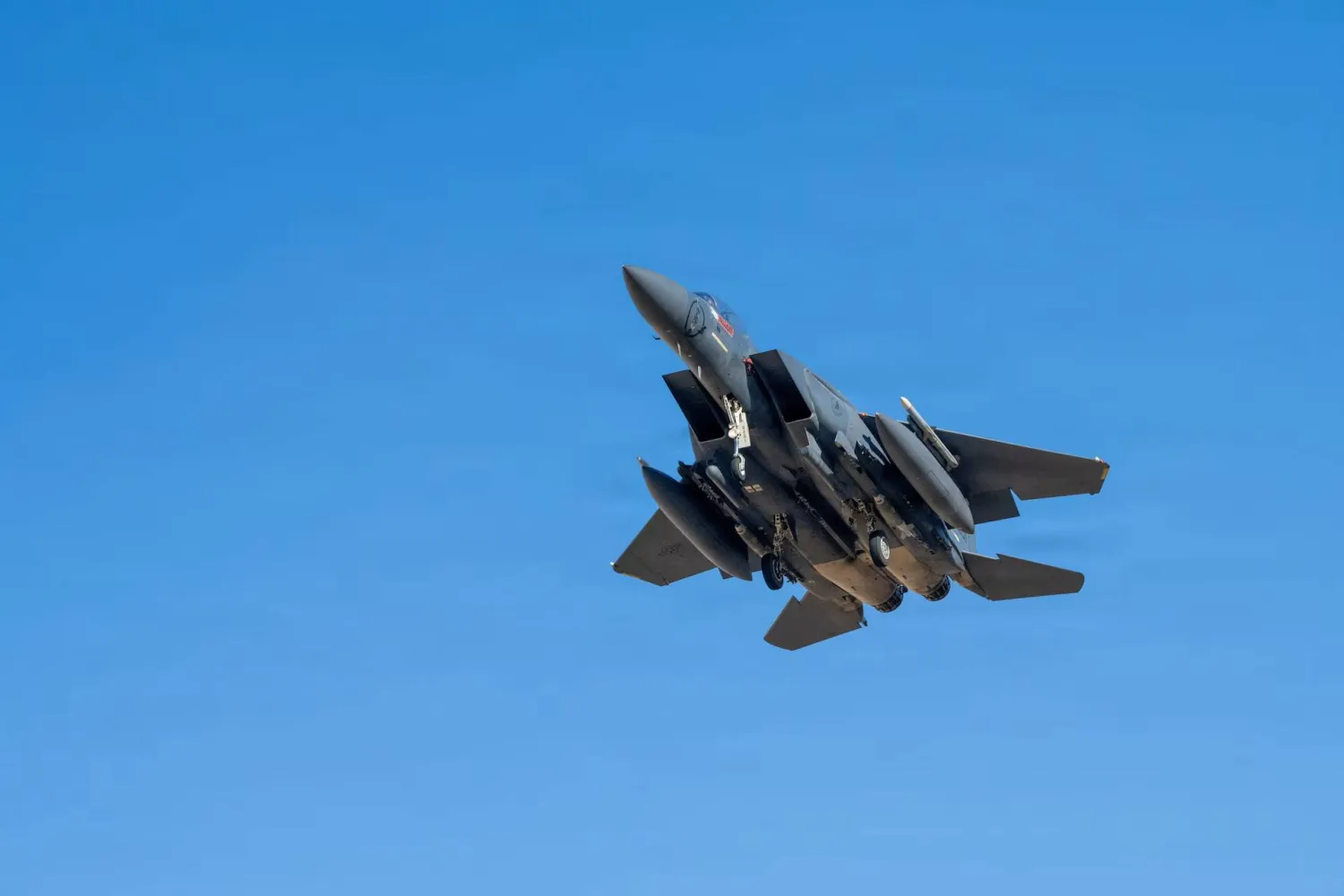
A US Air Force F-15E Strike Eagle aircraft. (US Air Force/Reuters)
TT

US Air Force Pilot Recounts Survival After Jet Shot Down Over Iran Mountains

A US Air Force F-15E Strike Eagle aircraft. (US Air Force/Reuters)

A US Air Force colonel recounted on Monday his story of survival after his F-15E fighter jet was shot down over Iran in April, in the early months of the US-Israeli conflict with Iran.

The aviator, who broke his back, an arm and a shoulder after hitting the ground at such high speed, hid and survived 50 hours behind enemy lines before his rescue.

He spoke on CBS News about the incident and was referred to as Bravo, his mission call sign, due to security threats.

Bravo was the backseater, the weapons-systems officer on a two-man crew with the mission call sign Dude 44. The pilot was Alpha.

CBS News asked Admiral Brad Cooper, US Central Command (CENTCOM) chief, what brought the fighter jet to a mountainous area south of the city of Isfahan, close to where Iran had been keeping much of its highly enriched nuclear material.

“Their mission that evening was to conduct a strike on industrial facilities related to both the drone and the missile program, not related to the Isfahan nuclear facility,” Cooper said.

The plane's mission call sign was DUDE 44. It was an F-15E, a type of two-seat fighter that's been a workhorse of US air combat operations for decades. The $30 million jet was brought down by a shoulder-fired missile that can cost around $100,000.

Moments of terror

In his first public account of what happened, Bravo said when the missile hit, it was as “getting hit by a freight train.”

He and Alpha did everything they could to try to save the fighter jet. It quickly became clear the plane couldn't be saved, so the pair ejected.

The US aviator free-fell to the ground at an estimated 110-160 kilometers per hour; the Iranian shoulder-fired missile had damaged his parachute.

“At one point when I looked up and saw no parachute, that was the most terrifying thing I've ever seen,” Bravo said in his first public account of what happened. “So I paused, right then, and I prayed, ‘Lord, your will be done. But if I'm getting through this, I need help.’”

Help took two days to come. Bravo hid and survived two days behind enemy lines before his rescue. He calls it a “modern-day miracle.”

Learning of the downed crew in the US

Back in the United States, Defense Secretary Pete Hegseth was woken in the middle of the night with the news. He said he immediately jumped to the next steps: asking if the crew was OK, and whether Iran knew what had happened.

“Whether they're alive or not, we're going to go get them,” he said.

Evidence of the wreckage was shared by Iranian media, and videos emerged online of armed groups hunting for the downed crew. According to US military sources, Iranians got to within a few hundred meters of Bravo.

Six hours in, the US was able to rescue Alpha in a risky daytime raid. American helicopters in the rescue force took fire.

“It was a gun fight all the way in and all the way out,” Hegseth said. “But they got Alpha back.”

The job was only half done. Alpha's rescue force was unable to find Bravo and withdrew.

But as night fell on that first day in Iran, Bravo was able to send a message back home.

A rescue force was almost sent in not long after, but Hegseth said “it just didn't line up.”

“That was a really tough decision,” he said. “I'll never forget, you know, being in the situation room and saying, ‘OK, I guess we're gonna roll 24,’ which means, ‘Hey, Bravo's going to be out there for basically 24 hours more.’”

CIA played pivotal role in rescue

The CIA played a pivotal role in Bravo's rescue. The agency launched a multi-pronged deception campaign to confuse Iranian forces looking for Bravo. It also used top-secret technology to pinpoint Bravo's location.

To clear the way for Bravo's rescue, newly declassified video shows American bombers and drones hit Iran's Revolutionary Guard forces nearby where he was hiding. Then it was time to go back in for Bravo.

There were over 90 US service members on the ground — the first US boots on the ground in Iran in 46 years, Cooper said. Several hundred people were in the air, and several thousand served as support in the rescue mission.

Bravo said it was “one of the greatest moments of my life” when he saw his rescuers.

But Bravo and the others on the ground were not yet out of danger. The rescue planes' landing gear was stuck in the desert sand of the makeshift airstrip. The planes could not take off, and more than 90 of what Cooper described as the military's “most elite service members” were stuck until a clandestine Air Force unit came to the rescue.

The US destroyed the two marooned aircraft, worth about $100 million each, as well as the Little Bird helicopters, so the technology wouldn't fall into Iranian hands.

Fifty hours after being shot down, Bravo was safe. Not long after leaving Iran, Bravo called his wife back home in the US.

“I was really proud of her and grateful for the strength that she showed,” Bravo said.

The officer says he wants the American people to know that the rescue is about more than what he went through.

Alpha, who ejected safely and was rescued before Bravo, is already back flying for the Air Force.

“I am still in awe of the professionalism and tactical prowess of the Combat Search and Rescue specialists and the Joint Force who executed the rescue missions of me and DUDE 44 Bravo, both those in theater and behind the scenes,” Alpha said in a statement. “Words cannot capture how thankful my family and I are and how proud I am to serve alongside each and every one of them.”


Where Does Israel’s Destruction of Underground Hezbollah Base Leave the Group?

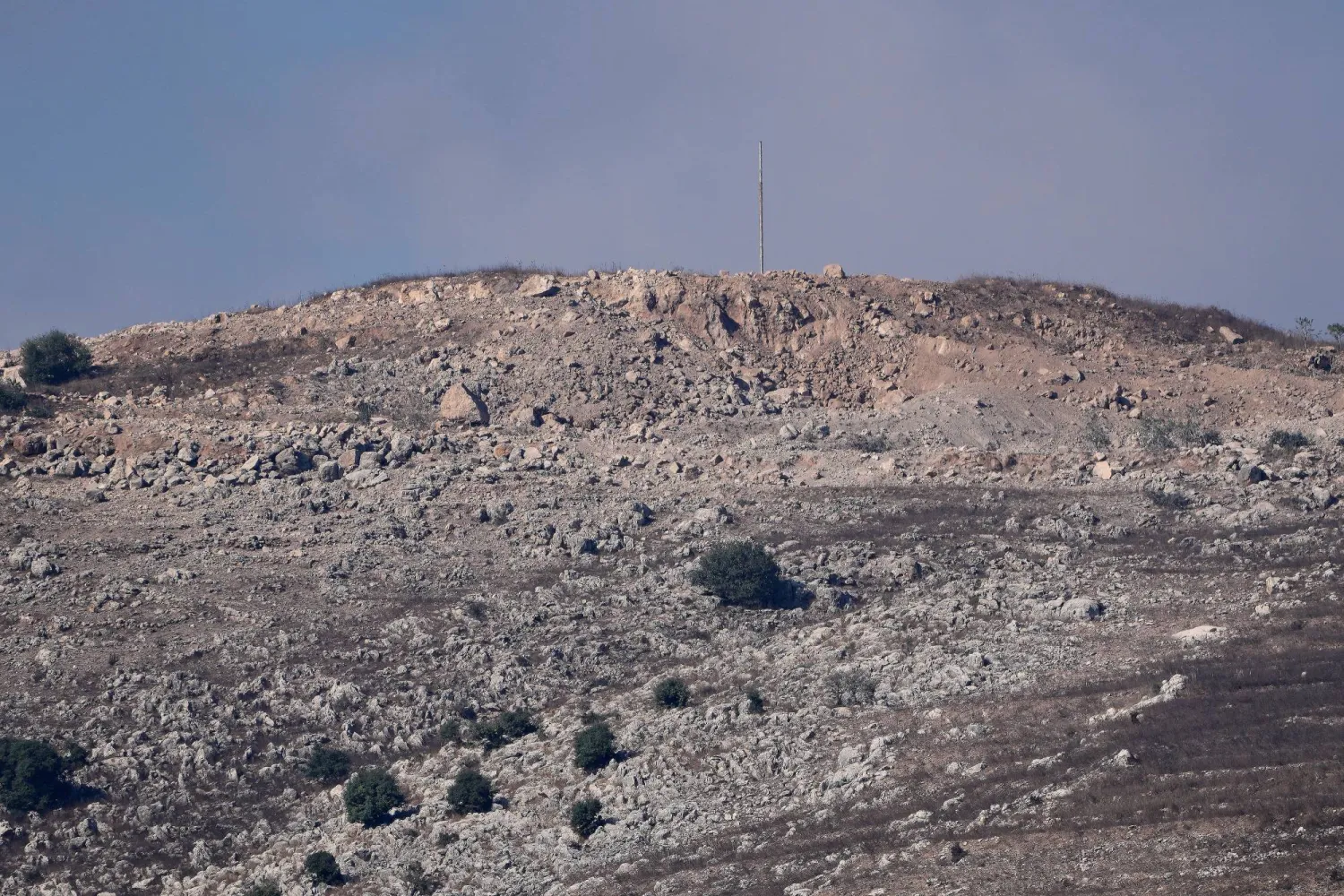
Destroyed stones on the top of Ali al-Taher ridge, which Israeli forces captured after fighting with Hezbollah and where the Israeli military said it blew up a network of Hezbollah tunnels Thursday night near Nabatieh, southern Lebanon, Friday, Sept. 11, 2026. (AP)
TT

Where Does Israel’s Destruction of Underground Hezbollah Base Leave the Group?

Destroyed stones on the top of Ali al-Taher ridge, which Israeli forces captured after fighting with Hezbollah and where the Israeli military said it blew up a network of Hezbollah tunnels Thursday night near Nabatieh, southern Lebanon, Friday, Sept. 11, 2026. (AP)

Israel's demolition on Thursday of a tunnel network used by Hezbollah as a command center in southern Lebanon, near the border, represents a significant setback for the Iran-backed group.

Experts said that while Hezbollah is far from defeated, the group was now exposed after two fierce wars with Israel in which it suffered major blows including the loss of much of its top leadership and Israel's occupation of parts of southern Lebanon.

- How big of a blow is it? -

A week after capturing the site, the Israeli military on Thursday demolished the tunnels in the Ali al-Taher ridge with huge explosions. The United States Geological Survey reported a 4.1 magnitude tremor in the area.

Hezbollah never acknowledged losing the strategic highland, which lies around 10 kilometers (six miles) from the border with Israel and overlooks the major city of Nabatieh.

The Israeli military previously said that the network comprised tunnels containing dozens of Iranian-made rockets, missiles and drones, as well as other weapons.

Experts say the tunnels, built over two decades, connected a network of villages in the area, and that the Israeli military now had easy access to Nabatieh, where Hezbollah holds sway.

"This is a major loss, they cannot make another (headquarters) like it for decades to come," Khalil Gemayel, a retired Lebanese general told AFP.

"Hezbollah is now exposed in the area around the ridge," he added.

Reacting to the tunnels' destruction on Friday, Israeli Defense Minister Israel Katz said: "Now there is a strong security zone, stronger than ever before, which protects the communities from attack and direct fire, and enables us to maintain control and threaten Hezbollah deep inside the area".

- Is Hezbollah militarily defeated? -

While a significant moment, Gemayel believed that "losing Ali al-Taher does not mean Hezbollah is broken".

Israel occupies a swathe of southern Lebanon, where Hezbollah built a now-dismantled network of tunnels near the border.

The group still maintains its major positions in Iqlim al-Tuffah -- a higher-altitude part of the south further away from Israel -- in the Jezzine highlands elsewhere in the south and in the Bekaa region in Lebanon's east and northeast.

"The facilities present in Iqlim al-Tuffah are bigger than (Ali al-Taher)," according to Gemayel.

But Hezbollah no longer has a weapons supply route through Syria, where the new authorities there are hostile to the group.

Military expert Hassan Jouni also said that "the fact that Hezbollah did not carry out a major operation in Ali al-Taher to defend it is a sign of weakness".

Hezbollah has not claimed any attacks on Israel and its troops since June 20 while Lebanon reports regular, sometimes deadly Israeli strikes despite a months-long truce.

Israel has accused the group of attacks on its troops in that time.

- Where does the group stand now? -

Hezbollah twice sparked wars with Israel in recent years, the first time with its attacks in support of Hamas during the Gaza war, and the second in March in support of Iran.

Jouni said that while "Hezbollah lost a solid, fortified defensive base" when Israel took Ali al-Taher, "it is not a devastating setback".

"It has gone through unprecedented setbacks before the issue of Ali al-Taher, especially with the assassinations and the (Israeli army)'s ability to occupy a vast area" of southern Lebanon, he said.

During these wars, Hezbollah lost several of its top commanders, including its former chief, while an Israeli operation in September 2024 saw hundreds of Hezbollah pagers and walkie-talkies explode, paralyzing the group's communication systems while killing dozens and wounding thousands.

More than 8,900 people have been killed in Israeli attacks since 2023, according to Lebanon's health ministry. Hezbollah does not disclose how many fighters it has lost, but most people killed in the war have been adult men.

On top of these setbacks, Hezbollah is also dealing with a Lebanese president and prime minister who have vowed to disarm it.

The group's weapons have long been a point of contention in the country, with critics accusing it of using them to support Iran's regional agenda to the detriment of Lebanon.

Hezbollah is also facing some scrutiny from its core support base, the Shiite community.

In online petitions posted earlier this month, hundreds of Lebanese public figures, including legal experts and human rights advocates, called for Lebanon's army to be deployed in Nabatieh and Tyre, two of southern Lebanon's largest cities.

"This city does not belong to any political group," said the signatories in the Nabatieh petition, referring to Hezbollah.


Fall of Mokha Leaves Humanitarian Crisis in Its Wake, Threatens Shipping

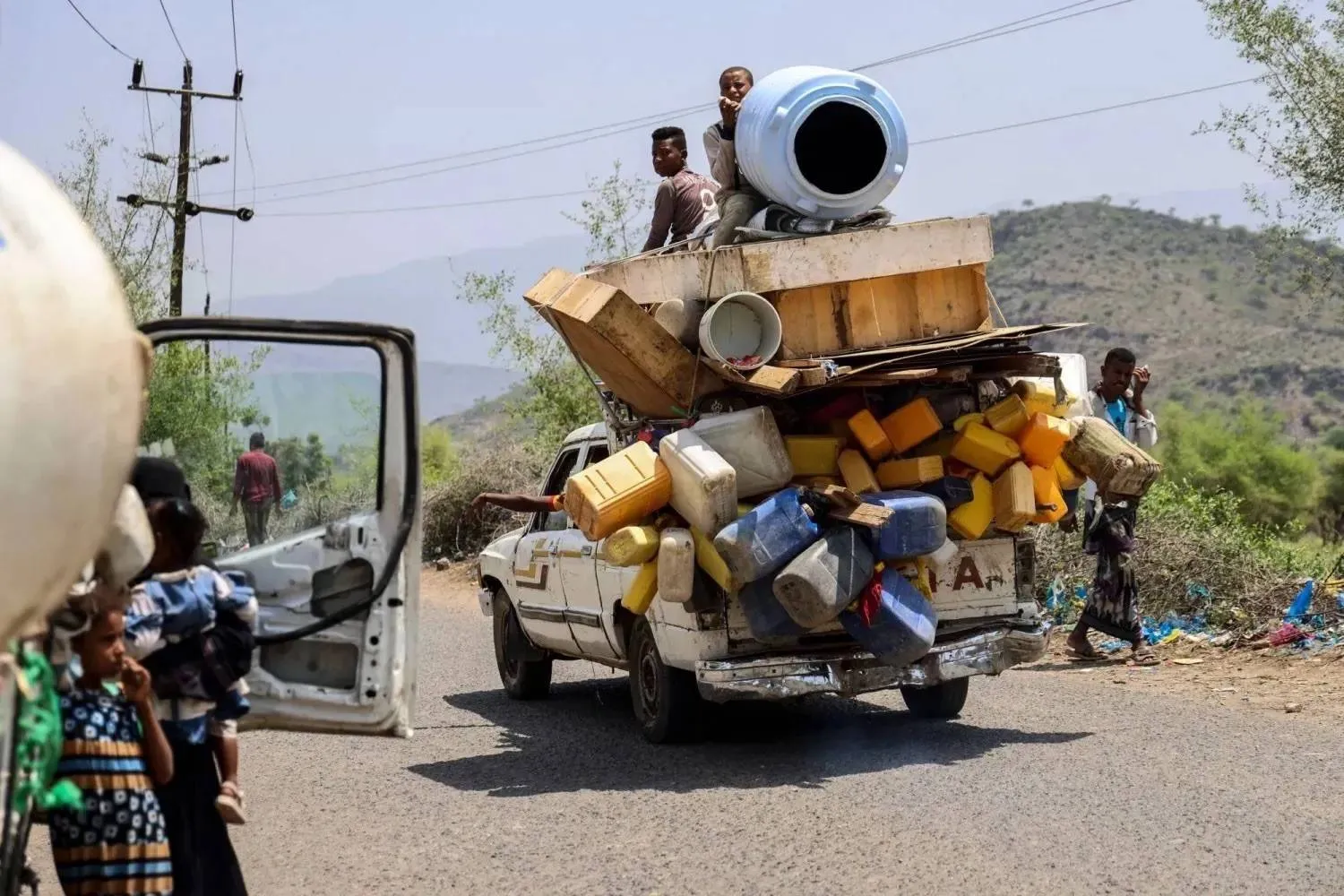
The Houthi escalation has forced thousands of Yemeni families to flee their homes. (AFP)
TT

Fall of Mokha Leaves Humanitarian Crisis in Its Wake, Threatens Shipping

The Houthi escalation has forced thousands of Yemeni families to flee their homes. (AFP)

Those who had not fled the southwestern Yemeni coastal city of Mokha awoke Thursday to a grim military and humanitarian reality after the Houthi group seized full control of the city and its strategic port and extended its reach toward the Bab al-Mandeb Strait.

As military developments accelerate, threatening international shipping, the humanitarian crisis is worsening, pushing tens of thousands of civilians to the brink.

With little time to consider their options, thousands of civilians in western Taiz and southern Hodeidah were forced to flee after the Houthis carried out raids and arrests in villages and communities they had entered, amid fears of reprisals and reports of looting targeting residents and their property.

Mokha endured a night of panic after residents and wounded fighters were told to evacuate their homes and flee following the Houthis’ announcement that they had seized the Khalid camp and Jabal al-Nar, east of the city. Houthi forces also continued advancing through the Mawza district, which borders the coastal strip to the east, making the city’s encirclement from all sides appear only a matter of time.

Warnings broadcast over loudspeakers and radio communications triggered widespread panic during the first hours of the night and continued into the morning.

Residents described harrowing scenes of thousands of families fleeing villages and areas in western Taiz and southern Hodeidah, some on foot and others in cars or on motorcycles. Some took whatever livestock and possessions they could save.

They told Asharq Al-Awsat that, for many families, displacement was not planned but an urgent flight from fear, forcing them to leave behind their homes, land and livelihoods.

Those unable to leave found themselves trapped amid fear and uncertainty as raids and arrests continued, according to residents, alongside reports of looting and theft.

Confusion and flight

Human rights activist Amina Mohammed told Asharq Al-Awsat that she was preparing dinner for her family when they learned of warnings to evacuate the city.

The news threw everyone in the house into confusion. Initially unable to believe the warnings, they went outside to check and were confronted by scenes of panic, with hundreds of people of all ages running south.

Mohammed and her family immediately returned home, gathered whatever belongings they could and joined the exodus. By sunrise, they had reached Yemen’s interim capital, Aden. The road between Mokha and Aden remained heavily congested until late Thursday.

Medical sources, who fled after the Houthi takeover, said armed fighters stormed hospitals and health facilities as soon as they took control of the city. They detained wounded patients and began questioning them as suspected fighters in an effort to obtain military information.

The fighters also searched records and documents and ordered administrative staff to disclose patients’ medical information.

The sources told Asharq Al-Awsat that doctors, nurses and other hospital workers were also detained and questioned, prompting many medical personnel, who were not on duty during the raids, to flee the city.

The Houthis also carried out a wave of arrests in streets, homes, shops and public facilities, prompting most remaining residents to stay indoors.

Humanitarian shock

Mohammed al-Zaghrouri was saying goodbye to the manager of his new motorcycle spare-parts shop, which he had opened only weeks earlier, and preparing to spend the evening with friends he had met since arriving in Mokha. The manager was heading home to spend the night with his family.

Suddenly, both men changed course and headed for Aden.

Al-Zaghrouri told Asharq Al-Awsat that they were stunned by the sight of frightened residents running through the streets. Within seconds, they realized they too had to join them.

They rushed back to the shop to retrieve whatever cash and small valuables they could carry. Within hours, al-Zaghrouri was driving out of the city with the manager and his family, lamenting the effort and money they had left behind.

Mokha’s fall was more than a military shift. It dealt a severe humanitarian blow reflected in immediate UN assessments.

According to the United Nations Population Fund, escalating fighting in Taiz and along Yemen’s West Coast displaced about 40,000 people. The International Organization for Migration said the sharp escalation had forced more than 18,500 people to flee within days, with the numbers rising by the hour.

The IOM also warned of dangerous “secondary displacement” affecting families that had previously settled in camps in districts, including Hays and Mawza, only to find themselves fleeing fighting once again.

Field reports by rights groups indicated that those escaping faced extremely harsh conditions, with more than 100 families forced to spend the night among rocky outcrops and rugged mountain areas in western rural Taiz without basic necessities.

The displacement coincided with stringent Houthi restrictions that prevented some residents in combat zones from leaving, amid accusations that civilians were being used as human shields.

Pledge to counter terrorist threats

As displacement continues, families who have fled need safety, shelter, food, water and fuel, as well as protection and assistance in reuniting relatives separated during their escape, particularly children and older people.

Separately, local authorities in the interim capital, Aden, and the governorates of Abyan and Lahj issued a joint statement saying the armed forces had overcome the initial shock and confusion, regained their balance and were fully prepared to confront any challenges.

The statement cited broad popular support and public momentum to confront the Houthis and thwart the ambitions of the “Iranian project in the region.”

The authorities said they continued to monitor security conditions and public services, while state institutions remained operational. They pledged to counter terrorist threats, protect citizens and property, and preserve security and stability in coordination with the relevant government, security and military bodies.

They urged residents to remain calm and vigilant, disregard rumors, obtain information from official sources, cooperate with the relevant authorities and report any suspicious movements or activities.