


Foreigners Boost England’s Potential – but our Youngsters May Beg to Differ

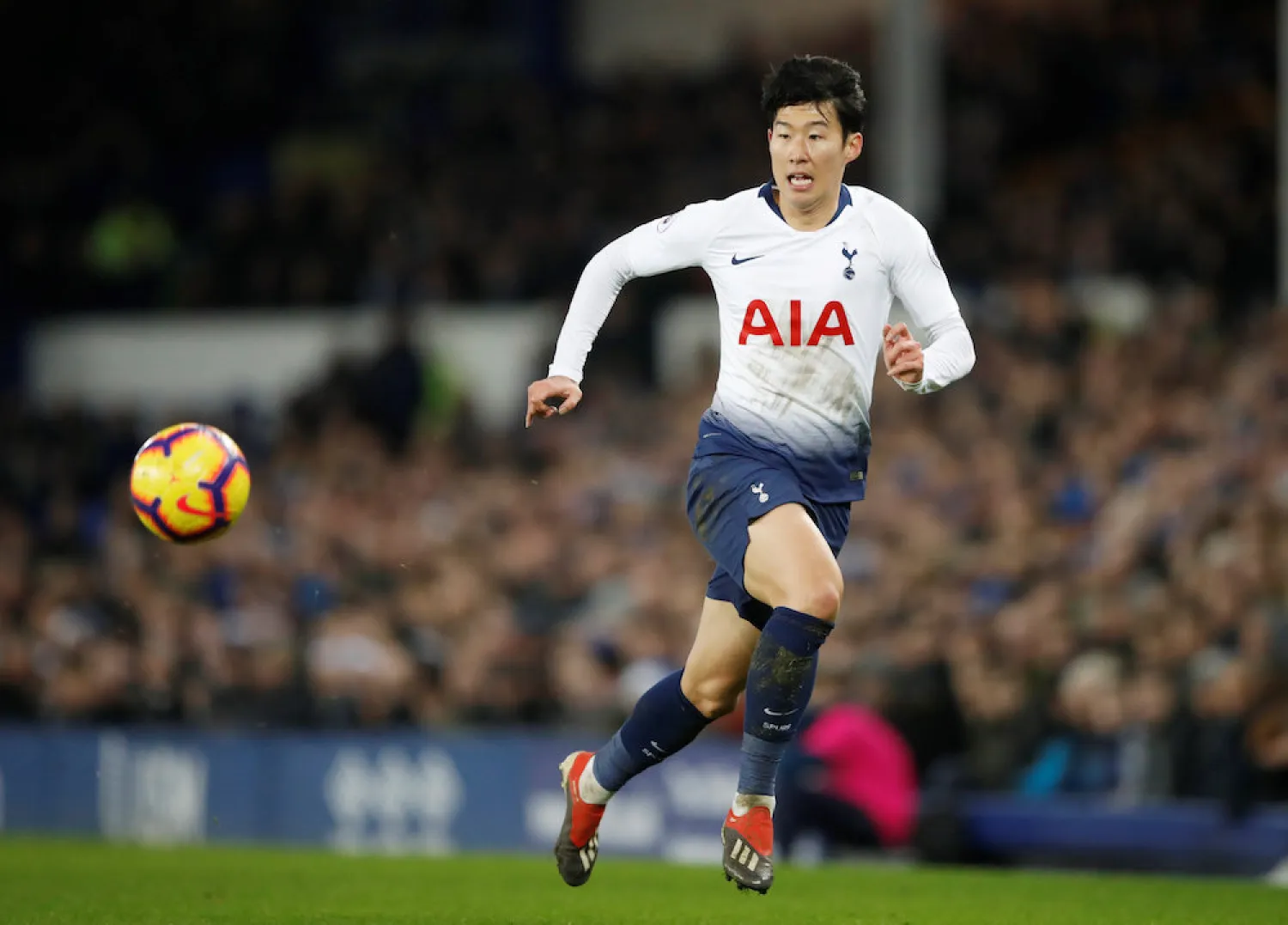
Tottenham’s Son Heung-min in action during the Premier League match against Everton in Liverpool December 23, 2018. (Reuters)
TT

Foreigners Boost England’s Potential – but our Youngsters May Beg to Differ

Tottenham’s Son Heung-min in action during the Premier League match against Everton in Liverpool December 23, 2018. (Reuters)

It sounds like the start of a bad joke. What do Boris Johnson and Silvio Berlusconi have in common? Yes, apart from that. And that. Oh, and that too. Well, both have also warned of the dangers of too many foreign footballers. Johnson, of course, blamed England’s Euro 2016 humiliation on huge numbers of international players “soaking up space on our top teams” while Berlusconi has spoken about how he craves an all-Italian Milan side.

Johnson may have been trying to tap into the nation’s worst instincts, singing his siren song when the country was vulnerable after the Brexit referendum. Yet more sober heads, such as Paul Scholes, have also warned that too many foreign players could damage the England team as youngsters are unable to break through. The Football Association agrees. As things stand, Premier League teams can register up to 17 non-home grown players in a 25-man squad, a figure the FA wants reduced to 13 after Brexit.

Yet, while watching Gareth Southgate’s new England buzz through the Czech Republic defense last month, it was impossible not to wonder whether such fears are overblown. And digging a bit deeper, across wider sport and industry as well as football, that feeling only grows. Because all the evidence suggests foreigners do not damage national teams. If anything, they improve them.

One of the largest studies into the factors behind a country’s success in international football found – unsurprisingly – that, all else being equal, countries with larger populations and higher GDP per capita performed better in Fifa’s rankings. Yet, tellingly, the researchers Michael and Marikova Leeds noted that bringing more foreign players into a domestic league tended to lead to an improvement in an international team.

As they noted in their conclusion: “When countries contemplate how best to advance in international soccer rankings, they should not be afraid to import players for their domestic league. Because the stronger the structure and performance of the domestic league, the greater the country’s international success.”

Why might more foreign players be an advantage? One explanation is down to what academics call the spillover hypothesis. As David Forrest, an economist at the University of Liverpool, explains: “If you bring in a foreign star, then home-grown talent benefits in two ways. First, because they have a more talented colleague to learn from. And, second, because foreigners may bring in different ways of doing things, thus broadening ways of solving problems.”

Examples abound in English football. The Class of 92 have spoken about how Eric Cantona’s professionalism and ability at Manchester United lifted them to another level. Arsène Wenger revolutionized Arsenal after the bumpy reign of Bruce Rioch. And who knows what is happening in an alternate universe where Mauricio Pochettino did not take over from Tim Sherwood at Spurs?

It is perhaps also notable that nine of England’s starters at last year’s World Cup played for either Pep Guardiola, Jürgen Klopp, José Mourinho or Pochettino. It was a youthful and inexperienced team, with far fewer starts historically than most England squads, yet their performance was one of the best in a generation. Absorbing from the best at club level surely helped them with that accelerated learning.

Forrest, incidentally, was part of a massive study that examined the effects of foreign players in 47 European basketball leagues on their national teams between 1986 and 2008. Again the results were clear. An increase in the number of foreigners in a domestic league tended to generate a subsequent improvement in the performance of the national team when it came to qualifying for, or competing at, the European and world championships and Olympics.

The authors assessed the supposedly negative effects of foreign talent – including a delay in local players securing a first-team place and therefore vital experience – before dismissing them. As they put it: “Empirically, we have shown for the case of European basketball that any negatives appear to be dominated by the positive influence of foreign players.”

There was, though, a subsidiary finding from the basketball study that may be more soothing to traditional England supporters: winning youth titles in the preceding years is a very strong predictor of success at senior international level. As Forrest puts it: “If football is like basketball, then good times are indeed coming for England.”

Academics have also found that when players play abroad it improves the performance of the national team.

All this is not to suggest that there should not be some limits. Southgate needs his best youngsters to be playing regularly in the top leagues. No one disputes that such players need minutes to develop – something that is impossible to do when there is an established international ahead of them.

Just ask Jadon Sancho, who left for Borussia Dortmund, or another of Manchester City’s wunderkinder, Phil Foden, who has played only 96 minutes in the Premier League this season.

It is understandable why some in the game are worried about this issue. After all, when the Premier League began in 1992 there were only 13 foreign players. Now almost every top club has more than that. However this has long been a debate too often hijacked by scaremongering or populist posturing.

The fact is when countries are looking for a bogeyman for the woes of their national team they should look within – not without.

The Guardian Sport


Portugal to Return to F1 Calendar in 2027 and 2028 

12 July 2025, United Arab Emirates, Abu Dhabi: Red Bull driver Max Verstappen leads into turn one during the Abu Dhabi Grand Prix at the Yas Marina Circuit, Abu Dhabi. (dpa)
TT

Portugal to Return to F1 Calendar in 2027 and 2028 

12 July 2025, United Arab Emirates, Abu Dhabi: Red Bull driver Max Verstappen leads into turn one during the Abu Dhabi Grand Prix at the Yas Marina Circuit, Abu Dhabi. (dpa)

Formula One will return to Portugal's Portimao circuit in 2027 and 2028 after the Dutch Grand Prix at Zandvoort drops off the calendar.

Formula One announced a two-year deal in a statement on Tuesday.

The 4.6-km Algarve International circuit in the country's south last hosted the Portuguese Grand Prix in 2020 and 2021, both seasons impacted by the COVID-19 pandemic with stand-in venues.

In 2020, seven-times world champion Lewis Hamilton took his 92nd career win at Portimao, breaking the record previously held by Michael Schumacher. Hamilton also won in 2021.

"The interest and demand to host a Formula One Grand Prix is the highest that it has ever been," said Formula One chief executive Stefano Domenicali, thanking the Portuguese government and local authorities.

The financial terms of the deal were not announced.

"Hosting the Grand Prix in the Algarve reinforces our regional development strategy, enhancing the value of the territories and creating opportunities for local economies," said Economy Minister Manuel Castro Almeida.

Portugal first hosted a grand prix in Porto in 1958, with subsequent races at Monsanto and Estoril near Lisbon. The late Brazilian great Ayrton Senna took his first grand prix pole and win at the latter circuit in 1985.

Formula One announced last year that Zandvoort, a home race for four-times world champion Max Verstappen, would drop off the calendar after 2026.

The championship already features a record 24 races and Domenicali has spoken of European rounds alternating to allow others to come in.

Belgium's race at Spa-Francorchamps is due to be dropped in 2028 and 2030 as part of a contract extension to 2031 announced last January.


ATP to Introduce New Heat Policy from 2026 Season 

Novak Djokovic of Serbia cools himself with water during the men's singles semifinal match with Valentin Vacherot of Monaco, at the Shanghai Masters tennis tournament at Qizhong Forest Sports City Tennis Center, in Shanghai, China, Saturday, Oct. 11, 2025. (AP)
TT

ATP to Introduce New Heat Policy from 2026 Season 

Novak Djokovic of Serbia cools himself with water during the men's singles semifinal match with Valentin Vacherot of Monaco, at the Shanghai Masters tennis tournament at Qizhong Forest Sports City Tennis Center, in Shanghai, China, Saturday, Oct. 11, 2025. (AP)

The ATP Tour said it will introduce a new heat policy that will come into effect from 2026 after a string of retirements due to soaring temperatures and punishing humidity at the Shanghai Masters earlier this season.

The governing body of men's tennis said the rule, based on the internationally recognized Wet Bulb Globe Temperature (WBGT) index used to measure human heat stress in direct sunlight, had "clear thresholds" for cooling measures and suspension of play.

"The new heat rule provides a structured, medically supported approach to managing extreme heat, with the objective of safeguarding player health," the ATP said on Monday.

It added the rule would also improve conditions for fans, officials, ball persons and tournament staff.

If the WBGT reaches 30.1 C (86.18 F) or higher in the first two sets of a best-of-three-set singles match, a 10-minute cooling break after the second set can be requested by either player and will apply to both competitors.

During breaks, players can hydrate, change clothing, shower and receive coaching under the supervision of ATP medical staff, the governing body added. Play will be suspended when the WBGT goes past 32.2 C.

World number two Jannik Sinner's Shanghai title defense ended in agony in October when the Italian struggled to walk due to cramp in his right thigh before he retired in the deciding set of his third-round clash with Tallon Griekspoor.

At the same event, Novak Djokovic vomited during his encounter with Yannick Hanfmann while Holger Rune was heard asking an official during a medical timeout in his meeting with Ugo Humbert if players had to "die on court" amid the heat and humidity.

The need for a formal ATP heat rule had sprung up in August in Cincinnati when Arthur Rinderknech collapsed on court during a match in sweltering conditions, before handing Felix Auger-Aliassime the victory.

Previously, ATP regulations stated that decisions on the suspension of play due to adverse weather conditions - including extreme heat - lie with an onsite ATP supervisor who coordinates with medical teams at the venue as well as local authorities.

The new rule aligns the ATP with the WTA. The four Grand Slams have also formally implemented the rules that allow for extended breaks and match suspensions.

Several professional sports including football, Formula One and cycling have formal policies to deal with extreme weather.


Rodrygo Scrapes Real Madrid Win at Alaves

Real Madrid's Brazilian forward Rodrygo secured the visitors a much-needed victory at Alaves. ANDER GILLENEA / AFP
TT

Rodrygo Scrapes Real Madrid Win at Alaves

Real Madrid's Brazilian forward Rodrygo secured the visitors a much-needed victory at Alaves. ANDER GILLENEA / AFP

Kylian Mbappe and Rodrygo Goes's goals earned Real Madrid a tense 2-1 win at Alaves in La Liga on Sunday to potentially keep coach Xabi Alonso in his job.

Second-placed Madrid trimmed league leaders Barcelona's advantage back to four points and recorded only their third victory in the last nine games across all competitions.

After a home defeat by Manchester City in the Champions League on Wednesday, Spanish media reported that anything but a victory would cost Alonso his position, AFP said.

After Mbappe's superb opener, Carlos Vicente pulled Alaves level in the second half, but Rodrygo secured the visitors a much-needed victory at Mendizorroza stadium.

"It was a hard-fought game, we competed well, got in front and then lost a bit of control," Alonso told reporters.

"Alaves play with a lot of intensity, it's hard to dominate throughout. We came here to win and we got the three points."

The coach said, as he did after the City game, that he has the support of his squad.

"We're all together in this. One game isn't enough to change the dynamic," he said.

"Now before the winter break we have a cup game on Wednesday, and a game at home (in La Liga to come)."

Alonso was able to bring his key player, Mbappe, back into the side after he could only watch the defeat by City from the bench because of a painful knee.

The coach also handed a debut to Victor Valdepenas at left-back, with both Alvaro Carreras and Fran Garcia suspended, and Ferland Mendy one of several players out injured.

Mbappe appeared to be feeling his knee and also hobbling in the first few minutes but, despite that, was the game's most influential player.

The forward had a shot deflected wide and then fired narrowly over as Alaves sat deep and tried to keep the 15-time European champions at bay.

By the time Mbappe opened the scoring in the 25th minute, his discomfort seemed to have cleared up.

Released by Jude Bellingham, Mbappe drove towards goal at full tilt and whipped a shot into the top right corner for his 17th league goal of the campaign.

England international Bellingham then blasted home from close range but his strike was ruled out for handball.

Needing to fight back, Alaves moved on to the front foot and took control of the game before the break, almost pulling level.

Madrid goalkeeper Thibaut Courtois made a fine save with his head, even if he knew little about it, to deny Pablo Ibanez from close range.

Tight battle

Los Blancos were dangerous again soon after the interval, with Alaves goalkeeper Antonio Sivera saving well from Mbappe and then Vinicius Junior.

Real came to rue those misses when Vicente pulled Alaves level after 68 minutes.

The forward got in behind Antonio Rudiger, controlled former Madrid midfielder Antonio Blanco's chipped pass and whipped a shot past Courtois.

Eduardo Coudet's side almost took the lead when Vicente's low cross from the right was nudged wide by Toni Martinez, who was nudged off-balance by Raul Asencio's pressure.

Instead, Madrid pulled back in front, with Vinicius breaking in down the left and crossing for Rodrygo to finish from six yards out.

It was the Brazilian's second goal in two games after going the previous 32 matches without finding the net, and a tense Alonso celebrated wildly, knowing that his future could depend on it.

Vinicius had appeals for a penalty turned down as he fell under a challenge from Nahuel Tenaglia, and Bellingham came close in stoppage time as Madrid tried in vain to ease their nerves by putting the game to bed.

"I thought it was a clear penalty, Vini was going very fast, there was contact... it surprises me that it didn't go to VAR," said Alonso.

Third-place Villarreal's visit to Levante was postponed because of a weather warning in the Valencia region.

Real Oviedo, 19th, sacked coach Luis Carrion after a 4-0 hammering at Sevilla.

On Saturday, champions Barcelona beat Osasuna 2-0 to win a seventh straight La Liga game and ensure that they will lead the table into 2026, regardless of what happens in the final round of fixtures before the winter break.
