


Khartoum Barricades Symbolize Sudan's Uprising

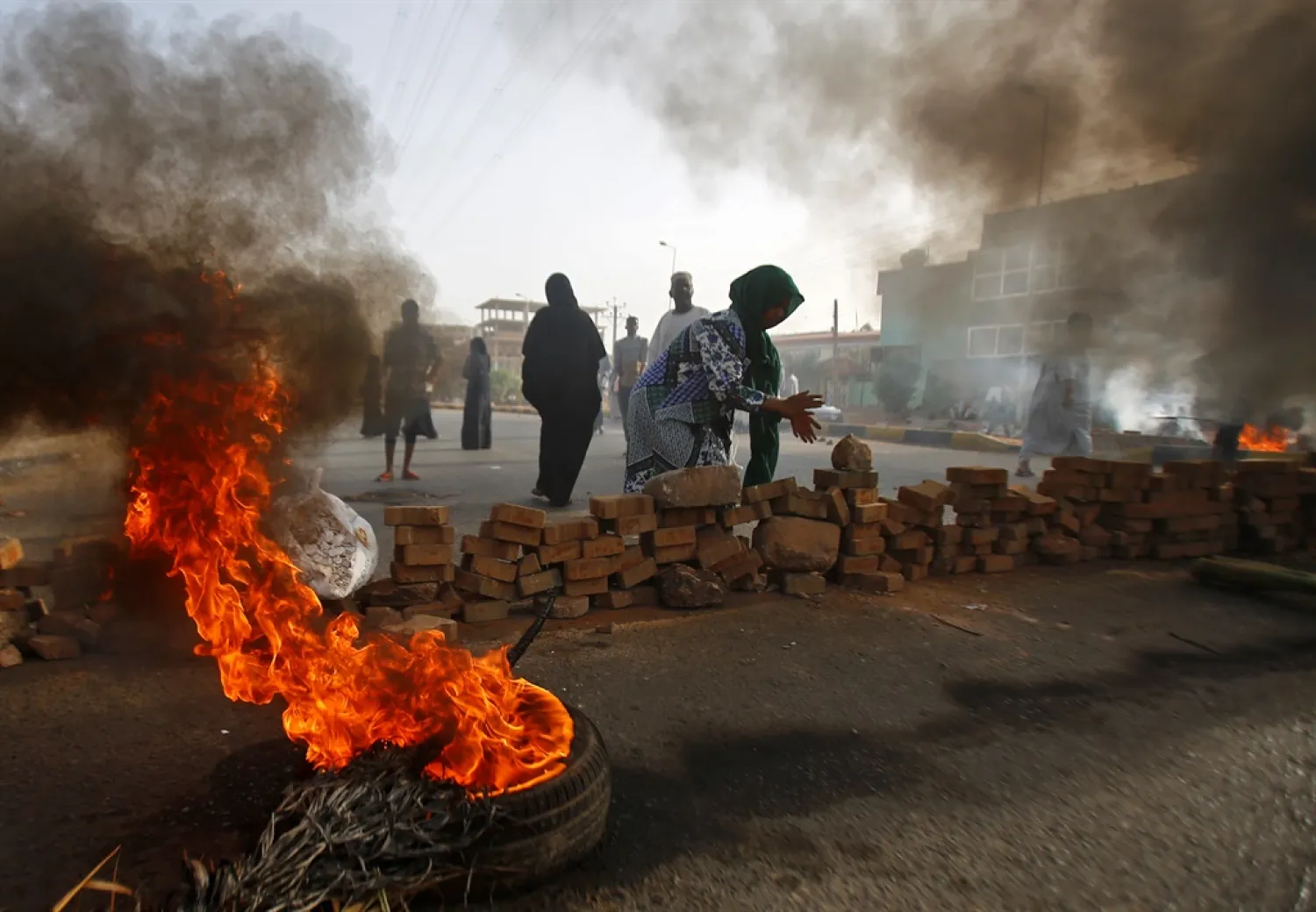
Sudanese protesters close Street 60 with burning tires and pavers as military forces tried to disperse a sit-in outside Khartoum's army headquarters. (AFP)
TT

Khartoum Barricades Symbolize Sudan's Uprising

Sudanese protesters close Street 60 with burning tires and pavers as military forces tried to disperse a sit-in outside Khartoum's army headquarters. (AFP)

Young Sudanese protesters in T-shirts and jeans dump bricks in a pile to create a makeshift barricade in a Khartoum street -- but they are playing a dangerous game of cat-and-mouse.

They disperse as dozens of riot police storm in on pickup trucks.

Officers in blue fatigues fire gunshots into the air as demonstrators sprint down side-streets in Shambat, a working class northern neighborhood of the capital.

Security personnel set to clearing the road, first by hand and then with an excavator, setting fire to whatever can be burned, to prevent it being used again.

But shortly after they leave, the demonstrators return to the streets to put the makeshift roadblocks back in place, reported AFP.

The barricades in Sudan's capital have become a symbol of the months-long demonstrations against longtime ruler Omar al-Bashir and the military council that overthrew him in April.

Protest leaders have called for a nationwide campaign of civil disobedience starting Sunday, days after armed men moved into a key protest camp outside army headquarters in central Khartoum, killing dozens of people.

Protest leaders say the wave of repression has left at least 118 people dead and hundreds wounded, mostly during the break-up of the protest camp.

The government says 61 have died.

Security forces make their presence felt along the main avenues in Shambat and the neighboring district of Bahari, strongholds of the protest movement.

The overwhelming majority of businesses -- banks, pharmacies, restaurants, hairdressers and clothing stores -- are closed, their steel shutters pulled down.

Some are taking part in a general strike, while others have closed out of fear of further violence or the difficulty their staff face in getting to work.

Near the center of Shambat, young protesters try to block the entrance to a side street with everything from stones to tree branches.

"We closed this road overnight," one of them tells AFP.

Security forces came and fired gunshots in the air, he says.

"They opened the way, we closed it again, they opened it, we re-closed it. It was a game of cat and mouse," the 20-year-old mechanical engineering student says.

He insists that the barricades are "nothing personal".

"The main objective is to make sure nobody goes to work," he said. "If we didn't build barricades, people would go on as if nothing had happened."

Behind him, his fellow protesters chanted a key slogan of the protest movement: "power to civilians!"

A white car stops in front of a barricade. The protesters refuse to let it pass, so the driver calmly gets out and continues on foot.

"At the start, this annoyed me. The barricades are a nuisance," he said.

A 42-year-old events organizer, Islam Zakaria is dressed in traditional white robes.

"But I think the young have no other way" of expressing themselves, he said.

An AFP reporter saw one rickshaw driver trying to force his way through a barricade, nearly sparking a fight with a stick-wielding protester.

But other demonstrators held back their comrade. Protest leaders have insisted that the movement must remain peaceful.

The powerful deputy head of the ruling military council and commander of the feared Rapid Support Forces, Mohamed Hamdan Dagalo, has warned he will not tolerate "any chaos".

Widely known by his nickname Himeidti, he has urged the public to help security forces pull down the barriers and accuses the protesters of disrupting daily life.

But Fayez Abdallah, joining a long queue at a bakery that is one of the few shops open in Shambat, disagrees.

The government's abrupt decision to triple bread prices was the trigger for the first mass protests that rocked Sudan in December.

"These long queues are not new in Sudan, they date back to the start of the bread crisis which pushed people into the streets," Abdallah said.



What We Know and Don't Know about the Emerging Deal to End the Iran War

Government supporters hold Iranian flags and pictures of Iran's Supreme Leader, Mojtaba Khamenei, during a ceremony honoring the armed forces and those killed in the war with Israel and the US in Tehran, Iran, Sunday, May 24, 2026. (AP)
TT

What We Know and Don't Know about the Emerging Deal to End the Iran War

Government supporters hold Iranian flags and pictures of Iran's Supreme Leader, Mojtaba Khamenei, during a ceremony honoring the armed forces and those killed in the war with Israel and the US in Tehran, Iran, Sunday, May 24, 2026. (AP)

A deal appears to be emerging between the United States and Iran to end the war and open the Strait of Hormuz, and US President Donald Trump over the weekend said it had been “largely negotiated.”

It is not clear when or how the deal might be finalized and when its various parts will take effect. Trump spoke after calls with allies in the Middle East, including a separate call with Israel. Details come from two regional officials and a US official who spoke on condition of anonymity to discuss the sensitive negotiations.

Here’s what we know and don’t know:

The war would end

In the 12 weeks since the US and Israel launched the war with attacks on Iran that killed senior officials including Supreme Leader Ali Khamenei, Tehran has insisted that any deal focus on ending the fighting on all fronts. That includes Lebanon, where the Iranian-backed Hezbollah militant group has been fighting Israel since two days into the war.

A fragile ceasefire has held since April 7. An end to the war would ease concerns throughout a region that saw Gulf states like the United Arab Emirates struck by Iranian missiles and drones. It would allow for global shipping, including an estimated 20% of the world's oil and natural gas, to begin flowing through the Strait of Hormuz again. It also would allow the rebuilding of energy and other infrastructure in the region.

Both regional officials said the draft deal includes an end to the war between Israel and Hezbollah, as well as a commitment to not interfere in the domestic affairs of countries in the region including Iran. That’s a critical reference to Iran’s support for proxies, which also include the Houthi militants in Yemen, Hamas militants in Gaza and Shiite armed groups in Iraq.

The US wants Israel to have a free hand to respond to what it views as threats in Lebanon while Iran rejects it, one regional official said. The US official said the deal would guarantee Israel’s right to act against imminent threats in self-defense.

The Strait of Hormuz would reopen gradually

Iran’s nuclear program, missile program and support for armed proxies were the stated reasons for the US and Israel attacking Iran. But Tehran’s retaliatory grip on the Strait of Hormuz quickly shot to the top of global concerns as hundreds of ships carrying oil, natural gas, fertilizer and other supplies were stranded.

Under the emerging agreement, the strait would gradually reopen in parallel with the US ending the blockade of Iran’s ports it launched on April 17, the regional officials said. The blockade has limited Iran’s ability to ship its oil and bring in badly needed cash for its long-suffering economy.

The US would allow Iran to sell its oil through sanctions waivers, said one of the officials, who has been briefed on the negotiations. Sanctions relief and the release of Iran’s billions of dollars in frozen funds would be negotiated during a 60-day period, the official said.

Iran would give up its stockpile of highly enriched uranium

Iran’s nuclear program and international concerns over its possible pursuit of a nuclear weapon underlie all tensions, and the US and Israel have considered highly complex military operations to go in and take out its highly enriched uranium.

Under the potential deal, Tehran would agree to give up that stockpile of highly enriched uranium, according to the regional officials. One official, with direct knowledge of the negotiations, said how Iran would give it up would be subject to further talks over the 60-day period. Some would likely be diluted and the rest transferred to a third country, potentially Russia, the official said. Russia has offered to take it.

A US official confirmed the 60-day period and said if Iran doesn’t give up its stockpile, there will be no sanctions relief.

Iran has 440.9 kilograms (972 pounds) of uranium that is enriched up to 60% purity, a short, technical step from weapons-grade levels of 90%, according to the International Atomic Energy Agency.

Iran says it has an “inalienable” right to nuclear technology while insisting its program is peaceful. On Sunday, President Masoud Pezeshkian told state TV they were ready “to assure the world that we are not after a nuclear weapon.”

Trump on Sunday on social media said that “our relationship with Iran is becoming a much more professional and productive one. They must understand, however, that they cannot develop or procure a Nuclear Weapon or Bomb.”

What appears to be missing

Other issues have not been mentioned in descriptions of the emerging deal, including the status of Iran's uranium enrichment.

Another is Iran's missile program, which Israel in particular has sought to destroy.

And while the United States and Israel entered the war with stated ambitions of seeing Iranians rise up against their government after nationwide protests early in the year, any discussion of leadership change in Tehran appears to be out.

As for Iran's past stated aims during negotiations, there appears to be no mention of any withdrawal of US forces from the region, or for reparations for the damage the war has caused.


Attacks on Ebola Treatment Centers Are One of Several Problems Affecting Congo’s Outbreak Response

People wait to be attended at the Mongbwalu General Referral Hospital, as aid agencies intensify efforts to contain an Ebola outbreak caused by the Bundibugyo virus in Mongbwalu, Democratic Republic of Congo, May 23, 2026. (Reuters)
TT

Attacks on Ebola Treatment Centers Are One of Several Problems Affecting Congo’s Outbreak Response

People wait to be attended at the Mongbwalu General Referral Hospital, as aid agencies intensify efforts to contain an Ebola outbreak caused by the Bundibugyo virus in Mongbwalu, Democratic Republic of Congo, May 23, 2026. (Reuters)

Arson attacks on Ebola treatment centers in eastern Congo show how authorities are faced with a number of serious complications — including a backlash in local communities — as they try to stop an outbreak of an infectious disease that has been declared a global health emergency.

The burning of the centers in two towns at the heart of the outbreak shows the anger in a region beset by violence linked to armed rebel groups, the displacement of a large number of people, the failure of local government and international aid cuts that experts say have stripped health facilities in vulnerable communities.

"A devastating set of emergencies are converging," said the Physicians for Human Rights nonprofit.

Here's a look at the longstanding crises in eastern Congo that have made it home to one of the world's worst humanitarian disasters, and how they are now affecting the response to a rare type of Ebola:

The region has a constant threat of violence

Eastern Congo has seen violence by dozens of separate rebel groups for years, some of them with links to foreign countries or Islamic State.

The Rwanda-backed M23 rebels are in control of parts of the region. While the Congolese government still largely controls the northeastern Ituri Province, which is the epicenter of the Ebola outbreak, that control is tenuous. The Allied Democratic Forces, a Ugandan group linked to ISIS, is one of the dominant rebel groups there and responsible for violent attacks against civilian targets.

Before the outbreak, Doctors Without Borders said in an assessment of the situation in Ituri that the insecurity had worsened recently, causing doctors and nurses to flee and leaving overwhelmed health facilities and "catastrophic" conditions in some parts.

Nearly a million people are displaced in Ituri

Nearly 1 million people in Ituri have been displaced from their homes by conflict, according to the United Nations humanitarian office.

That means this Ebola outbreak is "unfolding in communities already facing insecurity, displacement and fragile health care systems," said Gabriela Arenas, Regional Operations Coordinator at the International Federation of Red Cross and Red Crescent Societies.

It's a significant concern that the disease might spread to the large displacement camps near the city of Bunia, where the first cases were reported.

Authorities have announced more than 700 suspected Ebola cases and more than 170 suspected deaths, mostly in Ituri. But cases have been reported in two other eastern provinces, North Kivu and South Kivu, where M23 are in control, and also in the neighboring country of Uganda.

That means that part of the outbreak in Congo is being managed by the government and part by rebel authorities, with an array of aid agencies also helping.

Aid cuts were devastating for eastern Congo

Health experts say international aid cuts last year by the United States and other rich nations were devastating for eastern Congo because it has so many problems.

The cuts "reduced the capacity to detect and respond to infectious disease outbreaks," said Thomas McHale, public health director at Physicians for Human Rights. Congo has had more than a dozen previous Ebola outbreaks.

Aid groups fighting this outbreak on the ground say they don't have the equipment they need, like face shields and suits to protect health workers from infection, testing kits, and body bags and other materials needed to safely bury the bodies of victims, which can be highly contagious.

"We have made requests to different partners, but we have not yet really received anything," said Julienne Lusenge, president of Women’s Solidarity for Inclusive Peace and Development, an aid group operating a small hospital near Bunia.

"We only have hand sanitizer and a few masks for the nurses."

The Bundibugyo type of Ebola virus responsible for the outbreak has no approved vaccine or treatment.

Health and aid workers also face anger from local communities

The burning of two treatment centers by people in the Rwampara and Mongbwalu areas — which have the highest case counts — show how a backlash in some communities is further complicating the response.

Colin Thomas-Jensen, director of impact at the Aurora Humanitarian Initiative, said the attacks may reflect the "built-in skepticism and anger" of people in eastern Congo over how the region has been treated, with years of violence from foreign-linked rebel groups and a failure of their government and international peacekeepers to protect them, he said.

Another source of anger has been the strict protocols around the burial of suspected victims of Ebola, which authorities are taking charge of wherever they can to prevent further spread of the disease when families prepare the bodies and people gather for a funeral.

The first burning of an Ebola center in Rwampara was by a group of local youths trying to retrieve the body of a friend who died, according to witnesses and police. The witnesses said the crowd accused the foreign aid group operating there of lying about Ebola.

Authorities in northeastern Congo have now banned funeral wakes and gatherings of more than 50 people in an effort to curb the spread, and armed soldiers and police are guarding some burials carried out by aid workers.


Report: Netanyahu Relegated from Partner to Passenger in Trump's War on Iran

 US President Donald Trump, right, meets with Prime Minister Benjamin Netanyahu in the Oval Office of the White House, in Washington, Feb. 4, 2025. (AFP)
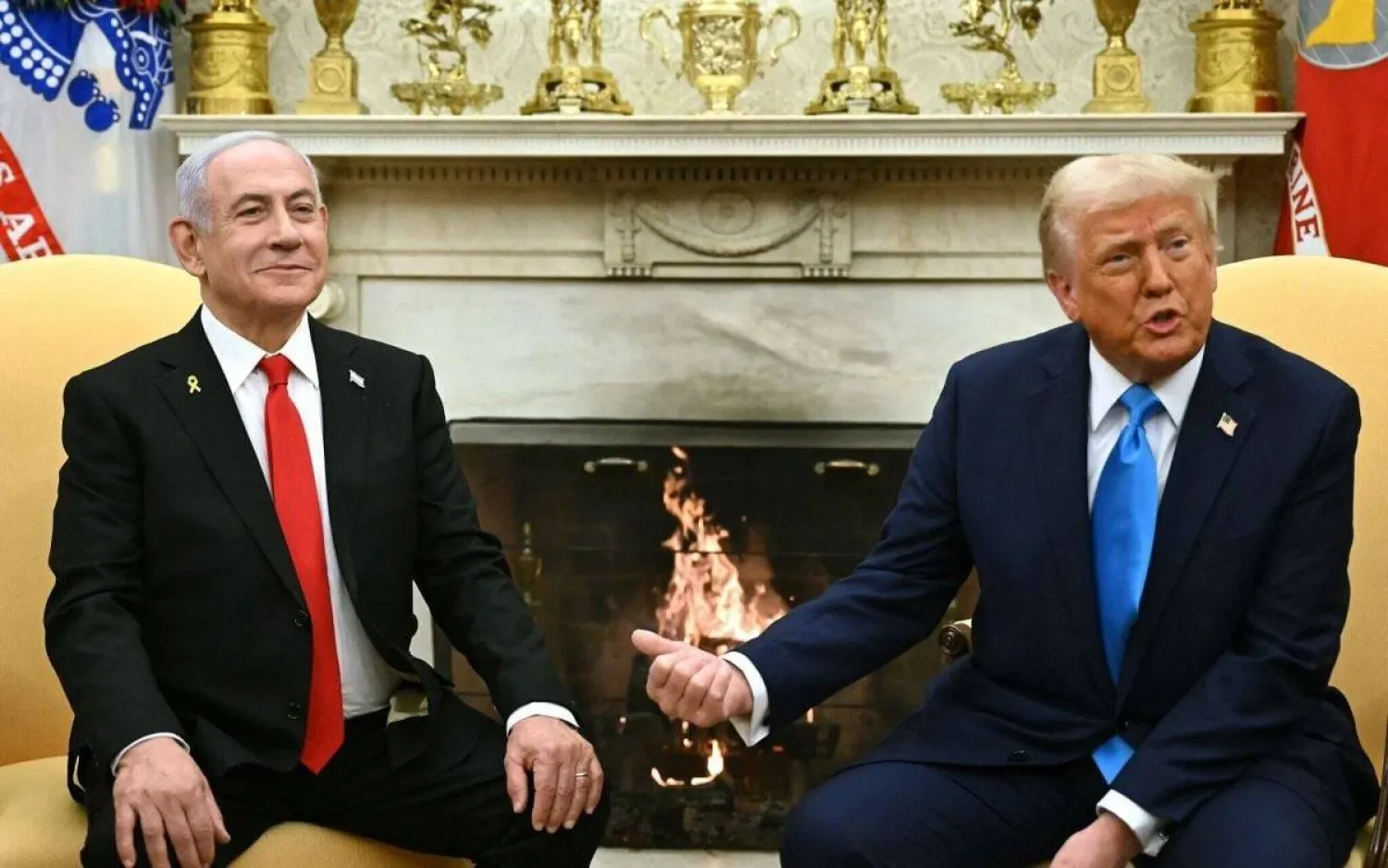
US President Donald Trump, right, meets with Prime Minister Benjamin Netanyahu in the Oval Office of the White House, in Washington, Feb. 4, 2025. (AFP)
TT

Report: Netanyahu Relegated from Partner to Passenger in Trump's War on Iran

 US President Donald Trump, right, meets with Prime Minister Benjamin Netanyahu in the Oval Office of the White House, in Washington, Feb. 4, 2025. (AFP)
US President Donald Trump, right, meets with Prime Minister Benjamin Netanyahu in the Oval Office of the White House, in Washington, Feb. 4, 2025. (AFP)

In the run-up to the February 28 attack on Iran, Prime Minister Benjamin Netanyahu of Israel was not only in the Situation Room with President Trump, he was leading the discussion, predicting that a joint US-Israeli strike could very well lead to the demise of the regime in Iran.

“Just a few weeks later, after those sanguine assurances proved inaccurate, the picture was starkly different. Israel was so thoroughly sidelined by the Trump administration, two Israeli defense officials said, that its leaders were cut almost entirely out of the loop on truce talks between the United States and Iran,” said a New York Times report on Saturday.

“Starved of information from their closest ally, the Israelis have been forced to pick up what they can about the back-and-forth between Washington and Tehran through their connections with leaders and diplomats in the region as well as their own surveillance from inside the Iranian regime,” said the two officials, who spoke on the condition of anonymity to discuss sensitive matters.

“The banishment from the cockpit to economy class has potentially significant consequences for Israel, and especially for the prime minister, who faces an uphill re-election battle this year.”

“Netanyahu has long sold himself to Israeli voters as a kind of Trump whisperer,” uniquely capable of enlisting and retaining the president’s support. In a televised speech early in the war, he portrayed himself as the president’s peer, assuring Israelis that he talked to Trump “almost every day,” exchanging ideas and advice, “and deciding together.”

“He had led Israel to war in February with grand visions of achieving a goal he has pursued for decades: stopping Iran’s push for nuclear weapons once and for all. As the war began with a stunning decapitation of much of the government in Tehran, it seemed as though an even more grandiose dream might come true: the toppling of the regime.”

“But many in Trump’s inner circle had always viewed the idea of regime change as absurd. And it wasn’t long before American and Israeli priorities began to diverge more, especially after Iran closed the Strait of Hormuz, sending oil prices soaring and pressuring Trump into agreeing to a ceasefire.”

Far from vanquished, Tehran has behaved as though it won the war, merely by surviving it. Israel, by contrast, has seen its biggest objectives for the war elude its grasp.

Netanyahu set three goals at the start of the war: toppling the regime, destroying Iran’s nuclear program and eliminating its missile program. None have been realized.

Instead of burying Iran’s nuclear ambitions, a recent American proposal called for a 20-year suspension of, or moratorium on, Iranian nuclear activity and that time frame may have gotten smaller in subsequent proposals. That raises the prospect that an eventual deal could resemble the Obama administration’s 2015 nuclear accord, which Netanyahu fought against at the time and Trump exited from three years later.

With the Trump administration excluding Israel from the negotiations, Iran’s arsenal of ballistic missiles may have been left off the table, as far as Israeli officials know. In that respect, any deal would fail to improve on the 2015 agreement, which Netanyahu assailed in part because it did not address Iran’s missiles.

It would also be a dismaying setback for the Israeli public, for whom life largely ground to a halt as the nation was bombarded by Iranian missiles in March and April.

There are other concerns for Israel about the possible contours of a US-Iran agreement, including a lifting of economic sanctions against Tehran. Doing so could amount to an economic lifeline, flooding Iran with billions of dollars that it could then use to rearm and to help its proxy forces, like Hezbollah, replenish their own arsenals with weapons to use against Israel.

While little is certain yet about the shape of an eventual deal — and any agreement could still be postponed by a renewal of fighting — what seems clear is that Israel’s partnership with the United States has come at a steep price. A country that for generations prided itself on “defending ourselves by ourselves,” and whose leaders exasperated a succession of American presidents with their hardheaded recalcitrance, is now making little secret of its need, and willingness, to submit to Trump’s demands.

As Defense Minister Israel Katz said on April 23, as Trump threatened to resume the war and bomb Iran back to the “Stone Age”: “We are only waiting for the green light from the US.”

“That admission was a humbling climbdown from the heady first days of the war, when the two countries achieved air supremacy and were so confident of success that they urged the Iranian people to topple the regime and secure their future,” said the NYT.

Within two weeks, it became clear that the war would not produce instant victory, as Trump had hoped. The White House, and some Israeli leaders, put aside their hopes for regime change, and Trump turned his attention toward ending the fighting.

“He had viewed Netanyahu as a war ally, but not as a close partner when it came to negotiating with the Iranians,” American officials familiar with his thinking said; in fact, he considered Netanyahu someone “who needed to be restrained when it comes to resolving conflicts.”

Israel soon found itself demoted from “equal partner” to something more akin to a “subcontractor” to the US military.

Israel would often clear plans with the United States, only to have the Trump administration throw it under the bus after those plans were executed, such as when Israel struck the South Pars natural gas field and oil facilities along the Gulf in southern Iran.

Trump even pressured Israel to bring a premature halt to its campaign against Hezbollah in Lebanon within days after the ceasefire on April 8, forcing Israel to accept restraints on its fighting with a hostile adversary right on its border.

“The sidelining is particularly hard to take for some Israeli officials, who, speaking on condition of anonymity, noted that the country willingly shouldered some of the war’s more controversial assignments.”

For Netanyahu, it has meant repeatedly recalibrating his rhetoric, and even adjusting his description of Israel’s war objectives, in response to Trump’s frequent vacillations.

After initially telling his citizens that Israel’s goals were to “remove” the existential threats of an Iranian nuclear weapon and of its ballistic missile arsenal, by March 12 Netanyahu was articulating a new idea. This one downplayed the fact that those threats had not been removed, and instead exalted Israel’s close partnership with the United States.

“Threats come and threats go, but when we become a regional power, and in certain fields a global power, we have the strength to push dangers away from us and secure our future,” he said. What gave Israel such newfound strength in the eyes of its adversaries, Netanyahu asserted, was his alliance with Trump — “an alliance like no other.”


*David M. Halbfinger and Ronen Bergman for The New York Times