Despite Risks, Gazans Dream of Life Away

A Palestinian woman gives water to her son in Khan Yunis in the southern Gaza Strip, December 19, 2018. (Reuters)
TT

Despite Risks, Gazans Dream of Life Away

A Palestinian woman gives water to her son in Khan Yunis in the southern Gaza Strip, December 19, 2018. (Reuters)

At a modest dwelling open to the winds next to a landfill in the Gaza Strip, only the women, children and an old man remain.

Angham Zorab's two brothers along with her husband fled the blockaded Palestinian enclave in June 2014 -- like many others who see no hope in remaining.

"He sold the house and left with the $5,000," the frail 23-year-old woman said of her husband, according to AFP.

"They passed through tunnels" to reach Egypt, she added from the house where she now lives in Khan Yunis in the southern Gaza Strip.

Gaza's two million residents have lived under Israeli blockade for more than a decade, and humanitarian conditions have worsened by the year.

Gaza's rulers, the Hamas movement, and Israel have fought three wars since 2008 and the strip has an unemployment rate of more than 50 percent -- while around two-thirds of young people are jobless.

Eighty percent of the population are dependent on international aid.

There are no official figures on the number of Palestinians leaving the Gaza Strip permanently, said Samir Zaqout of the Palestinian human rights group Al-Mezan.

According to data compiled by the United Nations, around 61,000 Palestinians left Gaza for Egypt last year, while only around 37,000 entered -- a deficit of 24,000, though more could eventually return.

Israel grants limited numbers of exit permits, mainly for merchants and medical patients, according to Gisha, an NGO which monitors the Gaza blockade.

Zaqout says the reasons young people seek to leave include unemployment and poverty, low pay, lack of freedom of expression under Hamas and the impossibility of free travel under Israel's blockade.

"In the past, the idea of emigrating was considered a betrayal (of the Palestinian cause)," he said at his office in central Gaza City.

"Today it is a source of pride. Even those who are engaged in politics, in the resistance (to Israel), are preparing to emigrate."

The will to leave crosses all social classes, from the rich to the poor, he said.

'For my family'

For years, tunnels under the Gaza border with Egypt provided Palestinians with a way out of the enclave.

Some would then take a dangerous route into Europe, often involving a journey by sea.

Egypt has since destroyed the tunnels, but it reopened its crossing with Gaza in 2018 after having kept it largely closed for years.

Zorab's brother-in-law, the last of the family to emigrate, left Gaza last summer through the Rafah crossing with Egypt.

As for her husband, she said he left "for the same reasons as all the others: for work. He said 'I'm going to build a future for my daughter, for my family."

Her two brothers eventually reached Sweden and have established themselves there. She has however lost contact with her husband and has asked for a divorce, said AFP.

She and her six-year-old daughter now live with her parents. She thinks the acne-like bumps across her daughter's body are due to the landfill next door.

"I would like to leave too," Zorab said.

In front of her on a small wooden shelf sits the most precious object in their spartan home: a modem connected to a battery for when the Gaza Strip's frequent electricity cuts plunge the neighborhood into darkness.

"I speak with my sons everyday now," said the mother of the family, Chamaa. "The first two years, my eyes were always filled with tears."

The money that her sons send keeps the house running.

Nine people live in a handful of rooms that are nearly empty, furnished with mattresses on the floor and kitchen utensils.

In the extended family, at least 20 men have left the Gaza Strip and some died in the process.

Zaqout of Al-Mezan said the reopening of the Rafah crossing has made emigrating easier.

'How many have died?'

The mother of 27-year-old Abdallah Masri tells of how he wanted to start a new life by leaving Khan Yunis.

At the end of a long journey, he reached Algeria, where he planned to leave for Europe by crossing the Mediterranean.

"He called me on a Wednesday. He told me, 'I'm going tomorrow,'" said his mother Samar al-Masri, seated in her living room decorated with pictures of her oldest son.

But his first attempt failed.

"He seemed relaxed, but not normal" when he said he would try again, the 43-year-old woman recalled.

"I warned him -- 'If you're scared, don't go!'"

After having no word from him following his departure, she eventually received a call from a foreign number.

"The person just told me 'Abdallah is dead.' I still don't know who was on the other end of the line," she said.

Numerous Gazans know someone who died trying to make their way into exile.

"I am angry with the government, with Israel and everybody who locks us in here," Samar al-Masri said, wiping tears from her eyes.

"They are taking our young people away from us. How many have died?"


What Lies Ahead for Ukraine’s Contested Zaporizhzhia Nuclear Power Plant?

A Russian service member stands guard at a checkpoint near the Zaporizhzhia Nuclear Power Plant before the arrival of the International Atomic Energy Agency (IAEA) expert mission in the course of Russia-Ukraine conflict outside Enerhodar in the Zaporizhzhia region, Russian-controlled Ukraine, June 15, 2023. (Reuters)
TT

What Lies Ahead for Ukraine’s Contested Zaporizhzhia Nuclear Power Plant?

A Russian service member stands guard at a checkpoint near the Zaporizhzhia Nuclear Power Plant before the arrival of the International Atomic Energy Agency (IAEA) expert mission in the course of Russia-Ukraine conflict outside Enerhodar in the Zaporizhzhia region, Russian-controlled Ukraine, June 15, 2023. (Reuters)

The Zaporizhzhia nuclear power plant, Europe's largest, is one of the main sticking points in US President Donald Trump's peace plan to end the nearly four-year war between Russia and Ukraine. The issue is one of 20 points laid out by Ukrainian President Volodymyr Zelenskiy in a framework peace proposal.

Here are some of the issues regarding the facility:

WHAT ROLE MAY THE US PLAY?

Russia took control of the plant in March 2022 and announced plans to connect it to its power grid. Almost all countries consider that it belongs to Ukraine but Russia says it is owned by Russia and a unit of Russia's state-owned Rosatom nuclear corporation runs the plant.

Zelenskiy stated at the end of December that the US side had proposed joint trilateral operation of the nuclear power plant with an American chief manager.

Zelenskiy said the Ukrainian proposal envisages Ukrainian-American use of the plant, with the US itself determining how to use 50% of the energy produced.

Russia has considered joint Russian-US use of the plant, according to the Kommersant newspaper.

WHAT IS ITS CURRENT STATUS?

The plant is located in Enerhodar on the banks ‌of the Dnipro River and ‌the Kakhovka Reservoir, 550 km (342 miles) southeast of the capital Kyiv.

The Zaporizhzhia nuclear power plant has ‌six ⁠Soviet-designed reactors. They were ‌all built in the 1980s, although the sixth only came online in the mid-1990s after the collapse of the Soviet Union. It has a total capacity of 5.7 gigawatts, according to an International Atomic Energy Agency (IAEA) database.

Four of the six reactors no longer use Russian nuclear fuel, having switched to fuel produced by then-US nuclear equipment supplier Westinghouse.

After Russia took control of the station, it shut down five of its six reactors and the last reactor ceased to produce electricity in September 2022. Rosatom said in 2025 that it was ready to return the US fuel to the United States.

According to the Russian management of the plant, all six reactors are in "cold shutdown."

Both Russia and Ukraine have accused each other of striking the nuclear plant and of severing power lines to the plant.

The plant's equipment is powered by ⁠electricity supplied from Ukraine. Over the past four years these supplies have been interrupted at least eleven times due to breaks in power lines, forcing the plant to switch to emergency diesel generators.

Emergency generators ‌on site can supply electricity to keep the reactors cool if external power lines are cut.

IAEA ‍Director General Rafael Grossi says that fighting a war around a nuclear ‍plant has put nuclear safety and security in constant jeopardy.

WHY DOES RUSSIA WANT ZAPORIZHZHIA PLANT?

Russia has been preparing to restart the station but ‍says that doing so will depend on the situation in the area. Rosatom chief Alexei Likhachev has not ruled out the supply of electricity produced there to parts of Ukraine.

Oleksandr Kharchenko, director of the Energy Research Center in Kyiv, said Moscow intended to use the plant to cover a significant energy deficit in Russia's south.

"That's why they are fighting so hard for this station," he said.

In December 2025, Russia's Federal Service for Environmental, Technological and Nuclear Supervision issued a license for the operation of reactor No. 1, a key step towards restarting the reactor.

Ukraine's energy ministry called the move illegal and irresponsible, risking a nuclear accident.

WHY DOES UKRAINE NEED THE PLANT?

Russia has been pummeling Ukraine's energy infrastructure for months and some areas have had blackouts during winter.

In recent ⁠months, Russia has sharply increased both the scale and intensity of its attacks on Ukraine's energy sector, plunging entire regions into darkness.

Analysts say Ukraine's generation capacity deficit is about 4 gigawatts, or the equivalent of four Zaporizhzhia reactors.

Kharchenko says it would take Ukraine five to seven years to build the generating capacity to compensate for the loss of the Zaporizhzhia plant.

Kharchenko said that if Kyiv regained control of the plant, it would take at least two to three years to understand what condition it was in and another three years to restore the equipment and return it to full operations.

Both Ukrainian state nuclear operator Energoatom and Kharchenko said that Ukraine did not know the real condition of the nuclear power plant today.

WHAT ABOUT COOLING FUEL AT THE PLANT?

In the long term, there is the unresolved problem of the lack of water resources to cool the reactors after the vast Kakhovka hydro-electric dam was blown up in 2023, destroying the reservoir that supplied water to the plant.

Besides the reactors, there are also spent fuel pools at each reactor site used to cool down used nuclear fuel. Without water supply to the pools, the water evaporates and the temperatures increase, risking fire.

An emission of hydrogen from a spent fuel pool caused an explosion in Japan's Fukushima nuclear disaster in ‌2011.

Energoatom said the level of the Zaporizhzhia power plant cooling pond had dropped by more than 15%, or 3 meters, since the destruction of the dam, and continued to fall.

Ukrainian officials previously said the available water reserves may be sufficient to operate one or, at most, two nuclear reactors.


Egypt, Trump Reaffirm Strategic Alliance in 2025 amid Regional Turmoil

Egyptian President Abdel Fattah al-Sisi meets President Donald Trump ahead of a world leaders' summit on ending the Gaza war, in Sharm el-Sheikh, Egypt, October 13, 2025. (Reuters)
TT

Egypt, Trump Reaffirm Strategic Alliance in 2025 amid Regional Turmoil

Egyptian President Abdel Fattah al-Sisi meets President Donald Trump ahead of a world leaders' summit on ending the Gaza war, in Sharm el-Sheikh, Egypt, October 13, 2025. (Reuters)

After months of speculation over the trajectory of Egyptian-US relations, fueled by persistent talk of strain and an impending rift, a high-level meeting between President Donald Trump and President Abdel Fattah al-Sisi in Sharm el-Sheikh reaffirmed the resilience of the strategic alliance between Cairo and Washington, even as the region remains in turmoil.

The meeting followed a turbulent period marked by Trump’s adoption of a proposal to relocate Gaza’s population, an idea firmly rejected by Sisi and one that prompted warnings of a diplomatic crisis between the two longtime allies.

The subsequent signing of a Gaza peace agreement in Sharm el-Sheikh sent a clear signal that, despite sharp disagreements over policy, the foundations of the bilateral relationship remain intact.

Early in Trump’s second term, media reports said Sisi had scrapped plans to visit Washington. As the year draws to a close, speculation has said that the visit may happen. Trump has acknowledged Sisi as a friend and said he would be happy to meet him as well.

Trump’s election victory late last year raised Egyptian hopes of strengthening the strategic partnership. Sisi voiced that expectation in a congratulatory post on X, stating that he looked forward to working together with Trump to achieve peace, preserve regional peace and stability, and strengthen the strategic partnership.

Those hopes were tested when Trump floated a plan to “clean out Gaza” and relocate its residents to Egypt and Jordan. Cairo rejected the idea outright, mobilized international opposition, unveiled an alternative plan for Gaza’s reconstruction and hosted an emergency summit on the issue in March.

Limited public engagement

David Butter, a research fellow in the Middle East and North Africa program at Chatham House, noted that the striking feature of Egypt-US ties over the past year has been their low public profile.

Aside from Trump’s appearance in Sharm el-Sheikh, there was not much happening in the open, he told Asharq Al-Awsat.

Amr Hamzawy, an Egyptian political scientist and director of the Middle East program at the Carnegie Endowment for International Peace, described the first year of Trump’s second term as difficult for bilateral relations.

He said it began with talk of displacement and a “Middle East Riviera” in Gaza, but Egyptian diplomacy succeeded in shifting the trajectory.

Trump’s peace plan, he said, ultimately signaled rejection of displacement and spoke of security and political tracks for Gaza and a broader political process for the Palestinian issue, though details remain unclear.

Hamzawy added that the year opened from a tough starting point that followed what he called President Joe Biden’s hesitant stance on Gaza, when displacement was first discussed.

After nearly a year of Egyptian political and diplomatic effort, he said, displacement dropped from Washington’s agenda, even if it remains a risk that cannot be ignored.

Historically, Egypt has been a pivotal state for US national security, given its geography, demographic weight and diplomatic role, according to a recent report by the Congressional Research Service.

Gaza, the main test

The Gaza war shaped Egyptian-US relations during Trump’s first year back in office. Washington backed Egyptian-Qatari mediation to halt the war. US Secretary of State Marco Rubio thanked Cairo after a truce was reached between Israel and Hamas in January.

When hostilities resumed, however, Egypt faced complex diplomatic choices with both Washington and Israel. It rejected Trump’s call to resettle Gaza’s population, while its reconstruction plan failed to gain US or Israeli acceptance.

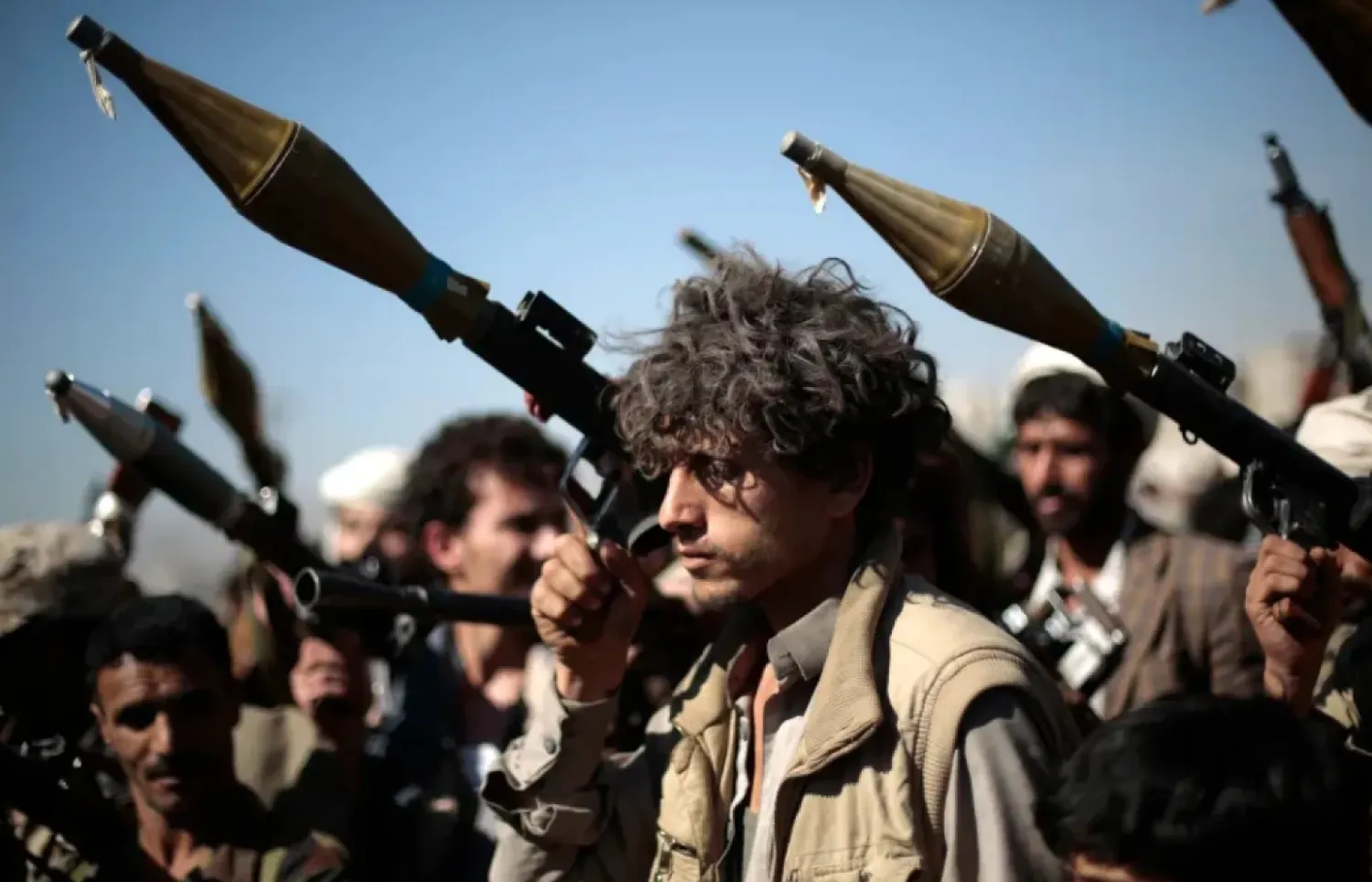
Cairo also drew criticism from Trump for declining to join US strikes against Yemen’s Houthis, the Congressional Research Service (CRS) revealed.

Butter noted that ties with the Trump administration were strained over Gaza after Sisi canceled a Washington visit early in the year, following Trump’s “Middle East Riviera” remarks, which left contacts at a minimum.

He said Trump’s Sharm el-Sheikh visit, the signing of the Gaza agreement and the celebration of his plan’s success offered a chance to reset relations. Egypt, he added, has become indispensable to Trump’s administration in Gaza.

Hamzawy said Gaza dominated the first year of Trump’s term, giving Egypt a chance to restore its standing with US and European decision-makers as a key mediator. Cairo put its vision on the table, he said, shifting US thinking toward parallel security and political tracks and from talk of disarmament to limiting weapons.

Throughout the year, Egypt publicly counted on Trump to end the Gaza war. In July, Sisi urged him in a televised address to press for a halt, saying Trump was capable of doing so.

Analysts Daniel Byman and Jon Alterman wrote in Foreign Policy that Egypt is indispensable to international responses to the Gaza war, even if it remains a difficult partner for Washington and Israel. The conflict, they said, restored diplomatic focus on Egypt and strengthened its leverage.

Sara Kira, director of the European North African Center for Research, said relations in Trump’s second term differ from his first. The earlier term saw broad alignment and personal warmth from Trump, particularly on counterterrorism, she said. The second term has been marked by divergence.

That surfaced in April when Trump called for free passage for US commercial and military vessels through the Suez Canal in exchange for US efforts to protect the waterway.

Positive signals despite differences

Despite disagreements over Gaza, there were positive signs elsewhere. Early in the year, the US State Department froze new funding for most aid programs worldwide, exempting humanitarian food programs and military aid to Israel and Egypt.

Washington did not include Egypt on a travel ban list issued in June. Trump said Egypt was a country with which the United States dealt closely and that things there were under control. Egypt was also spared higher US tariffs. Cairo has repeatedly stressed the depth and resilience of the strategic relationship.

Kira said Egypt exerted maximum pressure to achieve peace and stop the Gaza war, eventually convincing Washington of its approach and reaching a peace agreement in Sharm el-Sheikh. She said Egypt acted pragmatically and astutely, reading Trump’s personality and US interests.

As talks on the second phase of the Gaza agreement stall, Egypt continues to rely on the Trump administration to advance its plan. Cairo remains in contact with Washington and is working with it to prepare a donor conference for Gaza’s reconstruction, which has yet to receive sufficient momentum from the Trump administration.

The dialogue extends beyond Gaza to Libya, Sudan, Lebanon and Iran, as well as water security, led by Ethiopia’s Grand Ethiopian Renaissance Dam (GERD), which Egypt fears could affect its Nile water share.

GERD

In mid-June, Trump stirred controversy in Egypt when he wrote on Truth Social that the United States had “stupidly” funded the dam Ethiopia built on the Blue Nile, triggering a severe diplomatic crisis with Egypt.

In August, the White House released a list of Trump’s foreign policy achievements, which included a purported agreement between Egypt and Ethiopia over the dam.

Trump has repeatedly spoken of his administration’s efforts to resolve the dispute, but those claims have yet to translate into concrete action.

Hamzawy said there is an opportunity for Washington to mediate and revive an agreement reached near the end of Trump’s first term.

Charles Dunne of the Arab Center Washington DC wrote recently that Trump’s stance may please Cairo but could also produce adverse outcomes if Washington does not assume a mediation role.

The United States hosted talks with the World Bank in 2020 during Trump’s first term, but they failed after Ethiopia refused to sign the draft agreement.

Military ties endure

Military cooperation continued largely as usual. Since 1946, the United States has provided Egypt with about $90 billion in aid, with a sharp increase after 1979, which successive administrations have framed as an investment in regional stability, according to the CRS.

For more than a decade, Congress has imposed human rights conditions on part of Egypt’s aid.

Between fiscal years 2020 and 2023, the Biden administration and Congress withheld approximately $750 million in military funding. Trump’s technical annex to the proposed fiscal 2026 budget seeks $1.3 billion in military assistance for Egypt without conditions, the CRS said.

Hamzawy said the administration is far from imposing conditionality, noting that relations rest on mutual interests between a major power and a positively influential middle power.

Since the Gaza war, the Biden and Trump administrations have accelerated US arms sales to Egypt. The State Department notified Congress of military sales totaling $7.3 billion. In July, the Pentagon announced that the State Department had approved the sale of an advanced air defense missile system to Egypt, valued at approximately $4.67 billion. Egypt also hosted the Bright Star military exercises in September.

Kira said ties with Washington are driven by interests and that Cairo has positioned itself as a core regional player.

Hamzawy said Egypt occupies a central place in US Middle East thinking, as Washington needs a spectrum of allies, with Egypt at the heart of that network.


Why Metal Prices are Soaring to Record Highs

A salesman displays gold chains at an Indian jewelry store in September. Idrees MOHAMMED / AFP
TT

Why Metal Prices are Soaring to Record Highs

A salesman displays gold chains at an Indian jewelry store in September. Idrees MOHAMMED / AFP

Precious and industrial metals are surging to record highs as the year ends, driven by economic and geopolitical uncertainty, robust industrial demand and, in some cases, tight supply.

Below AFP examines the reasons for the surge in demand.

- Safe havens -

Gold and silver are traditionally seen as safe-haven assets, and demand has soared amid mounting geopolitical tensions, from US President Donald Trump's tariffs onslaught to wars in Ukraine and Gaza, as well as recent pressure by Washington on Caracas.

Investors are also uneasy about rising public debt in major economies and the risk of a bubble in the artificial intelligence sector.

These uncertainties are driving up gold and silver, with other metals now starting to see the impact as investors seek to diversify their portfolios, explained John Plassard, an analyst at Cite Gestion Private Bank.

"Metal is once again becoming insurance rather than just a speculative asset," he told AFP.

- A weak dollar -

Traditional safe havens like the dollar and US Treasuries have become less attractive this year.

Uncertainty around Trump's presidency and the prospect of further Federal Reserve interest rate cuts, have weakened the dollar, reducing its appeal to investors.

As a result, many investors are turning to gold and silver.

Gold has climbed more than 70 percent this year and passed $4,500 an ounce for the first time on Wednesday, while silver reached a record high of $72 an ounce, with prices up about 2.5 times since January.

A weak dollar is also boosting industrial metals, since commodities priced in dollars become cheaper for buyers when the currency falls.

- Fresh demand -

Industrial demand has surged in recent months, driven by the rise of artificial intelligence and the energy transition.

Copper, used for solar panels, wind turbines, electric vehicle batteries and data centers, has seen strong gains as a result.

Prices hit a record on Wednesday, topping $12,000 a ton, helped further by China, the world's largest copper consumer, announcing new measures to boost demand.

Aluminium, a cheaper alternative to copper, and silver are also benefiting from the AI boom and the shift to renewable energy.

Platinum and palladium, used in car catalytic converters, have also risen, reaching a record high and a three-year high respectively, after the European Union decided to allow sales of new internal combustion vehicles beyond 2035.

- Tight supply -

Copper prices have been lifted this year by fears of US tariffs, prompting companies to stockpile ahead of their introduction, with duties imposed on semi-finished products and potentially extending to refined copper.

Supply risks from disruptions at mines in the Democratic Republic of Congo, Chile and Indonesia have added to the price surge.

Physical markets for silver, platinum, and aluminium are also tight.

According to Ole Hansen, an analyst at Saxo Bank, thin holiday trading, which increases volatility, and investor fear of missing out have further amplified the rise at the end of the year.