

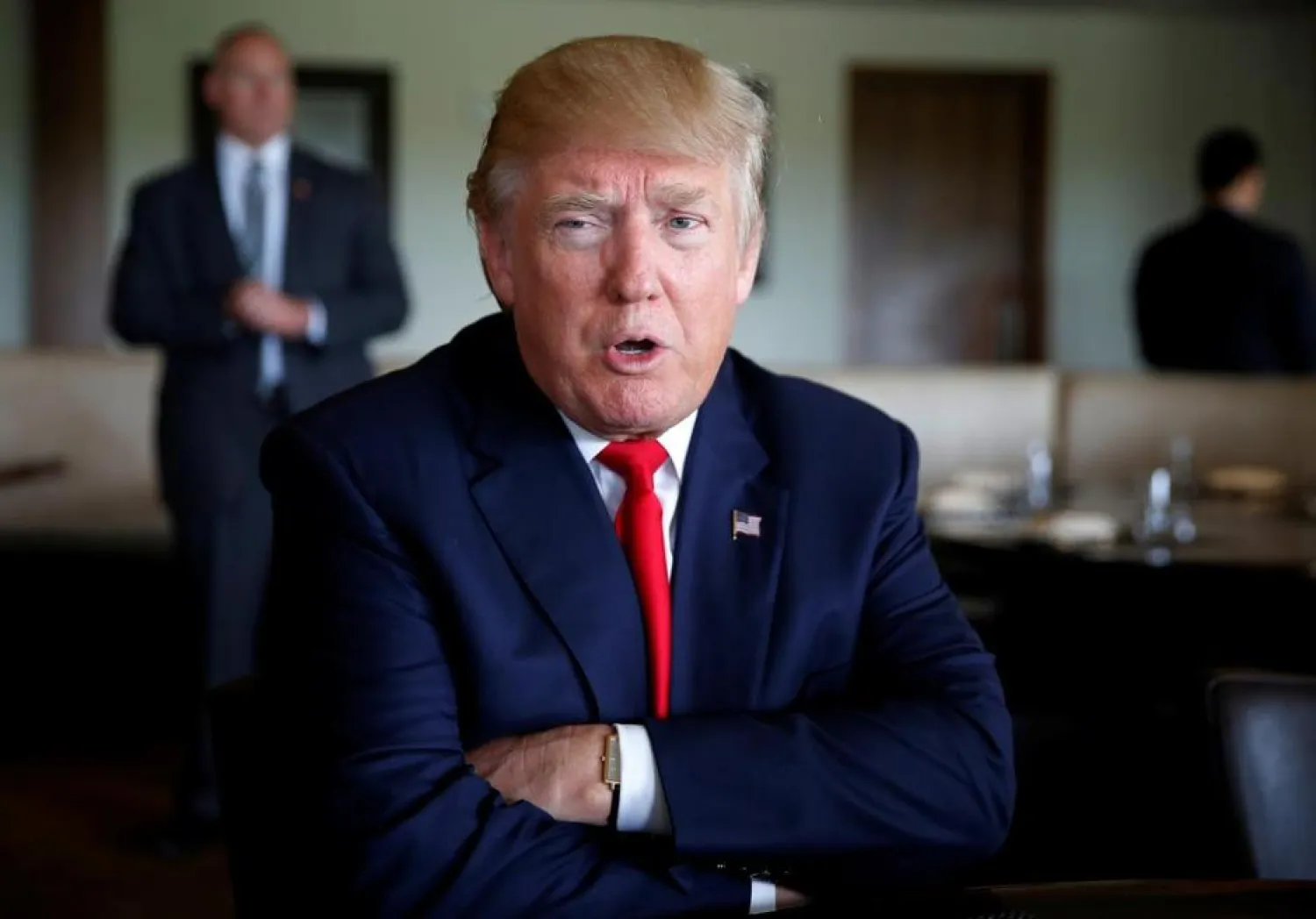

In Delaying Tariffs, Trump Faces Up to Economic Reality

Photo: REUTERS/Jonathan Ernst
TT

In Delaying Tariffs, Trump Faces Up to Economic Reality

Photo: REUTERS/Jonathan Ernst

President Trump’s tariffs on Chinese imports are forcing Americans to pay more for everyday products.

Many economists have shown this. If you look at the appropriate inflation data, like the rising price of imported home furnishings, you can see the effect for yourself. Mr. Trump still does not see it — he continues to claim, incorrectly, that China alone is bearing the costs of his trade war with Beijing. But he admitted at least the possibility that he could be wrong about that on Tuesday, conceding that Americans could start paying more for many products if his latest round of tariffs went through as planned. He acknowledged that when the administration said it would delay imposing a 10 percent tax on some Chinese goods, including electronic devices and toys, to avoid putting a chill into this year’s holiday spending. “We’re doing this for Christmas season, just in case some of the tariffs would have an impact on US customers,” Mr. Trump said, before veering back toward his usual line by adding, “which, so far, they’ve had virtually none.” Continuing his remarks, the president again swung between both positions.

“The only impact has been that we’ve collected almost $60 billion from China — compliments of China,” he said. “But just in case they might have an impact on people, what we’ve done is we’ve delayed it so that they won’t be relevant for the Christmas shopping season.” There were at least a couple of inaccuracies in Mr. Trump’s comments, starting with how much money the Treasury had collected as a result of the tariffs. The Customs and Border Protection agency puts the figure at $24 billion through Aug. 7 — less than half of what Mr. Trump claims. But his concession that consumers could wind up paying more for holiday gifts because of the tariffs is true based on the best available research on who is footing the bill for the trade war so far. The reality of what economists call the “incidence” of Mr. Trump’s China tariffs is a complicated tale of profits, supply chains, competition, and policy design. Here’s what we know about it to this point.

The tariffs have been relatively small, but they’re growing

When Mr. Trump first imposed tariffs on Chinese imports last year, he targeted $50 billion of goods that were mostly the kinds of things that American companies purchase to manufacture other products, and not items that shoppers typically buy at the mall or online. He later imposed tariffs on an additional $200 billion of Chinese goods, initially at a rate of 10 percent and then at a rate of 25 percent. That batch of tariffs affected more consumer products than the first round, but popular retail goods like clothes and cellphones were left off the list.

This month, Mr. Trump threatened a 10 percent tariff on about $300 billion in imports, or almost all of the Chinese goods that had not yet been taxed. Some of those tariffs will take effect on Sept. 1 as planned. The move announced on Tuesday, which also excluded some products, like car seats, from the new tariffs entirely, means a large swath of Chinese imports won’t be hit with tariffs until Dec. 15. That effectively staves off any tariff-related price increases for those products until after holiday shopping has started. Thus far, the tariffs have not been a huge burden for consumers.

Data from the customs agency shows that all of the China tariffs together raised $24 billion through Aug. 7. That works out to roughly a 5 percent tax rate on the total value of imports from China since Mr. Trump first began imposing the levies. As the list has grown, the pace at which revenue from the tariffs is collected has increased. The next round of tariffs will accelerate it even further.

Tariffs have already raised some prices

Inflation remains below the Federal Reserve’s 2 percent target rate, a fact Mr. Trump sometimes cites as evidence that the tariffs have not raised prices. That’s a leap of logic.

The overall inflation rate is too broad, encompasses too many prices and is affected by too many other factors to declare there has been no effect on consumers. In February, economists at the Federal Reserve Bank of San Francisco estimated that the first wave of China tariffs would raise the inflation rate by 0.1 percentage points. They predicted that a possible expansion to 25 percent tariffs on all Chinese imports, still short of what Mr. Trump has announced, would add an additional 0.3 percentage points. Goldman Sachs researchers echoed that finding in a note this week.

They did so by analyzing changes in inflation for a group of goods that has been, or is about to be, directly affected by the tariffs. The sample is narrower than the one that determines the overall inflation rate, which makes tariff-related movement easier to spot. “Our analysis of consumer prices, imports, and tariff rates in tariff-affected goods categories suggests that most tariff costs were passed on to consumers,” the analysts wrote, “and that there were sizable price spillovers as well.”

Ian Shepherdson, the chief economist at Pantheon Macroeconomics, a research firm, spotted an even greater effect this week by focusing on two types of goods already subject to the tariffs: floor coverings, and furniture and bedding. Both experienced price increases in July. The increases, he wrote this week, “are tariff effects, and offer a taste of what would happen if the administration imposes tariffs on a wide range of imported Chinese consumer goods next month.”

The higher tariffs rise, the more consumers will pay

It’s important to note that consumers almost certainly are not paying the full price of the tariffs, even on Chinese goods that they buy in stores. That’s because retailers like Target and Walmart and companies that make a lot of goods in China, like home lighting manufacturers, have several options when tariffs are imposed. Such companies can shift their supply chains, moving factory production to other low-cost countries, like Vietnam. They can demand price concessions from suppliers. They can choose to accept lower profits. Or they can pass price increases straight to consumers. Consumers don’t like paying higher prices, so companies are trying to find as many ways as possible to avoid going that route. The higher the tariff rate rises, though, the harder that becomes.

The department store giant Macy’s said on Wednesday that consumers had been unhappy about price increases on some Chinese goods already subjected to tariffs this year. The company’s chief executive, Jeff Gennette, said that consumers would have “no appetite” for price increases on the new round of products targeted by Mr. Trump, and that Macy’s would try to avoid passing them on. Mr. Gennette said such a strategy would be manageable for the 10 percent rate that Mr. Trump has said he planned to impose in the coming round of tariffs. But if the rate were to go to 25 percent, he said, “You’re dealing with a whole other series of dynamics.” “I would not say we wouldn’t have to raise prices,” Mr. Gennette added.

(The New York Times)


Türkiye, Syria Step Up Banking Ties as Lenders Eye Expansion

Türkiye’s Ziraat Bank tower is seen in Sarajevo, Bosnia and Herzegovina, May 16, 2018. (Reuters)
TT

Türkiye, Syria Step Up Banking Ties as Lenders Eye Expansion

Türkiye’s Ziraat Bank tower is seen in Sarajevo, Bosnia and Herzegovina, May 16, 2018. (Reuters)

Türkiye and Syria are accelerating cooperation between their central banks, Trade Minister Omer Bolat said on Tuesday, adding that Syria’s central bank governor will meet Turkish banking ‌regulators.

Speaking at ‌a business ‌forum, ⁠Bolat said closer ⁠banking ties and the entry of Turkish lenders into Syria could help boost trade and industrial ⁠investment.

State lender Ziraat ‌Bank ‌and private lender Aktifbank ‌are both working to ‌establish a presence in Syria, company officials said separately, with applications submitted ‌and operations expected to begin in the near ⁠term.

Business ⁠leaders at the forum said restoring banking services and resolving customs and logistics issues would be key to increasing bilateral trade.


Türkiye Not Facing Energy Security Problem Amid War but Situation ‘Volatile’

Travelers cross from Iran into Türkiye at the Kapikoy border crossing in eastern Van province, Türkiye, Saturday, April 4, 2026. (AP)
TT

Türkiye Not Facing Energy Security Problem Amid War but Situation ‘Volatile’

Travelers cross from Iran into Türkiye at the Kapikoy border crossing in eastern Van province, Türkiye, Saturday, April 4, 2026. (AP)

Türkiye is not ‌facing any problems regarding energy supply security due to the Iran war, but the situation is "volatile", Energy Minister Alparslan Bayraktar was quoted as saying by Turkish media on Tuesday.

"We hope the war will not last any longer. But the process is currently under our control," Bayraktar told reporters on Monday evening after a cabinet meeting, broadcaster Haberturk reported.

"There is no problem or difficulty in energy ‌supply security."

Türkiye ‌is a big energy importer which ‌neighbors ⁠Iran and is among ⁠the most exposed emerging market economies to the global energy price jump.

Bayraktar said in late March that Türkiye’s dependence on Middle East oil was at a "manageable" 10% of total supplies and that the country had taken protective diversification steps.

At the ⁠time he said every $1 increase in ‌oil prices adds about $400 million ‌to Türkiye’s energy bill, while there had not been ‌any natural gas supply cuts so far from ‌Iran, Türkiye’s fourth largest supplier last year.

On Monday, Bayraktar told reporters that he had spoken with the Hungarian foreign minister and discussed the issue of protecting the security ‌of the TurkStream pipeline, which carries Russian natural gas to southern Europe through ⁠the ⁠Black Sea and Türkiye.

Explosives were found near the TurkStream pipeline in Serbia at the weekend, prompting Hungarian Prime Minister Viktor Orban to convene an emergency defense council.

Russia and Türkiye formally launched the TurkStream pipeline, which has a capacity of 31.5 billion cubic meters per year, in January 2020. The pipeline allows Moscow to bypass Ukraine as a transit route to Europe.

"The security of the pipeline in the Black Sea and on our side is important," Bayraktar said.


SME Financing Moves to the Core of Saudi Arabia’s Non-Oil Economy

A night view of Riyadh, Saudi Arabia (SPA file)
TT

SME Financing Moves to the Core of Saudi Arabia’s Non-Oil Economy

A night view of Riyadh, Saudi Arabia (SPA file)

In a sign of a deep shift in the structure of financing within Saudi Arabia’s economy, and reflecting the goals of Vision 2030 to diversify the production base, credit facilities extended to micro, small and medium-sized enterprises reached a record high at the end of 2025.

Banks and finance companies injected around SAR 467.7 billion ($124.5 billion) into the sector last year, marking a 33 percent annual increase. The surge highlights the transition of these enterprises from the margins of economic activity to the center, positioning them as a key driver of non-oil growth and job creation.

On a yearly basis, total facilities rose 33 percent from about SAR 351.7 billion ($93.6 billion) in 2024, according to monthly bulletin data from the Saudi Central Bank (SAMA).

The banking sector accounted for the largest share, with facilities provided by banks reaching approximately SAR 446.6 billion, up 34 percent year on year. Finance companies contributed around SAR 21.1 billion, an annual increase of 15.4 percent.

By enterprise size, growth rates varied. Lending to medium-sized firms rose 18 percent year on year to SAR 220.9 billion. Small enterprises recorded stronger growth of 34 percent, reaching SAR 163.5 billion. Micro-enterprises saw the sharpest increase, with facilities surging 97 percent to SAR 83.3 billion, underscoring a notable expansion in financing to this segment.

Structural shift

The strong growth has been driven by several factors, most notably the clear strategic direction under Vision 2030, which places SMEs at the heart of economic diversification, along with the expanding role of institutions supporting the sector.

Among these is Monsha’at, which has helped improve the business environment and connect enterprises with funding sources, according to economist Hussein Al-Attas.

“This level of facilities is not just a record figure. It reflects a structural shift in the philosophy of financing within the Saudi economy,” Al-Attas told Asharq Al-Awsat.

He identified four main drivers behind the growth: a clear economic vision, a stronger regulatory environment, the expansion of credit guarantee programs, and a shift in how banks view the SME sector.

The Kafalah program has been particularly important, helping reduce lending risks and enabling banks to increase exposure to SMEs. This has coincided with improvements in financial data quality and governance practices, which have strengthened lenders’ confidence in the sector.

Sustainable growth

Al-Attas said the current trend reflects not a temporary expansion in credit but a redefinition of the role of SMEs in the economy, with growth expected to continue over the medium term.

However, he pointed to several challenges that could affect the pace of expansion. These include limited managerial expertise in some firms, the risk of defaults if financing is poorly managed, concentration of lending in specific sectors, and the potential impact of future interest rate increases.

Authorities are aware of these risks. This is reflected in a growing focus on improving governance, strengthening management efficiency, and linking financing more closely to actual operating performance to ensure funds are directed toward sustainable and productive activities.

The importance of this expansion extends beyond the headline figures. It supports a higher contribution of SMEs to non-oil GDP and plays a central role in job creation, given the sector’s labor-intensive nature.

According to Al-Attas, the growth also strengthens economic diversification by supporting the entry of new firms into promising sectors such as technology, industry, and services. It also increases local value added and reduces reliance on imports and large corporations.

Looking ahead, he expects financing growth to continue at a healthy pace over the next three to five years. This outlook is supported by the expansion of digital financing solutions, continued integration between government and banking sectors, and improving market maturity and enterprise quality. Large-scale projects and non-oil expansion are also expected to create new financing opportunities, gradually shifting the focus from the volume of funding to the quality of its economic impact.

Digital transformation

Mohammed Al-Farraj, senior head of asset management at Arbah Capital, said the development reflects alignment between ambitious government policies aimed at raising SMEs’ contribution to GDP to 35 percent and a responsive banking sector that has led the growth and captured the largest share of financing.

He noted that guarantee and incentive programs, as well as the SME Bank, have played a key role in reducing credit risks and boosting banks’ willingness to lend.

Digital transformation and the rise of fintech companies have also marked a turning point by improving access to financing and lowering operating costs. This has created a more flexible and attractive environment for business growth beyond traditional constraints.

Despite these positive indicators, Al-Farraj cautioned that rapid expansion requires strategic vigilance, particularly regarding credit risks and potential defaults amid interest rate volatility and increased competition in sectors such as retail.

He continued that the next phase will require a shift from quantitative growth, focused on expanding financing volumes, to qualitative growth that emphasizes credit quality, project sustainability, and resilience to economic changes.

Alternative financing tools such as venture capital are expected to play a growing role. These tools can ease pressure on bank balance sheets while directing funding toward strategic sectors including technology, tourism, and industry to ensure meaningful value creation in the national economy.

Developments seen in 2026 suggest early returns from this expansion. These include the emergence of a new generation of high-growth firms, increased SME contribution to non-oil exports, and greater use of instruments such as sukuk tailored for SMEs as a cost-effective long-term financing option.

Al-Faraj said SMEs are no longer a peripheral segment but a central driver of innovation and growth in Saudi Arabia’s economy. Sustaining this momentum will require continued regulatory development and more flexible repayment mechanisms to ensure durable growth aligned with long-term economic development goals.
