


UAE Underlines its Position in Arab Coalition, Rejects Claims over its Role in Aden

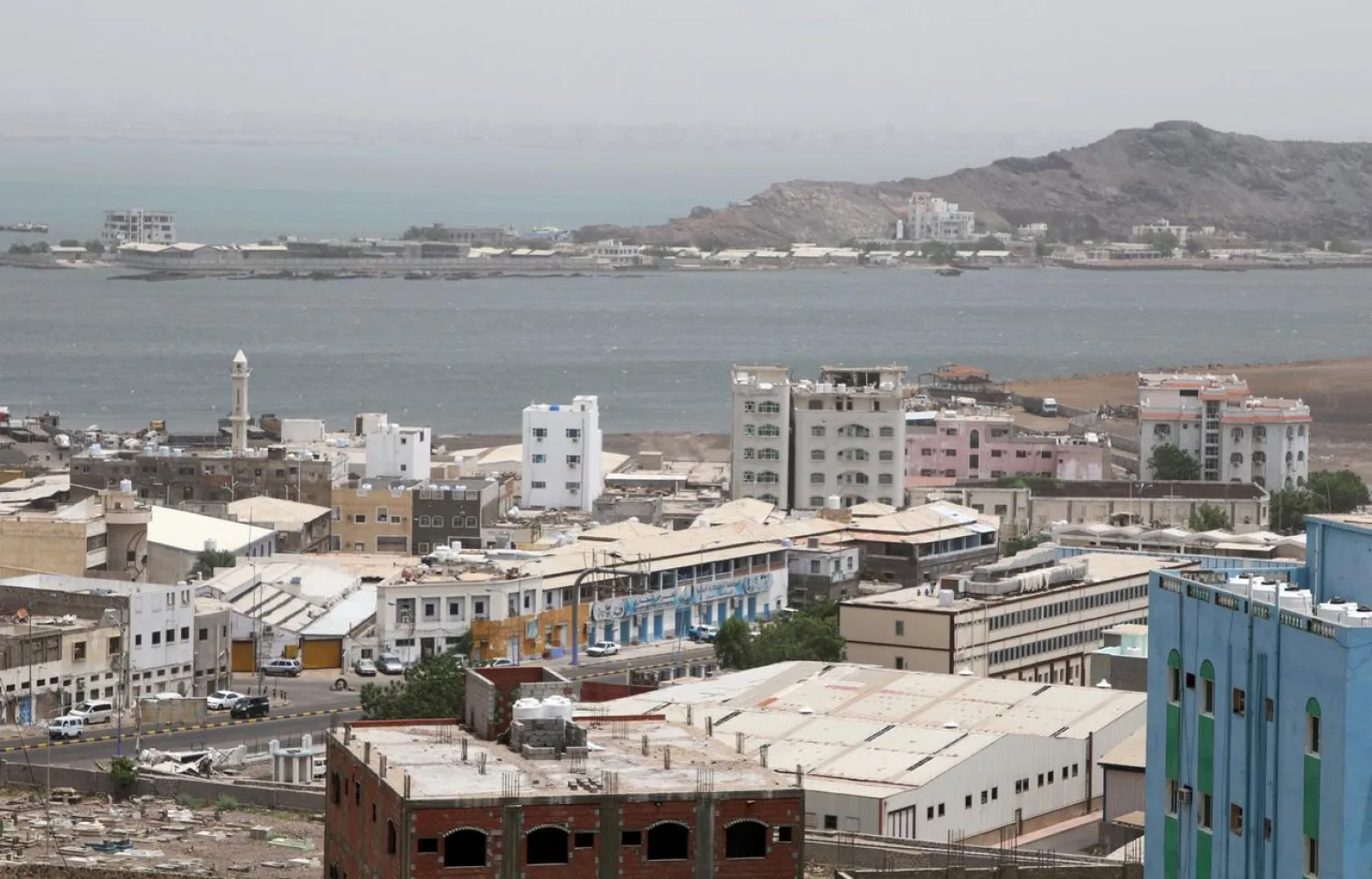
A general view of Aden, Yemen. (Reuters)
TT

UAE Underlines its Position in Arab Coalition, Rejects Claims over its Role in Aden

A general view of Aden, Yemen. (Reuters)

The United Arab Emirates has expressed its regret and categorical rejection of allegations it is facing in light of ongoing developments in Aden, affirming its firm stance as an Arab coalition partner and determination to continue exerting all efforts to de-escalate the current situation in Yemen.

This statement followed comments by Saud Al Shamsi, Deputy Permanent Representative and Chargé d'affaires of the UAE to the United Nations, in an address before a Special Ministerial Meeting convened by the UN Security Council on Tuesday regarding challenges to peace and security in the Middle East in relation to the item entitled "Maintenance of International Peace and Security."

Al Shamsi underscored the UAE’s extreme concern as conveyed in an official statement in recent days over armed clashes in Aden between the Legitimate Government of Yemen and the Southern Transitional Council. He reaffirmed the UAE’s call for calm and de-escalation in order to maintain peace and security for the people of Yemen, reported the UAE news agency (WAM).

Al Shamsi clarified that this remains the UAE’s position as a key partner in the Saudi-led coalition, pointing to the enormous sacrifices made by the UAE. Accordingly, the UAE firmly refutes all accusations espoused against the backdrop of differences and divisions in which the UAE takes no part.

He also reaffirmed the UAE’s concerted support for the restoration of legitimacy and stability in Yemen. He underlined that it was at the official request of the legitimate government of Yemen that the UAE became a member of the Saudi-led Coalition to Restore Legitimacy in Yemen and took decisive action against Houthi attacks in order to back the legitimate government.

Furthermore, he provided an overview of the UAE’s role in Yemen, stating: "We must not forget the significant role that my country has taken on in liberating Aden and other territories occupied by the Houthi coup militias while preventing terror organizations from exploiting the security vacuum during this difficult and sensitive time."

He added: "The UAE was able to play a role in major efforts to rebuild liberated areas and offer material and technical assistance to the Yemeni people while contributing to efforts to confront the threat posed by Al-Qaeda in the Arabian Peninsula. Moreover, the UAE has supported all efforts by the Coalition to safeguard freedom of navigation in the Bab el-Mandeb Strait and Red Sea."

Al Shamsi clarified that the UAE undertook these efforts in light of the inability of the legitimate government of Yemen to manage its internal affairs and its weak performance in view of the climate of widespread internal political and regional divisions that the government has been unable to address through constructive dialogue.

He renewed the UAE’s repeated and sustained calls for concerted dialogue between all parties to end internal disputes and achieve unity towards the preservation of peace and stability, stating, "It is inappropriate for the government of Yemen to lay blame for its political and administrative failure on the UAE as reflected in today’s negative statement."

He added: "As a coalition partner, the UAE will continue exerting all efforts to pursue de-escalation in the south of Yemen," emphasizing that the UAE was a vital member of the joint delegation with Saudi Arabia to maintain the integrity of national institutions in Aden during developments regarding the STC. The UAE also worked to coordinate dialogue and achieve peace and stability among all parties.

He continued: "This is the expected role of states that consider the region’s peace and security a major topic of discussion today."

Al Shamsi stressed the UAE’s stance towards all parties and urged a renewed focus on mutual objectives in Yemen, in addition to underlining the UAE’s support for the work of UN Special Envoy for Yemen Martin Griffiths.



Rakan bin Salman Appointed Governor of Diriyah at Critical Juncture in its Transformation 

Prince Rakan bin Salman bin Abdulaziz. (Social media)
TT

Rakan bin Salman Appointed Governor of Diriyah at Critical Juncture in its Transformation 

Prince Rakan bin Salman bin Abdulaziz. (Social media)

Prince Rakan bin Salman bin Abdulaziz has taken the helm of what is widely regarded as the Kingdom’s crown jewel, following the issuance of a royal order appointing him Governor of Diriyah.

The appointment came as part of a series of royal decrees issued on Thursday by Custodian of the Two Holy Mosques King Salman bin Abdulaziz, highlighting the strategic importance of Diriyah at a critical juncture in its transformation.

Diriyah holds a unique place in Saudi history as the birthplace of the Saudi state and a powerful symbol of national unity. Today, an ambitious development program is reshaping the area into a globally prominent cultural destination, echoing its historic role as a commercial hub and a flourishing center of learning and culture.

Prince Rakan bin Salman’s appointment coincides with a defining moment for the governorate, which is transitioning from a historic capital of the early Saudi state into a world-class cultural and tourism destination designed for the 21st century.

Born in 1997, Prince Rakan is the youngest son of King Salman. He holds a bachelor’s degree in law from King Saud University in Riyadh, bringing a legal background to a role that blends heritage preservation with modern governance.

His leadership comes amid unprecedented momentum in Diriyah’s development. No longer viewed merely as a historic site, Diriyah has become a vast, integrated development zone with ambitions to attract up to 100 million visitors annually by 2030.

At the forefront of the new governor’s agenda is a portfolio of landmark projects, most notably the multibillion-dollar Diriyah Gate development. The project encompasses the historic At-Turaif district, a UNESCO World Heritage Site, alongside broader plans to reinforce Diriyah’s position as a global hub for arts, culture, and immersive international experiences.


Khalid Al-Yousef: From the Halls of the Judiciary to the Helm of the Public Prosecution

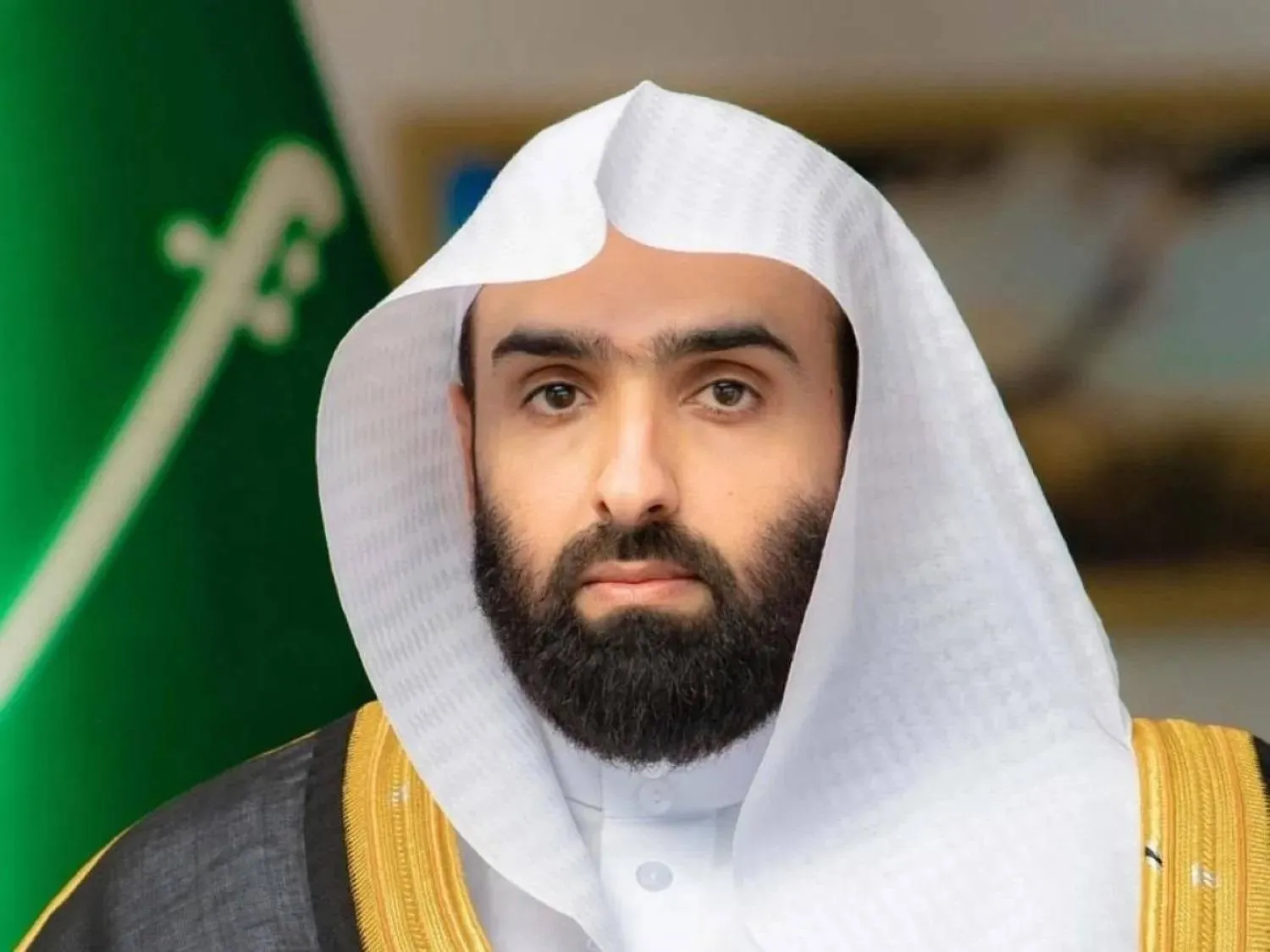
Dr. Khalid Al-Yousef draws on an extensive background and deep familiarity with the matters of the judiciary. (The Board of Grievances) 
TT

Khalid Al-Yousef: From the Halls of the Judiciary to the Helm of the Public Prosecution

Dr. Khalid Al-Yousef draws on an extensive background and deep familiarity with the matters of the judiciary. (The Board of Grievances) 

Dr. Khalid Al-Yousef has been appointed Saudi Arabia’s Attorney General, a choice that reflects the Kingdom’s continued drive to strengthen its legal and rights framework by entrusting leadership to figures who combine deep grounding in Islamic jurisprudence with modern legal thinking.

Al-Yousef has emerged as one of the legal and judicial figures closely associated with Saudi Arabia’s judicial transformation under Vision 2030.

This period has witnessed a sweeping shift toward the digitization of judicial and notarization services, a reduction in litigation timelines by more than 70 percent in some circuits, and the introduction of more than 160 services through electronic platforms and alternative dispute mechanisms.

He holds a doctorate in comparative jurisprudence (Fiqh) from the Higher Institute of Judiciary at Imam Muhammad ibn Saud Islamic University. His academic research has focused on bridging Sharia rulings with contemporary judicial systems, judicial oversight of administrative regulatory decisions, and administrative law and justice.

Before his appointment as Attorney General, Al-Yousef held a series of pivotal leadership positions at the Board of Grievances. He served as a judge in administrative, commercial, disciplinary, and criminal courts, issuing a wide range of rulings over the course of his career.

He also was a member of the Technical Affairs Office, which is responsible for legal opinions, research and studies, the classification of judicial rulings and principles, and jurisprudential and legal consultation.

His responsibilities at the Board of Grievances extended to overseeing the Decision Support Center, which includes the Development and Performance Oversight Office, as well as the Information and Reports Office and the Strategic Planning Office.

He also took part in teams tasked with drafting the strategic plan and performance management system, contributing to the Tenth Development Plan, supervising the electronic archiving of judicial rulings, and classifying and publishing court judgments.

In 2015, Al-Yousef was appointed President of the Board of Grievances. His tenure was marked by significant qualitative advances that coincided with Saudi Arabia’s broader judicial transformation, including the digitization of administrative courts and enhanced levels of transparency and legal clarity.


Al-Saif: From Engineering Saudi PIF’s Strategy to Investment Minister 

Saudi Arabia's newly-appointed Investment Minister Fahad Al-Saif. (PIF)
TT

Al-Saif: From Engineering Saudi PIF’s Strategy to Investment Minister 

Saudi Arabia's newly-appointed Investment Minister Fahad Al-Saif. (PIF)

Fahad Al-Saif has been appointed Minister of Investment of Saudi Arabia by royal order of Custodian of the Two Holy Mosques King Salman bin Abdulaziz, capping a career arc that brings financial expertise together with economic vision.

The appointment follows a pivotal tenure at the Saudi Public Investment Fund (PIF), where he helped shape the Kingdom’s overarching investment strategy and led global investment financing.

The move comes at a moment when efforts to attract foreign capital and deepen international partnerships are accelerating.

Drawing on deep experience in capital structuring, market and sustainability strategies, and the management of relationships with financial institutions and investors, Al-Saif is set to usher the Ministry of Investment into a new phase, one defined by the integration of strategic planning with smart financing to support the goals of Vision 2030.

At the PIF, Al-Saif served as Head of Global Investment Financing and previously led the General Department of Investment Strategy and Economic Studies.

Beyond his executive roles, Al-Saif has held a number of prominent board positions. He chaired the boards of Emaar Economic City and aircraft lessor AviLease, and served as a board member of the Saudi Insurance Authority, ACWA Power, the Saudi Real Estate Refinance Company, and the regional Voluntary Carbon Market Company. He also held the position of Vice Chairman of Bahri.

Al-Saif brings more than 20 years of experience across corporate banking, investment, and global banking services. He previously served as Chief Executive Officer and board member of the National Debt Management Center, acted as an adviser to the Minister of Finance, and founded the Public Debt Management Office at the Ministry of Finance.

His past board memberships include the National Center for Privatization, Gulf International Bank – Saudi Arabia, and the International Islamic Trade Finance Corporation.

Earlier in his career, Al-Saif spent several years in the banking sector, holding multiple positions at the Saudi First Bank and senior leadership roles at HSBC Saudi Arabia. He also led the initial public offering of the National Commercial Bank and served on the advisory committee of the Capital Market Authority.