Haaretz: Israel to Study Palestinian Request to Hold Elections in Jerusalem

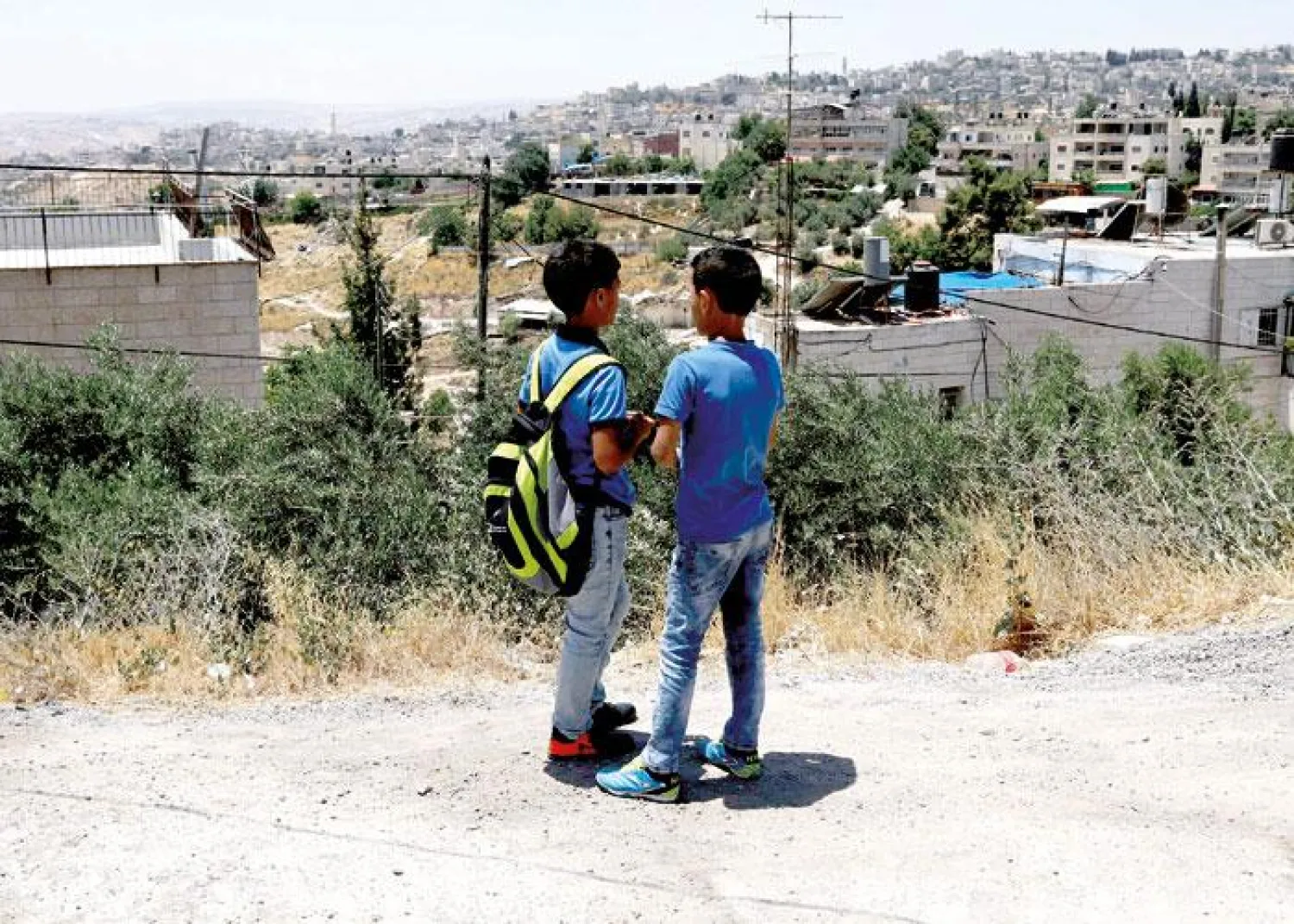
Palestinian children chat outside a school in the East Jerusalem neighborhood of Jabel Mukhaber. (Reuters)
TT

Haaretz: Israel to Study Palestinian Request to Hold Elections in Jerusalem

Palestinian children chat outside a school in the East Jerusalem neighborhood of Jabel Mukhaber. (Reuters)

Israeli newspaper Haaretz said that the cabinet would discuss the request made by the Palestinian Authority to hold elections in the areas of Eastern Jerusalem.

According to the website, Israel has officially received the Palestinian request and would discuss it extensively during its cabinet meeting.

The Palestinians submitted a request to Israel in order to allow the residents of East Jerusalem to participate and run in the upcoming elections, as was done in the legislative elections held in 1996 and 2006.

The Palestinians also addressed the European Union and other countries in order to pressure Israel on this matter.

The secretary of the PLO’s Executive Committee, Saeb Erekat, said that the Authority formally requested that the elections be held in Jerusalem, as was the case with previous elections.

Erekat stressed that Israel must agree to this according to the signed agreements, and based on previous Israeli stances and decisions.

“Israel doesn’t have the right to prevent the 400,000 Palestinians who live in Jerusalem from participating in the general elections,” he said.

He called on the European Union countries and the international community to put pressure on Israel to prevent it from obstructing the elections in Jerusalem.

But, on the other hand, Erekat said that Israeli recent positions were not encouraging.

“The Israeli positions are not promising; the most recent of which are attempts to suppress and prevent cultural activities. Israel ignores the facts, and those who ignore the truth do not live by reality. But they will not be able to change the fact that there are 400,000 Palestinian Muslims and Christians in Jerusalem,” he affirmed.


UN Force to Withdraw Most Troops from Lebanon by Mid-2027

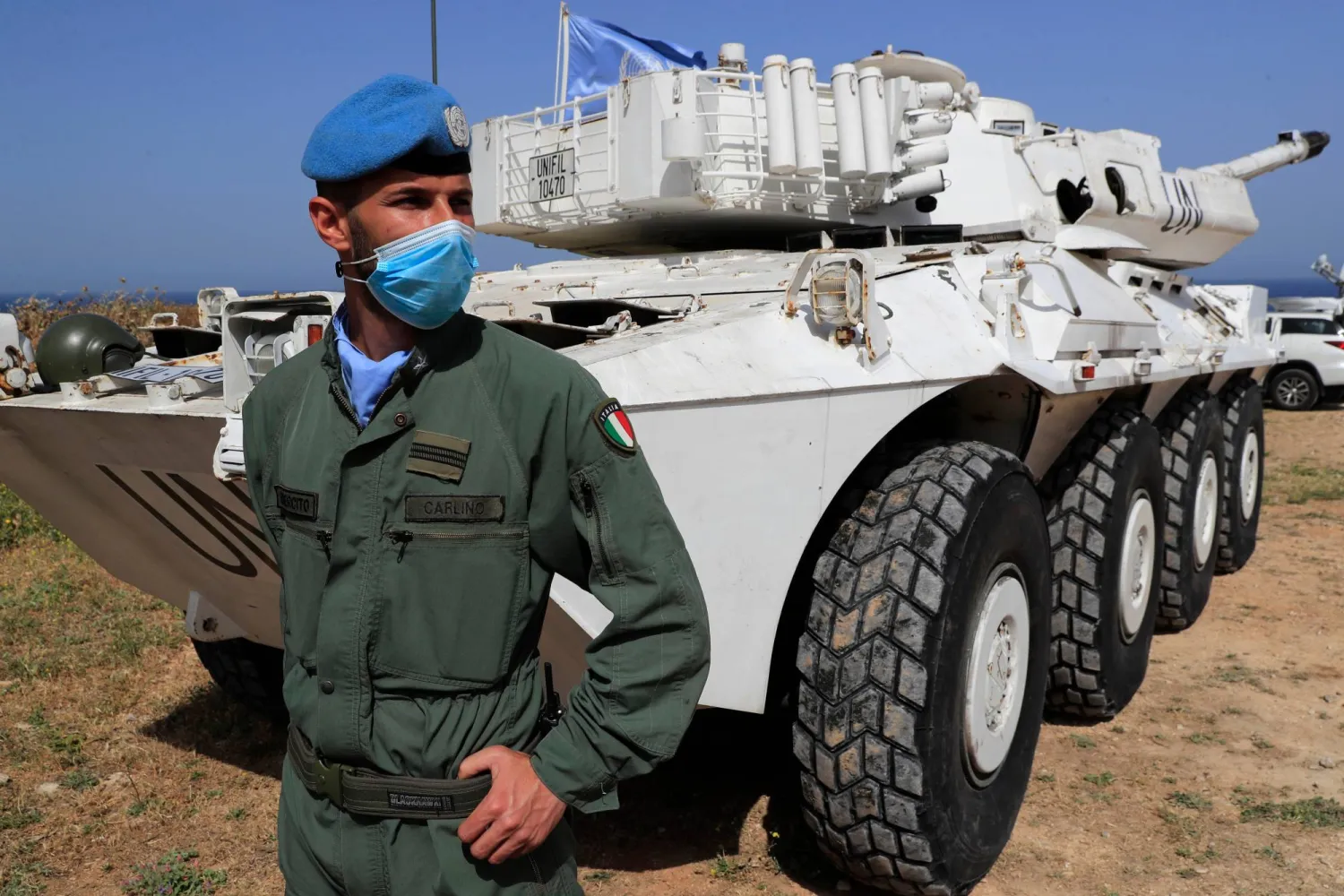
An Italian UN peacekeeper soldier stands guard at a road that links to a United Nations Interim Force In Lebanon (UNIFIL) base, in Naqoura town, Lebanon, on May 4, 2021. (AP)
TT

UN Force to Withdraw Most Troops from Lebanon by Mid-2027

An Italian UN peacekeeper soldier stands guard at a road that links to a United Nations Interim Force In Lebanon (UNIFIL) base, in Naqoura town, Lebanon, on May 4, 2021. (AP)

The United Nations Interim Force in Lebanon plans to withdraw most of its troops by mid 2027, its spokesperson told AFP on Tuesday, after the peacekeepers' mandate expires this year.

UNIFIL has acted as a buffer between Israel and Lebanon for decades and has been assisting the Lebanese army as it dismantles Hezbollah infrastructure near the Israeli border after a recent war between Israel and the Iran-backed group.

Under pressure from the United States and Israel, the UN Security Council voted last year to end the force's mandate on December 31, 2026, with an "orderly and safe drawdown and withdrawal" within one year.

Spokesperson Kandice Ardiel, said that "UNIFIL is planning to draw down and withdraw all, or substantially all, uniformed personnel by mid-year 2027", completing the pullout by year end.

After UNIFIL operations cease on December 31 this year, she said that "we begin the process of sending UNIFIL personnel and equipment home and transferring our UN positions to the Lebanese authorities".

During the withdrawal, the force will only be authorized to perform limited tasks such as protecting UN personnel and bases and overseeing a safe departure.

Despite a November 2024 ceasefire that sought to end more than a year of hostilities with Hezbollah, Israel has kept up regular strikes on Lebanon, mainly saying it is targeting Hezbollah, and has maintained troops in five border areas.

UNIFIL patrols near the border and monitors violations of a UN resolution that ended a 2006 war between Israel and Hezbollah and which forms the basis of the current ceasefire.

It has repeatedly reported Israeli fire at or near its personnel since the truce.

Ardiel said UNIFIL had reduced the number of peacekeepers in south Lebanon by almost 2,000 in recent months, "with a couple hundred more set to leave by May".

The force now counts some 7,500 peacekeepers from 48 countries.

She said the reduction was "a direct result" of a UN-wide financial crisis "and the cost-saving measures all missions have been forced to implement", and unrelated to the end of the force's mandate.

Lebanese authorities want a continued international troop presence in the south after UNIFIL's exit, even if its numbers are limited, and have been urging European countries to stay.

French Foreign Minister Jean-Noel Barrot said in Beirut this month that Lebanon's army should replace the force when the peacekeepers withdraw.

Italy has said it intends to keep a military presence in Lebanon after UNIFIL leaves.


Israeli Strikes Kill 3 People in Gaza, Hospital Says

Makeshift tents of displaced Palestinian families next to the beach in Gaza City, Gaza Strip, 09 February 2026. (EPA)
TT

Israeli Strikes Kill 3 People in Gaza, Hospital Says

Makeshift tents of displaced Palestinian families next to the beach in Gaza City, Gaza Strip, 09 February 2026. (EPA)

Israeli military strikes on Monday killed three people west of Gaza City, according to the hospital where the casualties arrived.

Shifa Hospital reported the deaths amid the months-old ceasefire that has seen continued fighting. The Israeli army said Monday it is striking targets in response to Israeli troops coming under fire in the southern city of Rafah, which it says was a violation of the ceasefire. The army said it is striking targets “in a precise manner."

The four-month-old US-backed ceasefire followed stalled negotiations and included Israel and Hamas accepting a 20-point plan proposed by US President Donald Trump aimed at ending the war unleashed by Hamas’ Oct. 7, 2023, attack into Israel. At the time, Trump said it would lead to a “strong, durable, and everlasting peace.”

Hamas freed all the living hostages it still held at the outset of the deal in exchange for thousands of Palestinian prisoners held by Israel and the remains of others.

But the larger issues the agreement sought to address, including the future governance of the strip, were met with reservations, and the US offered no firm timeline.

Rafah crossing improving, official says

The Palestinian official set to oversee day-to-day affairs in Gaza said on Monday that passage through the Rafah crossing with Egypt is starting to improve after a chaotic first week of reopening marked by confusion, delays and a limited number of crossings.

Ali Shaath, head of the National Committee for the Administration of Gaza, told Egypt’s Al-Qahera News that operations at the crossing were improving on Sunday.

He said 88 Palestinians were scheduled to travel through Rafah on Monday, more than have crossed in the initial days since reopening. Israel did not immediately confirm the figures.

The European Union border mission at the crossing said in a statement Sunday that 284 Palestinians had crossed since reopening. Travelers included people returning after having fled the war and medical evacuees and their escorts. In total, 53 medical evacuees departed during the first five days of operations.

That remains well below the agreed target of 50 medical evacuees exiting and 50 returnees entering daily, negotiated by Israeli, Egyptian, Palestinian and international officials.

Shaath and other members of the committee remain in Egypt, without Israeli authorization to enter the war-battered enclave.

The Rafah crossing opened last week for the first time since mid-2024, one of the main requirements for the ceasefire between Israel and Hamas. It was closed Friday and Saturday because of confusion around operations.

Palestinian officials say nearly 20,000 people are seeking to leave Gaza for medical care unavailable in its largely destroyed health system.

Palestinians who returned to Gaza in the first days after the crossing reopened described hourslong delays and invasive searches by Israeli authorities and an Israeli-backed Palestinian armed group, Abu Shabab. Israel denied mistreatment.

Gaza's Health Ministry said on Monday that five people were killed over the previous 24 hours, bringing the death toll to 581 since the October ceasefire. The truce led to the return of the remaining hostages — both living captives and bodies — from the 251 abducted during the Oct. 7, 2023, attack that triggered the war.

Hamas-led fighters killed around 1,200 people, mostly civilians, in the attack. Israel’s military offensive has since killed over 72,000 Palestinians, according to the ministry, which operates under the Hamas-run government and is staffed by medical professionals. The UN and independent experts consider it the most reliable source on war casualties.


Residents of North Lebanon City Lose Neighbors, Livelihoods in Building Collapse

People stand at the site of the collapsed residential building in Tripoli, Lebanon, 09 February 2026. EPA/WAEL HAMZEH
TT

Residents of North Lebanon City Lose Neighbors, Livelihoods in Building Collapse

People stand at the site of the collapsed residential building in Tripoli, Lebanon, 09 February 2026. EPA/WAEL HAMZEH

Rubble is all that remains of the building once home to Adnan Mardash's grocery shop in north Lebanon's Tripoli after it collapsed, killing 14 people and shining a spotlight on the impoverished city's neglect.

Mardash, 54, said he shut the small ground-floor store where he worked for more than three decades and went to his nearby home shortly before the disaster on Sunday afternoon.

"Our neighbors and loved ones died... people lost their livelihoods," said the father of four, who has no other income.

"We felt the building's situation wasn't good and we contacted the municipality but got no response," he told AFP.

Only eight people were pulled out alive after the building, home to 12 apartments, collapsed in the Bab al-Tabbaneh neighborhood.

People were angry and grieving on Monday, some peering over balconies to watch emergency workers remove debris after the disaster, which came just over two weeks after another building in the city collapsed, killing two people.

"Officials come, put on a show then leave, they're all liars... nobody cares about the poor people. If an official had lived in this building, it would have been fixed in seconds," Mardash said.

Naser Fadel, 60, who has lived all his life in the neighborhood, stood at his small store weeping.

"We live here in extreme poverty. We've gone through wars... There are no words to express what we have been through," he said.

Those who died were "the best people, they were poor and humble," he said.

- 'Rich people' -

Even before a years-long economic crisis began in Lebanon in 2019, more than half of the city's residents lived at or below the poverty line, according to the United Nations.

The building that collapsed is on a crowded street that divides the predominantly Sunni Bab al-Tabbaneh neighborhood from the mainly Alawite Jabal Mohsen.

Buildings still bear the scars of recurring clashes between the two neighborhoods from 2007 to 2014.

The fighting, and a 2023 earthquake that hit Türkiye and neighboring Syria, not far from Tripoli, worsened the situation.

The Tripoli municipality on Sunday declared the city "disaster-stricken" and urged the Lebanese state to bear its responsibilities.

After an emergency cabinet meeting on Monday, Prime Minister Nawaf Salam said authorities had decided to evacuate 114 buildings at risk of collapse and provide a year of housing allowances for the affected families.

Tripoli Mayor Abdel Hamid Karimeh told AFP that at least 600 other buildings needed "direct intervention to reinforce them" but he warned that the real number could be much higher.

He said the municipality has recently evacuated 12 buildings and relocated residents to a hospitality institute.

In the Qubbeh neighborhood near to Bab al-Tebbaneh, Yousef Ahmed, 80, had moved in with his daughter after losing his home in last month's deadly building collapse.

"Nobody has given us any help... there are lawmakers and rich people" in the city but "nobody asks about our situation", he lamented.

- 'Without oversight' -

Lebanon is dotted with derelict buildings, and many inhabited structures are in an advanced state of disrepair.

Several buildings have collapsed before in Tripoli and other parts of the country over the years, with the authorities failing to take appropriate measures to ensure structural safety.

Many buildings were built illegally, especially during the 1975-1990 civil war, while some owners have added new floors to existing residential blocks without permits.

Abir Saksouk, co-founder of research and design firm Public Works Studio, said authorities had allowed buildings to fall into disrepair and noted a lack of oversight and legislative gaps.

She said a public safety decree dating to the early 2000s fails to provide a mechanism for restoring buildings constructed before it was issued.

Many buildings were also built "without oversight", she told AFP, while decrying neglect of the issue and "unjust housing policies".

Many residents have little choice but to stay in their dilapidated homes.

Mohammed al-Sayed, 56, has remained in his building despite pieces falling from a second-floor balcony.

He said the municipality had repeatedly warned about cracks after four additional floors were built on the original two.

But he said he was unable to leave the building where he has spent almost his whole life.

"I have no shelter or alternative place to live," he said.