


Iran Gives US Activists Jail Time Over Spying Charges

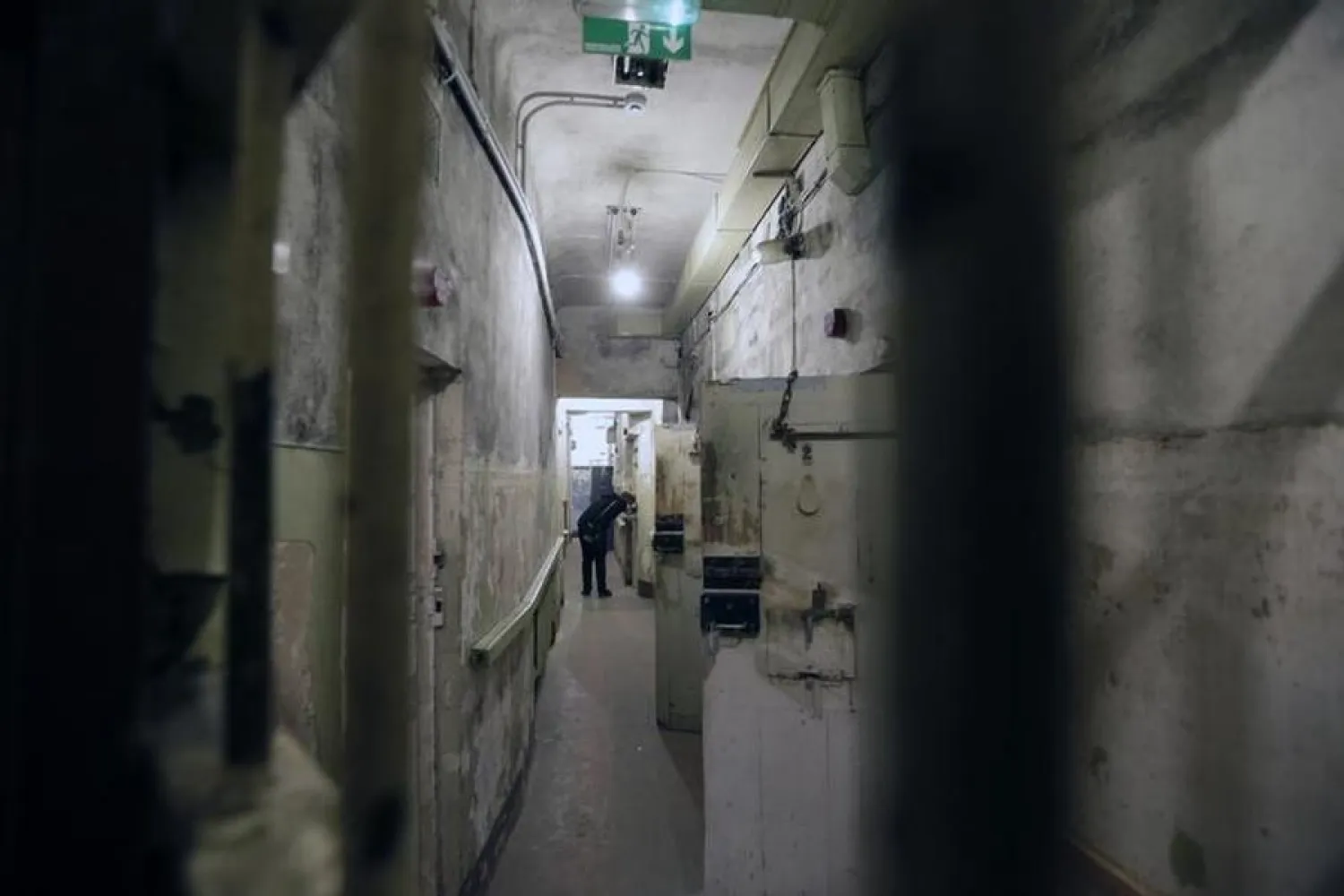
A man looks at prison cells | Reuters/Ints Kalnins
TT

Iran Gives US Activists Jail Time Over Spying Charges

A man looks at prison cells | Reuters/Ints Kalnins

Iran sentenced eight environmental activists, including an Iranian who reportedly also has British and American citizenship, to prison sentences ranging from four to 10 years on charges of spying for the United States and acting against Iran's national security, the judiciary said Tuesday.

According to the judiciary spokesman, Gholamhossein Esmaili, an appeals court issued the final verdicts.

Two of the activists, Morad Tahbaz and Niloufar Bayani, got 10 years each and were ordered to return the money they allegedly received from the US government for their services.

Tahbaz is an Iranian who also holds US and British citizenship.

Iran does not recognize dual or multiple nationalities, meaning Iranians it detains cannot receive consular assistance from their other countries. In most cases, dual nationals have faced secret charges in closed-door hearings before Iran's Revolutionary Court, which handles cases involving alleged attempts to overthrow the government.

Esmaili, the judiciary spokesman, said two other activists, Houman Jokar and Taher Ghadirian, each got eight-year sentences for allegedly “collaborating with the hostile government of America."

Another three of the activists, Sam Rajabi, Sepideh Kashan Doust and Amirhossein Khaleghi Hamidi, were sentenced to six years in prison each. The eighth activist, Abdolreza Kouhpayeh, got four years. All the activists were arrested in early 2018.

A ninth activist who was arrested at the time, Kavous Seyed Emami, an Iranian-Canadian national, died while in custody under disputed circumstances in February 2018. His widow then was blocked from flying out of Iran, but later made it out.

Iran is also holding others with ties to the West, including Nazanin Zaghari-Ratcliffe, a British-Iranian woman sentenced to five years on allegations of planning the "soft toppling" of Iran's government while traveling in Iran with her young daughter.

Iranian businessman Siamak Namazi and his 81-year-old father Baquer, a former UNICEF representative who served as governor of Iran's oil-rich Khuzestan province under the US-backed shah, both are serving 10-year prison sentences on espionage charges.

Iranian-American Robin Shahini was released on bail in 2017 after staging a hunger strike while serving an 18-year prison sentence for “collaboration with a hostile government.” Shahini has since returned to America and is now suing Iran in US federal court.

Former FBI agent Robert Levinson, who vanished in Iran in 2007 while on an unauthorized CIA mission, remains missing.

Earlier this month, Iran’s supreme court confirmed the death penalty for Amir Rahimpour, who was convicted of spying for the CIA. Iranian state media have alleged that he had shared details of the Islamic Republic's nuclear program with the American spy agency.

Esmaili said at the time that Rahimpor would soon be executed.

Iran has in the past has sentenced alleged American and Israeli spies to death. The last such spy executed was Shahram Amiri, who defected to the US at the height of Western efforts to thwart Iran’s nuclear program. When he returned in 2010, he was welcomed with flowers by government leaders and even went on the Iranian talk-show circuit. Then he mysteriously disappeared.

He was hanged in August 2016, the same week that Tehran executed a group of militants and a year after Iran agreed to a landmark accord to limit uranium enrichment in exchange for the lifting of economic sanctions.

Tensions remain high between Iran and the US since President Donald Trump unilaterally withdrew America from Tehran's nuclear deal. A US drone strike in January killed Iranian Revolutionary Guard Gen. Qassem Soleimani in Baghdad, prompting Tehran to retaliate with a ballistic missile strike on Iraqi bases housing American troops.




Netanyahu Skeptical of an Iran Breakthrough

Israel's Prime Minister Benjamin Netanyahu leaves after a meeting with US President Donald Trump at the White House February 11, 2026, in Washington, DC. (Photo by Brendan Smialowski / AFP)
TT

Netanyahu Skeptical of an Iran Breakthrough

Israel's Prime Minister Benjamin Netanyahu leaves after a meeting with US President Donald Trump at the White House February 11, 2026, in Washington, DC. (Photo by Brendan Smialowski / AFP)

Israeli Prime Minister Benjamin Netanyahu said he was skeptical that US nuclear talks with Iran will lead to a breakthrough but described his meeting with US President Donald Trump at the White House as “excellent.”

Speaking to reporters Thursday in Washington before boarding a plane to return to Israel, Netanyahu said Trump’s terms and Iran’s “understanding that they made a mistake the last time when they did not reach an agreement, may lead them to agree to conditions that will enable a good agreement to be reached.”

While he said he did “not hide my general skepticism” about any deal, he stressed that any agreement must include concessions about Iran’s ballistic missiles program and support for militant proxies.

He added that the conversation Wednesday with Trump, which lasted more than two hours, included a number of other subjects, including Gaza and regional developments but focused on the negotiations with Iran.


German Court Rejects Palestinian's Claim over Weapons Exports

A view shows the front of the Reichstag building, the seat of the German parliament, the Bundestag, in Berlin, Germany March 5, 2025. REUTERS/Annegret Hilse/File Photo
TT

German Court Rejects Palestinian's Claim over Weapons Exports

A view shows the front of the Reichstag building, the seat of the German parliament, the Bundestag, in Berlin, Germany March 5, 2025. REUTERS/Annegret Hilse/File Photo

Germany's highest court on Thursday threw out a case brought by a Palestinian civilian from Gaza seeking to sue the German government over its weapons exports to Israel.

The complainant, supported by the European Center for Constitutional and Human Rights (ECCHR), had been seeking to challenge export licences for German parts used in Israeli tanks deployed in Gaza.

After his case was rejected by lower courts in 2024 and 2025, he had appealed to the Federal Constitutional Court.

But the court in Karlsruhe dismissed the case, stating that "the complainant has not sufficiently substantiated that the specialized courts misjudged or arbitrarily denied a possible duty to protect him", AFP reported.

While Germany is obliged to protect human rights and respect international humanitarian law, this does not mean the state is necessarily obliged to take specific action on behalf of individuals, the court said.

"It is fundamentally the responsibility of the state authorities themselves to decide how they fulfil their general duty of protection," it added.

The ECCHR called the decision "a setback for civilian access to justice".

"The court acknowledges the duty to protect but only in the abstract and refuses to ensure its practical enforcement," said Alexander Schwarz, co-director of the NGO's International Crimes and Legal Accountability program.

"For people whose lives are endangered by the consequences of German arms exports, access to justice remains effectively closed," he said.

The ECCHR had been hoping for a successful appeal after the Constitutional Court ruled last year that Germany had "a general duty to protect fundamental human rights and the core norms of international humanitarian law, even in cases involving foreign countries".

In that case, two Yemenis had been seeking to sue Berlin over the role of the US Ramstein airbase in a 2012 drone attack.

The complainant was one of five Palestinians who initially brought their case against the German government in 2024.


2 Israelis Charged with Using Classified Military Information to Place Bets

The Israeli Iron Dome air defense system intercepts missiles during an Iranian attack on Tel Aviv, Israel, June 18, 2025. (AP Photo/Leo Correa, File)
TT

2 Israelis Charged with Using Classified Military Information to Place Bets

The Israeli Iron Dome air defense system intercepts missiles during an Iranian attack on Tel Aviv, Israel, June 18, 2025. (AP Photo/Leo Correa, File)

Two Israelis have been charged with using classified military information to place bets on how future events will unfold, Israeli authorities said Thursday, accusing the individuals of “serious security offenses.”

A joint statement by the Israeli Ministry of Defense, domestic security service Shin Bet and police said that a civilian and a reservist are suspected of placing bets on the US-based prediction market Polymarket on future military operations based on information that the reservist had access to, The AP news reported.

Israel’s Attorney General’s Office decided to prosecute the two individuals following a joint investigation by police, military intelligence and other security agencies that resulted in several arrests. The two face charges including bribery and obstruction of justice.

Authorities offered no details on the identity of the two individuals or the reservist's rank or position in the Israeli military but warned that such actions posed a “real security risk” for the military and the Israeli state.

Israel’s public broadcaster Kan had reported earlier that the bets were placed in June ahead of Israel’s war with Iran and that the winnings were roughly $150,000.

Israel's military and security services “view the acts attributed to the defendants very seriously and will act resolutely to thwart and bring to justice any person involved in the activity of using classified information illegally,” the statement said.

The accused will remain in custody until the end of legal proceedings against them, the Prosecutor's Office said.

Prediction markets are comprised of typically yes-or-no questions called event contracts, with the prices connected to what traders are willing to pay, which theoretically indicates the perceived probability of an event occurring.

Their use has skyrocketed in recent years, but despite some eye-catching windfalls, traders still lose money everyday. In the US, the trades are categorized differently than traditional forms of gambling, raising questions about transparency and risk.