


Differences Emerge between Hezbollah, FPM over Cooperation with IMF

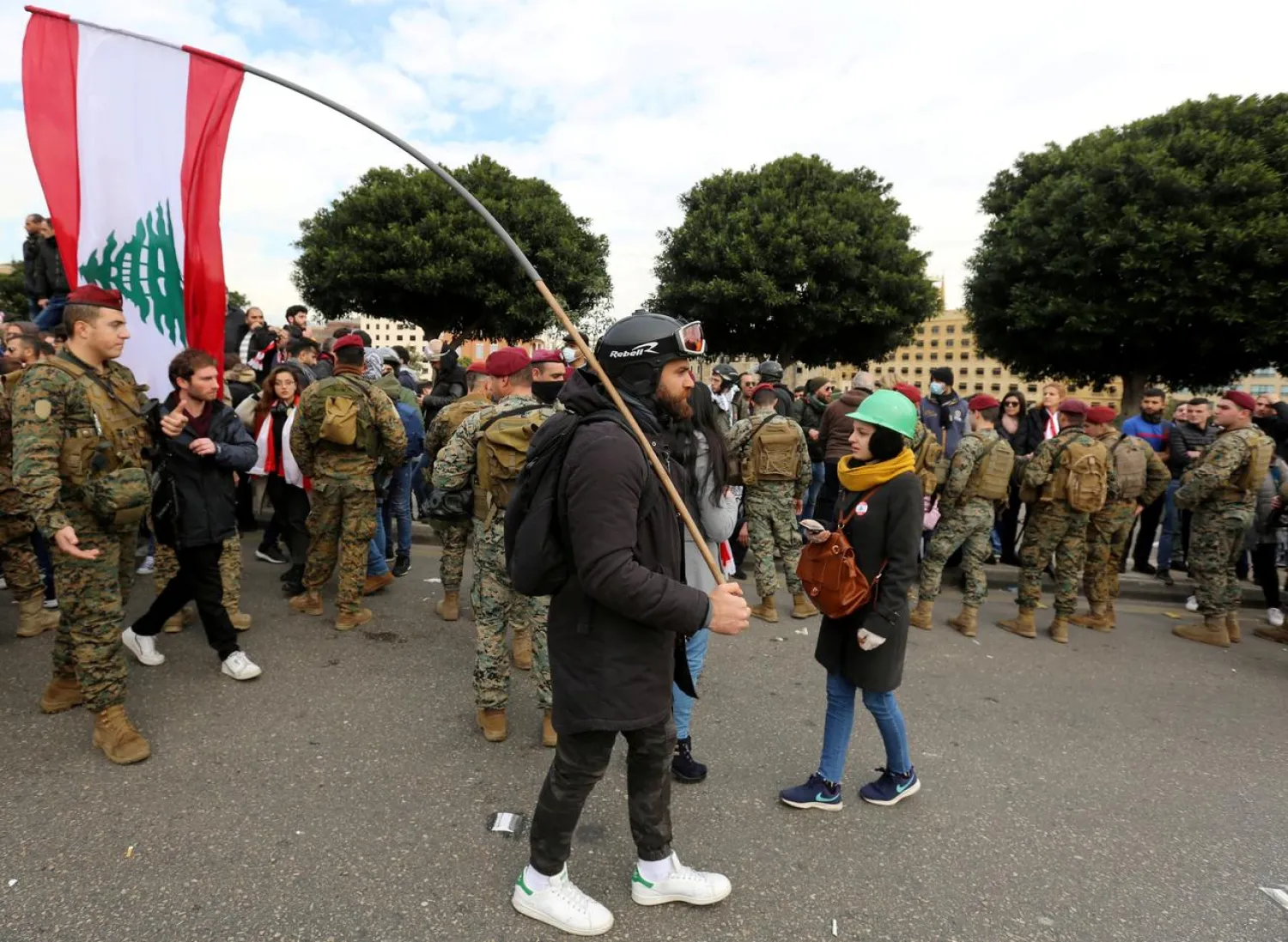
A demonstrator holds the Lebanese flag during a protest seeking to prevent MPs and officials from reaching the parliament for a vote of confidence, in Beirut, Lebanon February 11, 2020. (Reuters)
TT

Differences Emerge between Hezbollah, FPM over Cooperation with IMF

A demonstrator holds the Lebanese flag during a protest seeking to prevent MPs and officials from reaching the parliament for a vote of confidence, in Beirut, Lebanon February 11, 2020. (Reuters)

Differences recently emerged between the Hezbollah party and its ally, the Free Patriotic Movement, over how to tackle Lebanon’s crippling financial crisis.

Hezbollah had outright rejected any cooperation with the International Monetary fund, saying contacts with it would be limited to consultations. The position stood in contrast with that of leading members of the FPM, who rejected preemptive statements amid the lack of serious alternative options.

An IMF rescue plan appears as the best option to tackle the crisis. A $1.2 billion payment on a Eurobond is falling due on March 9 and even though Lebanon is widely expected to restructure its foreign-currency-denominated debt that is unlikely to be enough to deal with the total debt burden, economists and analysts say.

The IMF has estimated that Lebanon’s public debt would reach 155% of gross domestic product by the end of 2019, one of the biggest debt burdens in the world. Any move to restructure will further pressurize local banks, which after years of funneling their deposits to the state, have an exposure to Lebanese sovereign debt that stands at almost twice their capital base.

Lebanon hired US investment bank Lazard and law firm Cleary Gottlieb Steen & Hamilton LLP last week as advisers.

But with inflation shooting up to 30%, the pound depreciating by 40% since October and the number of jobless rising every day, analysts say only a full IMF deal will unlock the tens of billions of dollars Lebanon now needs.

Corruption and bad governance are seen as root causes of Lebanon’s problems and the crisis, which has seen street protests against the ruling elite, represents the most serious threat to the country’s stability since the 1975-1990 civil war.

Hezbollah deputy chief Naim Qassem was the first to announce his rejection of an IMF bailout, saying: “We will not accept submitting to (imperialist) tools ... meaning we do not accept submitting to the International Monetary Fund to manage the crisis.”

FPM MP Alain Aoun criticized his remarks, noting: “Before rejecting any option, we must at least have an alternative one available.”

“Difference of opinion should not be blown up into a major political dispute... The financial crisis is a new issue up for debate and the political class has enjoyed complete ease and comfort because the state financial system did not allow it to think or prepare for the day when it will fall over into the abyss as it is now,” he told Asharq Al-Awsat.

“Many views have been expressed over how to resolve the crisis, but ultimately, it is important that we reach a joint vision and place a roadmap and realistic and serious solutions,” he stressed.

“We should not make presumptions about any issue, whether about the IMF or anything else,” he urged. “We are now studying a rescue program. The plan must secure the necessary financial needs and other issues, such as the debt and bank restructuring.”

“Once we determine our needs and the side we can turn to, such as the IMF or friendly nations, then we can make our choice,” Aoun said. “Of course, any option must respect our sovereignty and how much our society can handle.”

Hezbollah has proposed alternatives to the IMF to provide much-needed liquidity to revive the economy. It has suggested holding banks responsible for restoring funds that have been smuggled abroad during the recent crisis.

Informed sources said Hezbollah is open to technical assistance from the IMF, but without being obligated to adhere to its conditions. The party was also willing to go ahead with the debt restructuring and seeking alternative liquidity sources within the next three months.

“The country needs some 4.5 billion dollars until June. We can secure this sum, whether through internal measures or foreign help,” the sources told Asharq Al-Awsat.

Director of the Levant Institute for Strategic Affairs Sami Nader said Lebanon has “no choice but to turn to the IMF, because reforms, as much as they are necessary, are no longer enough.”

He told Asharq Al-Awsat that 10 billion dollars in liquidity were needed for the economy within a year.

He acknowledged that this was a “difficult” choice, but the alternative will be a more severe crisis and the closure of more institutions and firing of more employees.

Furthermore, Nader accused Hezbollah of waging a campaign against the IMF because it is controlled by the United States.

“How do they expect to receive loans if the loaner does not have guarantees that it will get its money back?” he wondered.

Qassem’s remarks drew criticism from various Lebanese officials, including Lebanese Forces leader Samir Geagea, who slammed him for linking the country’s financial woes to the party’s ideological beliefs.


Former Syrian Regime Officer Arrested

Syrian Ministry of Interior in Damascus (Official Website)
TT

Former Syrian Regime Officer Arrested

Syrian Ministry of Interior in Damascus (Official Website)

Syria's Interior Ministry announced on Saturday the arrest of a former officer in Bashar al-Assad's regime holding the rank of major general and accused of committing crimes and violations.

In a statement, the ministry said that "based on precise monitoring and surveillance operations, Internal Security Forces carried out a special security operation that resulted in the arrest of criminal Mohammed Mohsen Nayouf."

"The criminal held the rank of major general under the former regime and occupied several prominent military and leadership positions, including service in the Third Corps, command of the 18th Tank Division, chief of staff of the 11th Division in 2020, and commander of the 105th Republican Guard Brigade in 2016."

According to the statement, the detainee was referred to the relevant authorities to complete investigations and take the necessary legal measures before being referred to the judiciary.

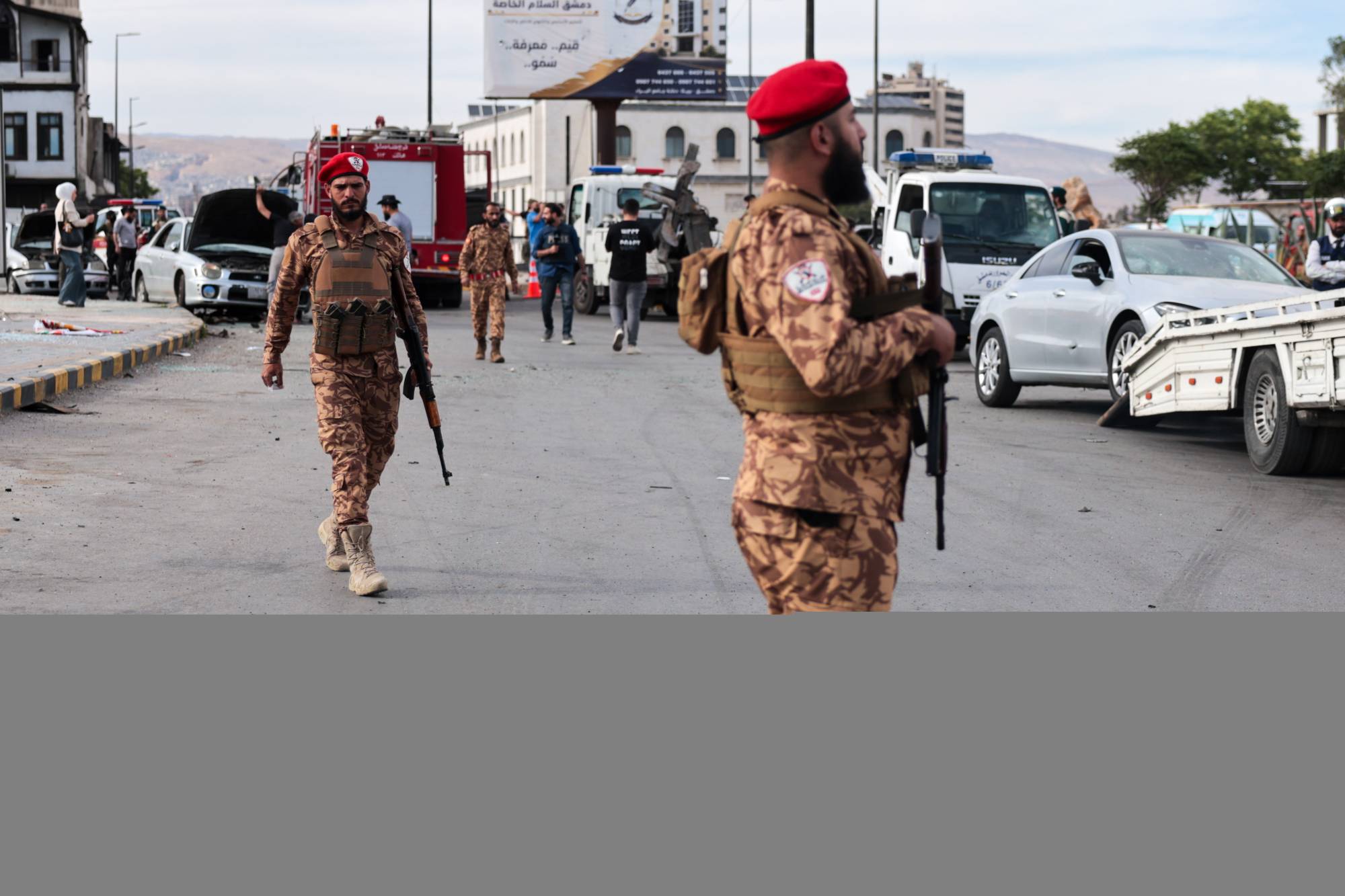
Syrian military police deployed near the explosion site in Bab Sharqi, near the headquarters of the Syrian Defense Ministry in Damascus, Syria, May 19, 2026. EPA/MOHAMMEDALRIFAI

The Syrian Arab News Agency (SANA) reported that the operation, carried out on Friday by the Salamiyah Security Directorate, which is affiliated with the Internal Security Command in Hama, comes "as part of the Interior Ministry's and relevant authorities' efforts to pursue and hold accountable those involved in crimes and violations committed against the Syrian people during the former regime, based on the principle of ending impunity, achieving transitional justice, and guaranteeing the rights of victims and their families."

Earlier on Friday, the Interior Ministry announced the arrest of Mohammed Imad Mahrez, one of the guards at Saydnaya prison during the former regime, making this the second such operation.


Hezbollah Says Message from Iran Shows it 'Will Not Give up' on Group

Displaced residents wave Hezbollah flags, including one bearing a picture of its leader, Naim Qassem, as they pass rubble of destroyed buildings in Dahiyeh, Beirut's southern suburbs, Lebanon, Friday, April 17, 2026, following a ceasefire between Israel and Hezbollah. (AP Photo/Bilal Hussein)
TT

Hezbollah Says Message from Iran Shows it 'Will Not Give up' on Group

Displaced residents wave Hezbollah flags, including one bearing a picture of its leader, Naim Qassem, as they pass rubble of destroyed buildings in Dahiyeh, Beirut's southern suburbs, Lebanon, Friday, April 17, 2026, following a ceasefire between Israel and Hezbollah. (AP Photo/Bilal Hussein)

Hezbollah said Saturday that a message from Tehran showed that Iran would not abandon the Lebanese militant group and that the Islamic republic's latest proposal to end the US-Iran war included a ceasefire in Lebanon.

Iran-backed Hezbollah said in a statement that its chief Naim Qassem had received a message from Tehran's Foreign Minister Abbas Araghchi, which indicated that Iran "will not give up its support for movements demanding justice and freedom, foremost among them Hezbollah".

In Iran's latest proposal through Pakistani mediators aimed at achieving "a permanent and stable end to the war, the demand to include Lebanon in the ceasefire was emphasised", the statement added.


South Lebanon Hospital Damaged in Israeli Strikes

Volunteers from the Lebanese Red Cross rescue a woman in the city of Nabatieh in South Lebanon (AFP)
TT

South Lebanon Hospital Damaged in Israeli Strikes

Volunteers from the Lebanese Red Cross rescue a woman in the city of Nabatieh in South Lebanon (AFP)

Israel kept up strikes on Lebanon on Saturday, hours after overnight raids on the country's south and east, including one that damaged a hospital, its chief executive told AFP.

Lebanon's state-run National News Agency (NNA) reported Israeli airstrikes on around a dozen locations in the south on Saturday including one targeting an agricultural area, "wounding several Syrian workers".

The NNA said an overnight strike in the southern city of Tyre that targeted a site near the hospital caused "severe damage" to the facility.

An AFP correspondent saw shattered glass, ceiling panels blown out and damaged medical equipment at the multi-storey Hiram hospital.

The Israeli military late on Friday night had issued evacuation warnings ahead of strikes on two locations in Tyre, saying it would target "Hezbollah facilities".

Accompanying maps advised people to leave areas within 500 metres (yards) of the target buildings, with the Hiram hospital shown within the advised evacuation area.

The hospital's CEO Dr Salman Aydibi told AFP that around 40 patients were in the facility when the warning was issued, including seven in intensive care.

"We took the patients to a safer location" elsewhere inside the hospital, he said, adding that none were harmed but some 30 staff sustained minor injuries.

He said an evaluation of the damage was ongoing and that the hospital has remained operational, though the emergency department briefly closed.

He said it was the third strike near the facility since the latest Israel-Hezbollah war erupted on March 2.

Israel's army said Saturday that it had targeted "Hezbollah infrastructure sites in Tyre" overnight where operatives from the Iran-backed group worked to "plan and execute attacks" against Israeli soldiers.

"Prior to the strike, steps were taken to mitigate harm to civilians, including the issuing of advance warnings, the use of precise munitions, and aerial surveillance," it added.

Another AFP correspondent saw heavy damage at both targeted sites in Tyre, with a man searching for his belongings among the debris at one location.

Israel's army also targeted east Lebanon overnight, saying it struck a "Hezbollah underground compound" used to manufacture weapons.

Lebanon's Hamas-aligned Islamist group Jamaa Islamiya and its armed wing the Al-Fajr Forces said Saturday in a statement that one of its members was killed in an Israeli strike in east Lebanon.

Under the terms of the ceasefire published by Washington, Israel reserves the right to act against "planned, imminent or ongoing attacks".
