Sanaa Residents Fear Houthis Are Obscuring Real Coronavirus Data

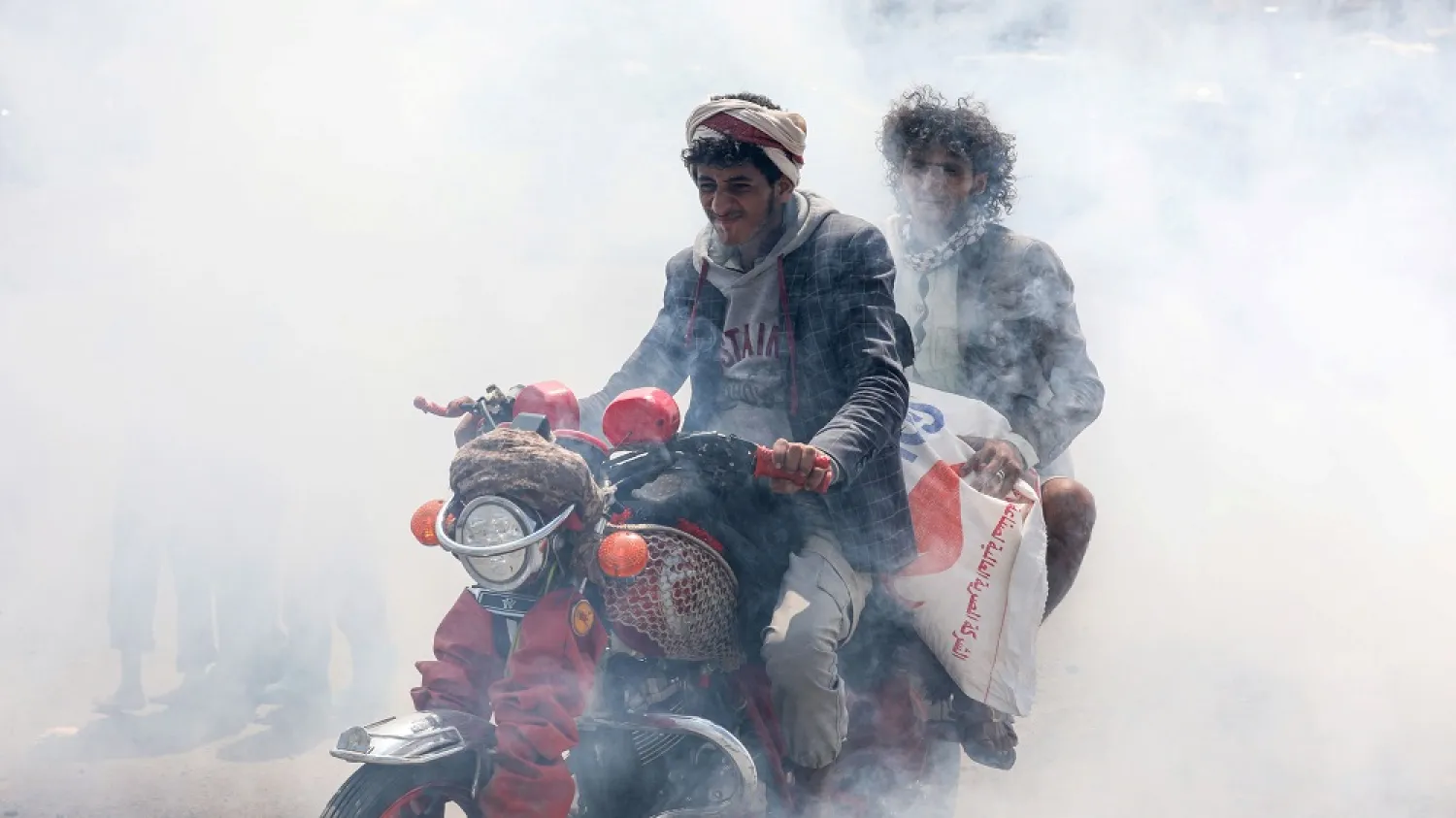
People ride a motorbike through smoke during fumigation to stop the spread of the coronavirus in the outskirts of Sanaa, Yemen. (Reuters)
TT

Sanaa Residents Fear Houthis Are Obscuring Real Coronavirus Data

People ride a motorbike through smoke during fumigation to stop the spread of the coronavirus in the outskirts of Sanaa, Yemen. (Reuters)

Sanaa is recording dozens of coronavirus cases daily, two health workers told Asharq Al-Awsat, adding that four cases tested positive for samples sent from the central Ibb governorate.

The Iran-backed Houthi militias continue to cover the truth about virus cases in areas under their control.

“They (Houthi militias) have transformed Sanaa into an epicenter for the coronavirus,” the two workers, speaking on condition of anonymity, told Asharq Al-Awsat.

Other medical sources confirm that there are 130 confirmed cases in the Houthi-run Yemeni capital, and that 13 virus deaths were registered. These numbers do not match the disclosed data by Houthis, who have actively concealed coronavirus cases.

Houthis have only admitted to one virus death last Sunday.

Attempting to stem the spread of the coronavirus, Houthis locked down ten Sanaa neighborhoods for sterilization purposes.

Coronavirus screening teams confirm that dozens of cases have emerged since the discovery of the first case in early April. They confirmed that whole families have been infected in more than one Sanaa neighborhood.

This coincides with the Houthi-appointed health minister’s continued obduracy when it comes to disclosing information about the virus outbreak.

Yemen's Information Minister Muammar Al-Iryani warned against the Houthis’ continued manipulation of virus data, saying that this action puts the lives of millions of Yemenis in danger and inhibits international efforts to curb the pandemic.

Iryani slammed Houthis for dealing with the coronavirus crisis with a military and political approach, and said that the militias are looking to exploit international organizations.

According to reports from Sanaa and other Houthi-run areas, the number of positive cases predicts a catastrophe that threatens millions of Yemenis, Iryani said.

On the other hand, the internationally-recognized government headed by President Abdrabbuh Mansur Hadi confirmed 26 coronavirus cases registered in areas under its control. It also confirmed five virus deaths so far.


Israel Adopts Phased Approach to Lebanon Negotiations

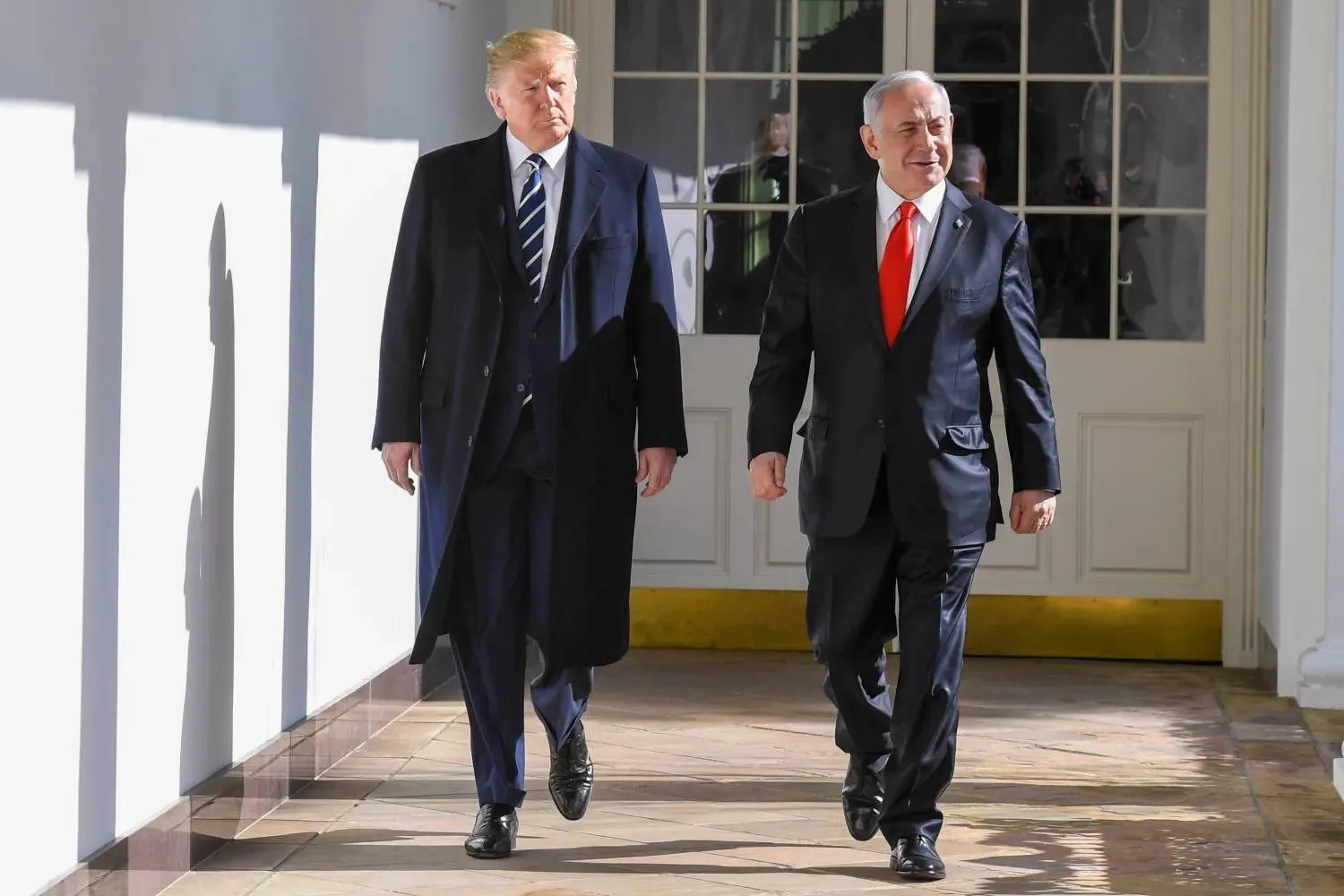
US President Donald Trump and Israeli Prime Minister Benjamin Netanyahu at the White House (file photo, dpa)
TT

Israel Adopts Phased Approach to Lebanon Negotiations

US President Donald Trump and Israeli Prime Minister Benjamin Netanyahu at the White House (file photo, dpa)

Israeli Prime Minister Benjamin Netanyahu had opted for a gradual approach in negotiations with Lebanon, sources close to Netanyahu said on Friday.

This means that Israel will start with technical and procedural issues before moving to major files, depending on the trajectory of US-Iran talks that began in Pakistan.

The sources cited by Maariv said Netanyahu chose a relatively junior official to handle the file, Israel’s ambassador to Washington, Yechiel Leiter, after initially planning to appoint his close adviser, Ron Dermer.

They said Dermer disagreed with Netanyahu’s approach. He argued Israel should agree to a ceasefire on the Lebanese front to allow the Islamabad talks to proceed without disruption.

In discussions with US envoy Steve Witkoff, he concluded that the continued war with Lebanon was undermining negotiations with Iran and could give Tehran grounds to trigger a crisis that prolongs the talks.

That would in turn harm President Donald Trump, who faces mounting domestic pressure to prevent a return to war.

Dermer, who manages US-Israeli dialogue, believes Trump’s opponents are exploiting the war politically, accusing him of being pulled behind Netanyahu and his personal and partisan interests at the expense of US interests, damaging Israel’s standing in the US.

The Israeli military, however, opposes ending the war with Lebanon and insists negotiations proceed under fire. The stance reflects a public perception that operations have not met their objectives, alongside anger over continued shelling from Lebanon. The fire has expanded into southern Israel and, while causing limited physical damage, has spread panic and reinforced calls to press on.

A poll published Friday showed 79% of Israelis oppose halting the war before Hezbollah is dismantled and disarmed.

Netanyahu has aligned himself with the military, leaving Dermer in a difficult position as both seek a formula that would satisfy Washington.

Katz said Hezbollah is “pleading for a ceasefire, and its Iranian patrons are also applying pressure and issuing threats, out of serious concern that Israel will crush Hezbollah.”

Boaz Bismuth, head of the Knesset’s Foreign Affairs and Defense Committee, said the war could resume in the “coming days,” describing the current ceasefire as a temporary arrangement.

Seeking to reassure the public, especially in the north where rocket fire is heaviest, Katz said the “massive and unprecedented attack on Lebanon” had dealt Hezbollah a severe blow, leaving it “stunned and confused” due to the depth and scale of the strikes.

He said the “separation of fronts” agreement, led by Netanyahu, was a key achievement that allows Israel to act forcefully against Hezbollah under an organized plan, with forces ready to escalate if Iran opens fire.

Katz said the plan rests on four lines: the border line, including the destruction of homes in Lebanese border villages, a defense line inside Lebanon expanded from five to 15 points, an anti-tank defense line secured through ongoing ground operations, and the Litani line, which Israeli forces aim to control to prevent infiltration and block residents from returning south.

He added the military would also launch a powerful air campaign, modeled on operations against Iran, targeting operatives and rocket launch sites in the Litani area and across Lebanon outside it.

Israeli military chief Eyal Zamir approved additional plans to expand the war and ground operations in Lebanon after touring and assessing the situation near Bint Jbeil on Thursday.

“Our main combat arena is here in Lebanon. The objective defined for you is the removal of the direct threat to the residents of the north, which you are carrying out with determination,” Zamir said to troops, according to remarks published by the army.

He said the army remained at war, deepening ground operations and striking Hezbollah hard.

“This is a very powerful operation, and our forces are on the front lines and in depth,” he said. He added that strikes on Iran were also affecting Hezbollah, which he said had become isolated inside Lebanon and cut off from its “strategic artery” in Iran.

“The Lebanese government now understands more than ever the scale of the problem posed by the presence of a radical extremist terrorist organization on its territory,” he said.


Lebanon Says Israel Talks Set for Tuesday in US, Israel Won’t Discuss Hezbollah Ceasefire

 Lebanese Americans and supporters gather in support of Lebanon during a vigil in Dearborn, Michigan, US, April 10, 2026. (Reuters)
Lebanese Americans and supporters gather in support of Lebanon during a vigil in Dearborn, Michigan, US, April 10, 2026. (Reuters)
TT

Lebanon Says Israel Talks Set for Tuesday in US, Israel Won’t Discuss Hezbollah Ceasefire

 Lebanese Americans and supporters gather in support of Lebanon during a vigil in Dearborn, Michigan, US, April 10, 2026. (Reuters)
Lebanese Americans and supporters gather in support of Lebanon during a vigil in Dearborn, Michigan, US, April 10, 2026. (Reuters)

Lebanon's presidency said Friday that a meeting would be held with Israel in Washington next week to discuss a ceasefire in the Israel-Hezbollah war and the start of negotiations between the neighbors.

Lebanese President Joseph Aoun has repeatedly expressed readiness for direct talks with Israel since Hezbollah drew Lebanon into the Middle East war on March 2 with rocket fire at Israel in support of its backer Iran, sparking massive Israeli strikes and a ground invasion.

After a ceasefire was announced between the United States and Iran this week, Washington and Tehran have been at odds over whether it also applies to Lebanon, as Israel has kept up heavy strikes on the country and Hezbollah has responded with its own attacks.

A statement from Aoun's office said that a first telephone call was held on Friday between the Lebanese and Israeli ambassadors to Washington and the US ambassador to Lebanon, who was also in the American city.

"During the call, it was agreed to hold the first meeting next Tuesday at the State Department to discuss declaring a ceasefire and the start date for negotiations between Lebanon and Israel under US auspices," the presidency statement said.

A Lebanese government official told AFP on Thursday that Lebanon wants a ceasefire before starting any negotiations with Israel.

But Israel said Friday it will not discuss a ceasefire with Hezbollah.

Meeting with his Lebanese counterpart to set up the talks, Israeli Ambassador to Washington Yechiel Leiter "refused to discuss a ceasefire with the Hezbollah terrorist organization," he said in a statement afterward.

Israel "agreed to begin formal peace negotiations" with the Lebanese government, with which it has no diplomatic relations, said Leiter.

Hezbollah “continues to attack Israel and is the main obstacle to peace between the two countries," he said in a statement.

- Security forces killed -

Earlier Friday, Hezbollah chief Naim Qassem urged the Lebanese government to stop giving "free concessions" to Israel and vowed that "the resistance will continue until the last breath".

Hezbollah has rejected direct talks between the two countries, instead calling for Israel's army to withdraw from Lebanon.

Late Friday near Beirut's seaside promenade, an AFP photographer saw dozens of people, some riding mopeds or brandishing Hezbollah or Iranian flags, protesting against the authorities and negotiations with Israel, after a similar gatherings elsewhere in the capital earlier in the evening.

Lebanese authorities say the weeks of hostilities have killed more than 1,950 people, while the provisional toll of massive Israeli strikes across the country on Wednesday alone has risen to 357 dead.

Israel's military said it "eliminated more than 180 militants" from Hezbollah in Wednesday's strikes, which came hours after the US-Iran ceasefire was announced, adding that "the count is still ongoing".

It also said it had "dismantled" more than 4,300 Hezbollah sites in Lebanon and killed "more than 1,400" Hezbollah fighters since the war erupted.

Lebanon's state-run National News Agency (NNA) reported strikes on south Lebanon on Friday, saying that "enemy warplanes launched a series of heavy strikes" on Nabatiyeh, hitting a State Security office near the government headquarters in the city.

An AFP photographer saw extensive damage and a fire still raging at the site, where State Security said 13 of its personnel were killed.

- Beirut threat -

Prime Minister Nawaf Salam said the "painful loss only strengthens our determination to achieve a ceasefire", while Aoun urged the international community to "assume its responsibilities in putting an end to the repeated Israeli aggressions".

Hezbollah also claimed dozens of attacks on Israeli targets, including cross-border rocket barrages in retaliation for the Nabatiyeh strikes, and a missile attack on a naval base in the southern Israeli city of Ashdod, far from the border.

On Thursday afternoon, the Israeli military issued a warning of incoming strikes for large, densely populated areas of southern Beirut home to major hospitals and the road to the airport, so far without carrying out the threat.

A Western diplomat told AFP on condition of anonymity that "there is ongoing diplomatic pressure... to prevent renewed Israeli airstrikes on Beirut after 'Black Wednesday'".

Transport Minister Fayez Rasamny has said he had "received assurances" from foreign diplomats that the airport and the road there would be spared.

Mohammad Zaatari, director of the country's largest public medical facility, Rafic Hariri Hospital, told AFP: "We have received assurances, including from the International Committee of the Red Cross that the hospital would not be targeted."



Over 100,000 Worshippers Perform Friday Prayers at Al-Aqsa

Muslim worshippers pray outside the Dome of the Rock at the Al-Aqsa Mosque compound during Friday noon prayers, following 40 days of closure by the Israeli authorities, in Jerusalem's Old City on April 10, 2026. (AFP)
TT

Over 100,000 Worshippers Perform Friday Prayers at Al-Aqsa

Muslim worshippers pray outside the Dome of the Rock at the Al-Aqsa Mosque compound during Friday noon prayers, following 40 days of closure by the Israeli authorities, in Jerusalem's Old City on April 10, 2026. (AFP)

More than 100,000 Muslim worshippers performed Friday prayers at the Al-Aqsa Mosque in east Jerusalem, the holy site's Islamic authority reported, after it reopened the previous day following a truce agreed between the United States and Iran.

Jerusalem's Old City is home to major holy sites for all three Abrahamic religions, which had been shuttered since the start of the war sparked by the US-Israeli attack on Iran on February 28.

Within the Old City lie the Al-Aqsa Mosque for Muslims, the Western Wall for Jews, and the Church of the Holy Sepulchre for Christians -- all located in East Jerusalem, a territory occupied and annexed by Israel.

The sites reopened to worshippers on Thursday, a day after Washington and Tehran declared a two-week ceasefire in the Middle East war.

Muslim worshippers had been unable to access the Al-Aqsa even during the holy month of Ramadan this year.

On Friday, more than 100,000 Muslims performed the weekly Friday prayer at Al-Aqsa, according to the Islamic Waqf, the Jordanian body that administers the site.

AFPTV live footage showed the compound packed with worshippers.

"Hopefully they will not close Al-Aqsa again, and everyone will be able to come to this holy place -whether residents of Jerusalem or from the West Bank," said 30-year-old Mohammad Saaedeh.

Palestinians from the Israeli-occupied West Bank remain subject to strict Israeli restrictions based on age and permit quotas.

"Friday prayer is an obligation for us, but performing it at Al-Aqsa is something entirely different," said Sharif Mohammad, 39, referring to the site's status as Islam's third-holiest shrine.

"It's an indescribable feeling," added Ahmad Ammar, 55.

Beyond the reopening of the holy sites in Jerusalem, the Israeli authorities have lifted most of the restrictions linked to the state of emergency over the war with Iran.

This excludes the country's northern border area near Lebanon, where the war against Iran-backed Hezbollah continues.