World Bank: $26 Million to Confront COVID-19 Impact in Yemenhttps://english.aawsat.com/home/article/2377411/world-bank-26-million-confront-covid-19-impact-yemen
World Bank: $26 Million to Confront COVID-19 Impact in Yemen
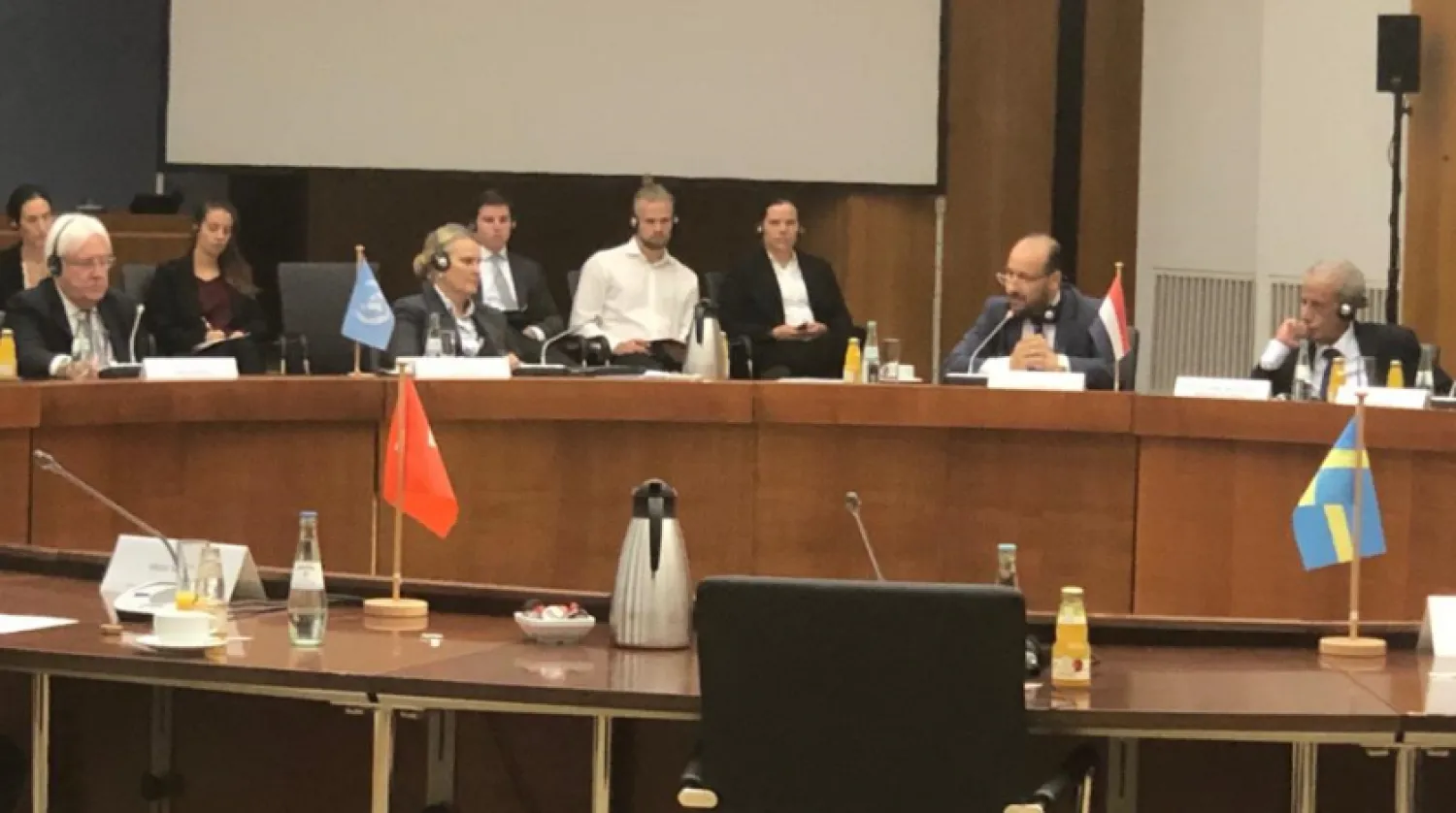
Yemen's Minister of Planning and International Cooperation, Najib al-Auj, speaking at a conference in Berlin, Germany (Saba)
A Yemeni official revealed Tuesday that the World Bank (WB) would finance two projects in Yemen during the second half of 2020 to confront the implications of the COVID-19 pandemic and to battle locust swarms.
Yemeni Minister of Planning and International Cooperation Najib al-Auj told Asharq Al-Awsat that the World Bank approved $26.9 million to help limit the spread and mitigate risks associated with the coronavirus in Yemen.
The project would be implemented by the Yemeni Health Ministry in cooperation with the World Health Organization, he said.
He stressed that the World Bank would also grant Yemen $25 million to fight swarms of locusts and to improve its systems in preparation for future swarms.
According to al-Auj, the project is implemented through the UN’s Food and Agriculture Organization (FAO) and the Yemeni Agriculture Ministry.
Al-Auj said that in 2019, the World Bank Group granted $450 million to finance several projects in Yemen and provide emergency support and health care for the population.
According to the Minister, the World Bank continues to offer aid through Yemeni institutions that gained good reputations, such as the Social Development Fund and the Public Works Project.
Earlier, al-Auj called on donor countries and international organizations to make a comprehensive overhaul of the relief work mechanism in the country.
Auj asked for adopting the principle of decentralized aid distribution, reviewing the lists of partners and local employees working in these organizations, and ensuring the delivery of aid to the beneficiaries.
Syrian Detainees Held in Iraq Return to Spotlight After Zaidan’s Damascus Visithttps://english.aawsat.com/arab-world/5307553-syrian-detainees-held-iraq-return-spotlight-after-zaidan%E2%80%99s-damascus-visit
Syrian Detainees Held in Iraq Return to Spotlight After Zaidan’s Damascus Visit
Syrian security forces at the entrance to al-Hol camp before its evacuation. (EPA file photo)
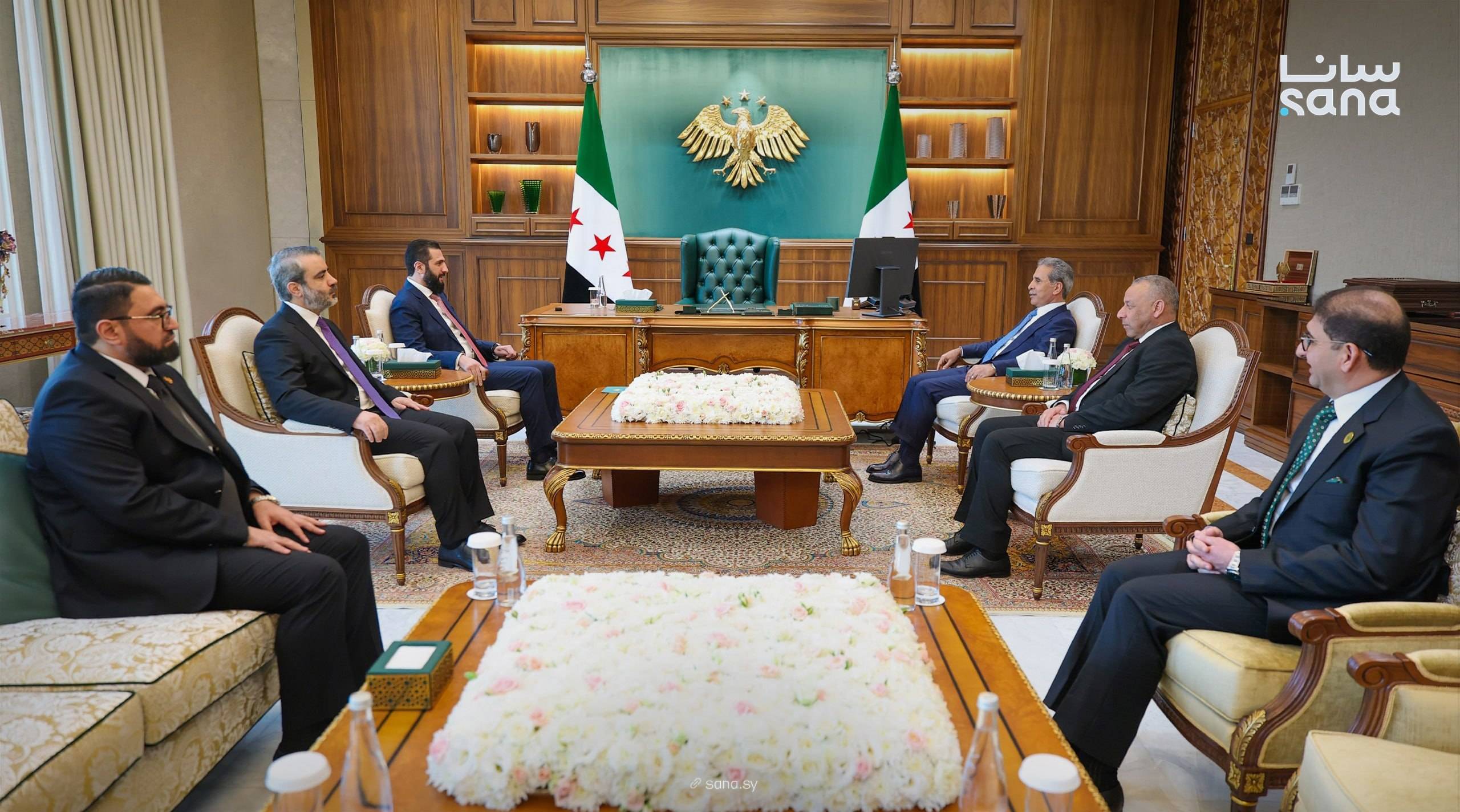
The fate of Syrian detainees transferred to Iraq from prisons formerly run by the Syrian Democratic Forces (SDF) has returned to the spotlight following a visit by Iraq’s Supreme Judicial Council President Judge Faiq Zaidan to Damascus on Thursday, where talks with Syrian officials, including President Ahmed al-Sharaa, focused on their cases.
Relatives of some detainees accused of belonging to ISIS insist they had no ties to the group and were arrested by the SDF over politically motivated allegations, including opposition to ousted Syrian President Bashar al-Assad.
They renewed calls for their return to Syria, a review of the charges against them and the release of those whose guilt cannot be established.
Ibrahim Abbas, from the al-Dhahiriya village east of Qamishli in the Hasakeh province, told Asharq Al-Awsat that the SDF arrested his nephews, Abdul-Azim Ahmed and Alaa al-Din Hassan al-Abbas, in 2017 because of their opposition to Assad.
Abbas, a member of the Arab Zuweid tribe, maintained that neither of the men had any connection to ISIS.
Relatives had been allowed to visit them regularly at al-Malikiyah prison before they were abruptly transferred to Qamishli prison, he revealed.
When the international coalition requested lists of ISIS prisoners for transfer to Iraq, the SDF included both men.
“They were 20 years old when they were arrested and are now nearly 30,” Abbas said, calling for their return to Syria and fresh investigations.
Those proven to have belonged to ISIS should be prosecuted, he added, while those against whom no evidence is found should be released.
In mid-February, Iraq’s Justice Ministry published the nationalities of ISIS prisoners transferred from detention facilities in northern Syria formerly run by the SDF to Iraq in a US Central Command-led operation. The number of Syrians transferred totaled 3,543.
Syrian activist Suheb al-Yaarobi said coordination between Damascus and Baghdad over the detainees’ return had been advancing before it was disrupted by tensions stemming from the US-Israel war on Iran.
He told Asharq Al-Awsat that some detainees had no connection to ISIS and had been imprisoned by the SDF on “malicious” accusations before being classified as members of the group and transferred to Iraq.
President Ahmed al-Sharaa receives Iraq’s Supreme Judicial Council President Judge Faiq Zaidan in Damascus last week. (SANA)
Both Baghdad and Damascus want the prisoners returned to Syria, Yaarobi said, but a key obstacle is the lack of detention facilities there.
Judge Laith Jabr, head of Iraq’s Judicial Supervision Authority, said Zaidan’s talks in Damascus focused on the Syrian detainees and their legal status. Iraqi authorities had conducted judicial investigations and provided them with all legal safeguards, he added.
The two sides agreed to establish joint judicial committees that will meet regularly to resolve issues related to the detainees’ trials.
Informed sources said Iraq and Syria were close to signing an agreement governing the transfer and prosecution of Syrian detainees held in Iraq.
International law expert Al-Moutassim al-Kilani told Asharq Al-Awsat that an accusation by the SDF or inclusion on a security list was not, in itself, sufficient legal proof of ISIS membership.
Rather than mass releases or collective trials, Kilani advocated a joint Syrian-Iraqi judicial mechanism to distinguish among detainees lacking credible evidence; those awaiting Iraqi judgments who could be transferred for prosecution in Syria; suspects accused of crimes committed in Iraq or against Iraqis; and prisoners serving final Iraqi sentences who could potentially complete their terms in Syria under a bilateral arrangement.
A fifth category should cover potential victims of arbitrary detention or torture, he suggested.
Detainees and their lawyers should be given access to case files and allowed to challenge the legality of detention and seek investigations into allegations of abuse. Convictions should not be based solely on coerced confessions or security reports that cannot be independently scrutinized, he stressed.
Sudan’s Al-Burhan Backs Inclusive Dialogue but Pledges to Continue Fighting the RSFhttps://english.aawsat.com/arab-world/5307459-sudan%E2%80%99s-al-burhan-backs-inclusive-dialogue-pledges-continue-fighting-rsf
Sudan’s Al-Burhan Backs Inclusive Dialogue but Pledges to Continue Fighting the RSF
Al-Burhan flanked by Yasser Al-Atta and Shams El Din Kabbashi during the Army Day celebration (Transitional Sovereignty Council Media)
The Chairman of the Transitional Sovereignty Council and Commander of the Sudanese Army, Abdel Fattah al-Burhan, has approved an initiative to launch a dialogue that brings together all political and civil parties.
Despite his announcement, he pledged to continue fighting until the rebellion of the Rapid Support Forces (RSF) is defeated across the country.
Speaking on Friday on the 72nd anniversary of the Sudanese Armed Forces, al-Burhan said: "In light of this troubled political reality, a group of Sudanese citizens took the initiative to present their vision to work as an independent national mechanism to prepare for an inclusive Sudanese dialogue, with the goal of reaching a comprehensive national consensus that puts the country on the path to stability."
He added that he agreed to provide the necessary guarantees for holding the all-party talks, facilitate the participation of the different groups, and protect their safety.
Al-Burhan stressed that the state was willing to provide the necessary logistical support as well as legal, political, and security guarantees, without being the organizing entity of the dialogue.
He noted that providing these guarantees does not mean the state will dictate the participants of the dialogue, draft its agenda, control its outcomes, or provide it with political sponsorship.
Al-Burhan clarified that "the action taken by the state regarding any of the participants in the dialogue is not considered a pardon, but rather means suspending the criminal proceedings previously taken by the state against them."
He stated that these measures represent a "temporary immunity" to create appropriate conditions that ensure the participation of the parties.
The Sudanese army commander also pledged legal protection for the opinions and positions expressed by participants, saying statements made during dialogue sessions would not be used as grounds for legal prosecution.
A-Burhan said the army was ready to engage with any serious peace initiative but would not accept what he called an “incomplete peace” that returned the RSF and its supporters to power.
He stated that the army would continue the “completion of the cleansing of the country from the terrorist militia.”
The path to peace must begin with RSF forces withdrawing from cities and gathering in designated areas, followed by the return of displaced people and refugees to their homes, he added.
The Democratic Bloc welcomed al-Burhan’s announcement to hold the all-party talks.
Its spokesperson, Mohamed Zakaria, said Saturday that al-Burhan’s emphasis on the importance of inter-Sudanese dialogue and the need to create a conducive environment for its launch represents a significant step towards addressing the crisis through a national political process.
He called on all sides to engage positively with any serious effort to launch a comprehensive national dialogue, provided that the process is managed entirely by Sudanese parties and that the regional and international role is limited to facilitation and support without interfering in determining participants or imposing an agenda or outcomes.
Egypt, China Consolidate Cooperation by Holding Air Combat Maneuvershttps://english.aawsat.com/arab-world/5307449-egypt-china-consolidate-cooperation-holding-air-combat-maneuvers
Egyptian President Abdel Fattah El-Sisi and China’s President Xi Jinping held summit talks in the Chinese capital, Beijing, in May 2024. Photo: Egyptian Presidency
Egypt, China Consolidate Cooperation by Holding Air Combat Maneuvers
Egyptian President Abdel Fattah El-Sisi and China’s President Xi Jinping held summit talks in the Chinese capital, Beijing, in May 2024. Photo: Egyptian Presidency
Egypt and China have consolidated their military cooperation by announcing new air combat drills that are set to start this month.
"The Chinese and Egyptian air forces will hold Eagles of Civilization 2026 joint training in Egypt from mid-August to early September," said Senior Colonel Chen Xi, spokesperson for China's Ministry of National Defense (MND), at a press briefing on Friday.
"The training will focus on such subjects as air combat tactics, air superiority operations, and combat search and rescue, and will include force employment drills," said the spokesperson.
"As the second iteration of its kind, the joint training will further enhance mutual trust and traditional friendship, deepen substantive cooperation between the Chinese and Egyptian militaries, and contribute to regional peace and stability," stressed the spokesperson.
The joint air force exercise between China and Egypt "Eagles of Civilization 2025" was held in April last year at an Egyptian air base. It marked the first-ever military air drill between the two nations and the first time the Chinese PLA Air Force systematically deployed multiple troop types to the African continent.
In May 2024, Egyptian President Abdel Fattah el-Sisi and Chinese President Xi Jinping met in Beijing to mark the 10th anniversary of their comprehensive strategic partnership.
The leaders declared 2024 the "Egypt-China Partnership Year,” signing bilateral agreements on the Belt and Road Initiative, technology, and industrial localization.
لم تشترك بعد
انشئ حساباً خاصاً بك لتحصل على أخبار مخصصة لك ولتتمتع بخاصية حفظ المقالات وتتلقى نشراتنا البريدية المتنوعة