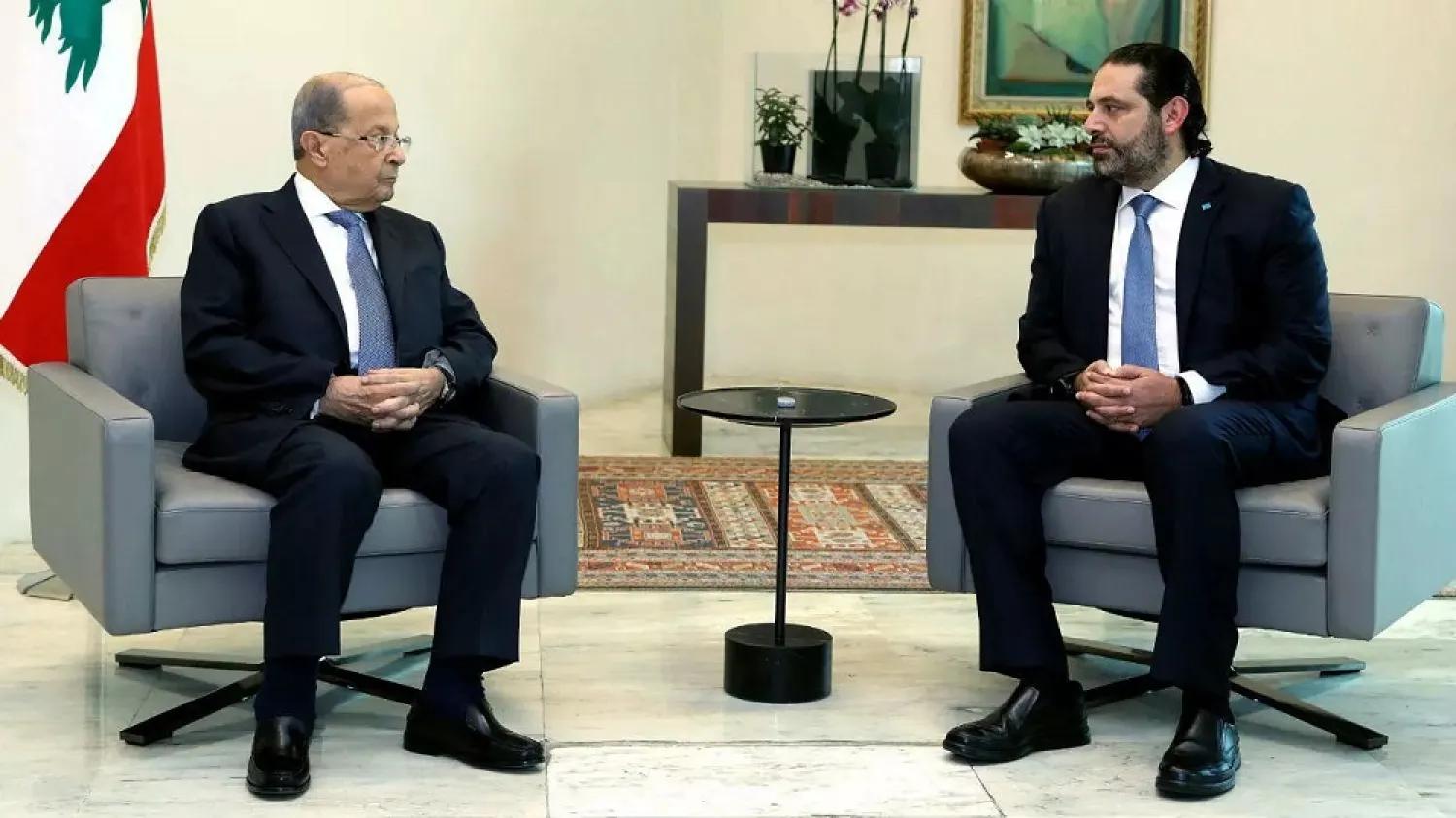
Lebanon's Aoun, Hariri Trade Blame over New Government

Lebanese President Michel Aoun (L) meeting with Prime Minister Saad Hariri at the presidential palace in Baabda, on October 21, 2019. (Dalati & Nohra)
TT

Lebanon's Aoun, Hariri Trade Blame over New Government

Lebanese President Michel Aoun (L) meeting with Prime Minister Saad Hariri at the presidential palace in Baabda, on October 21, 2019. (Dalati & Nohra)

Lebanese President Michel Aoun and Prime Minister-designate Saad al-Hariri traded blame on Monday over a delay in the formation of a new government, casting further doubt on whether the badly needed cabinet will be agreed soon.

Four months since Lebanon’s last government quit in the wake of a cataclysmic explosion in Beirut port in August, the main parties have been unable to agree on a cabinet even as the country sinks deeper into a crippling financial crisis.

Hariri, who was designated in October to form a government, gave Aoun a line-up last week, saying the atmosphere was positive. Aoun’s office said at the time the two had agreed to try to bridge the gap between their proposals.

But the atmosphere soured very publicly on Monday.

In a statement prompted by criticism from an Aoun adviser, Hariri’s media office urged Aoun to set aside party interests, namely the demand that one party get a third of the ministries, or effective veto power, referring to the Free Patriotic Movement founded by Aoun and now headed by his son-in-law and former minister Gebran Bassil.

“This is what will never happen under any pretext,” the statement said.

A statement from the presidency meanwhile said Aoun objected to Hariri “going it alone in naming ministers, particularly the Christians, without agreement with the president”.

“The president never proposed names of party candidates to be ministers and did not present the prime minister-designate with a list of names,” it said.

The most recent draft line-up proposed by Hariri differed from the previous one discussed with Aoun, it added.

The financial crisis came to a head last year after decades of corruption and bad governance, sinking the currency by some 80%, freezing savers out of their deposits and causing poverty to soar.

Major decisions have been set to one side amid the political paralysis, notably what to do about subsidies on basic goods including fuel, which are being imported using the central bank’s dwindling foreign currency reserves.


Syrian Interior Ministry: Conditions in Al-Hol Camp ‘Shocking’

Al-Hol camp in Hasakah province, northeastern Syria, on Feb. 24, after Syrian authorities closed the camp, which had been under Kurdish control (AFP)
TT

Syrian Interior Ministry: Conditions in Al-Hol Camp ‘Shocking’

Al-Hol camp in Hasakah province, northeastern Syria, on Feb. 24, after Syrian authorities closed the camp, which had been under Kurdish control (AFP)

Interior Ministry spokesperson Noureddine al-Baba said Syrian forces were surprised by the withdrawal of the Kurdish-led Syrian Democratic Forces (SDF) from Al-Hol camp more than six hours before the Syrian army arrived to assume control.

Al-Hol, the largest camp for relatives of suspected ISIS militants in northeastern Syria, had been under the control of the SDF. But last month, Syrian troops drove Kurdish forces from swathes of the north, sparking questions over the fate of the ISIS prisoners and their families.

Al-Baba noted that much of what has been reported about Al-Hol camp requires careful verification due to what he described as “exaggerations.” He confirmed that a number of those who had fled the camp were returned and had their legal status regularized.

His remarks came as the Interior Ministry announced the launch of two security operations against ISIS cells in the provinces of Raqqa and Deir Ezzor, following several attacks by the group on Syrian forces.

Security Plan in Hasakah

At a press conference, al-Baba said the ministry had prepared a comprehensive security deployment plan to secure Hasakah province, coinciding with the entry of Syrian army units last month.

The move was part of the implementation of an agreement between the Syrian government and the SDF aimed at ensuring stability and enforcing the terms of their understanding.

However, shortly before Syrian army units reached the outskirts of Al-Hol camp, “we were surprised” by what he described as an uncoordinated SDF withdrawal more than six hours earlier.

Al-Baba said the ministry followed up on the cases of those who left the camp in an unorganized manner, adding that most had been returned and their legal status settled. The families have been transferred to an alternative site offering improved humanitarian conditions and easier access.

He added that coordination is ongoing with relevant international and local organizations to verify the identities of individuals who lost documentation, determine where the documents were lost, and match records with civil registries. Work is also underway to establish a unified national database covering all of Syria.

European Concerns

A memo, sent from the Cyprus presidency of the Council of the European Union to member states and dated February 23, said the status of third-country nationals who had fled Al-Hol remained unclear and that it was reported that a majority of them had escaped.

"This raises concerns about how terrorist groups might seek to capitalize on the current situation to increase recruitment efforts among escapees," said the memo, which was reviewed by Reuters.

Earlier, Human Rights Watch cautioned that the security vacuum had allowed suspected ISIS affiliates to escape, exposing women and children to serious risks, including trafficking, exploitation, and recruitment by armed groups.

“Children, Women and the Elderly”

Al-Baba described conditions inside the camp upon its handover as “shocking and resembling a forced detention camp,” where thousands of people had been held for years under harsh conditions in a semi-desert area lacking basic infrastructure.

He said that 70 percent of detainees were children, women and elderly people, most of them Syrians and Iraqis. “They are civilians displaced from areas of fighting and were forcibly detained on the pretext of affiliation with ISIS,” he stated.

Al-Baba added that around 6,500 detainees from 44 non-Syrian nationalities were being held at the camp, noting discrepancies between commonly circulated figures and the actual numbers.

He stressed that all information circulated about the camp requires thorough investigation and verification due to what he described as exaggerations regarding the number of residents. Accurate figures and data, he said, will be disclosed once the verification process is completed.

Background on Al-Hol

Al-Hol camp, located in Hasakah province near the Iraqi border, has been one of the main detention centers for families of ISIS fighters captured during the US-led international coalition campaign against the group in Syria.

The camp had been under SDF control from 2015 until January 20 of this year, when it was handed over to the Syrian government following its takeover of most areas in eastern and northern Syria.

Al-Baba said that from the first moment of assuming control, the Syrian government has been working to address the humanitarian situation, restore security, and prevent disorder.

He revealed that more than 138 breaches were recorded along the 17-kilometer section of the perimeter fence, adding that it will now be placed under the supervision of the relevant authorities.


Prince Harry and Meghan Visit Hospitalized Children from Gaza, Refugee Camp during Jordan Trip

Britain's Prince Harry and Meghan, the Duke and Duchess of Sussex, attend a World Health Organisation roundtable hosted by Tedros Adhanom Ghebreyesus and regional WHO leadership, along with key donors and humanitarian partners, in Amman, Jordan, February 25, 2026. World Health Organisation (WHO)/Handout via REUTERS
TT

Prince Harry and Meghan Visit Hospitalized Children from Gaza, Refugee Camp during Jordan Trip

Britain's Prince Harry and Meghan, the Duke and Duchess of Sussex, attend a World Health Organisation roundtable hosted by Tedros Adhanom Ghebreyesus and regional WHO leadership, along with key donors and humanitarian partners, in Amman, Jordan, February 25, 2026. World Health Organisation (WHO)/Handout via REUTERS

Prince Harry and Meghan visited a refugee camp and hospital in Jordan on Wednesday to kick off a trip spotlighting organizations that help civilians affected by war and displacement.

The Duke and Duchess of Sussex also joined World Health Organization Director-General Tedros Adhanom Ghebreyesus for a roundtable with the WHO's regional leaders, some of their humanitarian partners and key donors, The Associated Press said.

“It is an honor and a privilege to be in a room full of people with such big hearts,” Harry told the group. “I don’t know how many times you get thanked for all the work that you do — probably not enough.”

Since stepping aside as working royals in 2020, the couple has prioritized support for projects that assist civilians affected by war, especially injured and displaced children. Their nonprofit, Archewell Philanthropies, recently supported WHO efforts to evacuate children from Gaza and bring them to Jordan for treatment.

Harry and Meghan met some of those children Wednesday at Specialty Hospital in Amman. They also visited Za’atari Refugee Camp, home to thousands of Syrians who remain displaced after more than a decade of conflict in their home country.

The couple were scheduled Thursday to visit the Amman office of World Central Kitchen, which organizes and sends food and other humanitarian assistance to Gaza. Harry and Meghan are longtime supporters of World Central Kitchen, their nonprofit's first philanthropic partner.


Sudan Health Minister: War Has Inflicted $11bn in Health Sector Damage

Sudanese child who fled the city of El Fasher with his family receives treatment at a camp in the town of Tawila (file photo - AP)
TT

Sudan Health Minister: War Has Inflicted $11bn in Health Sector Damage

Sudanese child who fled the city of El Fasher with his family receives treatment at a camp in the town of Tawila (file photo - AP)

Sudan’s health system has suffered an unprecedented collapse since war erupted in mid-April 2023, with most hospitals in the capital, Khartoum, and other cities across several states turned into military barracks.

A severe shortage of medical services has fueled widespread epidemics, disease outbreaks and worsening malnutrition.

Health Minister Haitham Mohamed Ibrahim told Asharq Al-Awsat that losses to the sector are “very large.”

“The destruction has affected all Sudanese states,” he said, citing the sabotage of hospitals and health institutions, the looting of medicines, vehicles and equipment, and the direct targeting of health workers.

He said Saudi Arabia is one of Sudan’s main supporters, particularly through the King Salman Humanitarian Aid and Relief Center, mainly by providing medical supplies, equipment and medicines.

Health sector losses

Preliminary estimates put health sector losses at about $11 billion, Ibrahim said, noting that final figures will only be determined after the war ends, as large areas remain under the control of the Rapid Support Forces.

He outlined a $2 billion reconstruction plan to secure basic services and restore the health system in states recaptured by the Sudanese army. But rebuilding what the war destroyed will require additional funding, he said.

“Attacks on hospitals have exceeded 500 incidents, and the tragedy is ongoing,” Ibrahim said. Several health workers have been killed, while others remain under house arrest in North Darfur, unable to reach their families.

Rebuilding and rehabilitating the system will require “massive budgets and exceptional efforts,” he added.

Sudan needs at least $300 million now to secure essential medicines and medical supplies.

Saudi support

Total Saudi humanitarian and relief assistance during the Sudan crisis exceeded $134 million as of early November 2025, according to new figures.

Donations through the Saudi public campaign to support the Sudanese people via the “Sahem” platform have surpassed $19.4 million, based on recent official estimates.

The campaign was launched in May 2023 under directives from Custodian of the Two Holy Mosques King Salman bin Abdulaziz and Crown Prince and Prime Minister Mohammed bin Salman. More than 537,000 donors have contributed.

Ibrahim reiterated that Saudi Arabia remains a key supporter, especially through the King Salman Humanitarian Aid and Relief Center, which primarily supplies medical consumables, equipment, and medicines.

Malnutrition crisis

Sudan ranks among countries in the World Health Organization’s Eastern Mediterranean Region with high malnutrition rates, Ibrahim said. The national average stands at about 15%, rising to 30% in some states, particularly in areas cut off from regular aid, notably in Darfur and parts of Kordofan.

The Health Ministry, working with UNICEF and other UN agencies and nutrition programs, has opened more than 400 supplementary and therapeutic feeding centers in Darfur to serve those in need.

Vaccination coverage fell below 40% in 2023 and 2024 at the outset of the war, he said, but climbed to more than 70% by the end of 2025. He described the rebound as “a major achievement” that helped reduce measles and diphtheria cases.

Authorities have launched campaigns to reach unvaccinated children, alongside polio drives and routine immunization programs targeting more than 9 million children across Sudan.

Funding constraints

Weak funding remains the main challenge facing the health system, Ibrahim said, pointing to widening health and humanitarian gaps, particularly in western states and Darfur. Reconstruction needs and efforts to improve the work environment to restore services to citizens add further pressure.

Access to some areas in the five Darfur states and parts of Kordofan remains difficult, he said, forcing heavy reliance on international and national organizations operating on the ground.

Securing drug supplies

By 2025, stability in the supply of essential medicines had been fully restored, with more than 700 drug items secured without interruption for chronic and life-saving treatments, Ibrahim said.

Several pharmaceutical factories have resumed operations, with more than three fully operational and four preparing to begin production, a move he said would strengthen supply sustainability and health security.

Availability of essential medicines has risen from less than 30% to more than 75%, with a relative decline in shortages of life-saving drugs.

Storage capacity has expanded at the state level, and the reopening of the main Medical Supplies Center in Khartoum has boosted capacity by more than 60% compared with the previous period.

Disease outbreaks

As the health crisis deepens, 79 dengue fever cases have been recorded in the Merowe locality in Northern State, according to the latest official report.

Outbreaks of malaria and dengue in the capital and several states are part of recurring epidemic waves in recent years, Ibrahim said, stressing that authorities have “a clear strategy to combat disease vectors.”

He announced a major malaria eradication campaign to be launched under the patronage of the prime minister, underscoring the need to sustain vector control programs at the locality and administrative unit levels.

The Rapid Support Forces control all hospitals and health facilities in the five Darfur states and large parts of Kordofan. Ongoing clashes and indiscriminate shelling have directly disrupted medical facilities and destabilized health workers.

Delivering services to areas outside government control remains extremely difficult, the minister said, citing reports of severe shortages that require urgent and sustained health and humanitarian intervention.