


Grim Picture Emerges From Glimpses of Ethiopia's Tigray War

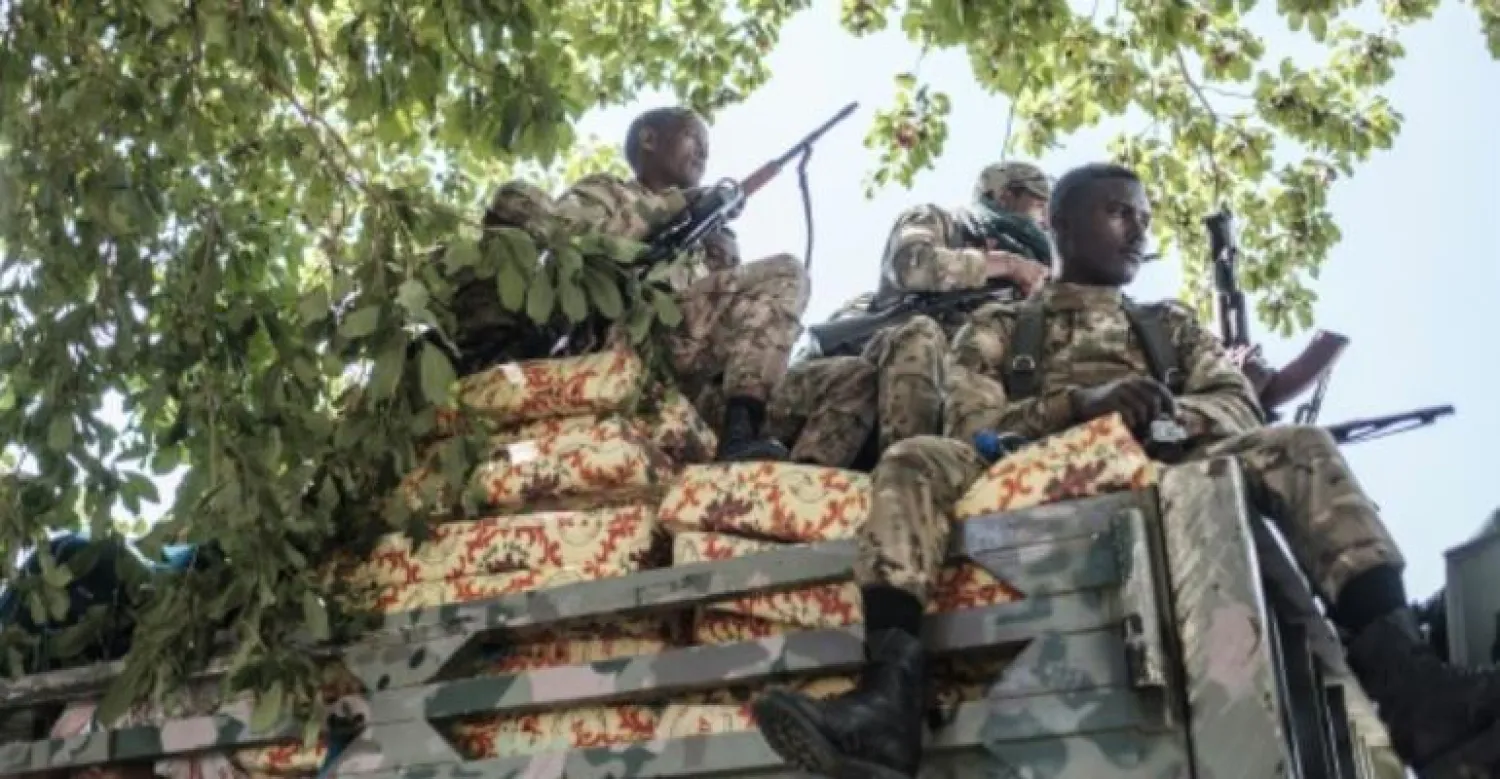
Special forces troops entered into the Tigrayan city of Alamata | AFP
TT

Grim Picture Emerges From Glimpses of Ethiopia's Tigray War

Special forces troops entered into the Tigrayan city of Alamata | AFP

Ethiopian Prime Minister Abiy Ahmed declared victory in his military operation in the northern region of Tigray, but there are clear signs that fighting persists despite a claimed return to normalcy.

Abiy launched the offensive last November against Tigray's ruling party, which he accused of attacking federal army camps and seeking to destabilize the country.

Within weeks troops entered the regional capital of Mekele and Abiy announced military operations were "completed."

But the government continues to give accounts of TPLF leaders slain in gun battles while the United Nations reports "insecurity" hampering aid access.

And in recent weeks satellite images, public statements from military and civilian officials in Tigray and scattered accounts from residents have added to evidence of a conflict unfolding largely in the shadows.

A communications blackout in much of Tigray means confirmable details remain scant.

- Region still 'volatile' -

When federal forces arrived in Mekele in late November, they encountered little resistance as the Tigray People's Liberation Front (TPLF) leadership appeared to have already fled.

And a triumphant Abiy claimed no civilians had been killed during the capture of Tigrayan cities.

Doctors at one Mekele hospital told a different story, though, saying at least 20 civilians died in shelling.

They provided AFP with photos of survivors with gruesome injuries, including lost limbs and exposed internal organs.

The International Crisis Group (ICG) think tank says thousands have died so far, and tens of thousands of refugees have streamed across the border into neighboring Sudan.

Federal officials have described subsequent fighting as minor operations centered on Tigrayan leaders like former regional president Debretsion Gebremichael, who has been out of contact for more than a month.

But a UN humanitarian assessment dated January 6 said Tigray remained "volatile", with "localised fighting".

The UN is especially worried about what happened at two camps housing over 30,000 Eritrean refugees that are inaccessible.

Top officials have repeatedly sounded the alarm about reported killings, abductions and forced repatriations from the camps back to neighbouring Eritrea.

The alleged presence of soldiers from the isolated and iron-fisted Eritrean regime in Tigray has been a hotly contested aspect of the conflict.

Five humanitarian workers have been confirmed killed at one of the camps, known as Hitsats.

"Reports of additional military incursions over the last 10 days are consistent with open source satellite imagery showing new fires burning and other fresh signs of destruction at the two camps," UN refugees chief Filippo Grandi said in a statement Thursday.

"These are concrete indications of major violations of international law."

- Eritrea's role -

Ethiopia has strenuously denied Eritrean soldiers played an active role in the fighting, contradicting witness accounts.

But in December the US State Department said it was "aware of credible reports of Eritrean military involvement in Tigray" and called for Eritrean troops to be withdrawn.

This week the Ethiopian Human Rights Commission (EHRC) said in its latest report that the town of Humera, in western Tigray, had suffered widespread looting by forces including "some Eritrean soldiers".

Eritrea fought a brutal border war with Ethiopia in 1998-2000, back when the TPLF dominated Ethiopia's governing coalition.

Abiy won the Nobel Peace Prize in 2019 in large part for initiating a rapprochement with Eritrea, whose President Isaias Afwerki and the TPLF remain bitter enemies.

In late December a top-ranking member of Ethiopia's army told a meeting of Mekele residents that Eritrean troops had entered Tigray, but insisted they were "unwanted".

Awet Weldemichael, a Horn of Africa security expert at Queen's University in Canada, said this explanation was dubious.

"Eritrean involvement in the war in Tigray is not considered a violation of Ethiopia, and the international community is not worked up about it, precisely because the Ethiopian government invited it," he said.

- Starvation warnings -

Perhaps the most immediate concern for Tigray's estimated population of six million is humanitarian access.

So far "the number of people reached is extremely low compared with the number of people we estimate to be in need of life-saving assistance, around 2.3 million people," said Saviano Abreu, spokesman for the UN's humanitarian coordination office.

The government's Tigray Emergency Coordination Centre puts the number of people needing food assistance at 4.5 million and says 2.2 million have been displaced.

Officials from the new caretaker administration have warned of widespread starvation if food aid does not arrive soon, according to humanitarian officials briefed on their assessments.

A letter from a Catholic church official in the town of Adigrat, dated January 5 and seen by AFP, says residents have run out of food, water, and medicine and are living without electricity and other basic services.

"It is a daily reality to hear people dying from the fighting consequences, lack of food, insulin & other basic medicines," the letter reads.

In its report this week, the EHRC noted that food aid in Humera had been "grossly insufficient", quoting a medical worker as saying that "a colleague once fainted from hunger while cleaning the hospital floor."

Government statements about the conflict have recently focused on TPLF leaders who have been killed or captured.

William Davison, the ICG's Ethiopia analyst, said this could complicate the caretaker administration's efforts to win over Tigrayans.

"From the outset of the conflict," Davison said, "the major challenge for the federal government has been how to defeat Tigray's leadership without alienating the Tigrayan people."



Nigeria's President to Make a Sate Visit to the UK in March

Nigeria’s President Bola Tinubu gives a joint statement with Brazil’s President Luiz Inacio Lula da Silva, at the Planalto presidential palace, in Brasilia, Brazil, Aug. 25, 2025. (AP Photo/Eraldo Peres, File)
TT

Nigeria's President to Make a Sate Visit to the UK in March

Nigeria’s President Bola Tinubu gives a joint statement with Brazil’s President Luiz Inacio Lula da Silva, at the Planalto presidential palace, in Brasilia, Brazil, Aug. 25, 2025. (AP Photo/Eraldo Peres, File)

Nigeria’s president is set to make a state visit to the UK in March, the first such trip by a Nigerian leader in almost four decades, Britain’s Buckingham Palace said Sunday.

Officials said President Bola Tinubu and first lady Oluremi Tinubu will travel to the UK on March 18 and 19, The AP news reported.

King Charles III and Queen Camilla will host them at Windsor Castle. Full details of the visit are expected at a later date.

Charles visited Nigeria, a Commonwealth country, four times from 1990 to 2018 before he became king. He previously received Tinubu at Buckingham Palace in September 2024.m

Previous state visits by a Nigerian leader took place in 1973, 1981 and 1989.

A state visit usually starts with an official reception hosted by the king and includes a carriage procession and a state banquet.

Last year Charles hosted state visits for world leaders including US President Donald Trump, French President Emmanuel Macron and German President Frank-Walter Steinmeier.


Iran Strikes Hard Line on US Talks, Saying Tehran's Power Comes From Saying 'No'

Traffic moves through a street in Tehran on February 7, 2026. (Photo by ATTA KENARE / AFP)
TT

Iran Strikes Hard Line on US Talks, Saying Tehran's Power Comes From Saying 'No'

Traffic moves through a street in Tehran on February 7, 2026. (Photo by ATTA KENARE / AFP)

Iran's top diplomat insisted Sunday that Tehran's strength came from its ability to “say no to the great powers," striking a maximalist position just after negotiations with the United States over its nuclear program and in the wake of nationwide protests.

Foreign Minister Abbas Araghchi, speaking to diplomats at a summit in Tehran, signaled that Iran would stick to its position that it must be able to enrich uranium — a major point of contention with President Donald Trump, who bombed Iranian atomic sites in June during the 12-day Iran-Israel war.

Iran will never surrender the right to enrich uranium, even if war "is imposed on us,” he noted.

"Iran has paid a very heavy price for its peaceful nuclear program and for uranium enrichment." 

Israeli Prime Minister Benjamin Netanyahu is expected to travel to Washington this week, with Iran expected to be the major subject of discussion, his office said.

While Iranian President Masoud Pezeshkian praised the talks Friday in Oman with the Americans as “a step forward,” Araghchi's remarks show the challenge ahead. Already, the US moved the aircraft carrier USS Abraham Lincoln, ships and warplanes to the Middle East to pressure Iran into an agreement and have the firepower necessary to strike the Islamic Republic should Trump choose to do so, according to The AP news.

“I believe the secret of the Islamic Republic of Iran’s power lies in its ability to stand against bullying, domination and pressures from others," Araghchi said.

"They fear our atomic bomb, while we are not pursuing an atomic bomb. Our atomic bomb is the power to say no to the great powers. The secret of the Islamic Republic’s power is in the power to say no to the powers.”

‘Atomic bomb’ as rhetorical device Araghchi's choice to explicitly use an “atomic bomb” as a rhetorical device likely wasn't accidental. While Iran has long maintained its nuclear program is peaceful, the West and the International Atomic Energy Agency say Tehran had an organized military program to seek the bomb up until 2003.

Iran had been enriching uranium up to 60% purity, a short, technical step to weapons-grade levels of 90%, the only non-weapons state to do so. Iranian officials in recent years had also been increasingly threatening that Tehran could seek the bomb, even while its diplomats have pointed to Iranian Supreme Leader Ali Khamenei’s preachings as a binding fatwa, or religious edict, that Iran wouldn’t build one.

Pezeshkian, who ordered Araghchi to pursue talks with the Americans after likely getting Khamenei's blessing, also wrote on X on Sunday about the talks.

“The Iran-US talks, held through the follow-up efforts of friendly governments in the region, were a step forward,” the president wrote. “Dialogue has always been our strategy for peaceful resolution. ... The Iranian nation has always responded to respect with respect, but it does not tolerate the language of force.”

It remains unclear when and where, or if, there will be a second round of talks. Trump, after the talks Friday, offered few details but said: “Iran looks like they want to make a deal very badly — as they should.”

Aircraft carrier in the Arabian Sea During Friday's talks, US Navy Adm. Brad Cooper, the head of the American military's Central Command, was in Oman. Cooper's presence was apparently an intentional reminder to Iran about US military power in the region. Cooper later accompanied US special envoy Steve Witkoff and Jared Kushner, Trump's son-in-law, to the Lincoln out in the Arabian Sea after the indirect negotiations.

Araghchi appeared to be taking the threat of an American military strike seriously, as many worried Iranians have in recent weeks. He noted that after multiple rounds of talks last year, the US “attacked us in the midst of negotiations."

“If you take a step back (in negotiations), it is not clear up to where it will go,” Araghchi said.


Russia: Man Suspected of Shooting Top General Detained in Dubai

An investigator works outside a residential building where the assassination attempt on Russian Lieutenant General Vladimir Alexeyev took place in Moscow, Russia February 6, 2026. REUTERS/Anastasia Barashkova
TT

Russia: Man Suspected of Shooting Top General Detained in Dubai

An investigator works outside a residential building where the assassination attempt on Russian Lieutenant General Vladimir Alexeyev took place in Moscow, Russia February 6, 2026. REUTERS/Anastasia Barashkova

Russia's Federal Security Service (FSB) said on Sunday that the man suspected of shooting top Russian military intelligence officer Vladimir Alexeyev in Moscow has been detained in Dubai and handed over to Russia.

Lieutenant General Vladimir Alexeyev, deputy head of the GRU, ⁠Russia's military intelligence arm, was shot several times in an apartment block in Moscow on Friday, investigators said. He underwent surgery after the shooting, Russian media ⁠said.

The FSB said a Russian citizen named Lyubomir Korba was detained in Dubai on suspicion of carrying out the shooting.

Russian Foreign Minister Sergei Lavrov accused Ukraine of being behind the assassination attempt, which he said was designed to sabotage peace talks. ⁠Ukraine said it had nothing to do with the shooting.

Alexeyev's boss, Admiral Igor Kostyukov, the head of the GRU, has been leading Russia's delegation in negotiations with Ukraine in Abu Dhabi on security-related aspects of a potential peace deal.