


Turkish Finance Minister Defends Predecessor's Forex Reserves Policy

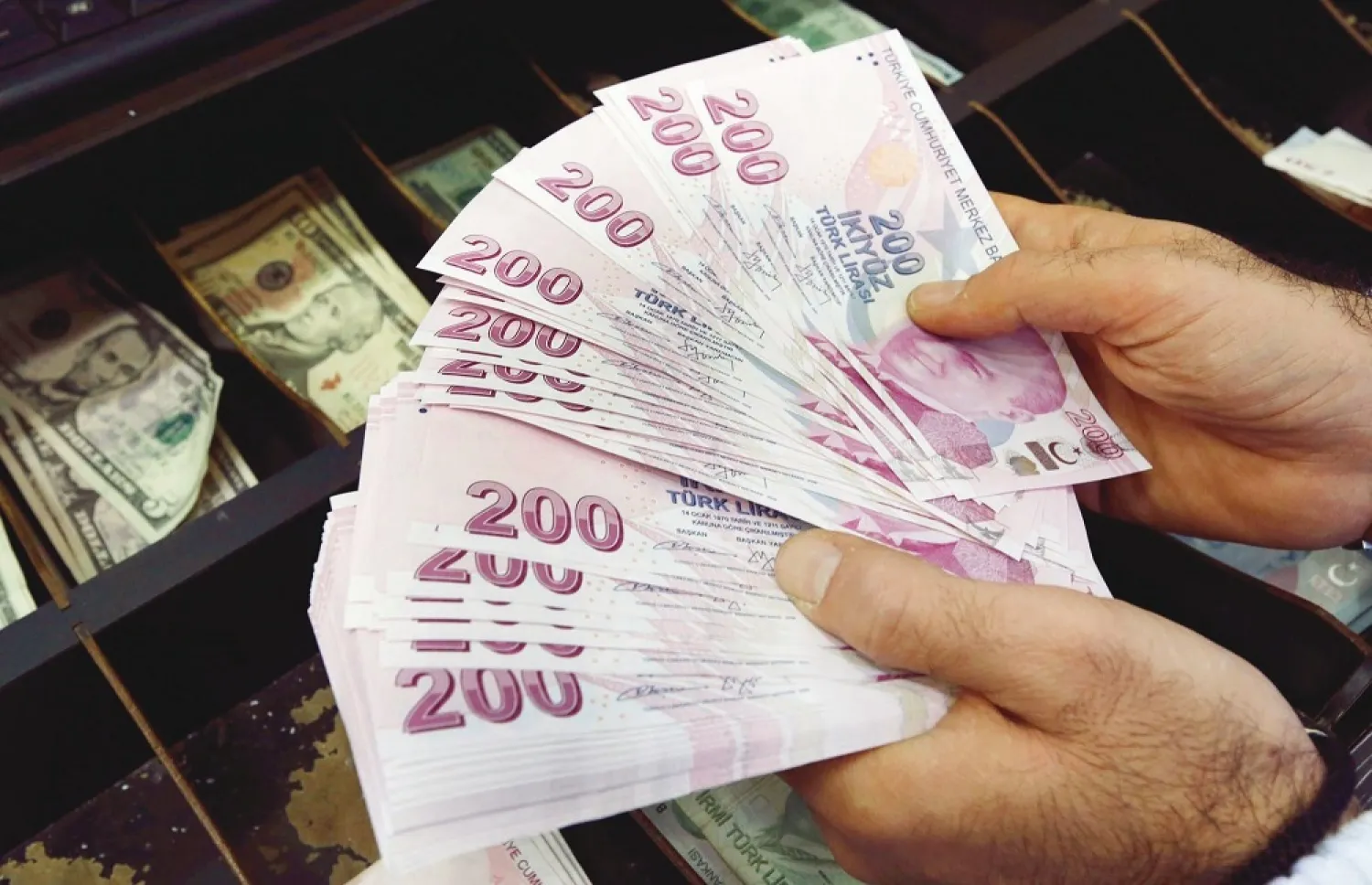
A money changer counts Turkish lira bills at a currency exchange office in Istanbul. (Reuters)
TT

Turkish Finance Minister Defends Predecessor's Forex Reserves Policy

A money changer counts Turkish lira bills at a currency exchange office in Istanbul. (Reuters)

Turkey's finance minister has defended the foreign exchange reserve policy of his predecessor Berat Albayrak, saying transactions that had led to a sharp fall in reserves were a response to the extraordinary demands of the COVID-19 pandemic.

Albayrak, who is President Recep Tayyip Erdogan's son-in-law, abruptly resigned in November shortly after Erdogan replaced the central bank governor. In his two-year term as finance minister, the lira slumped to record lows while forex reserves dwindled.

In a social media campaign blaming Albayrak for economic woes, the main opposition Republican People's Party (CHP) demanded to know what had happened to the $128 billion it says were sold from the central bank's reserves.

"I strongly condemn the unjust and rude rhetoric used by the CHP over forex reserves against our former Treasury and Finance Minister Mr. Berat Albayrak," Finance Minister Lutfi Elvan said on Twitter late on Sunday.

"It is unacceptable to distort the foreign exchange reserves transactions carried out in line with the goal of financial stability amid the 2020 pandemic circumstances in an environment necessitated by extraordinary fluctuations in the global markets," he added.

A lawyer for Albayrak said at the weekend the CHP's campaign comprised "ugly slander and attempts at smearing" the former minister, adding that they would file a 500,000 lira ($71,000) damages lawsuit over the campaign.

"Transactions over the central bank's reserves were carried out in accordance with the existing regulation and in line with the goals of financial and price stability, in a manner befitting the balance of payments requirements," Albayrak's lawyer said in a statement.

"Since the day he resigned from his post, Mr. Berat Albayrak has been spending time with his wife and children at home, like in any normal Turkish family."



India’s Modi Lauds Interim Trade Pact After US Tariff Rollback

Indian Prime Minister Narendra Modi addresses the media before the budget session of Parliament at Parliament House in New Delhi, India, 29 January 2026. (EPA)
TT

India’s Modi Lauds Interim Trade Pact After US Tariff Rollback

Indian Prime Minister Narendra Modi addresses the media before the budget session of Parliament at Parliament House in New Delhi, India, 29 January 2026. (EPA)

Indian Prime Minister Narendra Modi on Saturday hailed an interim trade agreement with the United States, saying it would bolster global growth and deepen economic ties between the two countries.

The pact cuts US "reciprocal" duties on Indian products to 18 percent from 25 percent, and commits India to large purchases of US energy and industrial goods.

US President Donald Trump, while announcing the deal Tuesday, had said Modi promised to stop buying Russian oil over the war in Ukraine.

The deal eases months of tensions over India's oil purchases -- which Washington says fund a conflict it is trying to end -- and restores the close ties between Trump and the man he describes as "one of my greatest friends."

"Great news for India and USA!" Modi said on X on Saturday, praising US President Donald Trump's "personal commitment" to strengthening bilateral ties.

The agreement, he said, reflected "the growing depth, trust and dynamism" of their partnership.

Modi's remarks came hours after Trump issued an executive order scrapping an additional 25 percent levy imposed over New Delhi's purchases of Russian oil, in a step to implement the trade deal announced this week.

Modi, who has faced criticism at home about opening access of Indian agricultural markets to the United States and terms on oil imports, did not mention Russian oil in his statement.

"This framework will also strengthen resilient and trusted supply chains and contribute to global growth," he said.

It would also create fresh opportunities for Indian farmers, entrepreneurs and fishermen under the "Make in India" initiative.

In a separate statement, Commerce Minister Piyush Goyal said the pact would "open a $30 trillion market for Indian exporters".

Goyal also said the deal protects India's sensitive agricultural and dairy products, including maize, wheat, rice, soya, poultry and milk.

Other terms of the agreement include the removal of tariffs on certain aircraft and parts, according to a separate joint statement released Friday by the White House.

The statement added that India intends to purchase $500 billion of US energy products, aircraft and parts, precious metals, tech products and coking coal over the next five years.

The shift marks a significant reduction in US tariffs on Indian products, down from a rate of 50 percent late last year.

Washington and New Delhi are expected to sign a formal trade deal in March.


Gold Bounces Back on Softer Dollar, US-Iran Concerns; Silver Rebounds

Gold and silver bars are stacked in the safe deposit boxes room of the Pro Aurum gold house in Munich, Germany, January 10, 2025. REUTERS/Angelika Warmuth
TT

Gold Bounces Back on Softer Dollar, US-Iran Concerns; Silver Rebounds

Gold and silver bars are stacked in the safe deposit boxes room of the Pro Aurum gold house in Munich, Germany, January 10, 2025. REUTERS/Angelika Warmuth

Gold rebounded on Friday and was set for a weekly gain, helped by bargain hunting, a slightly weaker dollar and lingering concerns over US-Iran talks in Oman, while silver recovered from a 1-1/2-month low.

Spot gold rose 3.1% to $4,916.98 per ounce by 09:31 a.m. ET (1431 GMT), recouping losses posted during a volatile Asia session that followed a fall of 3.9% on Thursday. Bullion was headed for a weekly gain of about 1.3%.

US gold futures for April delivery gained 1% to $4,939.70 per ounce.

The US dollar index fell 0.3%, making greenback-priced bullion cheaper for the overseas buyers.

"The gold market is seeing perceived bargain hunting from bullish traders," said Jim Wyckoff, senior analyst at Kitco Metals.

Iran and the US started high-stakes negotiations via Omani mediation on Friday to try to overcome sharp differences over Tehran's nuclear program.

Wyckoff said gold's rebound lacks momentum and the metal is unlikely to break records without a major geopolitical trigger.

Gold, a traditional safe haven, does well in times of geopolitical and economic uncertainty.

Spot silver rose 5.3% to $74.98 an ounce after dipping below $65 earlier, but was still headed for its biggest weekly drop since 2011, down over 10.6%, following steep losses last week as well.

"What we're seeing in silver is huge speculation on the long side," said Wyckoff, adding that after years in a boom cycle, gold and silver now appear to be entering a typical commodity bust phase.

CME Group raised margin requirements for gold and silver futures for a third time in two weeks on Thursday to curb risks from heightened market volatility.

Spot platinum added 3.2% to $2,052 per ounce, while palladium gained 4.9% to $1,695.18. Both were down for the week.


Europe, Türkiye Agree to Work Toward Updating Customs Union

European Union (R) and Turkish flags fly at the business and financial district of Levent in Istanbul, Türkiye September 4, 2017. REUTERS/Osman Orsal
TT

Europe, Türkiye Agree to Work Toward Updating Customs Union

European Union (R) and Turkish flags fly at the business and financial district of Levent in Istanbul, Türkiye September 4, 2017. REUTERS/Osman Orsal

The European enlargement chief and the Turkish foreign minister said on Friday they had agreed to continue work toward modernizing the EU-Türkiye customs union and to improve its implementation, Reuters reported.

European Commissioner for Enlargement Marta Kos met Turkish Foreign Minister Hakan Fidan in the capital Ankara on Friday.

"They shared a willingness to work for paving the way for the modernization of the Customs Union and to achieve its full potential in order to support competitiveness, and economic security and resilience for both sides," they said in a joint statement afterward.

The sides also welcomed the gradual resumption of European Investment Bank (EIB) operations in Türkiye and said they intended to support projects across the country and neighbouring regions in cooperation with the bank.