Formula One Great to Develop Electric Vans, SUVs for Carmakers, Startupshttps://english.aawsat.com/home/article/2967166/formula-one-great-develop-electric-vans-suvs-carmakers-startups
Formula One Great to Develop Electric Vans, SUVs for Carmakers, Startups
An undated handout photo of the Gordon Murray Group's T50 supercar, which will go into limited production in 2022 and carry a price tag of 2.4 million pounds. (Handout via Reuters)
Formula One Great to Develop Electric Vans, SUVs for Carmakers, Startups
An undated handout photo of the Gordon Murray Group's T50 supercar, which will go into limited production in 2022 and carry a price tag of 2.4 million pounds. (Handout via Reuters)
Supercar maker the Gordon Murray Group said on Tuesday it plans a 300-million-pound ($420 million) expansion over the next five years, which includes developing electric SUVs and delivery vehicles for carmakers as it shifts towards an all-electric supercar by 2030.
"Electric is what we've been missing and that's where the future is," founder and chairman Gordon Murray, the Formula One design great who oversaw one of the sport's most successful cars to date, told Reuters.
The company will produce its first supercar, the T50, with a powerful V12 engine, in 2022.
The carmaker will make 100 of them next year, selling for around 2.4 million pounds each. They are already sold out.
The company will launch one more fossil-fuel supercar after the T50, followed by a hybrid model around 2026 and then a fully-electric supercar in 2029 or 2030.
The challenge for premium car firms like McLaren and Lotus, part-owned by Chinese company Geely, is that batteries are very heavy, making it hard to develop sports cars or supercars that perform like their fossil-fuel equivalents.
Murray described the supercar as a "brand building" product at the upper end of his business "while at the customer-facing end we'll focus on light-weighting and electric cars".
The company does not just see itself as a carmaker, but as an auto supplier. It has been working on designs for a lightweight SUV and a delivery van, which it aims to sell to traditional manufacturers or startups.
Over the next two and a half years the carmaker will develop a small test fleet of these vehicles to international standards.
"We're hoping to pick up a customer or two along the way," Murray said. "And it doesn't have to be a carmaker, it can be a post office, or a company like Amazon."
Dell to Asharq Al-Awsat: AI in Saudi Arabia Enters Production, Not Experimentation Phasehttps://english.aawsat.com/technology/5275232-dell-asharq-al-awsat-ai-saudi-arabia-enters-production-not-experimentation-phase
Dell to Asharq Al-Awsat: AI in Saudi Arabia Enters Production, Not Experimentation Phase
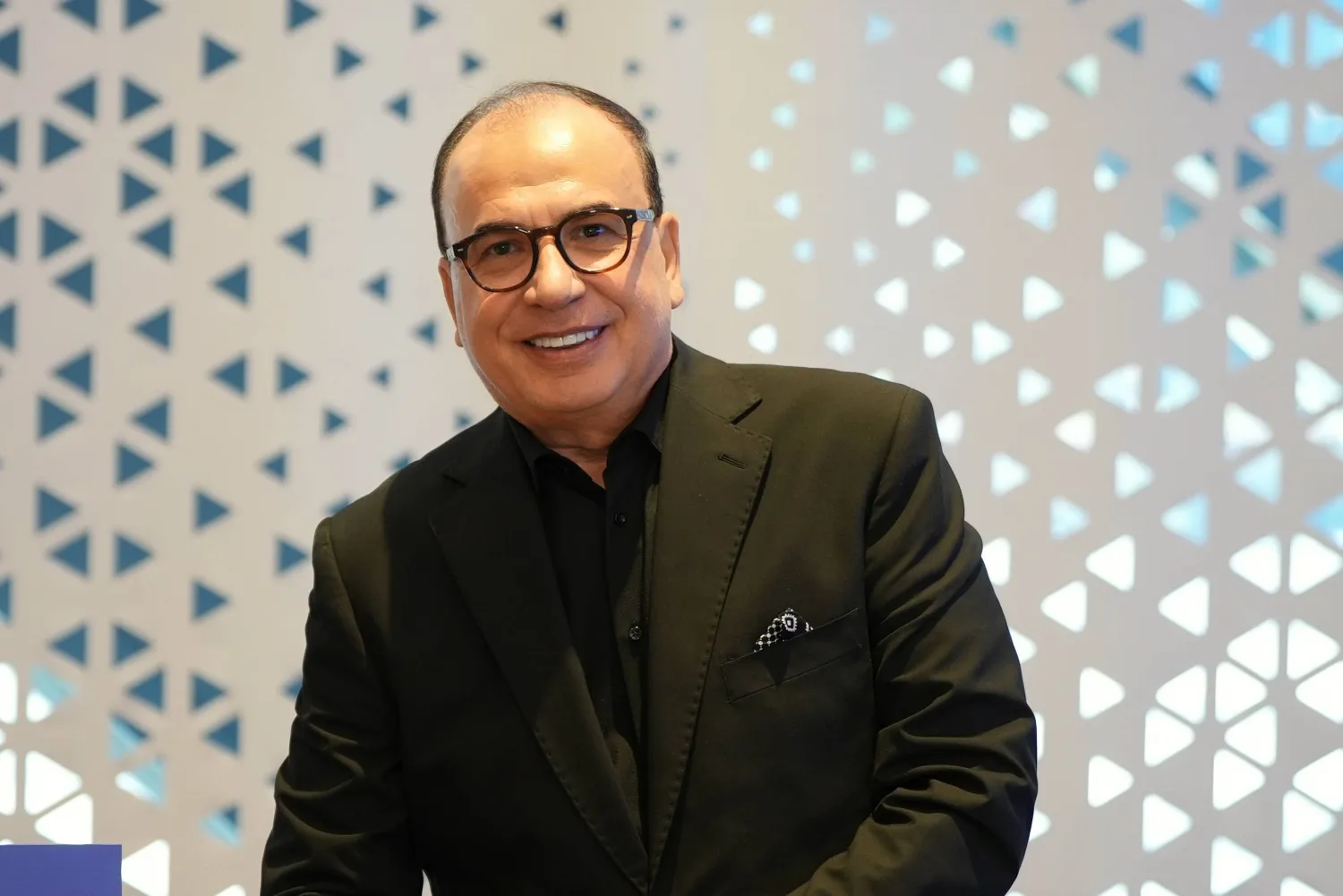
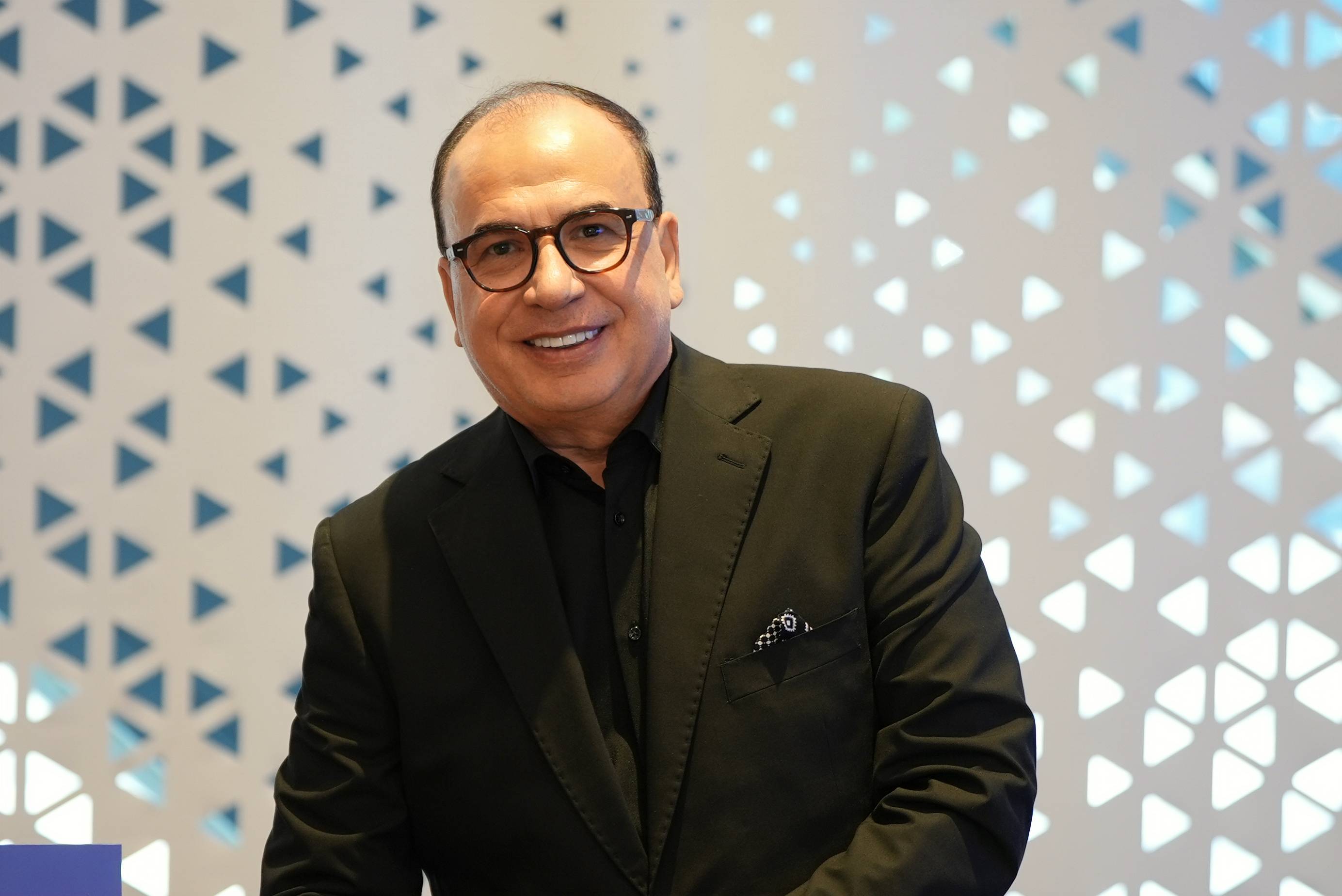
Mohammed Amin, Senior Vice President for Central Eastern Europe, Middle East, Türkiye and Africa at Dell Technologies
Saudi Arabia became a focal point of discussion in the “Dell Technologies World 2026” in Las Vegas this week about the next phase of artificial intelligence.
The question is no longer just about the size of investment in infrastructure or national capacity building, but about the difference the Kingdom can make in a global market transitioning from AI experimentation to its operational deployment within institutions.
In exclusive remarks to Asharq Al-Awsat, Michael Dell, Chairman and CEO of Dell Technologies, stated that what the company sees in Saudi Arabia is a “deep commitment to modernizing the Kingdom,” highlighting its significant energy resources and Dell's collaboration with Humain and other companies in the Kingdom, in addition to a regional facility through which the company works to “aggregate these capabilities and build infrastructure for customers in the region.”
He added that every country today is going through a phase of re-understanding what the transition towards AI means, and how citizens and industries can be empowered to drive the economy forward. In the same session, Dell described Saudi Vision 2030 as “highly ambitious,” and the ambition for AI under this vision as “impressive.”
The Operation Test
From this point, the real discussion about Saudi Arabia and artificial intelligence begins. The narrative is no longer solely about the volume of investments, the speed of data center construction, or the number of announced national projects.
The challenge of the next test relates to how this national capability can be transformed into operational value within government entities, banks, hospitals, energy and telecommunications companies, and smart cities. It's about how institutions move from AI experiments to systems that operate daily, on real data, within secure environments, and at a predictable cost.
Mohammed Amin, Senior Vice President for Central Eastern Europe, Middle East, Türkiye and Africa at Dell Technologies, places this transformation in a clear context.
In remarks to Asharq Al-Awsat on the sidelines of the conference, he states that the biggest barrier for institutions in Saudi Arabia and the Gulf as they transition from AI experimentation to production is not a single isolated factor, but an interconnected system encompassing infrastructure, governance, skills, cyber resilience, cost, and operating models.
However, he considers “data readiness” to be the primary obstacle. He adds: “Without a reliable and AI-ready data foundation, even the most advanced infrastructure is insufficient, and pilot projects falter before reaching production.”
Mohammed Amin, Senior Vice President for Central Eastern Europe, Middle East, Türkiye and Africa at Dell Technologies
Data Before the Model
This point appears fundamental to Dell's assessment of the Saudi phase, as the company indicates that 96 percent of Saudi institutions now view AI as a key part of their business strategy, according to its research on the state of innovation and AI.
However, this indicator, despite its importance, does not mean that the path to production has become easy. Many institutions still operate through outdated and fragmented systems, distributed data, inconsistent governance, and limited access to reliable real-time data.
According to Amin, the fastest-advancing institutions are those that treat AI “not as a standalone tool, but as a transformation of the entire operating model.”
Here lies the difference between ambition and operational infrastructure. An institution that wants to use AI for customer service, risk management, predictive maintenance, or patient data analysis not only needs a robust model but also requires its data to be discoverable, governed, reliable, and usable by AI systems in a timely manner.
Amin defines AI-ready data as data that is “discoverable, governed, reliable, and usable by AI systems in real-time.” This definition transforms the discussion from a narrow technical question to an institutional one: Does the institution know where its data is, who can use it, and can it be trusted when fed into a model or intelligent agent?
Data from Sensitive Sectors
In the Saudi banking sector, this could mean linking customer, transaction, and risk data across different environments while maintaining compliance and governance. In hospitals, it involves securely organizing clinical and imaging data so that AI can support diagnosis or improve operations without compromising patient privacy. For government entities, it means unifying citizen and operational data while preserving sovereignty and security controls. As for energy companies, it might involve combining operational, sensor, and geographic data to support predictive maintenance and improve performance.
Dell states that updates to its Dell AI Data Platform specifically target this point, by indexing billions of files and linking them into governed data pipelines. The platform includes capabilities such as GPU-accelerated SQL analytics, achieving up to six times faster performance, and vector indexing up to 12 times faster.
These details might seem technical, but they actually determine the speed at which an institution transitions from a limited experiment to a widely operational AI service. The slower data is accessed or the less organized it is, the more the data pipelines themselves become an operational bottleneck. Amin notes that these capabilities help reduce response time, improve accuracy, and expand AI services with higher efficiency.
Local Operating Economics
As AI transitions to more sensitive and continuous workloads, another question emerges: when does private or institution-controlled infrastructure become more suitable than the public cloud? Amin does not present this as a stark choice between cloud and private infrastructure; he believes the public cloud remains important for experimentation, flexibility, and quick access to AI services. However, he adds that there comes a stage where controlled infrastructure becomes “strategically better,” especially when workloads involve sensitive national or financial data, or when response time requirements are critical.
This aligns with what Dell presented at the conference regarding Deskside Agentic AI, a solution aimed at running some AI agents locally on high-performance workstations, rather than relying entirely on cloud programming interfaces.
The company states that this solution can, in some cases, reach a break-even point with the cost of cloud programming interfaces within three months, and reduce spending by up to 87 percent within two years. Amin interprets these figures from a broader perspective, stating that technology managers in Saudi Arabia must evaluate the economics of AI “over its full lifecycle, not just by focusing on initial infrastructure costs.” The cloud might appear attractive at the outset, but it can become more expensive when running continuous generative or agentic workloads at the scale of a large enterprise.
Processor Efficiency
For Saudi Arabia, this issue is also linked to sectors with regulatory and sensitive natures. Amin acknowledges that the most realistic use cases today are those that deliver clear productive and operational value while maintaining manageable governance.
He points out that private assistants within institutions and workflow in regulated sectors represent a compelling starting point in the Kingdom, due to the strong focus on data security and sovereignty. He also believes that programming assistants are rapidly gaining momentum because they offer direct benefits to development teams.
The transition to production requires not only data and architecture but also infrastructure capable of handling high workload density. In heavy AI environments, processing units are insufficient if data does not move quickly between computing, storage, and applications.
Amin notes that the network design in PowerRack includes a switching capacity exceeding 800 terabits per second per rack, explaining that the practical meaning of this capacity is to eliminate data traffic bottlenecks between GPUs, storage, and applications. The longer GPUs wait for data, the lower the efficiency of infrastructure investment. Conversely, when data moves with low latency, training and inference operations become faster and more effective.
Cooling as a Strategic Factor
This discussion cannot be separated from cooling and power, as AI increases rack density and power requirements within data centers, making cooling a strategic, not just operational, factor.
Amin notes that the ability of Dell PowerCool C7000 to support facility water temperatures up to 40 degrees Celsius means that data centers can operate with higher efficiency in hot climates, reducing reliance on energy-intensive cooling.
In Saudi Arabia, where the government and private sector are investing in sovereign AI infrastructure, he believes that cooling “is no longer merely an operational issue,” but has become linked to scalability, energy efficiency, and long-term viability.
Data and Model Security
Cyber resilience is part of AI readiness; an intelligent system is not reliable if its data is corruptible, its models are exploitable, or its infrastructure is not recoverable. Amin points out that an AI system “is only as reliable as the data and models it operates on,” and a cyberattack that corrupts data or harms a model can have significant consequences.
Therefore, he believes that the maturity of cyber resilience will directly impact the extent to which institutions trust expanding their adoption of AI. Here, Dell offers tools like Cyber Detect, which it claims can detect data corruption resulting from ransomware attacks and accurately identify the last known clean version.
Openness and Sovereignty
With Dell's expanded partnerships with Google, Hugging Face, OpenAI, Palantir, ServiceNow, and SpaceXAI, the company emphasizes that institutions do not want to tie their AI strategy to a single model, cloud platform, or infrastructure package.
This openness, in Amin's view, gives institutions a “choice” and reduces vendor lock-in risks, allowing them to develop their capabilities as technology evolves. This is crucial in a fast-moving market like Saudi Arabia, where integration and interoperability can become strategic advantages in themselves.
When Mohamed Amin was asked about the Saudi sectors that would first require AI-ready infrastructure, he placed government, energy, telecommunications, finance, and smart cities at the forefront, due to the volume of their data, their national importance, and the operational value that AI can unlock.
These sectors are also most closely linked to sovereignty, compliance, and security requirements. Therefore, building a secure and scalable AI infrastructure appears not merely a technical upgrade, but part of institutions' ability to transform the Vision's ambitions into measurable daily operations.
Between Michael Dell's response regarding Saudi Arabia and Mohamed Amin's vision for the region, the picture of the next phase becomes clear. The Kingdom is not entering the AI race merely from the perspective of consumption or experimentation, but from the perspective of building institutional capability.
However, true capability will not be measured solely by the number of data centers or the volume of investment, but by institutions' ability to prepare their data, choose where to run their workloads, manage costs, protect their models and data, and scale their use without losing control or governance.
Alibaba Unveils New AI Chip in Push for Domestic Alternativeshttps://english.aawsat.com/technology/5275211-alibaba-unveils-new-ai-chip-push-domestic-alternatives
A visitor walks in front of Alibaba booth during the 3rd China International Supply Chain Expo at the China International Exhibition Center, in Beijing, China, Friday, July 18, 2025. (AP)
TT
TT
Alibaba Unveils New AI Chip in Push for Domestic Alternatives
A visitor walks in front of Alibaba booth during the 3rd China International Supply Chain Expo at the China International Exhibition Center, in Beijing, China, Friday, July 18, 2025. (AP)
Alibaba Group on Wednesday unveiled a new AI chip, the Zhenwu M890, as the Chinese technology giant intensifies efforts to build domestic alternatives to Nvidia processors amid tightening US export curbs.
The chip, developed by Alibaba's semiconductor design subsidiary T-Head, delivers three times the performance of its predecessor, Zhenwu 810E. It is purpose-built for the emerging wave of AI "agents" — software systems that can carry out complex, multi-step tasks with limited human oversight.
Alibaba said the new processor is well-suited to handle the heavy memory and communication demands of agent workloads, where models must retain long stretches of context and coordinate with one another in real time.
The company also outlined a multi-year chip roadmap, saying it would follow the M890 with a successor called the V900 in the third quarter of 2027, and a further chip, the J900, in the third quarter of 2028. The V900 is expected to deliver another roughly threefold performance gain over the M890, Alibaba said, signaling a sustained cadence of in-house silicon upgrades.
The plan underscores China's growing efforts to produce locally developed AI chips as Washington bans the sale of the most powerful US processors to Chinese customers, and follows a similar announcement by Huawei last year.
Hangzhou-based Alibaba last year pledged to spend more than 380 billion yuan ($53 billion) on cloud and AI infrastructure over three years, its largest-ever commitment to the sector.
The investment reflects a broader bet across China's technology industry that demand for AI computing power will continue to surge as enterprises adopt agent-based applications.
Alibaba unveiled the chip at its annual Alibaba Cloud Summit, alongside a new server system, the Panjiu AL128, which packages 128 of the accelerators into a single rack.
The system is available immediately to Chinese enterprise customers through Alibaba Cloud's domestic model platform, known as Bailian.
T-Head said it has shipped more than 560,000 Zhenwu units to date, with over 400 external customers across 20 industries, including automakers and financial services firms, having deployed the chips.
Alibaba also announced Qwen 3.7-Max, the latest version of its flagship large language model, which it said is engineered for advanced coding and long-running agent tasks. The company said the model can operate continuously for up to 35 hours without performance degradation.
Beijing Says China, US Should Work Together to Promote AI Governancehttps://english.aawsat.com/technology/5274854-beijing-says-china-us-should-work-together-promote-ai-governance
A message reading "AI artificial intelligence", a keyboard, and robot hands are seen in this illustration taken January 27, 2025. (Reuters)
TT
TT
Beijing Says China, US Should Work Together to Promote AI Governance
A message reading "AI artificial intelligence", a keyboard, and robot hands are seen in this illustration taken January 27, 2025. (Reuters)
China and the United States "should work together to promote the development and governance of AI", Chinese foreign ministry spokesman Guo Jiakun said on Tuesday.
Cooperation on artificial intelligence was discussed by US President Donald Trump and China's Xi Jinping at talks in Beijing last week, both sides say, despite their countries' fierce rivalry over the fast-evolving technology.
"The two heads of state held constructive discussions on AI-related issues and agreed to launch an intergovernmental dialogue on artificial intelligence," Guo told a news briefing, confirming previous remarks by US Treasury Secretary Scott Bessent.
As major powers in the field, the countries should also work together "to ensure that AI better serves the progress of human civilization and the common well-being of the international community", Guo added.
Analysts said before the summit that fears over autonomous AI weapons, cybersecurity and the threat of new AI-designed bioweapons were mutual concerns for Xi and Trump.
In 2024, Xi agreed with Trump's predecessor Joe Biden that humans must remain in control of the decision to fire nuclear weapons.
But with China set on narrowing the United States' lead in the strategic sector, until now little further cooperation has followed.
The White House recently accused Chinese entities of "industrial-scale" efforts to steal US technology, while Beijing blocked the acquisition of a Chinese-founded AI agent tool by tech giant Meta.
But at the same time, the AI cybersecurity threat has been highlighted by Mythos, a powerful new model that US startup Anthropic withheld from public release to stop it from being exploited by hackers.
Bessent told CNBC on Thursday that Washington and Beijing would set up a "protocol" on the path forward on AI, particularly "to make sure non-state actors don't get a hold of these models".
The world's "two AI superpowers are going to start talking", Bessent said.
While details on what will be discussed are so far scarce, Sun Chenghao, a senior fellow at Tsinghua University's Center for International Security and Strategy, told AFP that "compared with 2024, the topics to be discussed this time might be broader".
"The two sides could share some best practices and exchange experiences on how to address and manage" AI's impact on society, for example on youth employment, he said.
"Even though China and the United States are in competition in the field of AI, the impact of AI technologies on the entire world -- and on all kinds of actors, whether states, societies, or businesses -- is extremely significant."
However, keeping thorny issues such as the export of high-end US chips that can train and power AI systems for separate meetings "may help create a better atmosphere for talks between the two sides", Sun added.
لم تشترك بعد
انشئ حساباً خاصاً بك لتحصل على أخبار مخصصة لك ولتتمتع بخاصية حفظ المقالات وتتلقى نشراتنا البريدية المتنوعة