


Sudan PM Hopes to Settle $60b Foreign Debt This Year

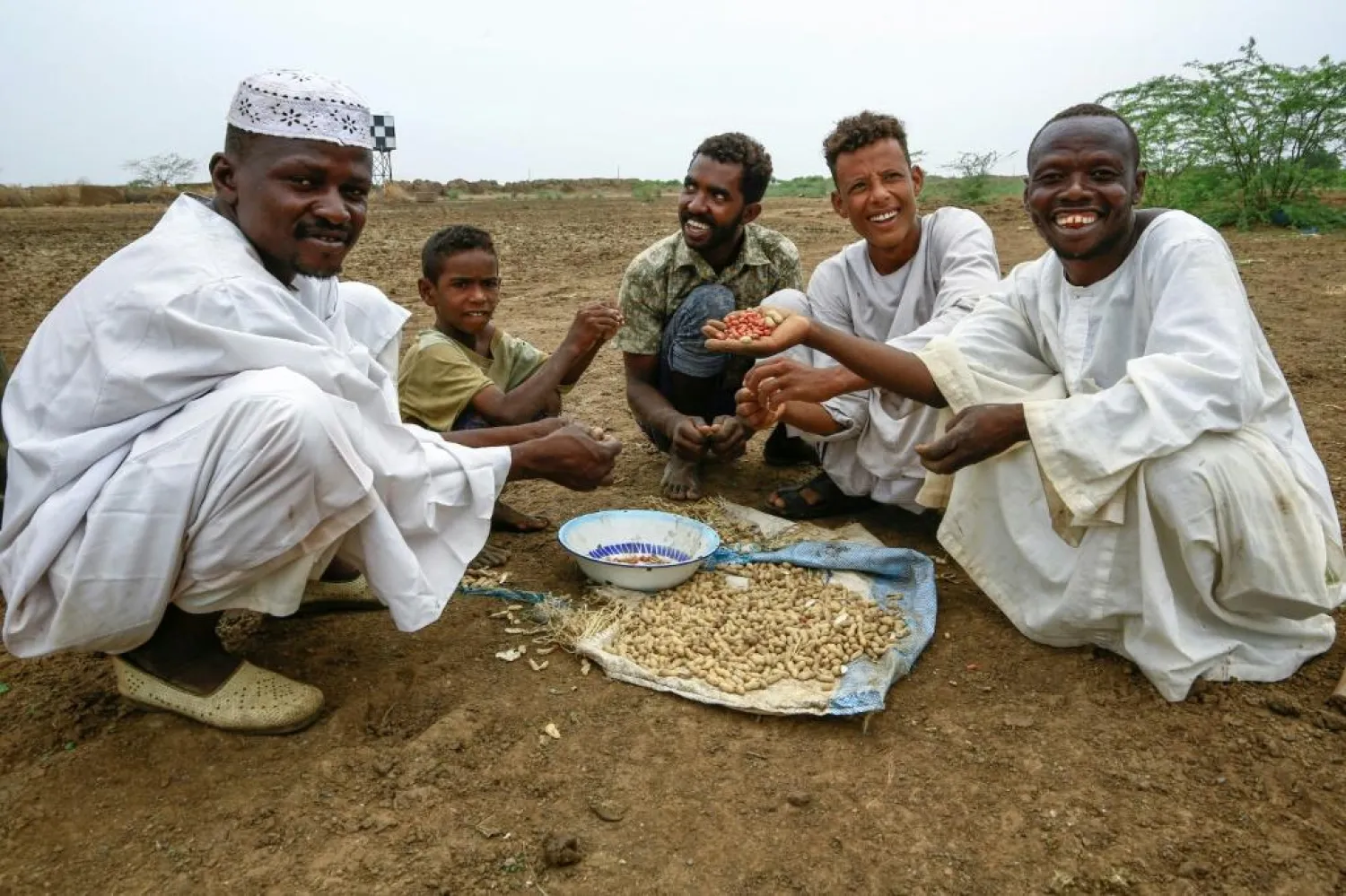
Sudan is hoping the Paris conference will attract a flood of badly-needed foreign investment into such sectors as agriculture, energy and telecommunications after it was removed from the US blacklist of state sponsors of terrorism - AFP
TT

Sudan PM Hopes to Settle $60b Foreign Debt This Year

Sudan is hoping the Paris conference will attract a flood of badly-needed foreign investment into such sectors as agriculture, energy and telecommunications after it was removed from the US blacklist of state sponsors of terrorism - AFP

Prime Minister Abdalla Hamdok hopes Sudan can wipe out its staggering $60 billion foreign debt bill this year by securing relief and deals at an upcoming Paris conference that could bring much-needed investment.

The seasoned UN economist-turned-premier took office at the head of a transitional government shortly after the 2019 ouster of president Omar al-Bashir whose three-decade iron-fisted rule was marked by economic hardship, deep internal conflicts, and biting international sanctions.

In the past two years, Hamdok and his government have pushed to rebuild the crippled economy and end Sudan's international isolation.

"We have already settled the World Bank arrears, those of the African Development Bank, and in Paris, we will be settling the International Monetary Fund arrears," Hamdok told AFP at his office in Khartoum.

Arrears due to the African Development Bank were cleared through a bridging loan worth $425 million from Sweden, Britain and Ireland, while debts to the World Bank were paid off with a $1.1 billion bridging loan from the US.

"Paris also is home to the Paris Club, our biggest creditors... and we will be discussing debt relief with them," Hamdok said.

Sudan's debts to the Paris Club, which includes major creditor countries, is estimated to make up around 38 percent of its total $60 billion foreign debt.

Hamdok and top Sudanese officials will be attending Monday's Paris conference along with by French President Emmanuel Macron, and World Bank and IMF representatives.

The aim is to draw investments to Sudan including in the energy, infrastructure, agriculture and telecommunications sectors.

"We are going to the Paris conference to let foreign investors explore the opportunities for investing in Sudan," Hamdok said.

"We are not looking for grants or donations."

Sudan was taken off Washington's blacklist of state sponsors of terrorism in December, removing a major hurdle to foreign investment.

The government has also embarked on tough measures including subsidy cuts and introducing a managed currency float to qualify for an IMF debt relief program.

Though widely unpopular, the premier says the measures were necessary to move towards debt relief "by the end of the year".

But many challenges still lie ahead.

His government has been pushing to forge peace with rebel groups to end conflicts in far-flung regions.

In October, it signed a landmark peace deal with rebels from the western region of Darfur as well the southern states of South Kordofan and Blue Nile.

Only two groups including one which wields substantial power in Darfur refused to sign the deal.

To Hamdok, the peace deal represents "50 percent on the road to peace".

Efforts are underway to sign deals with the remaining groups, and talks with a faction of the Sudan People's Liberation Movement-North (SPLM-N) are slated for later this month.

Hamdok acknowledged the slow pace of implementing the peace deal, but said Sudan is "steadily moving forward".

In February, Sudan appointed three ex-rebels to the ruling sovereign council and announced a new transitional cabinet including seven ex-rebels.

"We have come a long way... and in my view the second stage of talks will go much faster."

Simmering tensions with neighboring Ethiopia over a fertile border region and a gigantic dam on the Blue Nile pose another challenge.

Downstream Sudan and Egypt have been locked in inconclusive talks with Ethiopia seeking a binding deal over the filling and operation of its hydro-power barrage which broke ground in 2011.

Cairo views the dam as an existential threat to its water supply, while Khartoum fears its dams would be overwhelmed if Ethiopia fills the giant reservoir without a deal.

Sudanese officials this week met with US special envoy for the Horn of Africa Jeffrey Feltman and President Felix Tshisekedi, of the Democratic Republic of the Congo, who is also the chair of the African Union to discuss the dispute.

"The proposal of Congo's president is not far from Sudan's suggestion of a quartet mediation," Hamdok said, without elaborating.

In February, Khartoum proposed mediation by a quartet of the AU, European Union, UN and United States. The proposal was welcomed by Cairo, but rejected by Addis Ababa.

Ethiopia has already completed its first-year filling target for the dam and plans to proceed with the second stage regardless of any deal.

Sudanese-Ethiopian relations have also soured over Al-Fashaqa, a fertile border region where Ethiopian farmers have long cultivated land claimed by Sudan. The two sides have recently traded accusations of violence and territorial violations.

"For us, the maps are marked and the land is not even disputed," Hamdok noted, adding Sudan is considering a United Arab Emirates investment initiative in the region.

But he hopes relations will improve. "All our issues can be resolved through dialogue," he insisted.



India, Malaysia Renew Pledges to Boost Trade and Collaboration

Malaysia's Prime Minister Anwar Ibrahim shakes hands with India's Prime Minister Narendra Modi in Putrajaya on February 8, 2026. (Photo by Hasnoor Hussain / POOL / AFP)
TT

India, Malaysia Renew Pledges to Boost Trade and Collaboration

Malaysia's Prime Minister Anwar Ibrahim shakes hands with India's Prime Minister Narendra Modi in Putrajaya on February 8, 2026. (Photo by Hasnoor Hussain / POOL / AFP)

India's Prime Minister Narendra Modi and his Malaysian counterpart Anwar Ibrahim renewed pledges on Sunday to bolster trade and explore potential collaborations in semiconductors, defense and other fields.

Modi is on a two-day visit to the Southeast Asian nation, his first since the two countries elevated ties to ⁠a comprehensive strategic partnership in August 2024.

Anwar said the partnership included deep collaborations in multiple fields, including trade and investments, food security, defense, healthcare and tourism.

"It's really comprehensive, and we believe ⁠that we can advance this and execute in a speedy manner with the commitment of our both governments," he told a press conference after hosting Modi at his official residence in the administrative capital Putrajaya.

Following their meeting, Anwar and Modi also witnessed the exchange of 11 cooperation agreements, including ⁠on semiconductors, disaster management and peacekeeping, Reuters reported.

Anwar said India and Malaysia would continue efforts to promote the use of local-currency settlement for cross-border activities and expressed hope that bilateral trade would surpass last year's $18.6 billion.

Malaysia will also support India's efforts to open a consulate in Malaysia's Sabah state on Borneo island, Anwar said.


Saudi Arabia, Syria Sign Joint Airline and Telecoms Deals

Officials pose after signing a framework agreement for developmental cooperation and the launch of 45 development initiatives between the Syrian Development Fund and Saudi Arabia's Development Committee at the People's Palace in Damascus, Syria, Saturday, Feb. 7, 2026. (AP)
TT

Saudi Arabia, Syria Sign Joint Airline and Telecoms Deals

Officials pose after signing a framework agreement for developmental cooperation and the launch of 45 development initiatives between the Syrian Development Fund and Saudi Arabia's Development Committee at the People's Palace in Damascus, Syria, Saturday, Feb. 7, 2026. (AP)

Syria and Saudi Arabia signed deals Saturday that include a joint airline and a $1-billion project to develop telecommunications, officials said, as Syria seeks to rebuild after years of war.

The new authorities in Damascus have worked to attract investment and have signed major agreements with several companies and governments.

Syrian Investment Authority chief Talal al-Hilali announced a series of deals including "a low-cost Syrian-Saudi airline aimed at strengthening regional and international air links".

The agreement also includes the development of a new international airport in the northern city of Aleppo, and redeveloping the existing facility.

Hilali also announced an agreement for a project called SilkLink to develop Syria's "telecommunications infrastructure and digital connectivity".

Syrian Telecommunications Minister Abdulsalam Haykal told the signing ceremony that the project would be implemented "with an investment of around $1 billion".

For decades, Syria was unable to secure significant investments because of Assad-era sanctions.

But the United States fully removed its remaining sanctions on Damascus late last year, paving the way for the full return of investments.

Syria and Saudi Arabia also inked an agreement on water desalination and development cooperation on Saturday.

At the ceremony, Saudi Investment Minister Khalid Al-Falih announced the launch of an investment fund for "major projects in Syria with the participation of the (Saudi) private sector".

The deals are part of "building a strategic partnership" between the two countries, he said.

Syria's Hilali said the agreements targeted "vital sectors that impact people's lives and form essential pillars for rebuilding the Syrian economy".

Syria has begun the mammoth task of trying to rebuild its shattered infrastructure and economy.

In July last year, Riyadh signed investment and partnership deals with Damascus valued at $6.4 billion to help rebuild the country's infrastructure, telecommunications and other major sectors.

A month later, Syria signed agreements worth more than $14 billion, including investments in Damascus airport and other transport and real estate projects.

This week, Syria signed a preliminary deal with US energy giant Chevron and Qatari firm Power International to explore for oil and gas offshore.


India’s Modi Lauds Interim Trade Pact After US Tariff Rollback

Indian Prime Minister Narendra Modi addresses the media before the budget session of Parliament at Parliament House in New Delhi, India, 29 January 2026. (EPA)
TT

India’s Modi Lauds Interim Trade Pact After US Tariff Rollback

Indian Prime Minister Narendra Modi addresses the media before the budget session of Parliament at Parliament House in New Delhi, India, 29 January 2026. (EPA)

Indian Prime Minister Narendra Modi on Saturday hailed an interim trade agreement with the United States, saying it would bolster global growth and deepen economic ties between the two countries.

The pact cuts US "reciprocal" duties on Indian products to 18 percent from 25 percent, and commits India to large purchases of US energy and industrial goods.

US President Donald Trump, while announcing the deal Tuesday, had said Modi promised to stop buying Russian oil over the war in Ukraine.

The deal eases months of tensions over India's oil purchases -- which Washington says fund a conflict it is trying to end -- and restores the close ties between Trump and the man he describes as "one of my greatest friends."

"Great news for India and USA!" Modi said on X on Saturday, praising US President Donald Trump's "personal commitment" to strengthening bilateral ties.

The agreement, he said, reflected "the growing depth, trust and dynamism" of their partnership.

Modi's remarks came hours after Trump issued an executive order scrapping an additional 25 percent levy imposed over New Delhi's purchases of Russian oil, in a step to implement the trade deal announced this week.

Modi, who has faced criticism at home about opening access of Indian agricultural markets to the United States and terms on oil imports, did not mention Russian oil in his statement.

"This framework will also strengthen resilient and trusted supply chains and contribute to global growth," he said.

It would also create fresh opportunities for Indian farmers, entrepreneurs and fishermen under the "Make in India" initiative.

In a separate statement, Commerce Minister Piyush Goyal said the pact would "open a $30 trillion market for Indian exporters".

Goyal also said the deal protects India's sensitive agricultural and dairy products, including maize, wheat, rice, soya, poultry and milk.

Other terms of the agreement include the removal of tariffs on certain aircraft and parts, according to a separate joint statement released Friday by the White House.

The statement added that India intends to purchase $500 billion of US energy products, aircraft and parts, precious metals, tech products and coking coal over the next five years.

The shift marks a significant reduction in US tariffs on Indian products, down from a rate of 50 percent late last year.

Washington and New Delhi are expected to sign a formal trade deal in March.