Forced Wedlock in Houthi-run Territories Raises Humanitarian Concerns
A Yemeni girl awaits humanitarian aid supplies given by the Russian humanitarian relief mission in a camp on the outskirts of the capital Sanaa on March 16, 2017. (AFP)
Forced Wedlock in Houthi-run Territories Raises Humanitarian Concerns
A Yemeni girl awaits humanitarian aid supplies given by the Russian humanitarian relief mission in a camp on the outskirts of the capital Sanaa on March 16, 2017. (AFP)
Houthi coup militias in Yemen are forcing civilian families to hand over their children in compulsory marriages involving its commanders, activists told Asharq Al-Awsat, confirming that around 105 cases of forcible wedlock were documented over the last two years.
Yemeni girls living in insurgency-held areas in governorates of Ibb, Hajjah, Dhmar, Al Mahwit, Raymah, Hodeidah, and the capital, Sanaa, are pressured into marrying Houthi officers under the threat of losing their relatives.
Hundreds of families have been affected by the brutish Houthi wedlock policy, especially in Ibb and Hajjah, women rights activists reported.
Speaking under the conditions of anonymity for safety reasons, activists documented 31 accounts of forced marriages in Ibb, 26 in Hajjah, 14 in Raymah governorate, 12 in Hodeidah, 9 in Dhamar, 5 in Al Mahwit, and 3 in Sanaa’s countryside.
Objectors also alleged that hundreds of other cases have gone undocumented as parents were threatened at gunpoint to keep quiet against the inhumane practice.
Reported cases were based on testimonies collected from territories under the Iran-backed guerrillas’ grip.
“Since it waged a nationwide coup and captured Sanaa and other cities, the Houthi insurgency failed in imposing alien rituals, customs and traditions and beliefs on Yemenis,” human rights activist S.B. told Asharq Al-Awsat.
This failure, according to S.B., compelled Houthis to regress to other methods to please its officers, like offering them Yemeni girls through “forced marriages.”
“There are stories in general that tell the extent of the suffering endured by the fathers of many girls who were forced to marry Houthi supervisors,” they said, revealing that the ages of the girls wedded by force varied between 13 and 22 years old.
In mid-2016, Houthis kidnapped a girl in the Radmah district, nestled east of Ibb, and forced another girl to marry a prominent Houthi leader in the southern governorate.
During the nearly three-hour session, the judge read the investigation findings, which were also shown on a screen, including the suspects' testimonies (INA)
During the nearly three-hour session, the judge read the investigation findings, which were also shown on a screen, including the suspects' testimonies (INA)
Six French nationals went on trial on Sunday, as Iraq moves to prosecute thousands of suspected ISIS members.
Iraq's prisons, already packed with ISIS suspects, have received thousands more detainees transferred since last year from Syria.
The trial of the six French nationals began on Sunday morning.
An AFP correspondent in the courtroom reported that the judge set the next hearing for October 5.
During the nearly three-hour session, the judge read the investigation findings, which were also shown on a screen, including the suspects' testimonies.
The investigation found that they joined ISIS after travelling first to Turkey and then Syria.
The judge then inquired about their legal representation before setting the new hearing date.
The suspects include Charlie Sun, Kamel Ben Mbarak, Najib Megherbi, Mehdi Ismael and Ibrahim Azahaf, who arrived in Syria when he was 14 years old, according to their French lawyers.
Among them was also Noureddine El Mansouri, who was stripped of his French nationality in June 2026, though the decision is still under appeal.
The suspects are part of a group of 47 French citizens transferred from Syria last year.
The larger group includes Adrien Guihal, who claimed responsibility for the 2016 Nice attack for ISIS.
The group swept across Syria and Iraq in 2014, committing massacres and forcing women and girls into sexual slavery.
French lawyers on Thursday urged the repatriation of the French nationals detained in Iraq, warning that they could face the death penalty.
In February, over 5,700 ISIS detainees from more than 60 countries were transferred to Iraq by the United States, after years held in Syrian prisons overseen by Kurdish-led forces.
Among them were at least five French nationals, some of whom were minors when their parents joined ISIS.
Earlier this month, Iraq's judiciary said it had completed their interrogation and that the cases would proceed to trial.
It added that more than 450 Syrians would be released after investigations found no evidence warranting legal action against them.
In April, Iraq handed over two detained foreigners, from Finland and the United States, to their countries after they were cleared of suspicion.
Israeli Man Critically Wounded in West Bank Shootinghttps://english.aawsat.com/arab-world/5320396-israeli-man-critically-wounded-west-bank-shooting
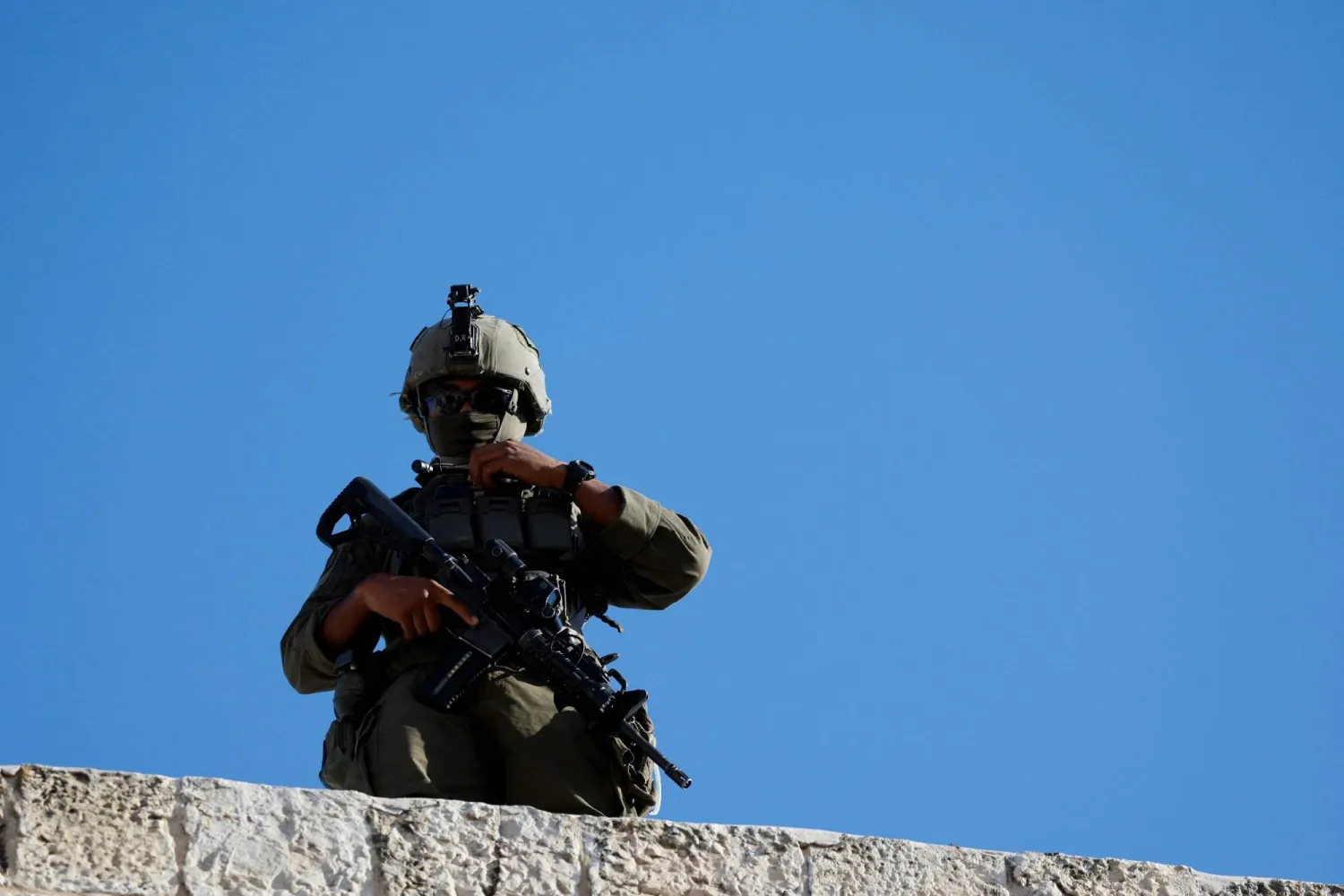
A member of Israeli forces stands guard during Israeli settlers' weekly tour in Hebron, in the Israeli-occupied West Bank, September 19, 2026. REUTERS/Mussa Qawasma
Israeli Man Critically Wounded in West Bank Shooting
A member of Israeli forces stands guard during Israeli settlers' weekly tour in Hebron, in the Israeli-occupied West Bank, September 19, 2026. REUTERS/Mussa Qawasma
A 30-year-old Israeli man was critically wounded in a shooting attack in the northern West Bank on Sunday morning, hours before the Yom Kippur holiday, which is widely considered the holiest day in the Jewish calendar.
The Israeli military said the attacker opened fire from a vehicle and then fled on foot.
The military set up several roadblocks in the area.
Prior to the attack, Israeli troops carried out a large counterterrorism operation in the northern West Bank town of Al-Mughayyir. Palestinian officials said at least 28 people were detained.
Tensions have surged in the West Bank and extremist Israeli settler attacks against Palestinians have increased exponentially, emboldened by right-wing, ultra-nationalist politicians in Israel's government.
US Withdrawal Fears Grip Baghdadhttps://english.aawsat.com/arab-world/5320327-us-withdrawal-fears-grip-baghdad
An American helicopter flies near the Harir Air Base in Erbil, Iraqi Kurdistan (Rudaw file photo)
The Sept. 30 withdrawal of US forces will mark Iraq’s shift toward full security self-reliance and remove any justification for armed activity outside state control, the spokesman for the commander-in-chief of Iraq’s armed forces said on Saturday.
The transition would “eliminate any justification for operating outside state institutions and give those institutions the security and legitimacy needed to disarm unofficial groups,” Sabah al-Numan told the state news agency.
“The professional performance of the Iraqi armed forces has proven that they are the impenetrable shield protecting political decision-making and the primary guarantor of Iraq’s unity and national stability,” he said.
But the upcoming withdrawal has stirred fears in Baghdad, rattling markets and reviving concerns over the fate of armed factions. Sources close to the government say the warnings circulating publicly are exaggerated.
The Iraqi government and allied political forces are preparing to declare the withdrawal date a “day of Iraqi sovereignty.”
Much of the unease, however, centers on the possible repercussions of bringing weapons under state control — an initiative that Iraqi politicians say may be recast as a “plan to regulate and manage weapons.”
Qasim al-Araji, the prime minister’s national security adviser, said the government would regard anyone who continued to carry weapons illegally after the process was completed as an outlaw.
“Strict measures will be taken against them, potentially including treating them as terrorists,” al-Araji said in televised remarks.
He denied reports that the committee overseeing the process had been given a deadline, saying no timeframe had been set.
Al-Araji said the committee, formed by the Coordination Framework alliance, was working under the prime minister’s direct supervision.
Legal action against those carrying illegal weapons would begin only after the committee had completed its work and arms had been brought fully under state control, he added.
Government spokesman Haider al-Aboudi called Sept. 30 “a sovereign milestone” that would shift Iraq’s relationship with international coalition members toward bilateral ties based on respect for sovereignty and mutual interests.
The government was proceeding with plans to end the coalition’s military mission according to the agreed timetable and mechanisms, al-Aboudi told the state news agency.
“Iraq possesses the constitutional, political and diplomatic tools needed to manage its national security through its institutions and armed forces,” he said.
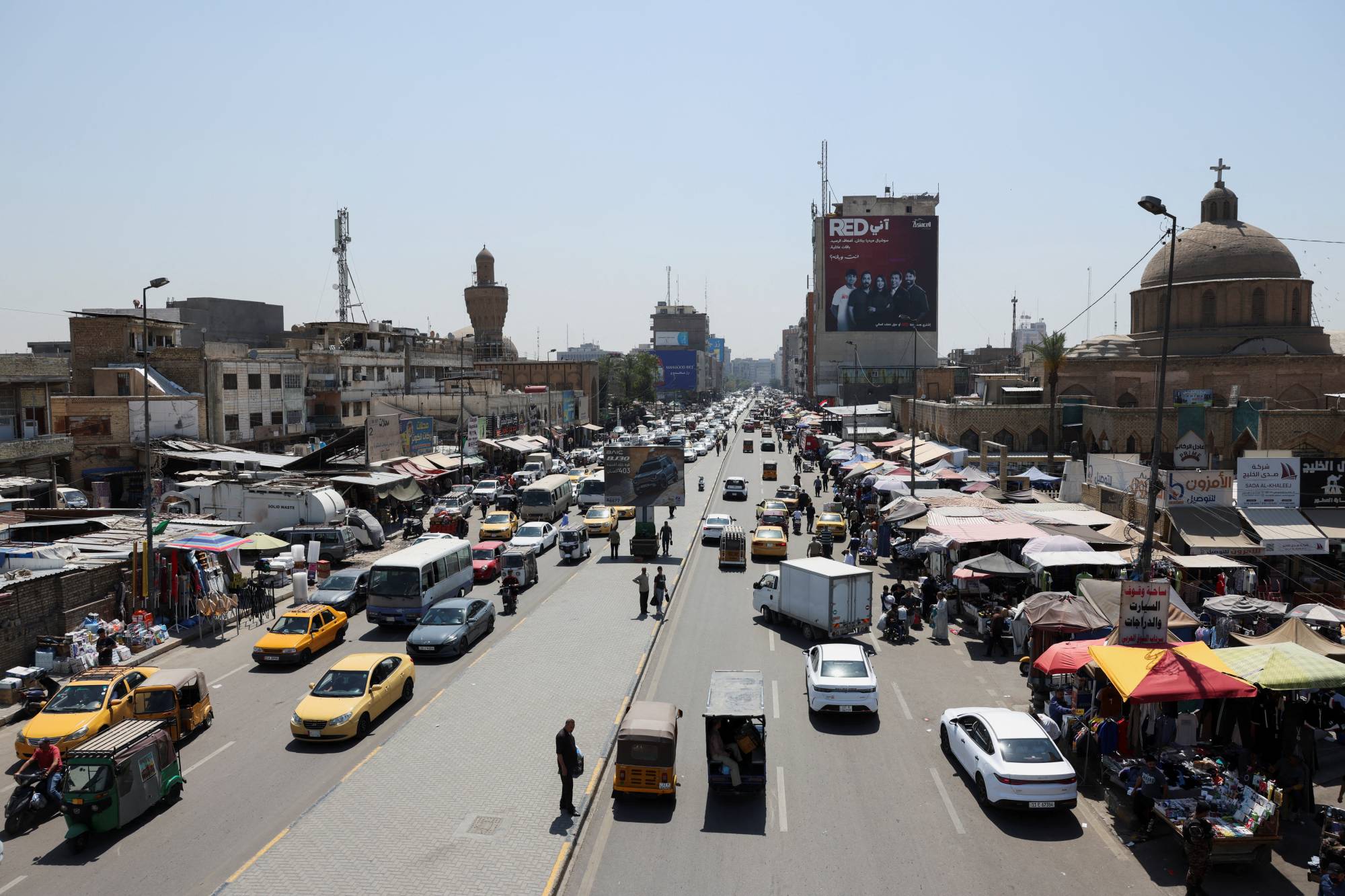
Al-Shorja wholesale market in central Baghdad, Iraq (Reuters)
Fears of sanctions
Despite repeated government assurances, religious leaders and experts have warned of possible repercussions after the withdrawal.
Abdul Wahab al-Samarrai, imam and preacher of Baghdad’s Abu Hanifa al-Numan Mosque, raised the prospect of economic sanctions resembling those tightened against Iraq in the 1990s.
“We sent a message to our government and its prime minister that this country and its people are a trust for which they are responsible,” al-Samarrai said.
“Honoring that trust requires placing the interests of the country and its people above those of groups and individuals.”
“Some are talking about economic sanctions and recalling the days of the embargo,” he added. “We therefore urge officials not to gamble with the country’s fate or place the wishes of some Iraqis above the interests of everyone.”
Concern has largely focused on whether efforts to bring weapons under state control could falter. Many link the risk of regional isolation or sanctions to failure, while political forces and armed factions have publicly rejected attempts to disarm them.
Sadr al-Din al-Qubanji, the imam and Friday preacher in Najaf, warned that “any political or security unrest in Iraq would trigger a crisis across the entire region and destabilize the global economy.”
“These issues must therefore be addressed rationally,” he said.
Politicians close to the government, however, said the public warnings were exaggerated, including reports that Washington and Baghdad had exchanged messages over possible sanctions.
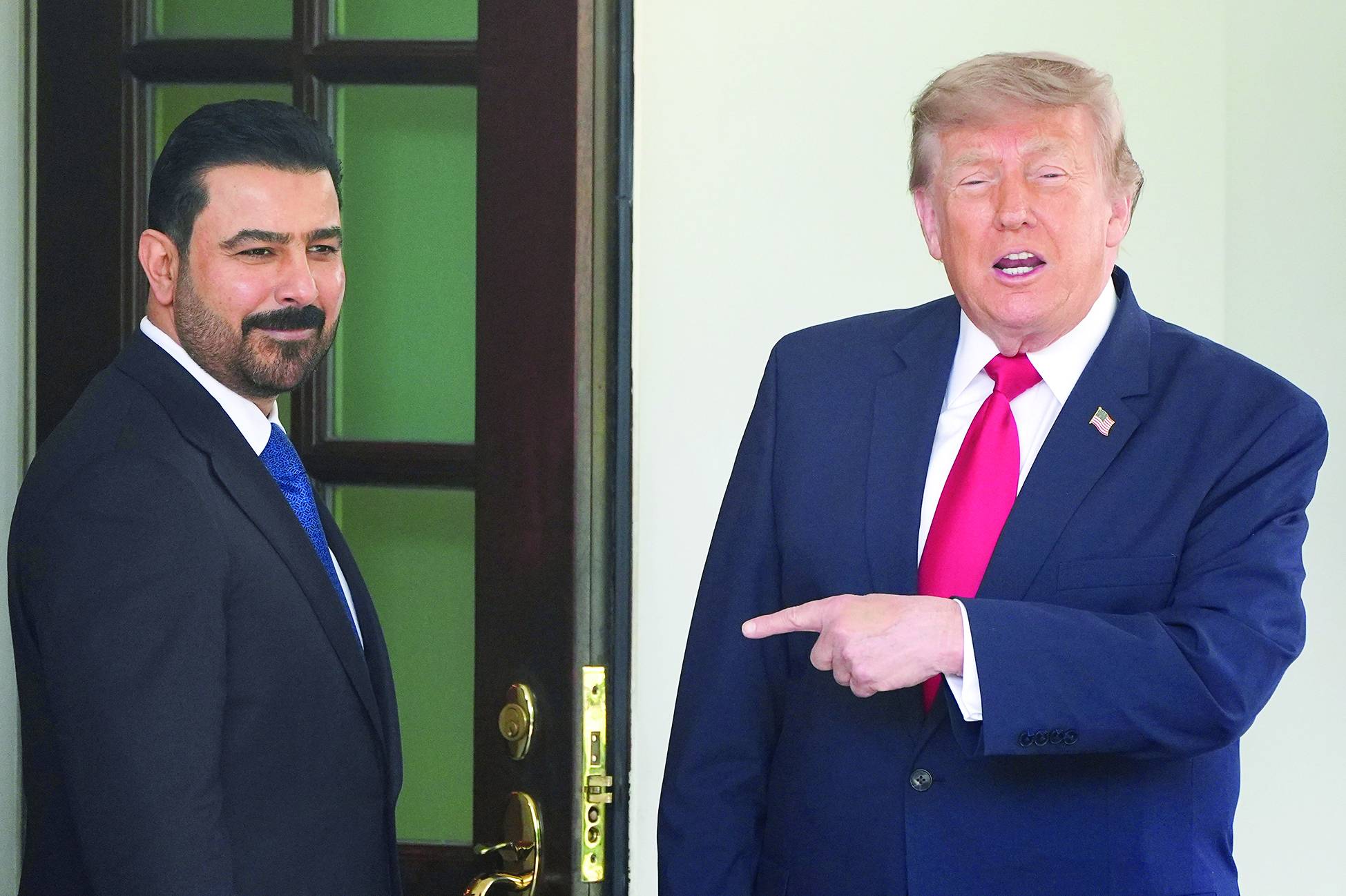
President Donald Trump, gestures as he greets Iraq's Prime Minister Ali al-Zaidi at the White House, Tuesday, July 14, 2026, in Washington.(AP Photo/Alex Brandon)
Dollar rises as markets slow
The conflicting messages come as stagnation grips local markets, according to domestic trade organizations.
Eco Iraq, an economic monitoring group, said the dollar had risen to unprecedented levels against the dinar on the parallel market.
“The current increase is not linked to a single factor but is the result of an interplay of economic, financial and psychological factors,” it said in a statement.
The group cited speculation on the parallel market, where traders have capitalized on rising demand for dollars and shrinking supply.
“Fears and speculation related to developments after Sept. 30, discussions surrounding bringing weapons under state control and claims of possible US sanctions are increasing market uncertainty and prompting some traders to raise their demand for dollars,” it said.
The parallel exchange rate has climbed above 162,000 Iraqi dinars per $100 in recent days. Observers said the rise had disrupted trade in goods, compounding repercussions that have persisted for months since the outbreak of the US-Iran conflict.
Traders in Baghdad, Erbil and Basra told Asharq Al-Awsat that buying and selling had fallen to unprecedented levels, forcing some businesses to close until further notice.
Meanwhile, Prime Minister Ali al-Zaidi plans to travel to the United States for the United Nations General Assembly after ending a European tour that took him to France and Germany.
His schedule could include a meeting with US President Donald Trump, although authorities in Washington and Baghdad have yet to confirm one.
لم تشترك بعد
انشئ حساباً خاصاً بك لتحصل على أخبار مخصصة لك ولتتمتع بخاصية حفظ المقالات وتتلقى نشراتنا البريدية المتنوعة