


US Scientists Convert Paralyzed Man's Brain Waves to Speech

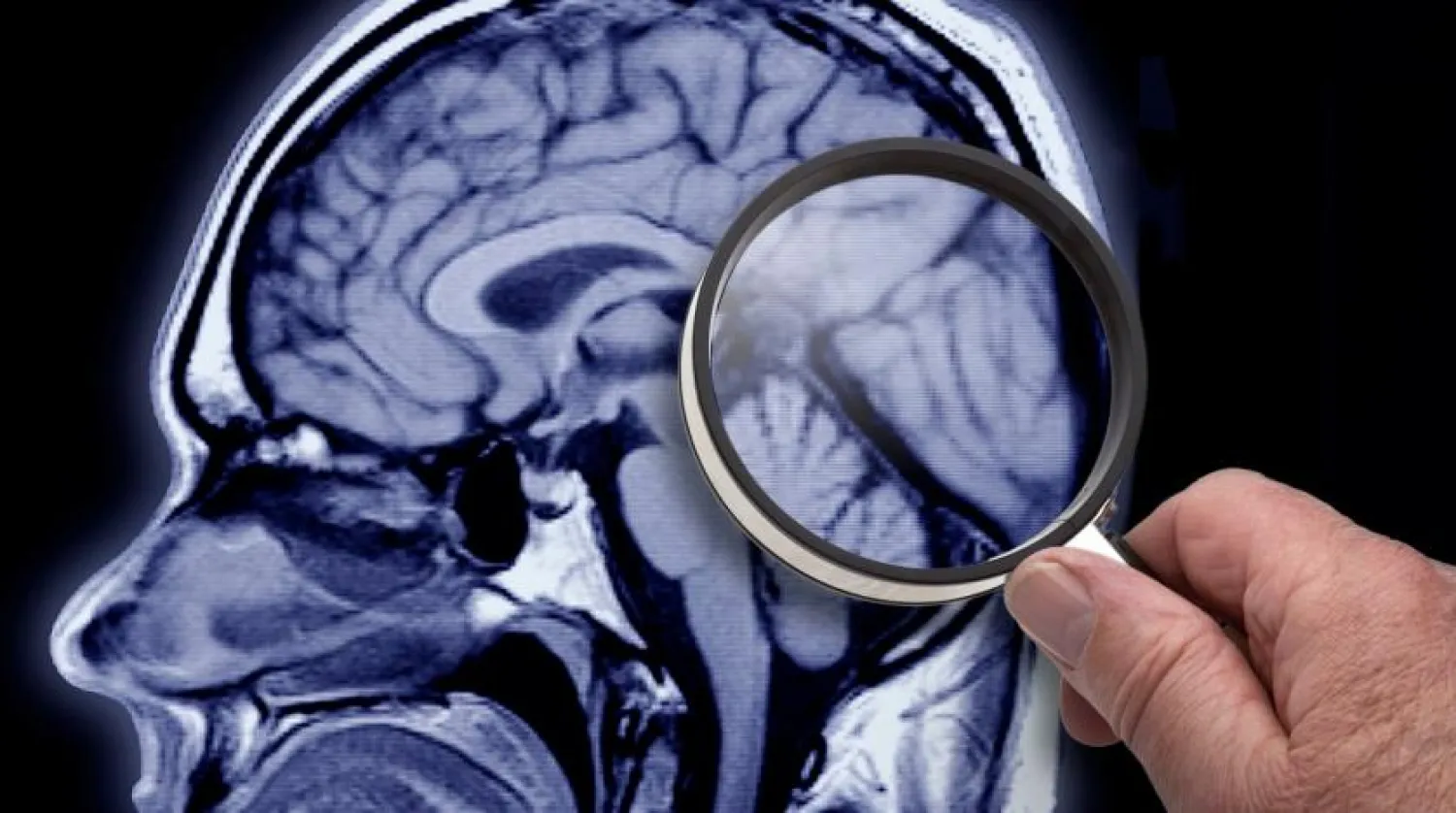
Examining the mind. Getty images
TT

US Scientists Convert Paralyzed Man's Brain Waves to Speech

Examining the mind. Getty images

In a world first, US researchers have developed a neuroprosthetic device that successfully translated the brain waves of a paralyzed man into complete sentences, according to a scientific paper published Thursday.

"This is an important technological milestone for a person who cannot communicate naturally," said David Moses, a postdoctoral engineer at the University of California San Francisco (UCSF), and one of the lead authors of the study in the New England Journal of Medicine.

"It demonstrates the potential for this approach to give a voice to people with severe paralysis and speech loss."

The breakthrough involved a 36-year-old man who had a stroke when he was 20 that left him with anarthria -- the inability to speak intelligibly, though his cognitive function had remained intact, reported Agence France-Presse.

Every year, thousands of people lose the ability to talk due to strokes, accidents or disease.

Past research in this area has focused on reading brain waves via electrodes to develop mobility prosthetics that allow users to spell out letters.

The new approach was intended to enable more rapid and organic communication.

UCSF researchers had previously placed electrode arrays on patients with normal speech who were undergoing brain surgery, to decode the signals that control the vocal tract in order to express vowels and consonants, and were able to analyze the patterns to predict words.

But the concept hadn't been tried out on a paralyzed patient to prove it could offer clinical benefit.

- 'Feat of neuroengineering' -
The team decided to launch a new study called Brain-Computer Interface Restoration of Arm and Voice, and the first participant asked to be referred to as BRAVO1.

Since suffering a devastating brainstem stroke, BRAVO1 has had extremely limited head, neck, and limb movements, and communicates by using a pointer attached to a baseball cap to poke letters on a screen.

The researchers worked with BRAVO1 to develop a 50-word vocabulary with words essential to his daily life like "water," "family," and "good," then surgically implanted a high-density electrode over his speech motor cortex.

Over the next several months, the team recorded his neural activity as he attempted to say the 50 words, and used artificial intelligence to distinguish subtle patterns in the data and tie them to words.

To test it had worked, they presented him with sentences constructed from the vocabulary set, and recorded the results on a screen.

They then prompted him with questions like "How are you today?" and "Would you like some water?" which he was able to answer with responses like, "I am very good," and "No, I am not thirsty."

The system decoded up to 18 words per minute with a median accuracy of 75 percent. An "auto-correct" function, similar to that used in phones, contributed to its success.

"To our knowledge, this is the first successful demonstration of direct decoding of full words from the brain activity of someone who is paralyzed and cannot speak," said BRAVO1's neurosurgeon Edward Chang, a co-author.

An accompanying editorial in the journal hailed the development as "a feat of neuroengineering," and suggested advancements in technology such as smaller surface electrodes might help improve accuracy even further.



More Than 10.7 Million Worshippers Visit Prophet’s Mosque in First 10 Days of Ramadan

More than 10.7 million worshippers visit Prophet’s mosque in first 10 days of Ramadan. (SPA)
TT

More Than 10.7 Million Worshippers Visit Prophet’s Mosque in First 10 Days of Ramadan

More than 10.7 million worshippers visit Prophet’s mosque in first 10 days of Ramadan. (SPA)

The General Authority for the Care of the Affairs of the Grand Mosque and the Prophet’s Mosque announced that 10,789,467 worshippers visited the Prophet’s Mosque during the first 10 days of Ramadan 1447 AH, performing the five daily prayers and Taraweeh amid a comprehensive and well-coordinated service system.

According to the authority, 317,025 worshippers prayed in the Rawdah Sharifah during the same period, while 784,379 visitors conveyed their greetings to Prophet Muhammad (peace be upon him) and his two companions.

The authority emphasized that these figures reflect the effectiveness of an integrated operational plan designed to manage crowds, streamline worship procedures, and ensure the highest standards of safety and comfort for visitors throughout the holy month of Ramadan.


Wadi Al-Aqiq in Madinah Blends Spiritual, Natural Appeal

Wadi Al-Aqiq was famed for the quality and sweetness of its water (SPA)
TT

Wadi Al-Aqiq in Madinah Blends Spiritual, Natural Appeal

Wadi Al-Aqiq was famed for the quality and sweetness of its water (SPA)

Wadi Al-Aqiq in Saudi Arabia's Madinah region stands out as one of the area’s most significant geographical and tourist landmarks, known for its striking terrain and the sweetness of its water.

The valley draws much of its fame from its association with the Prophet Muhammad, peace be upon him, and is known as the “Blessed Valley,” based on his saying: "Tonight there came to me a visitor from Allah, saying: 'Pray in this blessed valley.'"

Although several valleys across the Arabian Peninsula share the same name, Wadi Al-Aqiq remains the most renowned.

According to a report by the Saudi Press Agency (SPA), the valley was famed for the purity of its water, to such an extent that some Umayyad caliphs transported it to Damascus.

At the time, it was likened to the “Ghouta of Damascus” for its dense trees and lush greenery. Several of the Prophet’s companions settled along its banks, including Abu Hurairah and Saied bin Al-Aas.

They died there and were later carried to Madinah. Among the successors, Urwa bin Al-Zubayr and Sukaynah bint Al-Hussein had palaces in the valley, some of which remain standing today.

Wadi Al-Aqiq is now undergoing rehabilitation and development overseen by Al Madinah Region Development Authorityand related bodies.

The project stretches nearly 15 kilometers, from the Miqat Dhi Al-Hulayfah, south of Madinah, to Al-Jurf, in the north, aiming to balance urban growth with natural resources.

Works span key sites along the valley, including Qasr Urwa, the Al-Salam Road intersection, the Islamic University Square and the agricultural areas of Al-Jurf.

The projects are part of broader efforts to improve Madinah’s urban landscape and introduce environmentally friendly developments that enhance the city’s visual appeal.

The Wadi Al-Aqiq walkway has emerged as a leading destination for walking and recreation in Madinah, thanks to its distinctive natural setting.

Extending about 1,500 meters, it overlooks the “Blessed Valley,” mentioned in the Prophet’s traditions, giving it spiritual and historical weight that attracts visitors interested in religious and nature tourism.

Designed to blend with its surroundings, the walkway features prepared paths, seating areas overlooking the valley and shade trees lining the route. A modern lighting system enhances safety and highlights the site’s beauty at night.


Contrary to Jurassic Park Movie, T-Rex Dinosaur Ran on Tip-Toes

Rather than stomping heel-first, T-rex may have actually tip-toed as it roamed around on its giant feet (Shutterstock)
TT

Contrary to Jurassic Park Movie, T-Rex Dinosaur Ran on Tip-Toes

Rather than stomping heel-first, T-rex may have actually tip-toed as it roamed around on its giant feet (Shutterstock)

Ever since the release of the blockbuster Jurassic Park, the Tyrannosaurus rex has been associated with ground shaking tremors as it moved.

But in fact, rather than stomping heel-first, the prehistoric beast may have actually tip-toed as it roamed around on its giant feet, a study has found.

And it may have moved 20% faster than previously thought, the experts claim, at a speed fast enough to beat Usain Bolt.

The findings, published in the journal Royal Society Open Science, contradict previous theories on how the extinct species moved, according to The Independent.

Earlier analysis of T-rex footprints suggested their heels struck the ground first.

However, the team of scientists have now gathered data on T-rex anatomy to find that they have more in common with how birds walk. They said that the T-rex had a “very bird-like gait defined by higher stride frequencies” and moved with “elevated speeds.”

According to the researchers model, a T-rex that weighed about 1.4 tons and could have reached a top speed of 11.4 meters per second - meaning it could run 100 meters in 8.77 seconds.

In comparison, world record holder Usain Bolt ran 100 meters in 9.58 seconds.

A bigger T-rex, weighing 6.5 tons would still be able to move at 9.5 meters per second, the study found.

Study authors concluded that their study represents the first quantitative biomechanical analysis of the effects of foot-strike patterns on the gait of Tyrannosaurus.

A separate fossil study has recently revealed T-rex grew much more slowly than previously thought, taking several decades to reach their full size of around eight tons.

The study of 17 tyrannosaur specimens, ranging from early juveniles to massive adults, has revealed that the king of carnivores took 40 years to reach their full size.