Jordan Foils ISIS Plot to Kill Israeli Soldiers

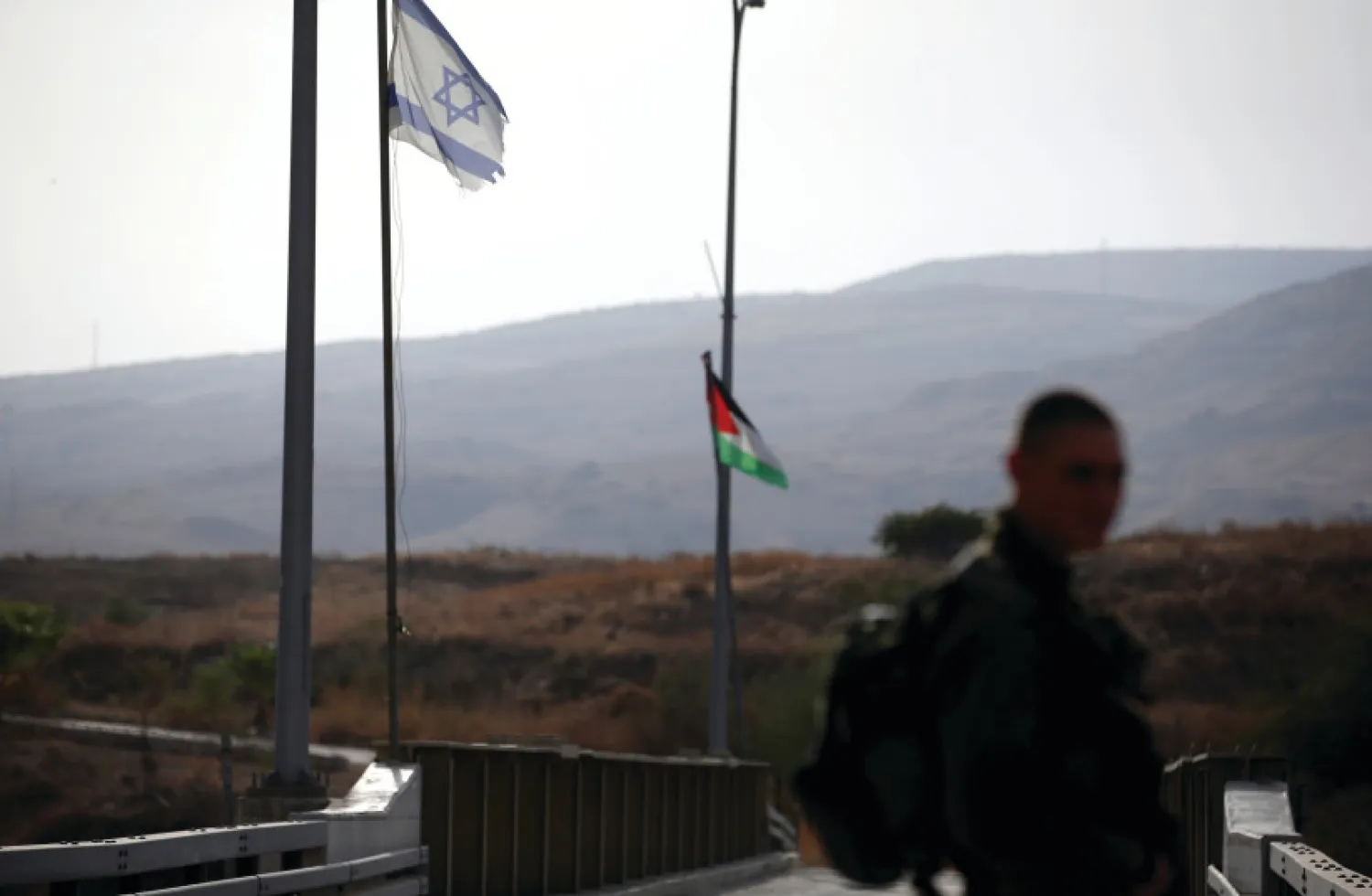
An Israeli soldier patrols the border area between Israel and Jordan at Naharayim, as seen from the Israeli side. Reuters file photo
TT

Jordan Foils ISIS Plot to Kill Israeli Soldiers

An Israeli soldier patrols the border area between Israel and Jordan at Naharayim, as seen from the Israeli side. Reuters file photo

The Jordanian security apparatuses have foiled an ISIS plot to kill Israeli forces stationed at the border with the Palestinian Territories, precisely in the Ghor es-Safi area, south of the capital Amman, a local newspaper revealed Tuesday.

Four ISIS members were arrested for being in connection with the planned attack. The suspects intended to first attack Jordanian soldiers near the border with Israel before reaching Israeli troops and killing them.

The Jordanian newspaper Al-Rai reported Tuesday that Jordanian prosecutors issued an indictment against the four ISIS members, charging them of conspiring to commit an act of terror and propagating the ideology of a terror organization.

Three members of the cell were arrested in February, while the fourth was apprehended at the end of 2020.

The newspaper said that while preparing for the attack, the four members held several meetings in the Jordanian city of Karak, south of Amman, and near the border with the occupied Palestinian territories, and in the city of Irbid, located north of the capital.

According to the indictment, the four suspects had supported and spread ISIS ideologies on social media.

Ghor es-Safi is located between the governorates of Karak and Tafilah, near the southern Dead Sea.


‘Iran Data’ Guides Israel to Hezbollah Leaders in Lebanon

Firefighters extinguish blazes in cars hit by an Israeli strike in Beirut’s Jnah area at dawn Wednesday, killing Hezbollah commander Youssef Hashem (AP)
TT

‘Iran Data’ Guides Israel to Hezbollah Leaders in Lebanon

Firefighters extinguish blazes in cars hit by an Israeli strike in Beirut’s Jnah area at dawn Wednesday, killing Hezbollah commander Youssef Hashem (AP)

The assassination of senior Hezbollah commander Youssef Hashem at dawn on Wednesday has laid bare signs of security breaches the group had previously said it had resolved before the latest war.

It has also exposed a mix of advanced techniques and what sources describe as Israeli data originating from Iran, alongside the persistent role of human intelligence in tracking targets, security sources and experts told Asharq Al-Awsat.

Since the war began on March 2, Israel has carried out a string of assassinations targeting Hezbollah and Revolutionary Guards commanders on Lebanese soil, most notably Hashem, who was killed in a missile strike on a parking garage in the Jnah area on the outskirts of Beirut.

Emerging security factors

Security sources tracking the killings and the pursuit of Hezbollah members said the major breach that existed before the previous war, which erupted in September 2024 and ended in November that year, appeared largely absent at the outset of the current conflict.

They attributed this to a set of changes. Hezbollah tightened security measures, shifted communication methods, evacuated headquarters and apartments, and abandoned communication devices altogether.

Newly appointed figures replacing assassinated leaders were largely unknown. Israel, meanwhile, was unable to rebuild the intelligence database it had compiled over the years in the short window between the two wars. It also diverted attention to gathering intelligence from Iran, reflecting a shift in priorities.

As a result, assassinations declined in Lebanon in the early phase of the war, despite limited breaches that still enabled targeted strikes on senior figures, including Hashem, whom Israel identified as Hezbollah’s southern region commander.

People stand near a damaged van beside scattered debris following an Israeli strike in Beirut, Lebanon, Wednesday, April 1, 2026. (AP Photo/Hassan Ammar)

Non-Lebanese data sources

The sources said the most decisive factor in identifying targets lay in non-Lebanese data, pointing to an intelligence bank compiled from Iranian and Palestinian networks.

That pattern is reflected in the profiles and locations of those targeted.

Israel said on Monday it killed Hezbollah commander Ibrahim Rakin in a strike on an apartment in Beirut’s southern suburbs, describing him as the deputy commander of Unit 1800, responsible for supporting Palestinian militants and managing Hezbollah operations in countries neighboring Israel.

Israel also said it killed several Iranian figures in Lebanon, including two central commanders in the Lebanon Corps affiliated with the Quds Force of Iran’s Revolutionary Guards who were operating in Beirut, one of them in the Ramada Hotel in the Raouche area.

On March 11, the Israeli military said it had targeted Hisham Abdel Karim Yassin, describing him as a senior commander in Hezbollah’s communications unit and in the Palestine Corps affiliated with the Quds Force, the external arm of the Revolutionary Guards.

The sources said Israel’s Iran-based intelligence pool helped it track individuals inside Lebanon. Most targets maintained contact with Iranians, making them easier to trace through Iranian movements.

They added that Iranian figures killed early in the war were widely believed to have been carrying mobile phones, making them easier to locate and track, as were individuals linked to those handling the Palestinian file.

The pattern is not new. In the previous war, Hezbollah leaders were killed alongside Iranian figures, including a Revolutionary Guards official killed when Hezbollah Secretary General Hassan Nasrallah was assassinated, and another killed with Radwan force commanders on September 20, 2024, reinforcing indications that Israeli intelligence sources extend into Iran.

Another hypothesis suggests that Iranian, Palestinian, and Lebanese figures coordinating with them are compelled to use communication devices, exposing them to surveillance.

Foreign operatives also tend to move through populated areas with surveillance cameras, making them easier to track through camera infiltration.

The sources did not rule out human intelligence breaches, pointing to operatives working for Israel’s Mossad in Lebanon, Iran, or the Palestinian territories.

Separately, Israel said on Wednesday it killed the head of the engineering branch in the Lebanon Corps of the Quds Force in a strike in the Mahallat area in central Iran.

The Israeli military said its air force targeted engineer Mehdi Vafaei, who had led infrastructure projects in Lebanon and Syria for two decades.


Huge Fire after Drone Attack Hits Engine Oil Warehouse in Iraqi Kurdistan

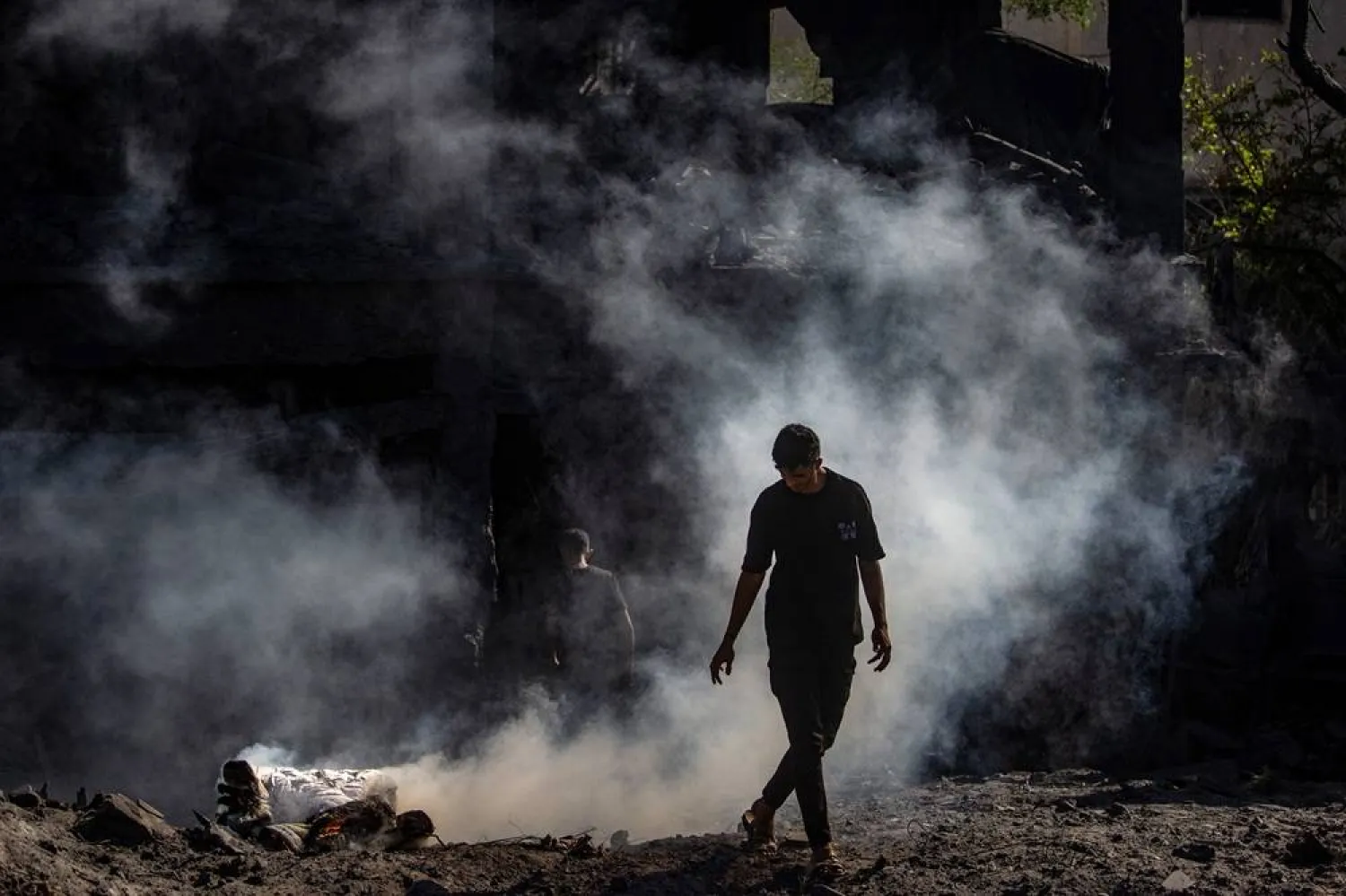
Smoke billows from an oil warehouse in the Kani Qirzhala area on the outskirts of Erbil, the capital of Iraq's autonomous Kurdistan region, following a suspected drone strike, on April 1, 2026. (Photo by AFP)
TT

Huge Fire after Drone Attack Hits Engine Oil Warehouse in Iraqi Kurdistan

Smoke billows from an oil warehouse in the Kani Qirzhala area on the outskirts of Erbil, the capital of Iraq's autonomous Kurdistan region, following a suspected drone strike, on April 1, 2026. (Photo by AFP)

A drone strike caused a massive fire at the storage facilities of an engine oil firm in Iraq's autonomous Kurdistan on Wednesday, the regional government and the company said.

Iraq has been increasingly and unwillingly drawn into the war started by Israel and the US on February 28, with strikes targeting both US interests and pro-Iran groups in the country.

The country's northern autonomous Kurdistan has not been spared.

The regional capital Erbil hosts a major US consulate complex, while its airport houses military advisors attached to a US-led international anti-jihadist coalition. Both have been regularly targeted since the outbreak of war.

Erbil's governor Omed Khoshnaw said the attack had started at around 0700 am local (0400 GMT) and that four drones had targeted the facility, AFP reported.

He said a double-tap attack had occurred "while the teams were still working, the same site was attacked by another drone".

A fourth drone was "destroyed mid-air before reaching its target," he said, adding that the blaze was ongoing.

Iraqi firm Sardar Group confirmed in a statement that the facility, a warehouse located around five kilometres (three miles) from Erbil, was attacked.

It said there were no casualties.

The company said it was not involved in any way in the Middle East war and that its operations were limited to services and investment, including "the storage of lubricants for automobiles, agricultural equipment, and construction".

The strike followed a heavy night of attacks near the regional capital, with Khoshnaw saying some 20 drones had been shot down over the city.


OIC-IPHRC Denounces Israeli Violations of Religious Freedom in Occupied Jerusalem

OIC-IPHRC Denounces Israeli Violations of Religious Freedom in Occupied Jerusalem
TT

OIC-IPHRC Denounces Israeli Violations of Religious Freedom in Occupied Jerusalem

OIC-IPHRC Denounces Israeli Violations of Religious Freedom in Occupied Jerusalem

The Independent Permanent Human Rights Commission (IPHRC) of the Organization of Islamic Cooperation (OIC) has unequivocally condemned the continued restrictions imposed by Israel, the occupying power, on the exercise of freedom of religion in occupied Jerusalem.

These measures include the prolonged obstruction imposed on Muslims to pray in the Al-Aqsa Mosque and also denying Christian worshippers access to their holy sites to perform obligatory religious rites.

The commission underscored that freedom of religion, including the right to manifest one’s religion in worship, observance, practice, and teaching, is a non-derogable fundamental human right under international human rights law, SPA reported.

The imposition of arbitrary and discriminatory restrictions on access to places of worship constitutes a serious violation of this right, as well as of the principles of equality and non-discrimination.

Such unjustified restrictions by Israel, the occupying power, violate international human rights law and international humanitarian law and undermine the dignity of individuals and communities by denying them the ability to freely practice their religion.

Any attempt to alter the legal and historical status quo of holy sites or to restrict access constitutes a violation of international legal obligations.

The commission calls upon the international community, including relevant United Nations mechanisms and international human rights bodies, to take appropriate measures to ensure accountability, safeguard the right to freedom of religion, and guarantee unhindered and non-discriminatory access to holy sites for all worshippers.