


Lebanon’s Mikati Faces Tricky Path to Safe Economic Ground

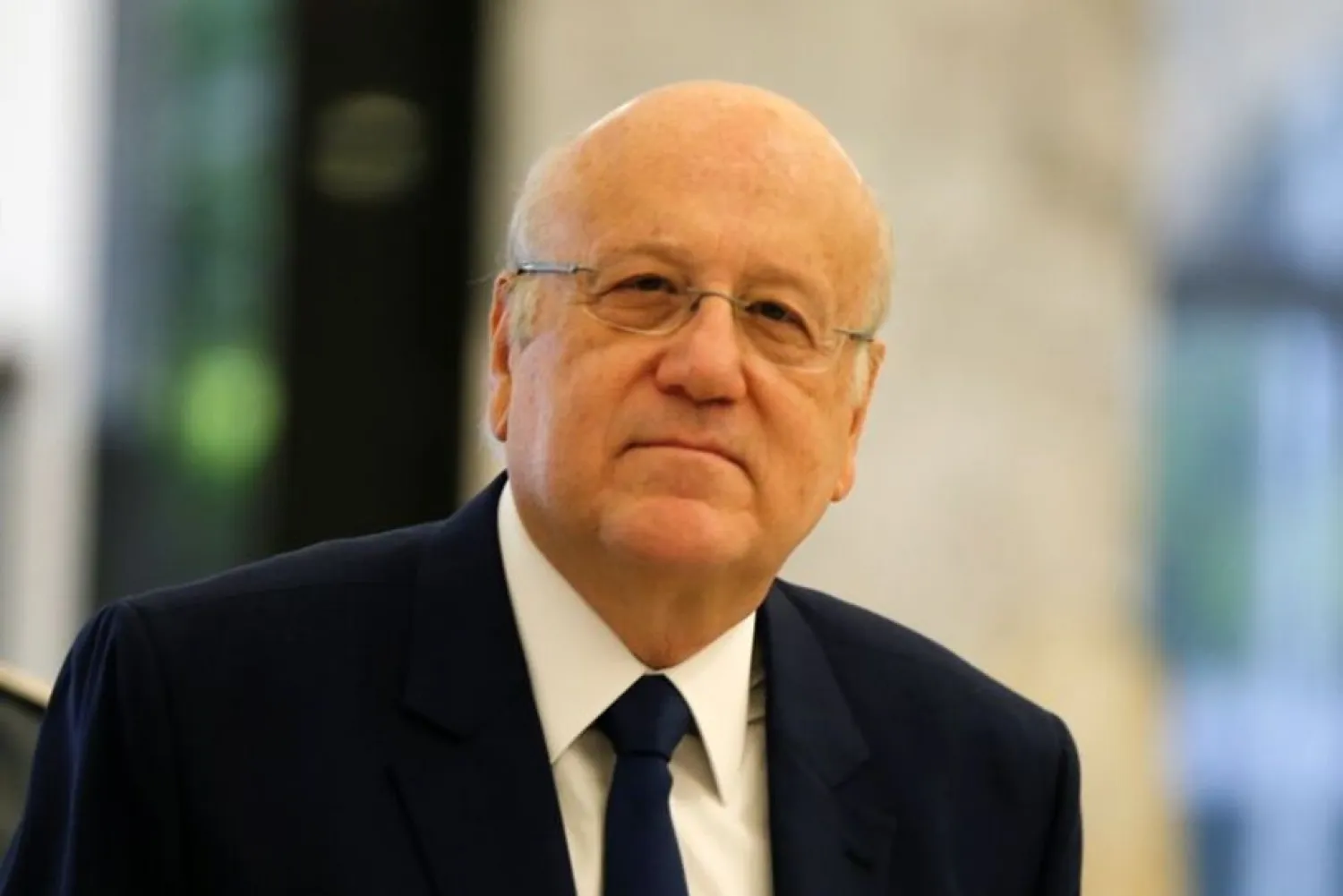
Lebanon's Prime Minister Najib Mikati arrives at the presidential palace in Baabda, Lebanon September 13, 2021. (Reuters)
TT

Lebanon’s Mikati Faces Tricky Path to Safe Economic Ground

Lebanon's Prime Minister Najib Mikati arrives at the presidential palace in Baabda, Lebanon September 13, 2021. (Reuters)

Lebanon’s new government has vowed to tackle one of the worst economic meltdowns in history.

The path it must take includes reforms mapped out by donor states and institutions such as the World Bank and International Monetary Fund which have repeatedly said they will unlock funds once they see change.

In exchange, Lebanon stands to gain billions of dollars of assistance.

The alternative is to sink deeper into a depression that marks the biggest threat to Lebanon’s stability since its 1975-90 civil war.

Successive governments have failed to implement changes due to Lebanon’s sectarian political system, so what kinds of reforms must its new Prime Minister Najib Mikati carry out and can he succeed where others have not?

“IMF talks won’t be a walk in the park,” a former Lebanese negotiator in the IMF talks said.

“It will be very difficult to meet the pre-conditions.”

The reforms
Many of the reforms concern the financial and banking system, the epicenter of the meltdown that took hold in late 2019, largely paralyzing Lebanon’s banks.

The root cause was decades of borrowing by a state riddled with corruption, much of it from the banks which depended on a steady flow of dollars from abroad to keep the system going. The crisis spiraled when those inflows slowed.

Multiple exchange rates have sprung up in place of the fixed dollar peg that had underpinned the system for two decades.

IMF recommendations include bringing public finances into order, rehabilitating the banks and restructuring public debt.

It has also recommended recognizing upfront losses at private banks and the central bank in a way that protects smaller depositors, and establishing a credible monetary and exchange rate system including the unification of multiple exchange rates, and accompanied by formal capital controls.

“The size of Banque Du Liban’s (BDL) losses is a critical matter: you cannot do any financial programming or plan any financial package for Lebanon without knowing the size of the BDL’s losses. These issues were brought up last year but were not resolved,” Nasser Saidi, a leading economist and former minister, said. “They are the elephant in the room.”

Donors also want to see reforms to improve transparency and combat corruption. One focal point is the energy sector which, despite being one of the main drains on state coffers, has failed dismally in providing electricity.

Many of the reforms were set out in a French roadmap last year, including an audit of the central bank.

What of the last government’s efforts?
The previous government drew up a financial recovery plan that mapped out losses of some $90 billion in the financial sector - a figure endorsed by the IMF.

But while the cabinet was installed by many of Lebanon’s main political players, they nearly all turned against the plan, disputing the scale of the losses.

Some leading politicians said bank deposits must not be touched even as the currency collapse destroyed the value of savings by up to 80%.

Attempts to perform a forensic audit of the central bank stalled amid rows over banking secrecy laws.

Former prime minister Hassan Diab’s government also tried to advance energy reforms to build new power generation capacity. This was derailed by objections from the president’s faction, which wanted a power station built in a Christian area.

Diab, an academic with no independent political standing, quit after seven months following the Beirut port explosion.

Can Mikati succeed?
With some state officials sounding the alarm about Lebanon’s collapse or fragmentation, some believe that the gravity of the crisis should encourage politicians to make decisions they previously resisted.

Yet the time it took them to agree on the Mikati government - a deal only clinched after intensive French contacts - shows the factional interests remain a priority and point to the political minefield he will face.

A billionaire, Mikati has political and financial muscle.

One of the main issues he must tackle is the central bank’s objections to the distribution of losses in the financial system, the former negotiator said.

If Mikati’s government begins a successful negotiation with the IMF now, it would probably not receive any funds before the turn of the year, the negotiator said.

Newly-appointed finance minister Youssef Khalil was a top central bank official and is close to its veteran governor Riad Salameh. He was picked by Nabih Berri, the parliament Speaker, a pillar of the system for decades.

“Restructuring the banking system for example, there is nitty gritty work that has to be done at a certain level for each individual bank, there’s a ton of work that hasn’t been done,” Mike Azar, a Beirut-based financial advisor said.

In the past two years, public sector losses have grown with the economy continuing to shrink making its ability to absorb shocks weaker, Azar notes, adding that central bank losses and government debt to GDP has hit more than 700%.
Facts about Strait of Hormuz Shipping Blockade

Around a fifth of global crude oil and liquefied natural gas passes through the Strait of Hormuz in peacetime. NASA Earth Observatory/AFP/File
TT

Facts about Strait of Hormuz Shipping Blockade

Around a fifth of global crude oil and liquefied natural gas passes through the Strait of Hormuz in peacetime. NASA Earth Observatory/AFP/File

Here are the latest key facts and figures about the blockage of the Strait of Hormuz, a crucial shipping route virtually paralyzed by the Middle East war.

Around a fifth of global crude oil and liquefied natural gas passes through the waterway in peacetime.

The war erupted on February 28 when the United States and Israel began bombing Iran, prompting Tehran to retaliate with strikes across the region and sharply restrict access to the strait.

First incident reported in over a week

The Express Rome, a Liberia-flagged container vessel, reported on Monday that two unknown projectiles splashed next to the moving ship within an hour of each other. All crew were reported safe.

The ship was 22 nautical miles northeast of the Ras Tanura port in Saudi Arabia, according to the British maritime security agency UKMTO and maritime security firm Vanguard Tech.

Iran's Revolutionary Guards previously claimed to have attacked the vessel on March 11, in a press release published by the ISNA news agency.

Monday's was the first such incident, attack or suspicious activity reported by the UKMTO since March 22.

Since March 1, 2026, 25 commercial vessels, including 11 tankers, have been attacked or reported incidents in the Gulf, the Strait of Hormuz or the Gulf of Oman, according to the UKMTO.

Drones struck fuel tanks at Oman's Salalah port on Saturday, injuring one worker and disrupting operations but hitting no vessels.

Eight sea workers killed

Since the conflict began, at least eight seafarers or dock workers have died in incidents in the region, according to the International Maritime Organization (IMO).

A further four remained missing and 10 were injured.

Around 20,000 seafarers are affected in the region, according to the IMO.

Handful of crossings

Seventeen commodities vessels crossed the strait over the weekend, 12 of them on Saturday, making it one of the busiest days for crossings since March 1, according to maritime intelligence firm Kpler.

From March 1 to 30 as of 1700 GMT Monday, commodities carriers made just 196 crossings, according to Kpler data -- a decrease of 95 percent from peacetime.

Of these, 120 were by oil tankers and gas carriers and most were travelling east out of the strait.

Chinese container ships pass

On Monday, two further ships -- ultra-large container vessels owned by Chinese shipping giant Cosco -- appeared to have successfully crossed the strait after an aborted attempt last week, maritime tracker MarineTraffic said on X.

It interpreted their passage as "signaling a potential shift in conditions for commercial shipping".

Steel, soybeans shipped

Nine of the commodities ships passing through the strait over the weekend were dry bulk carriers transporting metals, iron ore pellets and soybean meal.

Four vessels were liquified petroleum gas tankers and the rest were liquid tankers.

The channel in peacetime sees around 120 daily transits, according to shipping industry intelligence site Lloyd's List.

2,000 ships in Gulf

Around 2,142 vessels have sent transponder signals in the Gulf west of the Strait of Hormuz in the past day, according to Bloomberg data.

Of those, 298 were tankers, including 10 very large gas carriers and 55 very large crude carriers.

Iran-approved route

Recent crossings appeared to have mainly used a route apparently approved by Iran around Larak Island just off the country's coast.

Leading shipping journal Lloyd's List last week said at least 34 ships had been tracked using it.

The Revolutionary Guards said the route was closed to vessels travelling to and from ports linked to Iran's "enemies".

45% sanctioned ships

Since the war started, 45 percent of the crossings have been by ships under US, EU or UK sanctions, according to an AFP analysis of passage data.

Of the crossings by oil and gas tankers, 62 percent were by vessels under sanctions.


What Could Trump Achieve by Threatening Iran's Kharg Island?

Some 90 percent of Iran's crude exports pass through Kharg Island, making it a potentially crucial pressure point for Tehran. EUROPEAN SPACE AGENCY/AFP
TT

What Could Trump Achieve by Threatening Iran's Kharg Island?

Some 90 percent of Iran's crude exports pass through Kharg Island, making it a potentially crucial pressure point for Tehran. EUROPEAN SPACE AGENCY/AFP

A scrubby island in the Gulf that is roughly one third the size of Manhattan, Kharg Island is the nerve center of the Iranian oil industry -- and at the heart of US President Donald Trump's latest efforts to pressure Tehran.

On Monday Trump vowed that a failure by Iran to agree a deal to end the war could see the United States "completely obliterating" the export hub.

A day earlier, he had said the United States could take the island, eyed by the Pentagon for ground operations, "very easily".

So what are Trump's options, and how might Iran react if he presses on this pressure point?

What is Kharg Island?

It may be a mere scrap of land, but Kharg handles around 90 percent of Iran's crude exports, according to a report by US bank JP Morgan.

Located in the north of the Gulf, around 30 kilometers (20 miles) from the Iranian coast and more than 500 kilometers from the Strait of Hormuz, it has no oil wells.

But it has Iran's largest oil terminal, oil pipelines, storage tanks and related infrastructure.

It also has military facilities, some of which have already been hit by Israeli-US strikes.

On March 13, "US forces executed a large-scale precision strike on Kharg Island", Centcom, the US military command for the region, said.

"The strike destroyed naval mine storage facilities, missile storage bunkers and multiple other military sites. US forces successfully struck more than 90 Iranian military targets on Kharg Island, while preserving the oil infrastructure."

Sources close to US intelligence services told US broadcaster CNN Iran had deployed additional troops and defense systems to the area in recent weeks, including MANPAD-type surface-to-air missiles and mines.

Trump's options?

There appear to be three routes for US forces wishing to seize the island -– an airborne attack; an amphibious operation; or a combination of the two.

The Pentagon is currently moving US paratroopers and Marines into the area.

"(The) US combat force build-up sets the stage for (a) potential ground offensive in Iran," said US think tank Soufan.

Centcom former commander General Joseph Votel told The War Zone website this month it would not take that many soldiers to seize Kharg.

"On a small island like Kharg, I imagine you'd need a battalion of Marines. We are therefore talking about a force of 800 to 1,000 men, perhaps a little fewer, certainly not much more," he said.

But taking Kharg and holding onto it "are two different things", stressed Professor Phillips O'Brien of the University of St Andrews in Scotland.

He said the US military would struggle to retain the island within range of Iranian missiles and drones.

Just 60 kilometers away is the city of Bushehr, an important military center "from which the Iranians defend the entire northern part of the Gulf, including Kharg", noted Pierre Razoux of French research center FMES.

Why do it?

Trump's war goals remain hazy. It is unclear whether he primarily wants to force Iran to reopen shipping lanes in the Strait of Hormuz; force regime change in Tehran; coerce the Iranians into concessions on their nuclear or ballistic missile programs.

In the short term, capturing Kharg could give Washington leverage to force Iran to negotiate -– presumably on Trump's terms, given the country's dependence on oil revenue, the Soufan Center said.

It might not have much effect in reopening the Gulf to shipping, however, because Iran controls a string of other islands in the Strait of Hormuz.

And if the Iranians choose not to cede to Trump's demands, "What does the US do?", O'Brien wondered.

"Does the US then, out of spite, level all the economic facilities on Kharg?

"That could easily boomerang back in American faces. It means oil prices skyrocket even more and stay high for much longer," he said.

"It also means Iran will be incentivized to shut down the traffic in the Straits for even longer. If they cannot get their own oil out, why let anyone else's?"


UN Peacekeepers in the Crossfire Between Israel and Hezbollah

 A UNIFIL vehicle drives past a Lebanese soldier, amid escalating hostilities between Israel and Hezbollah, as the US-Israel conflict with Iran continues, in Qlayaa, southern Lebanon, March 27, 2026. (Reuters)
A UNIFIL vehicle drives past a Lebanese soldier, amid escalating hostilities between Israel and Hezbollah, as the US-Israel conflict with Iran continues, in Qlayaa, southern Lebanon, March 27, 2026. (Reuters)
TT

UN Peacekeepers in the Crossfire Between Israel and Hezbollah

 A UNIFIL vehicle drives past a Lebanese soldier, amid escalating hostilities between Israel and Hezbollah, as the US-Israel conflict with Iran continues, in Qlayaa, southern Lebanon, March 27, 2026. (Reuters)
A UNIFIL vehicle drives past a Lebanese soldier, amid escalating hostilities between Israel and Hezbollah, as the US-Israel conflict with Iran continues, in Qlayaa, southern Lebanon, March 27, 2026. (Reuters)

United Nations peacekeepers, who for decades have served as a buffer between Israel and Lebanon, have seen three of their comrades killed and several others wounded since the latest war erupted between Israel and Hezbollah.

Here is an overview of the UN force in south Lebanon, whose mandate expires at the end of this year.

- In the firing line -

The United Nations Interim Force in Lebanon (UNIFIL) patrols the area around the country's southern border, where Hezbollah and Israel began clashing this month after the Iran-backed group drew Lebanon into the Middle East war by firing rockets at Israel.

Israeli forces have been pushing into areas north of the frontier, and officials have announced plans to establish a buffer zone up to the Litani River, around 30 kilometers (20 miles) from Israel.

On Monday, two peacekeepers were killed when "an explosion of unknown origin destroyed their vehicle", wounding at least two others, the force said.

The day before, an Indonesian peacekeeper was killed and three others wounded when a projectile, also of undetermined origin, exploded near a UNIFIL position.

And earlier this month, three Ghanaian peacekeepers were wounded when their base was hit, with Lebanese President Joseph Aoun accusing Israel of being responsible and UNIFIL saying it would investigate.

Over the years since its mission began in 1978, the force has lost around 340 members.

Visiting UN chief Antonio Guterres this month said attacks against peacekeepers and their positions were "completely unacceptable... and may constitute war crimes".

- Ceasefire monitors -

UNIFIL was set up in 1978 to monitor the withdrawal of Israeli forces after they invaded Lebanon to stem Palestinian attacks targeting northern Israel.

Israel again invaded in 1982, only withdrawing from south Lebanon in 2000.

After a 2006 war between Israel and Hezbollah, UN Security Council Resolution 1701 bolstered UNIFIL's role and its peacekeepers were tasked with monitoring the ceasefire between the two sides.

UNIFIL patrols the Blue Line, the 120-kilometre (75-mile) de facto border between Lebanon and Israel, in coordination with the Lebanese army. It also has a maritime task force that supports Lebanon's navy.

The mission has its headquarters south Lebanon's Naqoura, which in recent years has hosted indirect border negotiations between Lebanon and Israel.

Following a November 2024 ceasefire that sought to end more than a year of hostilities between Israel and Hezbollah over the Gaza war, UNIFIL became part of a five-member committee supervising that truce.

Under pressure from the United States and Israel, the UN Security Council voted last year to end the force's mandate on December 31, 2026, with an "orderly and safe drawdown and withdrawal" by the end of 2027.

- International force -

The mission currently involves around 8,200 peacekeepers from 47 countries, according to the force's website.

Top troop-contributing countries include Italy, Indonesia, Spain, India, Ghana, France, Nepal and Malaysia.

Italy's Major General Diodato Abagnara has headed the mission since June 2025.

UNIFIL patrols have occasionally faced harassment, though confrontations are typically defused by the Lebanese army.

In December 2022, an Irish peacekeeper was killed and three colleagues wounded when their convoy came under fire in south Lebanon.

- Border area -

Resolution 1701 of 2006 called for the Lebanese army and UN peacekeepers to be the only armed forces deployed in the country's south.

UNIFIL had been supporting the army in dismantling Hezbollah infrastructure near the border in the months before the latest hostilities erupted, in line with a Lebanese government decision to disarm the group following the 2024 truce.

Hezbollah has long held sway over swathes of the south and has built tunnels and hideouts there, despite not having had a visible military presence in the border area since 2006.

- What comes next? -

Lebanese authorities want a continued international troop presence in the south after UNIFIL's exit, and have been urging European countries to stay.

Last month, French Foreign Minister Jean-Noel Barrot said Lebanon's army should replace the force when the peacekeepers withdraw.

Italy has said it intends to keep a military presence in Lebanon after UNIFIL leaves.
