
NASA's Lucy Mission to Probe Jupiter's Mysterious Trojan Asteroids

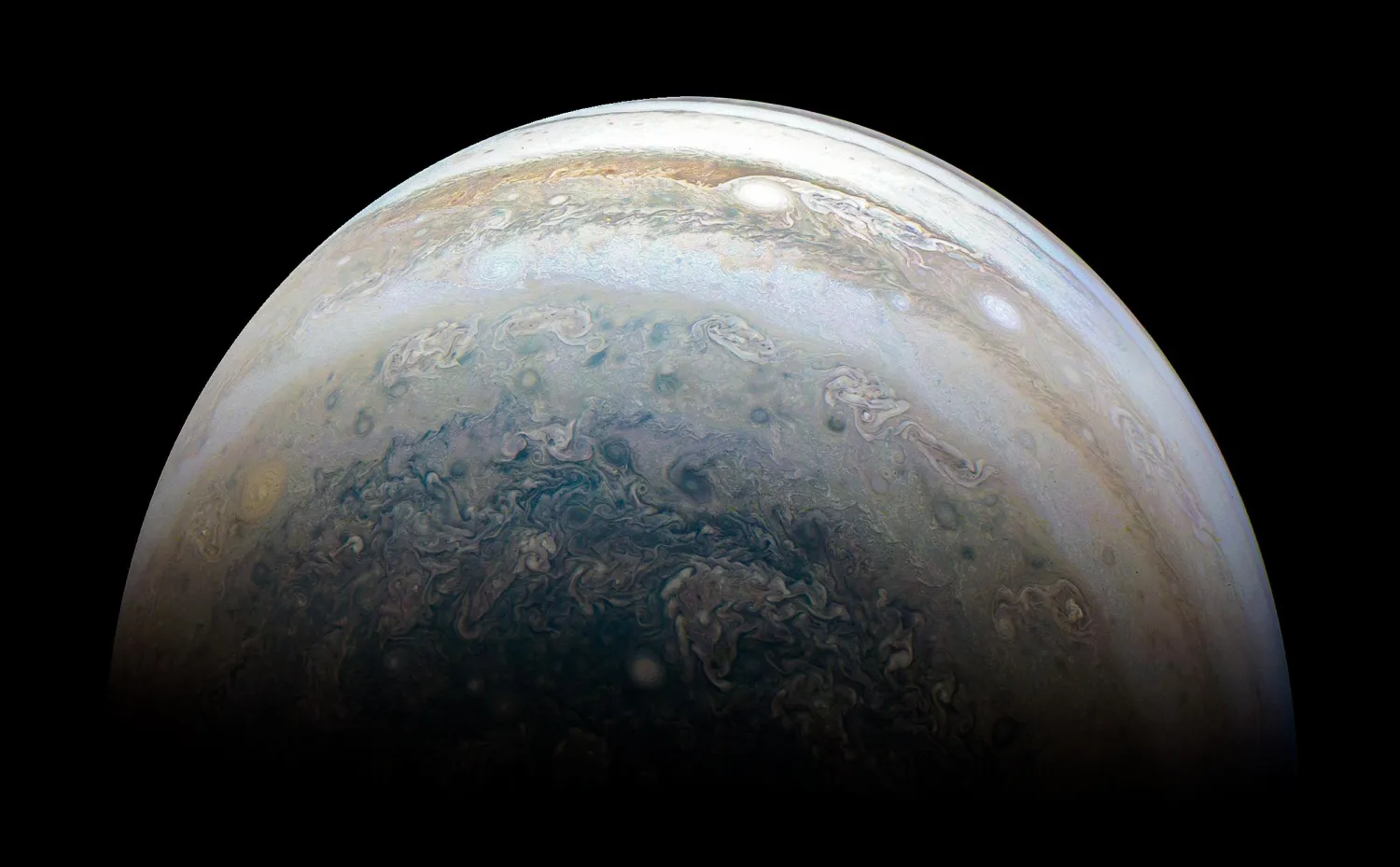
This NASA photo released on July 2, 2018 shows Jupiter's southern hemisphere captured by NASA's Juno spacecraft on the outbound leg of a close flyby of the gas-giant planet. Handout NASA/AFP
TT

NASA's Lucy Mission to Probe Jupiter's Mysterious Trojan Asteroids

This NASA photo released on July 2, 2018 shows Jupiter's southern hemisphere captured by NASA's Juno spacecraft on the outbound leg of a close flyby of the gas-giant planet. Handout NASA/AFP

NASA is poised to send its first spacecraft to study Jupiter's Trojan asteroids to glean new insights into the solar system's formation 4.5 billion years ago, the space agency said Tuesday.

The probe, called Lucy after an ancient fossil that provided insights into the evolution of human species, will launch on October 16 from Cape Canaveral Space Force Station in Florida.

Its mission is to investigate the group of rocky bodies circling the Sun in two swarms, one preceding Jupiter in its orbital path and the other trailing behind it.

After receiving boosts from Earth's gravity, Lucy will embark on a 12-year journey to eight different asteroids —- one in the Main Belt between Mars and Jupiter and then seven Trojans.

"Despite the fact that they really are in a very small region of space, they're very physically different from one another," Hal Levison, the mission's principal scientist told reporters, about the Trojan asteroids, which number more than 7,000 in total.

"For example, they have very different colors, some are grey, some are red," he added, with the differences indicating how far away from the Sun they might have formed before assuming their present trajectory.

"Whatever Lucy finds will give us vital clues about the formation of our solar system," added Lori Glaze, director of NASA's planetary science division.

Lucy will fly by its target objects within 250 miles (400 kilometers) of their surfaces, and use its onboard instruments and large antenna to investigate their geology, including composition, mass, density and volume.

The ship was built by Lockheed Martin and includes over two miles of wire and solar panels that, placed end-to-end, would be as tall as a five-story building.

It will be the first solar-powered to venture this far from the Sun, and will observe more asteroids than any other spacecraft before it. The total mission cost is $981 million.

The researchers who discovered Lucy the fossil in Ethiopia in 1974 named her after the Beatles' song "Lucy in the Sky with Diamonds" which they were playing loudly at the expedition camp.

In a nod to this heritage, the official logo of the NASA mission is diamond shaped.


Back on Earth, Artemis II Crew Still Finding their Footing

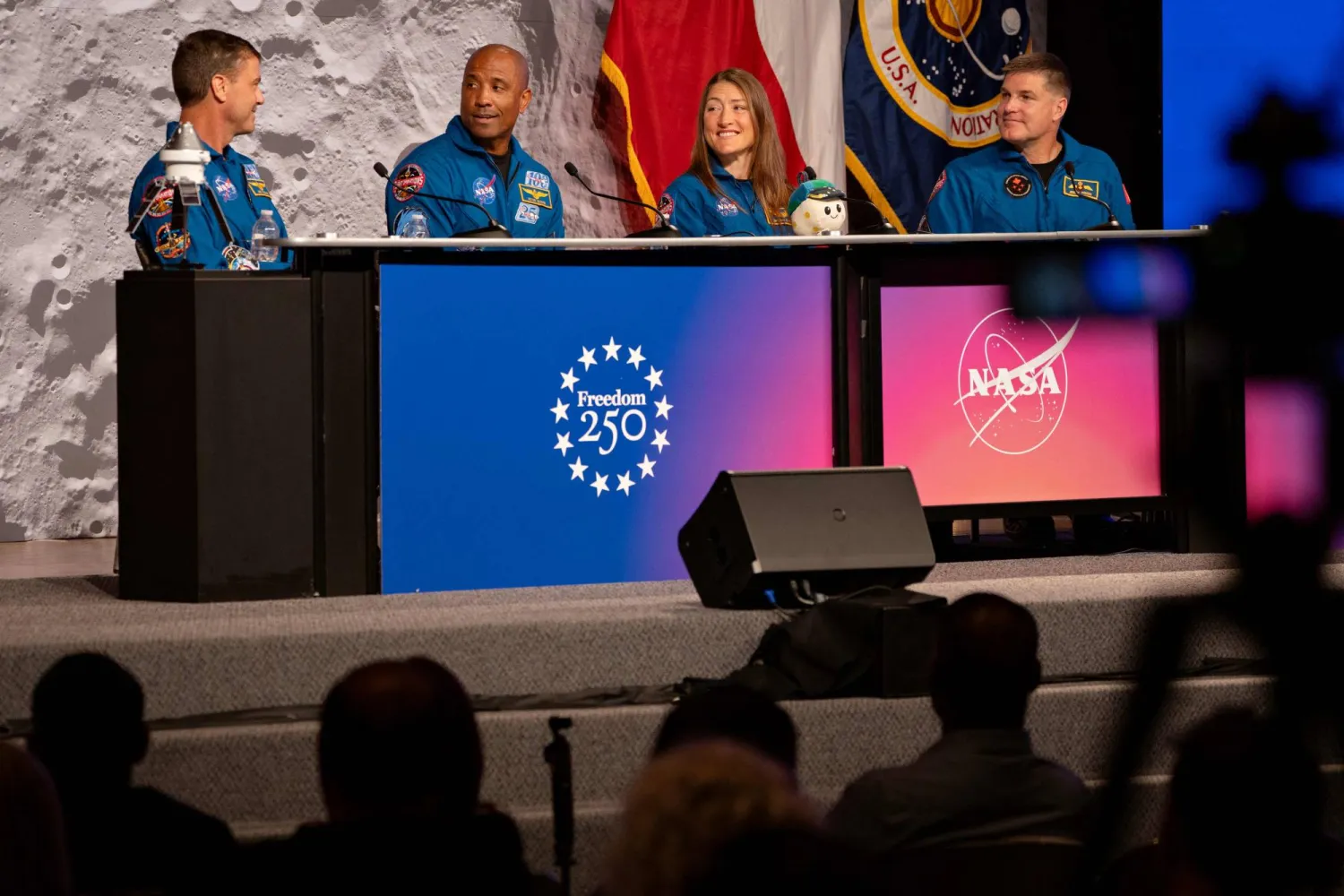
HOUSTON, TEXAS - APRIL 16: Artemis II Commander Reid Wiseman, Pilot Victor Glover, Mission Specialist Christina Koch, and Mission Specialist Jeremy Hansen speak during a press conference at the NASA Johnson Space Center on April 16, 2026 in Houston, Texas. Danielle Villasana/Getty Images/AFP
TT

Back on Earth, Artemis II Crew Still Finding their Footing

HOUSTON, TEXAS - APRIL 16: Artemis II Commander Reid Wiseman, Pilot Victor Glover, Mission Specialist Christina Koch, and Mission Specialist Jeremy Hansen speak during a press conference at the NASA Johnson Space Center on April 16, 2026 in Houston, Texas. Danielle Villasana/Getty Images/AFP

Nearly a week after their Pacific splashdown, the astronauts who crewed the Artemis II mission that flew around the Moon told reporters Thursday they have yet to fully grasp the magnitude of the moment.

"It's been a week of medical testing, physical testing, doctors, science objectives," mission commander Reid Wiseman said during a press conference at NASA's Johnson Space Center in Houston.

"We have not had that decompression," he added.

The 50-year-old led fellow Americans Victor Glover and Christina Koch, and Canadian crewmate Jeremy Hansen, on a mission that took them farther into space than anyone has ever gone before.

Adjusting to life on Earth is taking a beat, AFP reported.

"Tomorrow will be one week, and I just was trying to live in a little hole for one week, been off social media, not on the news. So, no, I don't know," Glover, who piloted the mission, told reporters.

Nonetheless, he said his children and neighbors have clued him in to the excitement.

Artemis II was the first crewed mission to venture to the Moon's orbit since 1972, and the only one in history to include a woman, or a Black astronaut, or a non-American. Their voyage was broadcast live by US space agency NASA, and the media coverage of the launch and return to Earth was watched by millions of people.

For Koch, waking up to the reality means remembering gravity has taken hold.

"In the first few days, I thought I was floating. I truly thought I was floating, and I had to convince myself I wasn't," Koch said.

Their mission lasted almost 10 days, but NASA has ambitions to return to the Moon for longer visits to establish a base in preparation for future missions to Mars.

The United States is targeting a lunar landing in 2028, before the end of President Donald Trump's term and a deadline set by rivals in China.


Hidden Cave, Hippo Bones Under Welsh Castle May Rewrite History

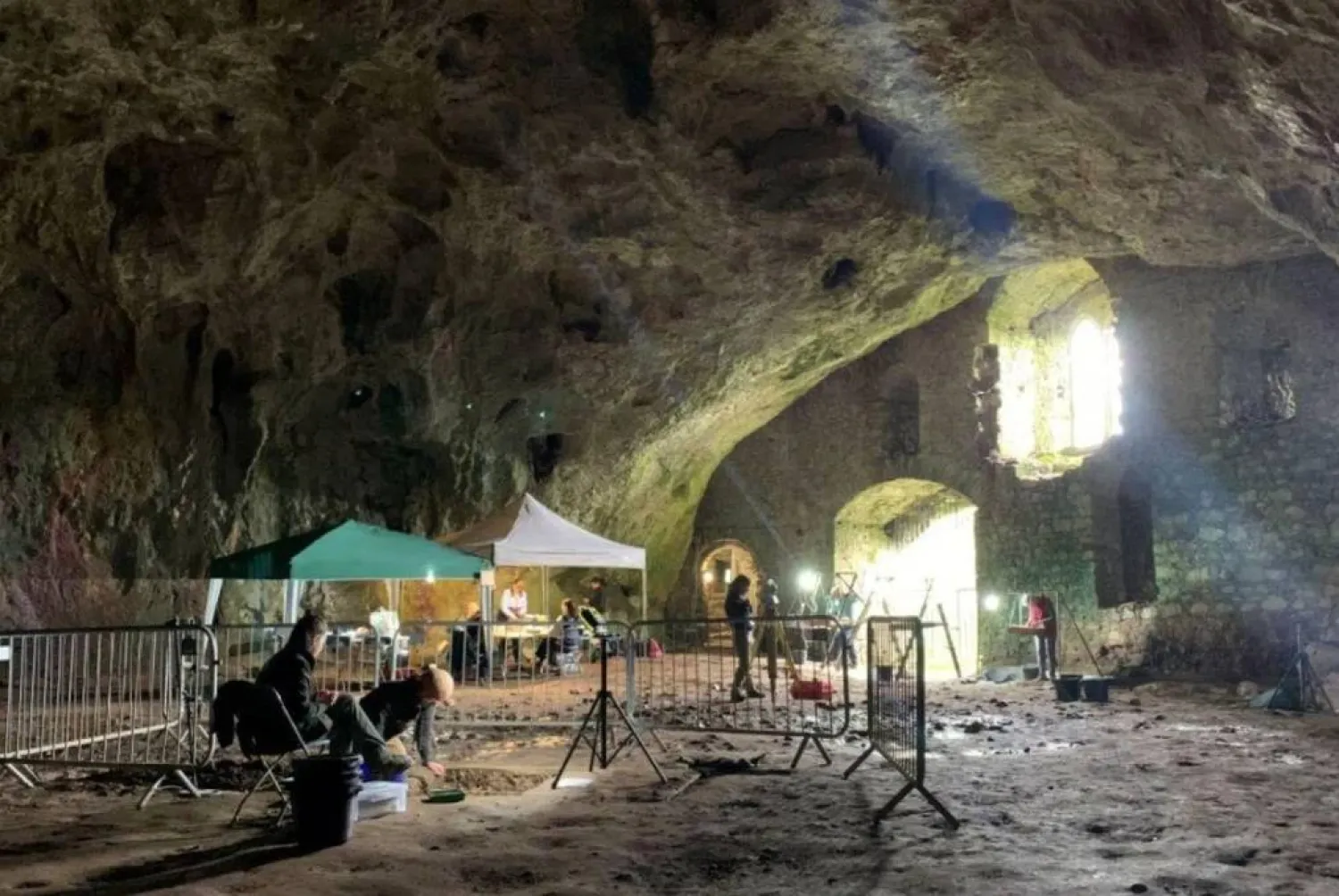
Previous small-scale excavations at Pembroke Castle have already uncovered evidence of early humans and animals. PHOTO: UNIVERSITY OF ABERDEEN
TT

Hidden Cave, Hippo Bones Under Welsh Castle May Rewrite History

Previous small-scale excavations at Pembroke Castle have already uncovered evidence of early humans and animals. PHOTO: UNIVERSITY OF ABERDEEN

A prehistoric hidden cave and hippo bones found beneath a Welsh castle could transform understanding of ancient life in Britain, researchers said Thursday, calling the site a "once-in-a-lifetime discovery".

Previous small-scale excavations at Pembroke Castle have already uncovered evidence of early humans and animals, including a now extinct hippopotamus that roamed Wales 120,000 years ago.

A major five-year archaeological project led by the University of Aberdeen will investigate the "enormous" cave, accessed via a spiral staircase from the 11th Century castle, AFP reported.

"There is no other site like it in Britain -- it is a once-in-a-lifetime discovery," said Rob Dinnis, who will lead the project.

The cave, previously thought to have been emptied by the Victorians, is now described as "one of the most important prehistoric archives in Britain".

"Despite the limited work done so far, we can already say that Wogan Cavern is a truly remarkable site," Dinnis said in a statement.

"Not only is there extremely rare evidence for early Homo sapiens, there are also hints at even earlier human occupation, probably by Neanderthals."

"We have also found hippo bones, which probably date to the last interglacial period, around 120,000 years ago," he added.

Earlier finds have revealed bones of mammoth, woolly rhinoceros, reindeer and wild horse, alongside stone tools and evidence of human occupation across multiple periods.

With larger-scale excavation due to resume in May, the researchers hope to gain "insights into past climate change, extinct species, and the multiple periods when humans called the cave their home".

They said the site could chart a long sequence of human activity, from hunter-gatherers after the last Ice Age around 11,500 years ago to some of Britain's earliest Homo sapiens between 45,000 and 35,000 years ago, and possibly even earlier Neanderthal presence.

"Wogan Cavern provides a unique chance to use all the scientific techniques now available to archaeologists," said professor Kate Britton of the University of Aberdeen.

"Because the bones are well preserved, we can learn a lot about past environments and ecosystems," she added.

At Pembroke Castle, staff say the discovery adds a new dimension to the site's long history as a medieval fortress and birthplace of Henry VII in 1457.

"This is incredibly exciting news for everyone at the castle," said castle manager Jon Williams.

"We are thrilled that work on this wonderful cave will continue."


Massive Asteroid Set to Pass ‘Close’ to Earth

The rare asteroid is expected to “safely pass” within 20,000 miles of Earth in 2029 (Shutterstock)
TT

Massive Asteroid Set to Pass ‘Close’ to Earth

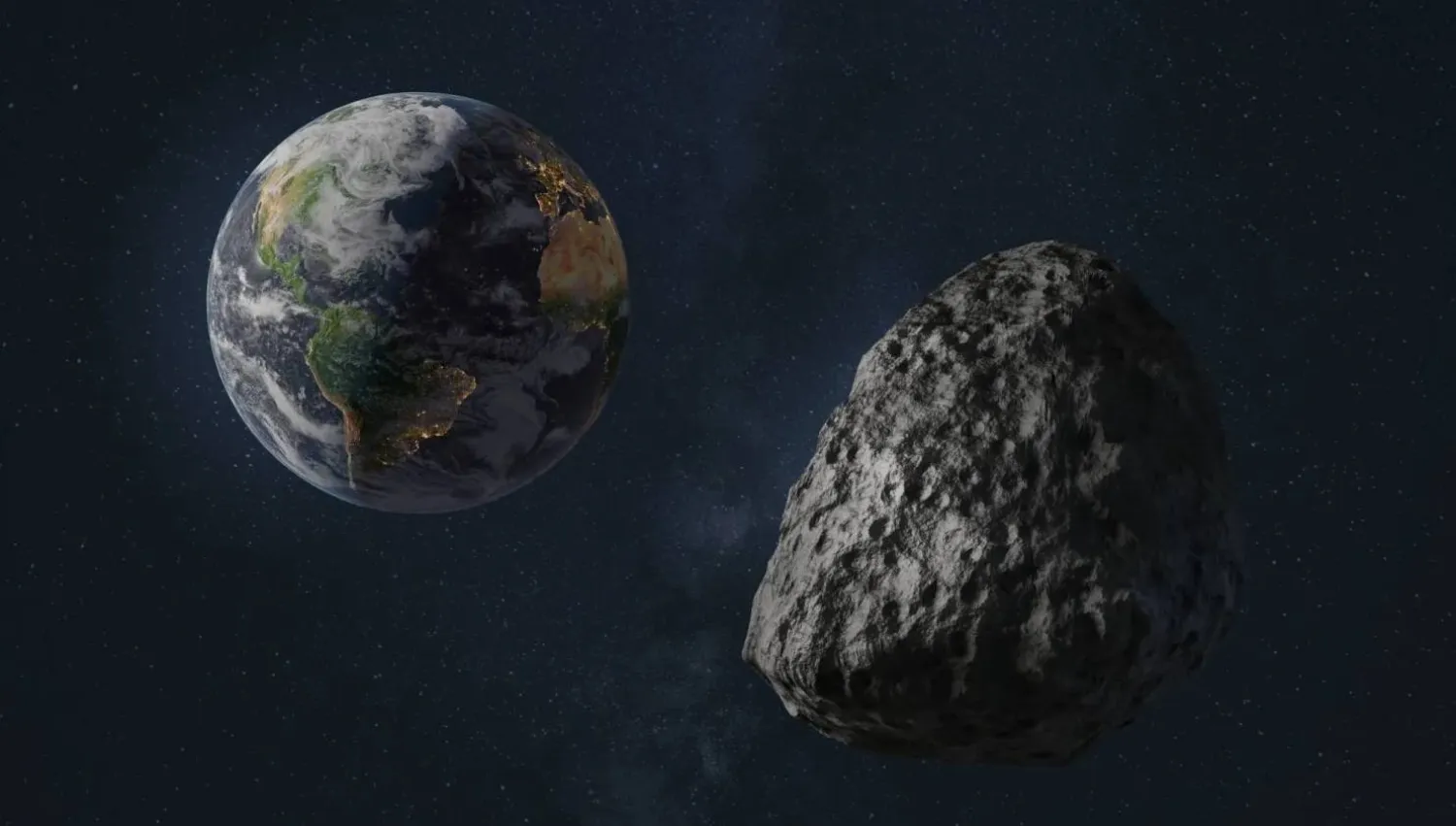
The rare asteroid is expected to “safely pass” within 20,000 miles of Earth in 2029 (Shutterstock)

An asteroid named after a god of chaos is heading toward Earth — but there is no need to panic just yet, according to The Independent.

The massive rock is arriving for a historic flyby rather than a disaster, according to NASA. The encounter is still a few years away, but when it finally arrives, it will be so close that spotting it won’t even require a telescope.

Known as 99942 Apophis, the rare asteroid is expected to “safely pass” within 20,000 miles of Earth in 2029, representing one of the closest approaches ever recorded for a celestial object of this size.

“Even though Apophis does not pose any immediate risk to Earth, an asteroid of its size passing so close to our planet is a very rare event,” NASA astronomers stated. “Scientists across the globe are excited to use this opportunity to study Apophis in detail.”

At roughly 1,115 feet wide, the asteroid will pass closer to Earth than the satellites orbiting in geosynchronous altitude, according to NASA.

It will be the closest approach of an asteroid of this size that humans have ever been aware of in advance, according to the European Space Agency.

The rare timing of the flyby — falling on Friday, April 13, in many parts of the world, has already sparked a mix of excitement and superstition across social media.

The asteroid was named after the ancient Egyptian god of evil and destruction. The name was proposed by its discoverers — astronomers Roy Tucker, David Tholen and Fabrizio Bernardi of the Kitt Peak National Observatory near Tucson, Arizona — because Apophis is the Greek name for the Egyptian god known as Apep.

NASA reports that an asteroid of this scale passes this close to Earth only once every few thousand years on average, making it a potentially unprecedented event in recorded human history.