


Houthis Besiege Thousands of Civilians South of Marib

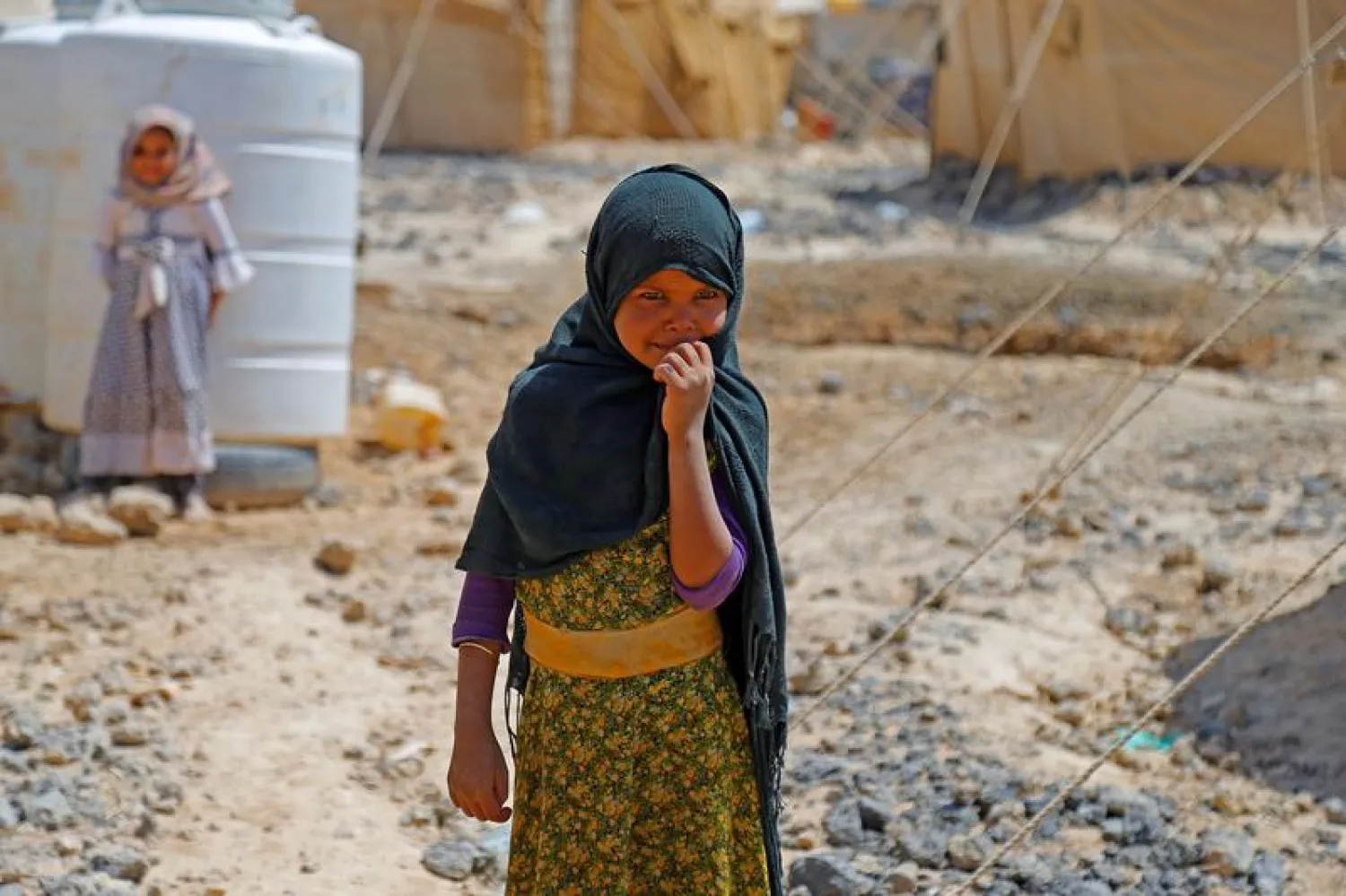
A girl pictured at a camp for internally displaced people (IDPs) in Marib, Yemen (Reuters)
TT

Houthis Besiege Thousands of Civilians South of Marib

A girl pictured at a camp for internally displaced people (IDPs) in Marib, Yemen (Reuters)

Houthi militias besieged thousands of civilians in the south of Marib, preventing food supplies, medicine, and fuel from entering the area, announced local and Yemeni human rights sources.

Clashes intensified between government forces and Houthi militias in the Harib district. The militias closed the roads leading to the al-Abdiya district after blocking all the streets from the al-Bayda governorate.

About 35,000 people live in tragic conditions and are unable to provide first aid.

Yemeni human rights advocates and the Executive Unit for the IDP Camps in Marib warned that the residents and shops had run out of wheat stocks due to the high demand.

They said that urgent intervention was required to save thousands of families after the militias isolated the district from the rest of the province.

The Executive Unit appealed to the Resident Coordinator of the UN, Humanitarian Coordinator William David Gresley and international organizations to open safe corridors for humanitarian aid to reach the displaced families in the al-Abdiya district.

It called on the UN and the international community to pressure the Houthi militia to stop its attacks on Marib and target the displaced.

It stressed the need for urgent action to provide relief and immediate aid to affected families.

Meanwhile, the International Organization for Migration (IOM) stated that about 3,800 individuals were displaced due to the clashes in Marib, Shabwa, and Abyan between September 19 and 25.

IOM said that 635 families were displaced at least once, and the largest number of displacement cases was recorded in Marib with 398 families, Shabwa with 85 families, and Abyan with 57 families.

According to the weekly update of the displacement movement, 12,000 families were displaced at least once, and 622 families were displaced two or three times due to the escalation of the conflict.

Yemeni Minister of Information, Culture and Tourism, Moammar el-Eryani, confirmed that the displaced in Maerib governorate amount to 7.5 percent of the country's total population.

Eryani warned of new waves of displacement of thousands of families, noting that families living in IDP camps in western Shabwa and southern Marib will be displaced for the second and third time.

The Yemeni minister pointed out that dozens of families were forced to flee the districts towards the overcrowded city of Marib, which includes more than two million displaced people, amounting to 60 percent of the total displaced people in various governorates and 7.5 percent of the total population of Yemen.

Estimates indicate that the displacement is the largest since the coup due to the continued Houthi escalation and the militia's indiscriminate bombing of populated areas and displacement camps.

He called on the international community, the UN, the US, international envoys, and human rights organizations to assume legal and humanitarian responsibilities.

Palestinian Authority: US Denial of Abbas Visa to Attend UN 'Unjustified'

FILE PHOTO: Palestinian President Mahmoud Abbas appears on a screen as he addresses delegates during a high-level meeting of heads of state on a two-state solution between Israel and the Palestinians at United Nations headquarters in New York City, US, September 22, 2025. REUTERS/Eduardo Munoz/File Photo
TT

Palestinian Authority: US Denial of Abbas Visa to Attend UN 'Unjustified'

FILE PHOTO: Palestinian President Mahmoud Abbas appears on a screen as he addresses delegates during a high-level meeting of heads of state on a two-state solution between Israel and the Palestinians at United Nations headquarters in New York City, US, September 22, 2025. REUTERS/Eduardo Munoz/File Photo

The Palestinian Authority on Thursday slammed a decision by the United States to refuse visas for its officials to attend the UN General Assembly in New York next week, a move which includes President Mahmoud Abbas.

In a statement, the Palestinian foreign ministry called it "an unjustified measure that runs counter to efforts to rebuild trust, develop Palestinian-US relations, and create the necessary political climate for implementing the two-state solution and achieving peace and stability.”

In a statement that did not mention Abbas by name, the State Department said Wednesday it would deny visas to members of the Palestine Liberation Organization (PLO) and officials with the Palestinian Authority (PA), "as a consequence of their failure to reform, contrary to their commitments to the United States, and their ongoing activities that undermine the prospects for peace."

The Trump administration took the same step last year, forcing the Palestinian leader, a regular at the UN General Assembly, to address the body of global leadership by video.


South Lebanon Blasts Threaten Landscape, Could Activate Fault Lines; Beirut to File UN Complaint

Smoke rises from the town of Halta following Israeli shelling (National News Agency)
TT

South Lebanon Blasts Threaten Landscape, Could Activate Fault Lines; Beirut to File UN Complaint

Smoke rises from the town of Halta following Israeli shelling (National News Agency)

Israeli forces pushed into the border town of Halta in South Lebanon on Wednesday before withdrawing to its outskirts after conducting searches and sweeps, amid reports that a local resident had been abducted.

The incursion came as Lebanese concern mounted over the scale of Israeli demolitions in the south, with Environment Minister Tamara El Zein warning that their repercussions could extend beyond direct destruction to geological risks affecting public safety.

Lebanon’s National News Agency reported that Israeli forces withdrew from Halta after entering the town Wednesday morning, amid reports that resident Fadi Abdel Aal had been abducted. Troops searched several homes and conducted sweeps with machine guns, while bulldozers razed olive groves.

Israeli forces also blew up several houses, while other homes were reportedly vandalized and solar panels on the ground and rooftops smashed. Three mortar shells struck the town, including one near homes. Powerful explosions heard across several villages in the Arqoub area were traced to demolitions carried out by Israeli forces inside Halta.

The operation followed previous Israeli incursions, searches, arrests and bulldozing in Halta and its surroundings. The town lies in the Arqoub area of Hasbaya district, near Kfar Shuba, the Kfar Shuba Hills and Shebaa Farms, in a geographically and militarily sensitive border area.

Israel says its operations in South Lebanon are intended to prevent Hezbollah from rebuilding its capabilities near the border.

Elsewhere, Israeli artillery struck the outskirts of Kfar Shuba and Kfar Tibnit in Nabatieh. In the western sector, Israeli forces carried out powerful demolitions in Mansouri, south of Tyre, following similar explosions targeting homes and valleys at dawn that caused strong tremors felt in neighboring villages.

Geological concerns

El Zein warned that the succession of massive Israeli explosions posed risks beyond the extensive destruction they caused, citing potential geological damage and ground disturbances.

She pointed to the demolition of the Ali al-Taher ridge two weeks ago using about 1,100 tons of explosives. According to data from Lebanon’s National Center for Geophysics, she noted, the blast generated seismic waves comparable to a magnitude 4.2 earthquake.

El Zein highlighted the site’s proximity to the Roum Fault, about one kilometer away, and the Yammouneh Fault, about seven kilometers away, arguing that the location and scale of the explosion raised additional concerns.

She also cited the demolition in Majdal Zoun using about 80 tons of explosives, which generated waves comparable to a magnitude 3.1 tremor and, according to her, physically split the town in two.

Another explosion near Beaufort Castle involved about 700 tons of explosives and generated waves comparable to a magnitude 3.8 tremor, with vibrations felt at considerable distances, she added.

The minister cautioned that massive underground explosions could, under certain geological conditions and particularly near existing faults, cause movement or reactivate faults, potentially increasing seismic risks.

She stressed that the inability to determine with certainty the future consequences of such effects did not mean the risks should be minimized or ignored.

‘Reshaping the geography’

El Zein argued that the scale of the explosions should not be measured solely by their immediate destruction, describing the operations as going beyond their direct military dimension to the “reshaping of geography.”

She warned that violent ground motion could damage the natural and built environment, infrastructure and homes across a wide area.

The minister linked the explosions to what she described as “ecocide,” stressing that the Lebanese state and government must respond to the scale of the damage and risks rather than merely document and catalogue what she called war crimes.

El Zein presented the findings and concerns to the Cabinet, which tasked her with preparing a detailed report on the repercussions of the explosions. The report will be submitted to the Foreign Ministry for referral to the UN Security Council and other relevant international bodies.


Sisi-Abbas Cairo Summit: Palestinian Reconciliation a Priority in Coming Period

Egyptian President Abdel Fattah al-Sisi assured his Palestinian counterpart on Wednesday of Egypt’s support for the Palestinian Authority (Egyptian Presidency)
TT

Sisi-Abbas Cairo Summit: Palestinian Reconciliation a Priority in Coming Period

Egyptian President Abdel Fattah al-Sisi assured his Palestinian counterpart on Wednesday of Egypt’s support for the Palestinian Authority (Egyptian Presidency)

Palestinian reconciliation featured prominently in talks between Egyptian President Abdel Fattah al-Sisi and Palestinian President Mahmoud Abbas, with Cairo reaffirming its support for “efforts to achieve consensus among Palestinian factions.”

A Palestinian official told Asharq Al-Awsat on Wednesday that the summit was part of longstanding Egyptian efforts to heal internal Palestinian divisions ahead of elections scheduled for November and could pave the way for an intra-Palestinian dialogue in Egypt.

The official expected reconciliation to become a priority in the coming period as Palestinians prepare for the phase following Israel’s elections in October.

During the summit, Cairo affirmed that it would continue working with mediators to implement the agreement to end the war in Gaza reached at the Sharm El-Sheikh Peace Summit in October 2025. It stressed the need for all parties to abide by its terms, including halting escalation, ensuring the flow of humanitarian aid and creating conditions for early recovery and reconstruction.

Al-Sisi affirmed “Egypt’s support for the Palestinian National Authority and for efforts to achieve consensus among the various Palestinian factions in a way that serves the interests of the Palestinian people,” according to a statement from the Egyptian presidency.

The two sides also agreed to intensify political coordination at all levels in the coming period.

According to the Palestinian news agency WAFA, Abbas told al-Sisi during their meeting at Cairo’s Al-Ittihadiya Palace on Wednesday that efforts would continue to renew national legitimacy through upcoming elections. He reiterated his rejection of any infringement on the unity of Palestinian territory or the sovereign institutions of the State of Palestine.

“Gaza is an integral part of our state, there is no alternative to Palestinian legitimacy, and we will not allow the separation of the Gaza Strip from the West Bank and East Jerusalem,” Abbas stressed.

PLO Executive Committee member Wasel Abu Youssef told Asharq Al-Awsat that the Abbas-Sisi summit was important given the circumstances facing the Palestinian cause, particularly because part of the talks concerned internal Palestinian arrangements, including national dialogue.

He noted that Egypt had consistently sought to ensure the success of such talks and had hosted numerous rounds aimed at healing divisions, ending internal rifts and achieving national unity before elections.

“National dialogue and ending the division are particularly important at this time,” Abu Youssef explained, noting that talks were underway among several factions with the aim of expanding them into a comprehensive national dialogue involving all factions.

He suggested this could take the form of a meeting of faction leaders, as held previously, or a broader call for dialogue, adding that “the most appropriate venue is Egypt.”

Abu Youssef expressed hope that a comprehensive national dialogue involving all sides could produce practical mechanisms to reorganize Palestinian internal affairs and end the division.

Such a process, he added, should affirm the unity of the Palestinian people in the West Bank, Gaza Strip and occupied East Jerusalem, as well as the responsibility of the Palestinian legitimate authority for all those territories, as preparations continue for upcoming elections.

He cited legislative elections scheduled for Nov. 28, provided the Israeli government does not obstruct them, particularly in Gaza.

Abu Youssef further maintained that it was in everyone’s interest to respond to Cairo’s efforts to heal the rift and for national dialogue to convene before the elections.

More importantly, he argued, the talks should produce results commensurate with current challenges and risks, reorganize Palestinian internal affairs on the basis of comprehensive national unity, uphold Palestinian rights and principles, and preserve representation through the Palestine Liberation Organization as the sole legitimate representative of the Palestinian people.

Over the years, numerous attempts have been made to unify the Palestinian ranks. Cairo has sponsored several rounds of talks, but none has produced a final agreement.
