Sudan’s Fragile Transition to Democracy at Stake as Rival Camps Flex Muscles

Sudanese protesters take part in a rally demanding the dissolution of the country's transitional government in Khartoum on Saturday, October 16, 2021. © Marwan Ali, AP
TT

Sudan’s Fragile Transition to Democracy at Stake as Rival Camps Flex Muscles

Sudanese protesters take part in a rally demanding the dissolution of the country's transitional government in Khartoum on Saturday, October 16, 2021. © Marwan Ali, AP

Supporters of Sudan’s transitional government have called for mass rallies in Khartoum on Thursday amid fears the military is plotting to withdraw its support for an uneasy power-sharing agreement, more than two years after a popular uprising led to the overthrow of veteran autocrat Omar al-Bashir.

The call to protest sets the stage for a possible showdown between rival camps in the Sudanese capital, where supporters of military rule have held a sit-in outside the presidential palace since Saturday, calling for the dissolution of the country’s embattled transitional government.

The looming confrontation on the streets caps a month of escalating tensions between the military and a coalition of civilian political parties, who have ruled the country under a precarious power-sharing deal following Bashir’s removal in April 2019, AFP reported.

The two camps have repeatedly traded barbs since an apparent coup attempt in late September, with army leaders demanding a cabinet overhaul and politicians accusing the military of plotting a power grab. Civilian officials have blamed both Bashir loyalists and the military for stirring up unrest, including in the east of the country where tribal protesters have been blocking shipping at the crucial Red Sea hub of Port Sudan, exacerbating shortages stemming from the country’s long-running economic crisis.

Pleading for unity last week, Abdallah Hamdok, Sudan’s civilian prime minister, said the attempted coup had “opened the door for discord, and for all the hidden disputes and accusations from all sides". In this way, he added, “we are throwing the future of our country and people and revolution to the wind."

Ousting Bashir, and then what?

The escalating tensions in the troubled nation of 40 million have raised alarm bells in the region and beyond – though experts sound unsurprised. If anything, it is remarkable that Sudan’s uneasy transition has made it this far, says Professor Natasha Lindstaedt of the University of Essex, stressing the toxic legacy of three decades under Bashir’s autocratic rule.

“Bashir was a very personalistic dictator who caused institutions around him to decay, leaving behind a weak state and an institutional void,” she explains.

The “monumental undertaking” of Bashir’s ouster has seen relatively little bloodletting – aside from a bloody June 2019 crackdown on protesters – and, so far, a bumpy but largely peaceful transition, notes Lindstaedt, who has written extensively about attempts to transition from authoritarian to democratic regimes.

“It could’ve turned into a civil war, but it didn’t,” she says. In the end, Sudan took a middle way, even though the unity between civilians and the military is largely a façade.”

Civilian leaders remain suspicious of the army’s intentions, while key military figures are fearful of losing privileges acquired during the Bashir era. Some have been unnerved by calls for the extradition of the former strongman and his allies to the International Criminal Court, where they are wanted for alleged war crimes in Darfur.

Other civilian goals include purging Bashir’s allies, seizing assets and putting the military’s extensive economic holdings under civilian control.

The trouble, says Lindstaedt, is that Sudan is largely deprived of the key requirements for a successful democratic transition, such as political parties and functioning state institutions. Moreover, its civilian leaders have struggled to find much common ground beyond their opposition to Bashir, undermining their pitch in a sprawling country scarred by regional conflicts and a biting economic crisis.

“The civilian camp is too weak, too loose a coalition of different groups and interests,” adds Lindstaedt. “It needs a platform, a program that is not just, ‘We don’t want Bashir’.”

Divisions within the Forces for Freedom and Change (FFC) – the umbrella civilian alliance that brought together Bashir’s opponents in 2019 – have presented the military with an opening to portray itself as the one stable entity that is above the fray, says David Kiwuwa, a professor of international studies at the University of Nottingham-Ningbo in China.

“Are they [the military] looking with glee as the civilian camp starts to unravel? Of course they are, because the more the civilians are unable to get their act together, the more they put the military in sharp contrast,” he explains.

Politicians have accused army leaders of exploiting divisions in the civilian camp and fanning popular discontent against the transitional government. They point out that pro-army demonstrators have been bussed into the capital, swelling the ranks of anti-government protesters, and have been left alone by unusually lenient security forces.

Senior military figures, like Mohamed Hamdan “Hemeti” Dagolo, the former head of the notorious Janjaweed militia and current head of the ruling Sovereign Council, have spoken disparagingly of politicians’ self-interest and compared it with the military’s purported selfless dedication to the good of the nation.

The battle for public opinion has also moved online, Reuters reported on Tuesday, noting that Facebook has recently shut down large networks used by Bashir loyalists to spread misinformation and agitate for a military takeover in Khartoum and civil disobedience in the east.

Fears of manipulation are certainly founded, says Michelle Gavin, the Ralph Bunche senior fellow for Africa policy studies at the Council on Foreign Relations, though cautioning that they should not distract from the real concerns and discontent voiced by the Sudanese people.

“While it is very likely that the apparent popular enthusiasm for military government is orchestrated by those in the security services who fear losing access to power, there are genuine grievances they can seize on to bolster their case,” she points out. “There is no question that many Sudanese civilians are impatient with the pace of reform and economic recovery, and dismayed by infighting within the transitional government that distracts from tackling larger social issues.”

Two years after Bashir ouster, protesters in Sudan decry slow political reform

Only a month ago, civilian officials were celebrating signs that Sudan’s protracted economic crisis was easing following promises of debt relief and international financing. Since then, however, unrest in the east has resulted in Khartoum experiencing acute shortages of bread and imported staples. This in turn has stoked anger at the government and overshadowed its less tangible achievements.

“The transitional government has made some progress, for instance in negotiating peace deals with rebellions, in matters of justice and reconciliation, freedoms in the public space and political prisoners,” says Kiwuwa. “But, at the end of the day, it’s matters of bread and butter that are the real pressing concern.”

Nation building

After precipitating the fall of Bashir back in 2019, will spiraling bread prices – a traditional trigger of popular uprisings – now help the military topple civilian rulers?

Sudan’s power-sharing deal “was always going to be an uneasy marriage", he says. “But we haven’t necessarily reached a tipping point. The military is still wary of being seen to shove aside its civilian partner, which would spell the failure of the revolution and trigger widespread anger. It needs civilian help.”

International pressure is also being brought to bear, with a flurry of high-level officials recently stopping in Khartoum, including World Bank President David Malpass and US Special Envoy Jeffrey Feltman. Washington has warned that any military takeover would result in a return to the sanctions that hobbled the country under Bashir, and a rollback of debt forgiveness and international financing that are among the transition's biggest achievements.

As for the motley coalition that makes up Sudan’s “civilian” camp, it has “no other option than to continue the conversation, hoping to build some form of consensus in the years to come", says Kiwuwa.

“Sudan is facing an existential problem in how to build a Sudan for all the Sudanese,” he adds. “But you need to reach a measure of consensus in the first instance in order to understand what institutions to build.”

Gaza Girls Take Up Boxing to Heal War’s Scars

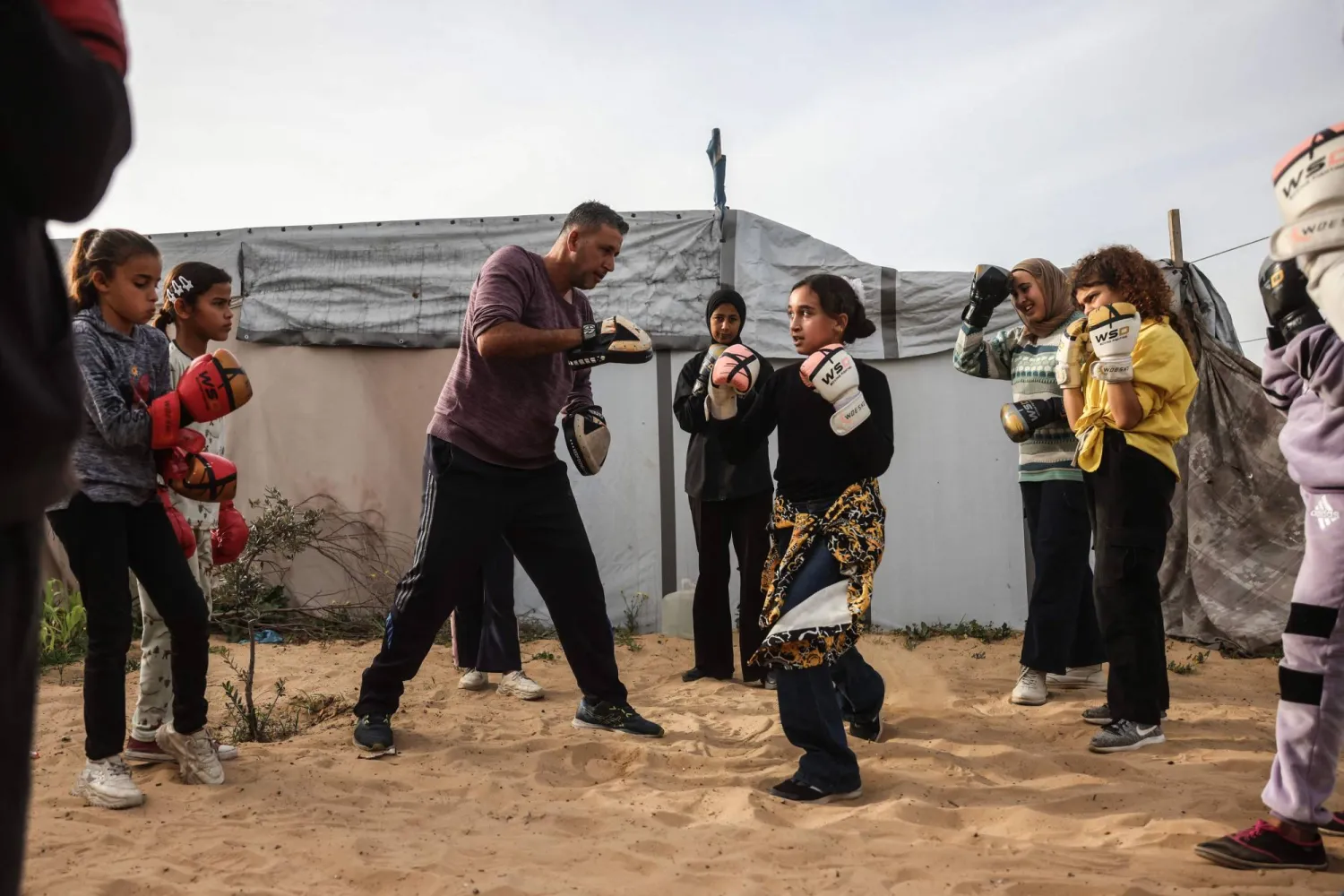
Palestinian girls and young women attend a boxing training session between displacement tents in Khan Younis, in the southern Gaza Strip, on February 9, 2026. (AFP)
TT

Gaza Girls Take Up Boxing to Heal War’s Scars

Palestinian girls and young women attend a boxing training session between displacement tents in Khan Younis, in the southern Gaza Strip, on February 9, 2026. (AFP)

In a makeshift boxing ring etched into the sand between the tens of displaced Palestinians in southern Gaza, a dozen young girls warmed up before delivering fierce blows at their coach's command.

Osama Ayub once ran a boxing club in Gaza City, in the north of the Palestinian territory, until it was destroyed in a strike along with his home during the war between Israel and Hamas.

After finding shelter in the southern city of Khan Younis, he opted to put his sporting skills at the service of displaced Gazans, crammed by the tens of thousands in tents and makeshift shelters.

"We decided to work inside the camp to offer the girls some psychological relief from the war", Ayub told AFP.

Behind him, some of the young athletes faced each other in the ring surrounded by cheering gymmates, while others trained on a punching bag.

"The girls have been affected by the war and the bombardments; some have lost their families or loved ones. They feel pain and want to release it, so they have found in boxing a way to express their emotions," said Ayub.

Ayub now runs these free training sessions for 45 boxers aged between 8 and 19 three times a week, with positive feedback from his students as well as from the community.

One of the youngsters, Ghazal Radwan, aged 14, hopes to become a champion and represent her country.

"I practice boxing to develop my character, release pent-up energy and to become a champion in the future, compete against world champions in other countries, and raise the Palestinian flag around the world", she told AFP.

- Call for aid -

One after the other, the girls trained with Ayub, shifting from right to left jabs, hooks and uppercuts at his command.

In war-devastated Gaza, where construction materials are scarce, Ayub had to improvise to build his small training facility.

"We brought wood and built a square boxing ring, but there are no mats or safety measures," he said.

He called on the international community to support the boxers and help them travel abroad to train, "to strengthen their confidence and offer them psychological support".

The strict blockade that Israel imposed on the Gaza Strip makes the reconstruction of sports facilities particularly complicated, as building materials are routinely rejected by Israeli officials.

The official Palestinian news agency Wafa reported in January that a shipment of artificial turf donated by China to Gaza's youth and sports council was not allowed in by Israel.

With medicine, food and fuel all in short supply, sports equipment comes much lower on the list of items entering the Palestinian territory.

Rimas, a 16-year-old boxer, said she and her friends continued "to practice boxing despite the war, the bombardments and the destruction".

"We, the girls who box, hope for your support, that you will bring us gloves and shoes. We train on sand and need mats and punching bags," she said in comments addressed to the international community.


Is Iran Pushing Houthis Toward Military Action Against Washington?

Houthis continue mobilization, fundraising, and declare combat readiness (AP) 
TT

Is Iran Pushing Houthis Toward Military Action Against Washington?

Houthis continue mobilization, fundraising, and declare combat readiness (AP) 

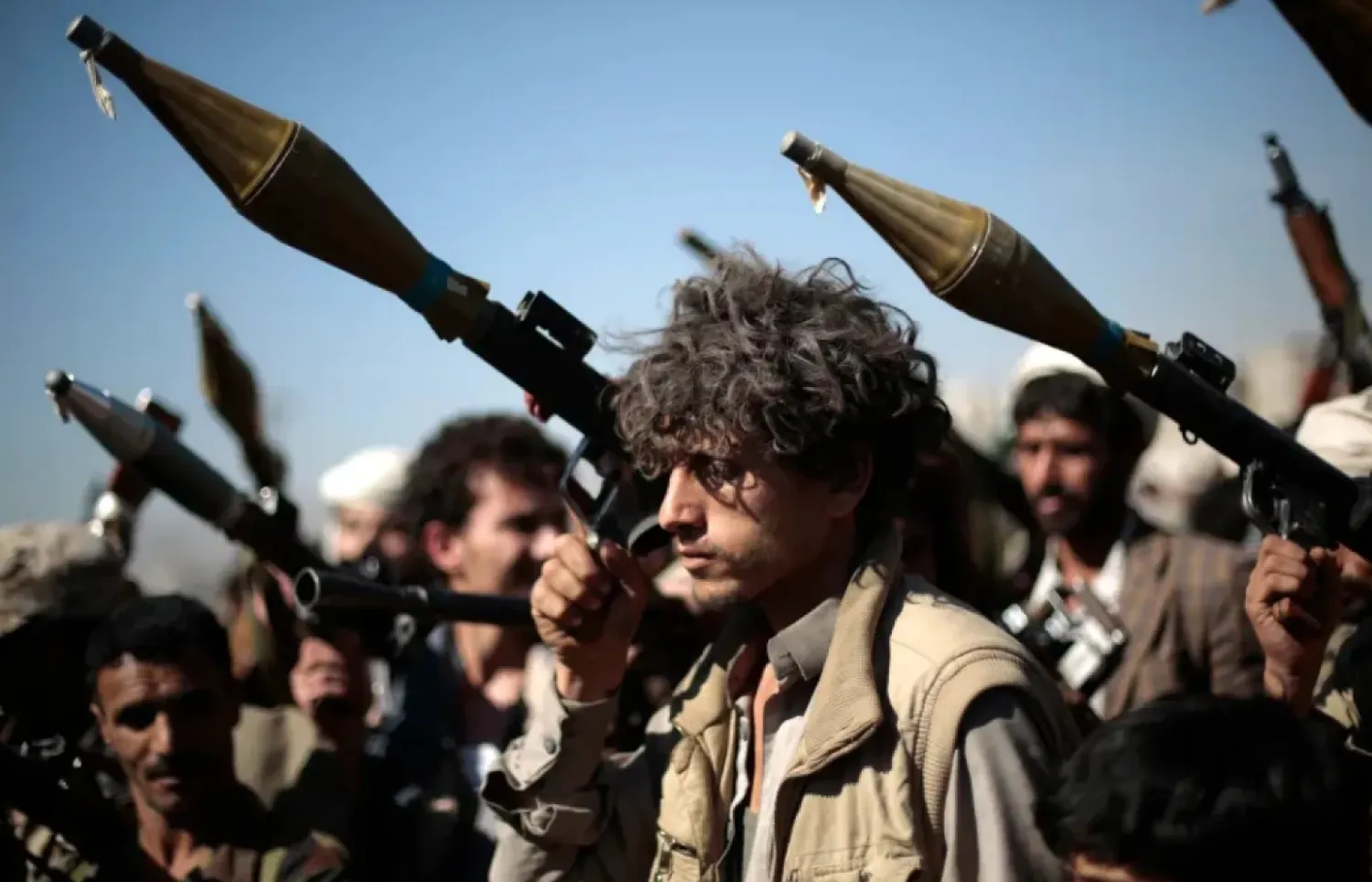
As US military movements intensify in the Middle East and the possibility of strikes on Iran looms, Yemen’s Houthi group has continued military preparations, mobilizing fighters and establishing new weapons sites.

The Houthi mobilization comes at a time when the group is widely viewed as one of Iran’s most important regional arms for retaliation.

Although the Iran-backed group has not issued any official statement declaring its position on a potential US attack on Iran, its leaders have warned Washington against any military action and against bearing full responsibility for any escalation and its consequences.

They have hinted that any response would be handled in accordance with the group’s senior leadership's assessment, after evaluating developments and potential repercussions.

Despite these signals, some interpret the Houthis’ stance as an attempt to avoid drawing the attention of the current US administration, led by President Donald Trump, to the need for preemptive action in anticipation of a potential Houthi response.

The Trump administration previously launched a military campaign against the group in the spring of last year, inflicting heavy losses.

Islam al-Mansi, an Egyptian researcher specializing in Iranian affairs, said Iran may avoid burning all its cards unless absolutely necessary, particularly given US threats to raise the level of escalation should any Iranian military proxies intervene or take part in a confrontation.

Iran did not resort to using its military proxies during its confrontation with Israel or during a limited US strike last summer because it did not perceive an existential threat, al-Mansi said.

That calculation could change in the anticipated confrontation, potentially prompting Houthi intervention, including targeting US allies, interests, and military forces, he told Asharq Al-Awsat.

Al-Mansi added that although Iran previously offered, within a negotiating framework, to abandon its regional proxies, including the Houthis, this makes it more likely that Tehran would use them in retaliation, noting that Iran created these groups to defend its territory from afar.

Many intelligence reports suggest that Iran’s Revolutionary Guard has discussed with the Houthis the activation of alternative support arenas in a potential US-Iran confrontation, including the use of cells and weapons not previously deployed.

Visible readiness

In recent days, Chinese media outlets cited an unnamed Houthi military commander as saying the group had raised its alert level and carried out inspections of missile launch platforms in several areas across Yemen, including the strategically important Red Sea region.

In this context, Yemeni political researcher Salah Ali Salah said the Houthis would participate in defending Iran against any US attacks, citing the group’s media rhetoric accompanying mass rallies, which openly supports Iran’s right to defend itself.

While this rhetoric maintains some ambiguity regarding Iran, it repeatedly invokes the war in Gaza and renews Houthi pledges to resume military escalation in defense of the besieged enclave’s population, Salah told Asharq Al-Awsat.

He noted that Iran would not have shared advanced and sophisticated military technologies with the Houthis without a high degree of trust in their ability to use them in Iran’s interest.

In recent months, following Israeli strikes on the unrecognized Houthi government and several of its leaders, hardline Houthi figures demonstrating strong loyalty to Iran have become more prominent.

On the ground, the group has established new military sites and moved equipment and weapons to new locations along and near the coast, alongside the potential use of security cells beyond Yemen’s borders.

Salah said that if the threat of a military strike on Iran escalates, the Iranian response could take a more advanced form, potentially including efforts to close strategic waterways, placing the Bab al-Mandab Strait within the Houthis’ target range.

Many observers have expressed concern that the Houthis may have transferred fighters and intelligence cells outside Yemen over recent years to target US and Western interests in the region.

Open options

After a ceasefire was declared in Gaza, the Houthis lost one of their key justifications for mobilizing fighters and collecting funds. The group has since faced growing public anger over its practices and worsening humanitarian conditions, responding with media messaging aimed at convincing audiences that the battle is not over and that further rounds lie ahead.

Alongside weekly rallies in areas under their control in support of Gaza, the Houthis have carried out attacks on front lines with Yemen’s internationally recognized government, particularly in Taiz province.

Some military experts describe these incidents as probing attacks, while others see them as attempts to divert attention from other activities.

In this context, Walid al-Abara, head of the Yemen and Gulf Studies Center, said the Houthis entered a critical phase after the Gaza war ended, having lost one of the main justifications for their attacks on Red Sea shipping.

As a result, they may seek to manufacture new pretexts, including claims of sanctions imposed against them, to maintain media momentum and their regional role.

Al-Abara told Asharq Al-Awsat that the group has two other options. The first is redirecting its activity inward to strengthen its military and economic leverage, either to impose its conditions in any future settlement or to consolidate power.

The second is yielding to international and regional pressure and entering a negotiation track, particularly if sanctions intensify or its economic and military capacity declines.

According to an assessment by the Yemen and Gulf Studies Center, widespread protests in Iran are increasingly pressuring the regime’s ability to manage its regional influence at the same pace as before, without dismantling its network of proxies.

This reality is pushing Tehran toward a more cautious approach, governed by domestic priorities and cost-benefit calculations, while maintaining a minimum level of external influence without broad escalation.

Within this framework, al-Abara said Iran is likely to maintain a controlled continuity in its relationship with the Houthis through selective support that ensures the group remains effective.

However, an expansion of protests or a direct military strike on Iran could open the door to a deeper Houthi repositioning, including broader political and security concessions in exchange for regional guarantees.


The Gaza Ceasefire Began Months Ago. Here’s Why the Fighting Persists

Israeli soldiers and tanks stand in Gaza, as seen from the Israeli side of the Israel-Gaza border, in Israel, February 4, 2026. REUTERS/Amir Cohen
TT

The Gaza Ceasefire Began Months Ago. Here’s Why the Fighting Persists

Israeli soldiers and tanks stand in Gaza, as seen from the Israeli side of the Israel-Gaza border, in Israel, February 4, 2026. REUTERS/Amir Cohen

As the bodies of two dozen Palestinians killed in Israeli strikes arrived at hospitals in Gaza on Wednesday, the director of one asked a question that has echoed across the war-ravaged territory for months.

“Where is the ceasefire? Where are the mediators?” Shifa Hospital's Mohamed Abu Selmiya wrote on Facebook.

At least 556 Palestinians have been killed in Israeli strikes since a US-brokered truce came into effect in October, including 24 on Wednesday and 30 on Saturday, according to Gaza's Health Ministry. Four Israeli soldiers have been killed in Gaza in the same period, with more injured, including a soldier whom the military said was severely wounded when militants opened fire near the ceasefire line in northern Gaza overnight.

Other aspects of the agreement have stalled, including the deployment of an international security force, Hamas' disarmament and the start of Gaza's reconstruction. The opening of the Rafah border crossing between Gaza and Egypt raised hope of further progress, but fewer than 50 people were allowed to cross on Monday, The Associated Press said.

Hostages freed as other issues languish In October, after months of stalled negotiations, Israel and Hamas accepted a 20-point plan proposed by US President Donald Trump aimed at ending the war unleashed by Hamas' Oct. 7, 2023, attack into Israel.

At the time, Trump said it would lead to a “Strong, Durable, and Everlasting Peace."

Hamas freed all the living hostages it still held at the outset of the deal in exchange for thousands of Palestinian prisoners held by Israel and the remains of others.

But the larger issues the agreement sought to address, including the future governance of the strip, were met with reservations, and the US offered no firm timeline.

The return of the remains of hostages meanwhile stretched far beyond the 72-hour timeline outlined in the agreement. Israel recovered the body of the last hostage only last week, after accusing Hamas and other militant groups of violating the ceasefire by failing to return all of the bodies. The militants said they were unable to immediately locate all the remains because of the massive destruction caused by the war — a claim Israel rejected.

The ceasefire also called for an immediate influx of humanitarian aid, including equipment to clear rubble and rehabilitate infrastructure. The United Nations and humanitarian groups say aid deliveries to Gaza's 2 million Palestinians have fallen short due to customs clearance problems and other delays. COGAT, the Israeli military body overseeing aid to Gaza, has called the UN's claims “simply a lie.”

Ceasefire holds despite accusations

Violence has sharply declined since the ceasefire paused a war in which more than 71,800 Palestinians have been killed, according to the Gaza Health Ministry. The ministry is part of the Hamas-led government and maintains detailed records seen as generally reliable by UN agencies and independent experts.

Hamas-led militants killed some 1,200 people in the initial October 2023 attack and took around 250 hostage.

Both sides say the agreement is still in effect and use the word “ceasefire” in their communications. But Israel accuses Hamas fighters of operating beyond the truce line splitting Gaza in half, threatening its troops and occasionally opening fire, while Hamas accuses Israeli forces of gunfire and strikes on residential areas far from the line.

Palestinians have called on US and Arab mediators to get Israel to stop carrying out deadly strikes, which often kill civilians. Among those killed on Wednesday were five children, including two babies. Hamas, which accuses Israel of hundreds of violations, called it a “grave circumvention of the ceasefire agreement.”

In a joint statement on Sunday, eight Arab and Muslim countries condemned Israel’s actions since the agreement took effect and urged restraint from all sides “to preserve and sustain the ceasefire.”

Israel says it is responding to daily violations committed by Hamas and acting to protect its troops. “While Hamas’ actions undermine the ceasefire, Israel remains fully committed to upholding it,” the military said in a statement on Wednesday.

“One of the scenarios the (military) has to be ready for is Hamas is using a deception tactic like they did before October 7 and rearming and preparing for an attack when it’s comfortable for them,” said Lt. Col. Nadav Shoshani, a military spokesperson.

Some signs of progress

The return of the remains of the last hostage, the limited opening of the Rafah crossing, and the naming of a Palestinian committee to govern Gaza and oversee its reconstruction showed a willingness to advance the agreement despite the violence.

Last month, US envoy Steve Witkoff, who played a key role in brokering the truce, said it was time for “transitioning from ceasefire to demilitarization, technocratic governance, and reconstruction.”

That will require Israel and Hamas to grapple with major issues on which they have been sharply divided, including whether Israel will fully withdraw from Gaza and Hamas will lay down its arms.

Though political leaders are holding onto the term “ceasefire” and have yet to withdraw from the process, there is growing despair in Gaza.

On Saturday, Atallah Abu Hadaiyed heard explosions in Gaza City during his morning prayers and ran outside to find his cousins lying on the ground as flames curled around them.

“We don’t know if we’re at war or at peace,” he said from a displacement camp, as tarpaulin strips blew off the tent behind him.