EU Says Position on Western Sahara Unchanged

EU flags flutter in front of the European Commission headquarters in Brussels, Belgium October 2, 2019. REUTERS/Yves Herman/File Photo
TT

EU Says Position on Western Sahara Unchanged

EU flags flutter in front of the European Commission headquarters in Brussels, Belgium October 2, 2019. REUTERS/Yves Herman/File Photo

The European Union reiterated Wednesday that its position remains unchanged regarding the status of Western Sahara, saying none of the EU states recognizes the self-declared Sahrawi Arab Democratic Republic (SADR) announced by the Polisario front in 1976.

Responding to a question about whether an invitation could be extended to the separatists to take part in the European Union-African Union summit, which opens Thursday in Brussels, the EU Spokesperson for Foreign Affairs and Security Policy, Peter Stano, stated that the EU did not invite the Polisario.

The EU is co-organizing the summit with the AU, and each organization is responsible for inviting its members. It is therefore the African Union that has taken responsibility for inviting its members.

The EU could not interfere in the AU’s decisions with regard to its members.

Stano said that the AU gesture “does not change the position of the European Union.”

He further reiterated that none of the EU’s 27 members recognizes the SADR or its leadership’s goal for a breakaway state in Western Sahara.

Europe’s position was previously stated in Abidjan, the Ivory Coast, in 2017. At the time, Brussels said it does not recognize the legitimacy of the SADR claims to Moroccan regions in Western Sahara.

More than 850 Sahrawi NGOs active in the area of human rights and sustainable development have strongly rejected the participation of the military leader of Polisario in the summit.

In a letter sent to the President of the European Commission, Ursula von der Leyen, the High Representative of the EU for Foreign Affairs and Security Policy, Josep Borrell, and the President of the European Parliament, Roberta Metsola, the NGOs expressed their astonishment and their rejection of the participation in the EU-AU summit “of a man and an organization responsible for serious violations of human rights and misappropriation of European aid."

"For us, it is incomprehensible and highly condemnable", said the 852 NGOs that signed the petition sent to the three senior European officials.


Lebanon Charges 5 Hezbollah Members with Recruiting, Arming Others

Lebanon Charges 5 Hezbollah Members with Recruiting, Arming Others
TT

Lebanon Charges 5 Hezbollah Members with Recruiting, Arming Others

Lebanon Charges 5 Hezbollah Members with Recruiting, Arming Others

The Lebanese judiciary has charged five Hezbollah members with recruiting and arming others.

They were charged with "forming an armed group, recruiting members, equipping them and supplying them with weapons,” a judicial source told Asharq Al-Awsat.

The source said that the five individuals were arrested earlier this month in northern Lebanon.

According to the source, the Information Branch of the Internal Security Forces (ISF) will continue the preliminary investigation into the case, saying the charges are expected to be expanded to include other individuals whose names emerged during the probe.

The judicial source said the detainees were charged with “undermining the internal security of the state” because authorities suspect they may have been preparing to carry out a security-related operation.

Papers and maps were found in their possession, some of which they had attempted to tear up when an ISF patrol approached them.


Washington Targets Hezbollah Funding with More Sanctions

Hezbollah supporters wave flags of the group as they attend a ceremony commemorating the Iran-backed group's annual Martyrs' Day in Beirut's southern suburbs on November 11, 2026.  (Photo by Joseph EID / AFP)
Hezbollah supporters wave flags of the group as they attend a ceremony commemorating the Iran-backed group's annual Martyrs' Day in Beirut's southern suburbs on November 11, 2026. (Photo by Joseph EID / AFP)
TT

Washington Targets Hezbollah Funding with More Sanctions

Hezbollah supporters wave flags of the group as they attend a ceremony commemorating the Iran-backed group's annual Martyrs' Day in Beirut's southern suburbs on November 11, 2026.  (Photo by Joseph EID / AFP)
Hezbollah supporters wave flags of the group as they attend a ceremony commemorating the Iran-backed group's annual Martyrs' Day in Beirut's southern suburbs on November 11, 2026. (Photo by Joseph EID / AFP)

The United States imposed sanctions Wednesday on a Lebanon-based charity as it sought to target funding for Hezbollah, marking Washington's latest move to step up pressure on Tehran.

The US Treasury Department took aim at the Wa Ta'awanu Association, which provides emergency relief services for southern Lebanon, charging that it also funnels donor funds towards Hezbollah's "terrorist activities."

"The Iranian regime's attempts to infringe on Lebanon's sovereignty through terror proxies like Hezbollah will not be tolerated," Treasury Secretary Scott Bessent said in a statement announcing the sanctions.

He added that Washington will continue to "disrupt Iran's attempts to exert influence in the region and fund its proxies."

The latest move is meant to raise pressure on Hezbollah's "illicit financing networks" as it tries to resist calls for it to disarm.

The US State Department accused the Wa Ta'awanu Association of claiming to deliver emergency relief in southern Lebanon while moving Hezbollah operatives and storing the group's weapons, plus channeling funds towards the group's activities.

On Wednesday, the US Treasury also imposed sanctions on members of a "gold and cash smuggling network" that it said was run by Hezbollah and Iran's Revolutionary Guard Corps Quds Force.


Iran Shadows Washington’s Moves in Lebanon as Visits, Calls Fuel Race for Influence

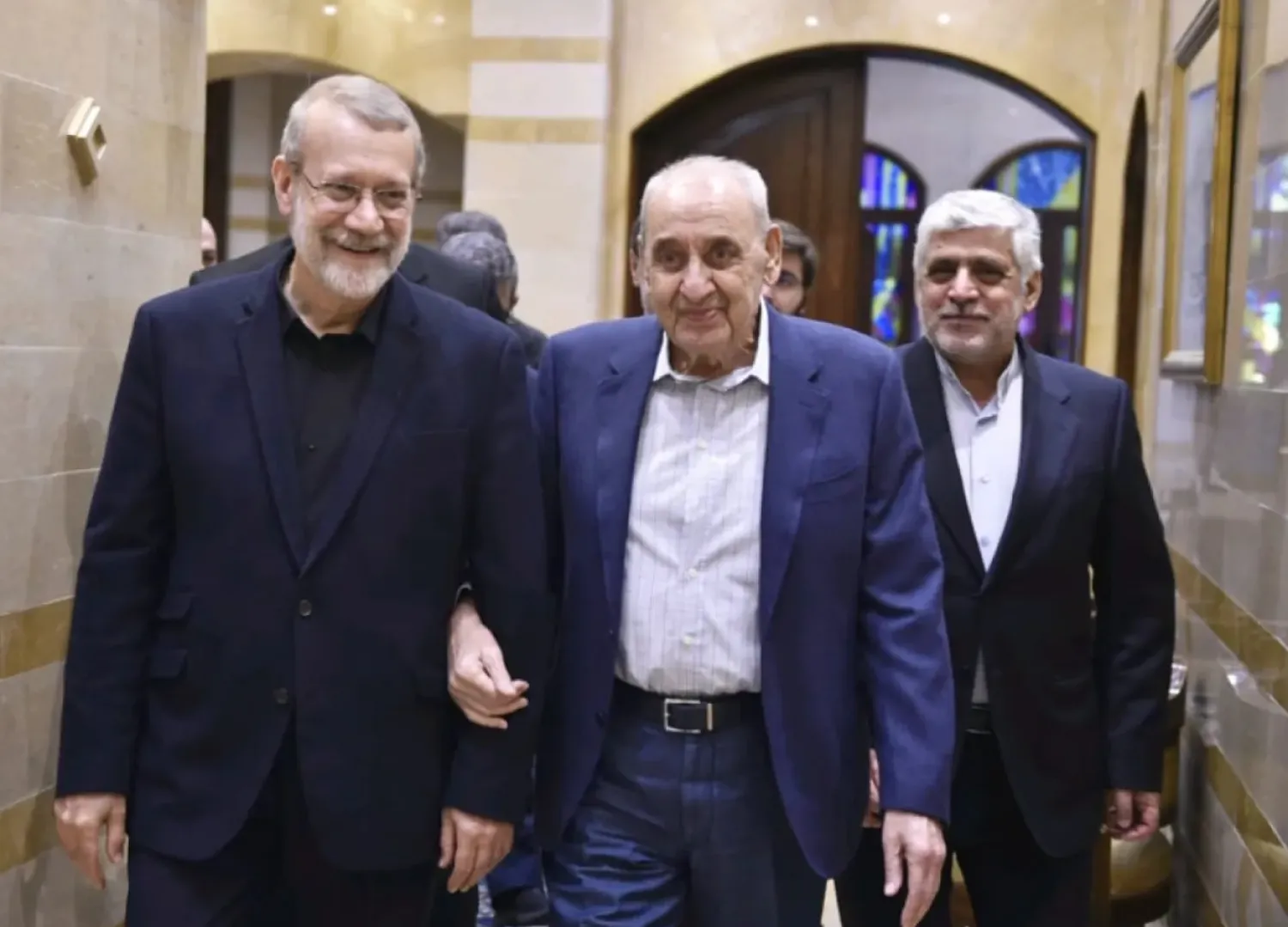
Ali Larijani, former senior adviser to Khamenei, with Lebanese Parliament Speaker Nabih Berri (File photo: Lebanese Parliament Media Office)
TT

Iran Shadows Washington’s Moves in Lebanon as Visits, Calls Fuel Race for Influence

Ali Larijani, former senior adviser to Khamenei, with Lebanese Parliament Speaker Nabih Berri (File photo: Lebanese Parliament Media Office)

Iran is keeping a close watch on Washington's moves in Lebanon and moving swiftly to counter them.

From dispatching senior officials to Beirut to calling Parliament Speaker Nabih Berri directly, Tehran has repeatedly sought to match or respond to US diplomatic initiatives in a contest for influence over Lebanese decision-making.

The message, according to the pattern of Iranian moves, is clear: Tehran will not let Washington dictate Lebanon's next chapter alone.

"Every time a US official visits Beirut, an Iranian official follows, even when there is nothing to discuss," a former Lebanese prime minister told Asharq Al-Awsat.

The pattern has become more pronounced in recent years, particularly since the 2024 war, the former premier said.

Ministerial sources said Iranian envoys typically follow US diplomatic moves with visits and meetings, particularly with Tehran's Lebanese allies, to gauge Washington's latest positions and learn what was discussed behind closed doors.

The contacts are also part of an exchange of political messages between Tehran and Washington, the sources told Asharq Al-Awsat.

Iran, they said, wants to show that it still holds the Lebanese card — and retains the leverage to shape political settlements.

The pattern was particularly evident in the autumn of 2024, as international efforts, led largely by Washington, intensified to halt Israel's war on Lebanon.

Iranian Foreign Minister Abbas Araghchi visited Beirut on Oct. 4. A week later, Iranian Parliament Speaker Mohammad Baqer Qalibaf arrived, saying he had diverted his trip to Switzerland to deliver a "message of support" from then-Supreme Leader Ali Khamenei.

The diplomatic maneuvering continued in November as a US ceasefire initiative gained ground.

On Nov. 14, US Ambassador Lisa Johnson handed Berri a draft of Washington's ceasefire proposal.

The following day, Ali Larijani, then an adviser to Iran's supreme leader, arrived in Beirut for talks with Berri and then-Prime Minister Najib Mikati.

He declared Iran's support for "any decision Lebanon makes to achieve a ceasefire."

Tehran's Familiar Playbook

Former Lebanese minister Boutros Harb sees little new in Tehran's approach.

Iran, he said, has long treated Lebanese groups aligned with it as subordinates, speaking and negotiating on their behalf rather than allowing Lebanon to pursue an independent negotiating position based on its national interests.

But the stakes are now higher, Harb told Asharq Al-Awsat.

Lebanon has an opportunity to capitalize on international diplomatic efforts, he said, while Iran is working to prevent the Lebanese file from being separated from its own negotiations with Washington.

Tehran wants to keep that card in hand to demonstrate that it remains an influential regional player, he added.

"Tehran treats Lebanon as an Iranian province, as though there were no state or government," Harb said.

He acknowledged that Lebanon's political landscape had changed to some extent under President Joseph Aoun and Prime Minister Nawaf Salam.

"But unfortunately, the card is still in Iran's hands, and it is exploiting it to preserve its regional role," he said.

Lebanon Tied to US-Iran Talks

By 2026, Tehran's diplomatic push had increasingly shifted from visits to telephone calls carrying political messages tied to negotiations with Washington.

The shift became particularly apparent after Iran announced that it had told mediators any ceasefire agreement with the United States and Israel must also halt Israeli attacks on Lebanon.

On April 1, Berri said Araghchi had conveyed Iran's insistence that any agreement include Lebanon.

"What applies to Tehran applies to Beirut," Berri quoted the Iranian foreign minister as saying.

The pattern resurfaced on July 9, when a US diplomatic move in Beirut coincided with a visit by an Iranian delegation led by Deputy Foreign Minister Vahid Jalalzadeh.

While US Ambassador Michel Issa met Aoun to discuss implementation of the Lebanese-Israeli framework agreement, the Iranian delegation held talks with Berri and Deputy Prime Minister Tarek Mitri.

The latest episode came on Nov. 16, following a Beirut visit by US Ambassador to the United Nations Mike Waltz.

Waltz met Lebanon's president, prime minister and parliament speaker and urged Hezbollah to voluntarily hand over its weapons to the state.

"No country can have two armies," he said.

That same day, Qalibaf called Berri, stressing Iran's "special interest" in Lebanon.

Regional calm, he said, could not return without an end to the war in Lebanon and the restoration of Lebanese sovereignty over all its territory.

Hezbollah's Weapons: Another Front

Iran's response to US moves has not been confined to ceasefire diplomacy.

The same pattern emerged in August 2025, when Lebanon's government decided to draw up a plan to bring all weapons under state control, amid US pressure to carry it out.

On Aug. 13, Ali Larijani, then secretary of Iran's Supreme National Security Council, visited Beirut and met Lebanon's president, prime minister and parliament speaker.

He opposed foreign pressure over Hezbollah's weapons, calling instead for "dialogue among the Lebanese" and warning against imposing "foreign dictates on Lebanon."

Five days later, US envoy Tom Barrack and deputy US envoy Morgan Ortagus arrived in Beirut to follow up on Washington's roadmap for placing weapons exclusively under state control and to discuss security issues.