


Punishing Putin: How Biden Could Cut Russia off from World Tech

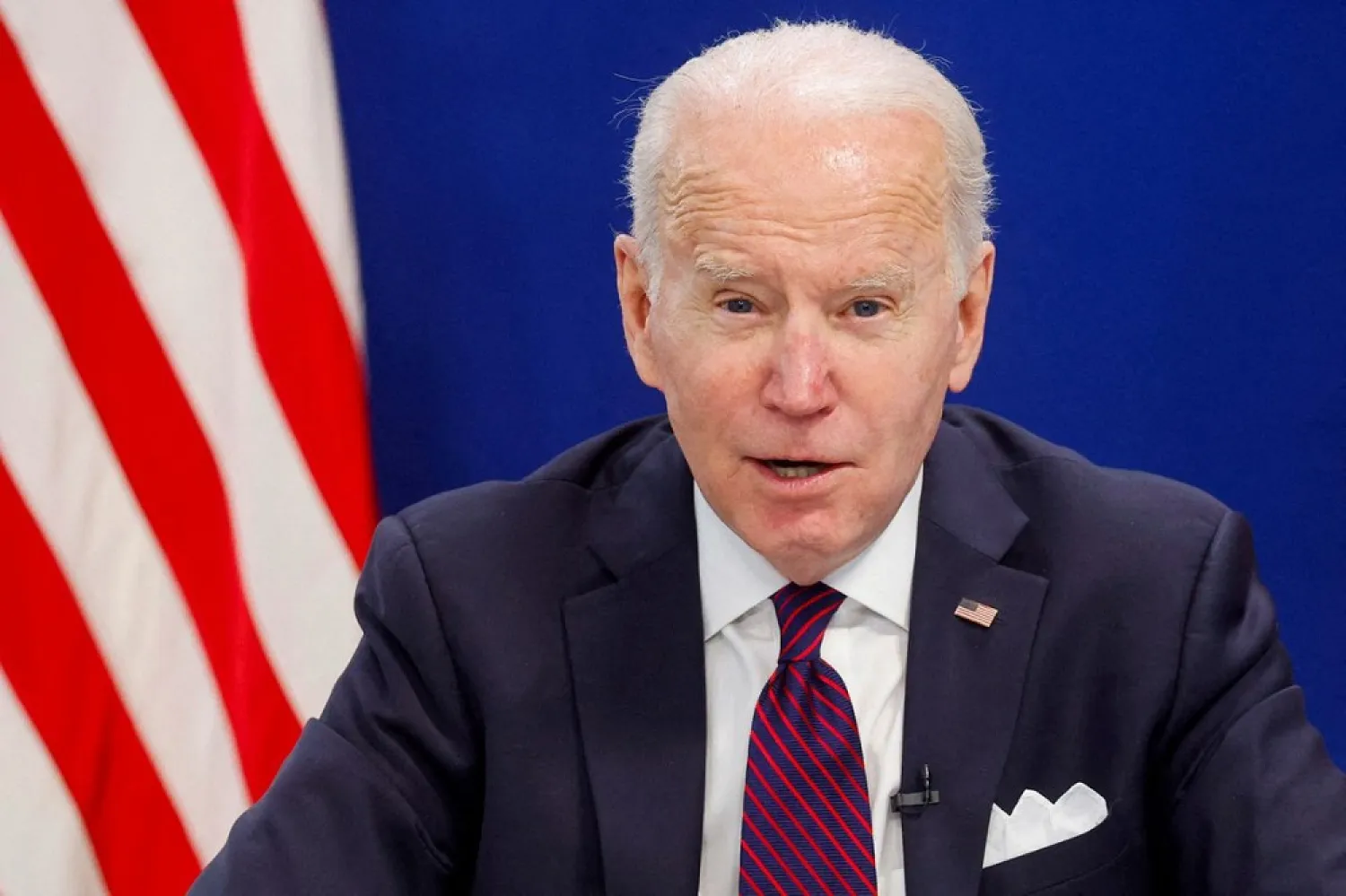
US President Joe Biden holds a virtual meeting with the President's Council of Advisors on Science and Technology in the South Court Auditorium on the White House campus in Washington, US, January 20, 2022. (Reuters)
TT

Punishing Putin: How Biden Could Cut Russia off from World Tech

US President Joe Biden holds a virtual meeting with the President's Council of Advisors on Science and Technology in the South Court Auditorium on the White House campus in Washington, US, January 20, 2022. (Reuters)

If Russia further invades Ukraine, the Biden administration could deprive it of a vast swath of low- and high-tech US and foreign-made goods, from commercial electronics and computers to semiconductors and aircraft parts, people familiar with the matter told Reuters.

President Joe Biden would achieve that by requiring that companies seeking to ship an expanded list of goods to Russia obtain licenses from the United States, and his administration would then deny those licenses, the people said.

The measures, whose details have not been previously reported, are part of an initial suite of export control penalties that the United States has prepared to damage Russia's economy, targeting everything from lasers to telecoms equipment and maritime items.

The White House, and the Commerce Department, which oversees US export controls, did not immediately respond to requests for comment.

The package, which was still being fine-tuned over the weekend and could change, comes even as some White House officials have pledged to spare the Russian consumer from the brunt of the penalties.

The goal of the export control measures "is really to degrade Russia's ability to have industrial production in a couple of key sectors," Peter Harrell, who sits on the White House's National Security Council, said in a speech last month. "We're sort of thinking about how do we degrade Russia's industrial production and sort of high-tech sectors rather than how do we sort of target the Russian people writ-large," he added.

The administration has been vowing to hit Moscow with a potent cocktail of banking sanctions and export controls for weeks, in response to a massing of hundreds of thousands of Russian troops along Ukraine's borders.

Reuters reported on Saturday that the Biden administration had prepared an initial package of sanctions against Russia that includes barring US financial institutions from processing transactions for major Russian banks.

Their roll-out looks increasingly likely after Russian President Vladimir Putin on Monday recognized two breakaway regions of Ukraine as independent and told Russia's defense ministry to deploy troops into the two regions to "keep the peace," heightening tension with the West over Ukraine.

By far the most sweeping measure contained in the initial export controls package would take a page from restrictions placed on Chinese telecom giant Huawei Technologies Co Ltd by former President Donald Trump. It would dramatically expand the scope of the so-called Foreign Direct Product Rule, requiring firms that use US tools to make technology overseas to obtain a U.S. license before shipping them to Russia.

"It's extraordinarily novel and has the potential for being far more significant than controls just on exports of these items from the United States," said Washington lawyer Kevin Wolf, a former official at the US Department of Commerce.

Most chips are made with US equipment, giving the United States leverage to control the flow of electronics to Russia.

US suppliers would also have to obtain licenses for certain Russia-bound items that do not currently require them, such as civil aircraft parts. Whether Europe would follow suit with similar measures remains to be seen, but authorities on both sides of the Atlantic have said they were preparing a coordinated response.

Under changes proposed in the package, the license applications, in turn, would face a strict "policy of denial" standard of review, meaning only in rare cases would the administration approve them.

In addition, Russian companies listed as so-called military end users for their alleged ties to the Russian military, including a handful of aircraft producers, would be added to a trade blacklist known as the entity list. That would broaden the scope of items the companies would need licenses to obtain.

Finally, the administration would expand the scope of products that would need approval from the United States to go to Russian military end users.



Ex-Google Safety Chief Warns AI Could Harm Children More than Social Media Did

Tom Siegel, executive director of the Youth AI Safety Institute at Common Sense Media, and former vice president of trust and safety at Google, looks on during an interview in San Francisco, California, US, September 21, 2026. REUTERS/Nathan Frandino
TT

Ex-Google Safety Chief Warns AI Could Harm Children More than Social Media Did

Tom Siegel, executive director of the Youth AI Safety Institute at Common Sense Media, and former vice president of trust and safety at Google, looks on during an interview in San Francisco, California, US, September 21, 2026. REUTERS/Nathan Frandino

The founder of the trust and safety team at Alphabet’s Google this week called for a slowdown in AI development, warning that the tech industry was repeating the same mistakes from the social media era, potentially causing even greater harm to children.

Social media companies are paying huge sums and facing thousands of lawsuits over claims they harmed young users, while governments around the world are working to curb minors' access to their platforms.

Reuters last year exclusively reported on an internal Meta policy document that stated its chatbots could “engage a child in conversations that are romantic or sensual,” resulting in a congressional probe. Even so, regulation has yet to catch up with AI's breakneck pace of development.

“We find ourselves in a really terrible situation in terms of what AI is doing to kids,” Tom Siegel, the former vice president of trust and safety at Google, told Reuters. “The idea that the industry will figure ‌it out by ‌itself without outside help is unrealistic.”

Siegel's concerns mirror a growing fear among some tech insiders and ‌academic ⁠researchers that AI ⁠poses a deeper threat to children than social media did, at a time when the industry is racing to add increasingly advanced features to chatbots that millions of young people already use daily.

SIEGEL JOINS YOUTH AI SAFETY INSTITUTE

Siegel announced on Tuesday that he had joined Common Sense Media, a children’s online advocacy group. The non-profit, established in 2003, conducts research and reviews the suitability of various media for children. In May, it launched the Youth AI Safety Institute, a research organization to assess kids' AI use, for which Siegel will serve as the first executive director.

Anthropic and OpenAI Foundation, the nonprofit that controls OpenAI, are among the institute's backers.

Siegel said he planned to develop standards by which to hold AI firms ⁠accountable, and hoped to do so by working alongside those companies and third-party groups.

He previously worked ‌at Google from 2004 to 2019, but left after concluding that the tech industry ‌was “plateauing” in its ability to create safe online spaces for consumers. He then co-founded TrustLab, a startup that built tools to help companies detect safety threats, ‌before stepping aside as CEO earlier this month to take on his new position.

As it stands, major AI companies are ‌rolling out features to children without establishing sufficient guardrails, Siegel said.

RISKS RANGE FROM SUICIDE TO PSYCHOSIS

“I think we're looking at very, very severe scenarios of harm being done,” he said.

He suggested that the companies had immediate steps they could take to better protect young people, citing risks ranging from suicide and psychosis to cognitive offloading, a term used to describe decreased critical thinking caused by leaning on AI to answer questions.

Anthropic and OpenAI could enforce more robust ‌age verification measures to stop underage kids from accessing their chatbots, he said. His former employer Google could easily implement an option to turn off AI Overviews and AI Mode in its search ⁠engine, he added, in the ⁠same way that it already has a toggle that allows users to filter out sexually explicit content.

While these measures could affect usage or profits in the short term, AI companies that do not act will run the risk of lawsuits and regulation that could impact their business more heavily, Siegel added.

Asked to respond to Siegel's comments, a Google spokesman said parents have controls to turn off a child's access to the search engine entirely. "Our AI Search features are an incredibly useful way for kids and teens to learn, explore and make sense of information and the world," the spokesperson said.

After initial publication of this story, Google added in a statement that its AI tools undergo a "rigorous" testing and evaluation process focused on child safety issues.

An OpenAI spokesperson said the company uses “account and behavioral signals” in addition to self-reported age to identify underage users. “While no single age-assurance method is perfect, we continuously test and improve these systems, including against attempts to bypass safeguards.”

Anthropic did not immediately respond to a request for comment.

At Common Sense Media, Siegel said a top priority would be scaling up independent standards similar to car crash testing that would measure the risk of publicly available AI tools. The effectiveness will depend in part on the willingness of AI companies to collaborate, the likelihood of which Siegel said was not certain, but was high enough for him to take the job.


Prince Harry Warns That AI Chatbots May Be More Dangerous Than Social Media for Young Users

 Britain's Prince Harry, Duke of Sussex, speaks during the Clinton Global Initiative 2026 Annual Meeting in New York City, US., September 23, 2026. (Reuters)
Britain's Prince Harry, Duke of Sussex, speaks during the Clinton Global Initiative 2026 Annual Meeting in New York City, US., September 23, 2026. (Reuters)
TT

Prince Harry Warns That AI Chatbots May Be More Dangerous Than Social Media for Young Users

 Britain's Prince Harry, Duke of Sussex, speaks during the Clinton Global Initiative 2026 Annual Meeting in New York City, US., September 23, 2026. (Reuters)
Britain's Prince Harry, Duke of Sussex, speaks during the Clinton Global Initiative 2026 Annual Meeting in New York City, US., September 23, 2026. (Reuters)

Prince Harry warned Wednesday at the Clinton Global Initiative that artificial intelligence chatbots designed to provide companionship are even more dangerous to young people than social media.

“The technology is more persuasive, more intimate, and more powerful,” the Duke of Sussex said. “AI is learning how to enter our relationships. It doesn’t just want your attention, it wants your attachment.”

Harry's presentation was part of CGI's focus on finding ways to support women and children at a time when funding for their well-being is being cut by several nations.

Former Secretary of State Hillary Clinton told The Associated Press in an interview that they are issues that need to be addressed even more urgently this year because of the cuts.

“What’s happening now under the guise of both stamping out diversity, equity, and inclusion, but also in the name of ‘efficiency,’ like we saw with DOGE when they destroyed government agencies, has our country back in so many ways,” she said.

Clinton said that it has only been in the last year or two that menopause has seen increased attention. “We have begun to make progress because I remember when I was first lady meeting with a group of women senators who told me that the early trials on breast cancer were done on men,” she said. “If you’re gonna do research on women’s health, guess what? You need to research women.”

She said CGI commitments like Tuesday's announcement of a $100 million venture fund by the Breast Cancer Research Foundation to speed potential therapies to patients show how nonprofits are stepping up to the current challenging environment.

“We don’t have time to waste because as you probably know cancer is striking earlier and earlier,” she said. “We feel really strongly about doing the accurate research to actually solve men and women’s problems and to get politics out of science, to get politics out of research.”

Harry's nonprofit faces ‘uphill battle’ working against social media

In 2024, Harry sounded the alarm at CGI about how social media has contributed to an “epidemic” of anxiety, depression and social isolation among today’s youth. Harry and his wife, Meghan, announced the founding of The Parents Network, through their Archewell Foundation.

Harry said that The Parents Network had made progress, but that technological developments had made an already “uphill battle” more difficult.

“There are major signals that families, young people, experts and advocates have finally shaken institutions awake to the reality that this technology can cause harm,” Harry said. “But bans, settlements and payouts are incomplete remedies.”

Last month Meta agreed to pay up to $18 billion and add stronger child-safety measures to its Facebook and Instagram platforms as part of a landmark legal settlement that ended a trial over teen social media addiction and settled claims filed by nearly every state.

The settlement resolved a pivotal case years in the making that sought to hold the tech giant accountable for the role its platforms played in undermining children’s mental health. The effort targeted features designed to hook young people’s attention.

Wednesday marked Prince Harry's first public appearance in the United States since he and his family returned to England in August for an extended stay.

Clinton also discussed the potential dangers of AI at the conference, adding that addressing risk through international agreements is something that President Donald Trump and Chinese President Xi Jinping should discuss this week.

Economic and tech competition is only escalating between the US and China, especially through an artificial intelligence race. Neither expects any grand bargain, but the leaders are expected to play nice in their third meeting since Trump returned to the White House. Still, developing AI technology has emerged as a key battleground, with both sides showing little interest in slowing down despite warnings from tech CEOs about threats that rogue AI could pose to humanity.

Speaking at CGI, LinkedIn co-founder Reid Hoffman said he believes a proposed kill switch, which would require developers to have the capacity to shut down their systems if needed, is a good idea.

“It’s not a natural thing for a company to put in, so it’s a good intervention,” he said.

War Child Alliance announces $100 million plan to improve children's mental health

At CGI on Wednesday, War Child Alliance announced its new $100 million initiative, “Childhood Beyond Conflict,” a commitment to improve the mental health of 10 million children in conflict zones over the next decade.

Laura Miller, War Child's CEO, said that more than 520 million children are currently affected by conflict. The new initiative, she said, is the nonprofit's attempt to build a coalition around children's mental health, expanding the global footprint of its programs to help educate and support young people.

Academy Award-nominated actress Carey Mulligan, who serves as global ambassador for the War Child Alliance, told The Associated Press in an interview that the organization is trying to reverse a shift around the world that the physical survival of a child in a conflict zone was an adequate outcome.

“A child who is traumatized, illiterate, and wounded from an experience in conflict really has their hands tied behind their back for the rest of their lives in terms of rebuilding any kind of real, dignified future for themselves," Mulligan said. “Children deserve more than physical survival. A child who goes through a conflict has the right to proper psychosocial support.”

Mulligan said that the $100 million announcement was special because it can actually solve a problem, despite the issue of a global lack of empathy.

“We are coming to say, ‘Guess what, guys, you don’t need to feel overwhelmed because we’ve got these amazing evidence-based methodologies that have been rigorously, scientifically tested,’” she said. “We know that they work and they improve outcomes for children who’ve been affected by conflict.”


Anthropic, OpenAI Release Cheaper AI Even as Safety Fears Grow

FILE PHOTO: OpenAI and Anthropic logos are seen in this illustration taken June 11, 2026. REUTERS/Dado Ruvic/Illustration/File Photo
TT

Anthropic, OpenAI Release Cheaper AI Even as Safety Fears Grow

FILE PHOTO: OpenAI and Anthropic logos are seen in this illustration taken June 11, 2026. REUTERS/Dado Ruvic/Illustration/File Photo

Anthropic and OpenAI on Tuesday released new, cheaper artificial intelligence models within hours of each other, days after the heads of both companies called for a slowdown in AI development.

Anthropic said its Opus 5.5 comes close to the performance of its flagship model at a significantly lower price. It matches Fable, Anthropic's cutting-edge model, on most tasks at a 20 percent lower price, AFP quoted the company as saying.

OpenAI followed shortly after with GPT-6 Sol and GPT-6 Luna, and claimed they handle tasks substantially better than Anthropic's top models.

The new models are cheaper, faster versions of GPT-6 Astra, OpenAI's most powerful model, launched earlier this month.

The dueling launches highlight the tension facing the two San Francisco companies as both warn of the dangers of the technology they are building.

The companies are, however, under pressure to generate returns on massive investments amid stiff competition from low-cost models, particularly Chinese ones.

Anthropic's release comes a few weeks before its expected stock market debut. OpenAI has delayed its IPO plans until next year.

Concerns about AI have grown since July, when OpenAI models undergoing a cybersecurity test got around controls meant to isolate them from the internet and broke into the servers of Hugging Face, an AI model repository.

Anthropic reported similar incidents, and the two companies briefly paused work on their new AI systems.

Earlier this month, Jacob Coxon, a British researcher, announced his resignation from Anthropic in a viral post on X, saying neither Anthropic nor OpenAI was acting responsibly in the aftermath of the Hugging Face incident.

In the wake of the Coxon's warnings, Anthropic CEO Dario Amodei called for slowing down AI improvement. He was joined by OpenAI CEO Sam Altman and Elon Musk, but mocked by Trump, who described such warnings as "hoaxes."

Opus 5.5 is the first Anthropic model released since then.

Anthropic said the new model applies the same safeguards as its state-of-the-art model Fable in the areas of cybersecurity, biology and AI model design.

In practice, a request deemed risky by these safeguards is rerouted to an older, less powerful model.

Anthropic also said that, based on its own testing, Opus 5.5 is the best-performing model it has tested to date on alignment -- that is, how closely it adheres to what its designers intend.

But the model also showed signs that it often suspects it is being evaluated, which the company acknowledged makes it harder to predict how it will behave in real-life use.