


US Delegation Visits Yemen For Talks on Economy, Terrorism

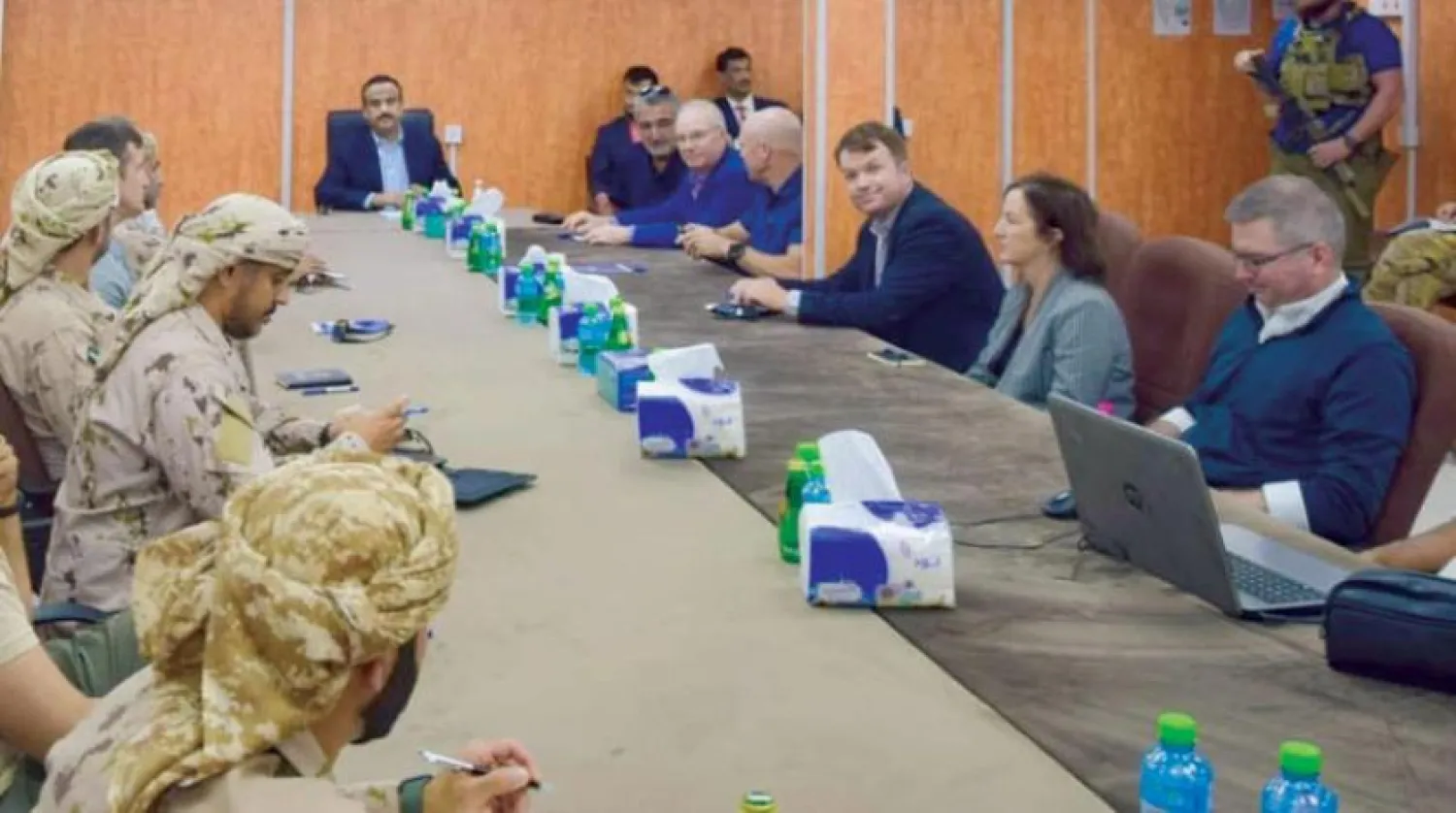
The US envoy to Yemen and the Chargé d’Affaires of the US Embassy in the country met with Governor Awad Al-Awlaki in Shabwa on Thursday. (Saba)
TT

US Delegation Visits Yemen For Talks on Economy, Terrorism

The US envoy to Yemen and the Chargé d’Affaires of the US Embassy in the country met with Governor Awad Al-Awlaki in Shabwa on Thursday. (Saba)

A US delegation discussed in Yemen the country’s security, economic and development needs, as well as efforts to combat terrorism and illegal smuggling.

US Envoy to Yemen Tim Lenderking and Chargé d’Affaires for the US Embassy in the country Cathy Westley conducted a visit to the governorates of Shabwa, Hadramaut and Mahra.

On a rare visit to the southeastern Shabwa governorate on Thursday, Lenderking and Westley discussed with the governor, Awad Al-Awlaki, developments on the economic and security levels, in the presence of officials from the Arab Coalition for the Support of Legitimacy in Yemen.

Local sources told Asharq Al-Awsat that the US delegation “focused on the security aspect, achieving security and stability, and combating terrorism.”

Speaking on condition of anonymity, the sources said: “The visit represented support for the governor’s efforts and followed a previous meeting with the chargé d’affaires of the embassy, which took place via video call.”

Earlier this year, the Southern Giants Brigades liberated three districts northwest of Shabwa from the grip of the Houthi militia, and advanced towards southern Marib, liberating the Harib district, before stopping at that point.

According to the same sources, the US side stressed the importance of “unifying military and security units, completing the implementation of the Riyadh Agreement, and enabling the security and military forces to achieve security and stability.”

The US State Department released a statement, saying that Lenderking and Westley concluded their visit to Yemen, during which they met with the Governors of Hadhramaut, Mahra, and Shabwa.

“The visit highlighted how Yemenis across the country – even those far from the frontlines – are suffering from years of political and economic instability. It provided an opportunity to discuss the needs in these governorates and efforts to strengthen basic services, economic opportunity, and security, which would allow peace to take root. This visit to Yemen also emphasized the continued challenges posed by terrorism and smuggling, which feed instability,” the statement read.

It continued: “The US delegation stressed its support for an inclusive UN-led peace process that incorporates the views of diverse Yemeni groups, including those from Hadhramaut, Mahra, and Shabwa, as well as women, civil society leaders, and representatives of other traditionally marginalized groups.”

The US State Department also noted that the visit to Yemen emphasized the importance of the international community continuing to support economic stability and humanitarian relief efforts.



Houthis Expand Spy Network to Tighten Grip on Sanaa

The Houthis continue to recruit new members for their military effort. (Facebook)
TT

Houthis Expand Spy Network to Tighten Grip on Sanaa

The Houthis continue to recruit new members for their military effort. (Facebook)

The Houthis have intensified security measures in the Yemeni capital, Sanaa, expanding their network of informants to monitor residents, track their movements and gauge their views, amid continued airstrikes targeting their leaders and military positions.

The measures are aimed at suppressing potential opposition amid growing fears of security breaches that could expose military positions and leadership movements.

Local sources told Asharq Al-Awsat that the Houthis had deployed additional informants across Sanaa in recent days to track residents’ movements, gatherings and social activities, and collect information about their attitudes toward the militia and its practices before reporting to security and intelligence agencies.

Plainclothes operatives have been deployed along main streets, in working-class neighborhoods and markets, and around institutions as part of a covert surveillance network designed to pursue critics, identify signs of public opposition and detect activities that could threaten Houthi influence.

According to the sources, the measures are intended to instill fear among residents and tighten surveillance.

Most informants are affiliated with various security agencies. They operate within networks overseen by Houthi officials responsible for collecting, exchanging and forwarding information to the relevant authorities.

Sanaa residents say the growing presence of informants reflects Houthi efforts to tighten their grip on society, turning neighborhoods and markets into spaces of constant surveillance and espionage to contain public discontent amid worsening living conditions, escalating abuses and shrinking freedoms.

One resident, speaking on condition of anonymity for fear of persecution, explained that the widespread deployment of informants had prompted many citizens to avoid speaking in public or expressing their opinions, fearing their remarks could be reported to security agencies.

Plainclothes operatives monitoring residents’ movements and gatherings have fostered an atmosphere of suspicion and apprehension, forcing people to exercise caution even in everyday conversations.

A shopkeeper in Sanaa told Asharq Al-Awsat that the Houthis were no longer content with pursuing opponents and activists, but sought to subject society as a whole to a network of surveillance and espionage.

He noted that some informants deliberately monitored conversations and gatherings in markets, reporting their observations to Houthi supervisors, who subsequently passed the information to security agencies.

The expansion of the spy network comes as the Houthis face sustained airstrikes targeting gatherings of their leaders, military positions, and missile and drone launch sites.

According to the sources, the strikes have prompted the group to reinforce security measures, intensify surveillance and pursue what it describes as suspicious activities to prevent its military positions and leadership movements from being exposed.

Meanwhile, the Houthis have stepped up accusations against residents in several parts of Sanaa of spying for the Yemeni government and the Coalition to Restore Legitimacy in Yemen, alleging that they track military movements and relay the coordinates of Houthi positions. Others have been accused of incitement and mobilizing opposition to the group.

Observers believe the expansion of the informant network reflects Houthi fears that growing public discontent could erupt into protests threatening their influence.


Suspects Arrested in Homs Church Robbery, Including Church Guard

Syrian security forces in Homs. (Government media)
TT

Suspects Arrested in Homs Church Robbery, Including Church Guard

Syrian security forces in Homs. (Government media)

Internal security forces in the central Syrian province of Homs announced the arrest of several suspects in connection with the armed robbery of Our Lady of Peace Church in the city’s Bustan al-Diwan neighborhood, including the church’s own guard.

Homs Internal Security Chief Brig. Gen. Bassem Shaaban said in a statement on Telegram that specialized security teams had begun investigating as soon as the crime was reported, tracing leads and gathering information and evidence that led to the arrest of several members of the group implicated in the theft of cash and valuables from the church.

Investigations remain ongoing to establish the full circumstances of the crime, determine each suspect’s role and locate and recover the stolen property.

Security forces are also pursuing the remaining members of the group to bring them before judicial authorities.

Our Lady of Peace Church, the seat of the Melkite Greek Catholic Archeparchy of Homs, Hama, Nabek, Yabroud and surrounding areas, was the target of an armed raid on November 14. The assailants attacked and bound Archbishop Jean-Abdo Arbach before stealing his cross and cash from his office.

The incident sparked widespread outrage and concern among Christians, particularly as it coincided with mounting alarm over the kidnapping of Christians in the Hama countryside and in rural Damascus, with abductors demanding exorbitant ransoms for their release.

The arrests came about a week after the heads of three churches in Syria issued a strongly worded joint statement expressing deep concern over a “series of heinous and recurring attacks targeting the Syrian people, particularly Christians.”

The statement was issued by John X, Greek Orthodox Patriarch of Antioch and All the East; Mor Ignatius Aphrem II, Syriac Orthodox Patriarch of Antioch and All the East; and Youssef Absi, Melkite Greek Catholic Patriarch of Antioch and All the East.

The three patriarchs stressed that the attacks had never been isolated incidents and constituted a violation of the most basic human rights. They warned that their recurrence without deterrence or tangible results from the authorities raised serious questions about the future of Christians in Syria.

The US State Department also expressed concern over attacks and kidnappings targeting Syria’s Christian community, calling for those responsible to be held accountable.

Christians are a historic and integral part of Syria’s social fabric, with their largest communities concentrated in Damascus, Aleppo, Homs, the northeastern Jazira region, coastal areas and the Hama countryside.

Since the outbreak of the Syrian conflict in 2011, their numbers have declined sharply amid waves of displacement and forced migration in search of safety and economic stability.

Following major political changes and the fall of the former regime in late 2024, Syria’s communities entered a new phase of cautious anticipation as they sought constitutional and security guarantees enshrining equal citizenship and protecting religious freedoms.

Despite positive steps by the new administration to return some confiscated church properties and offer assurances aimed at preserving civil peace, persistent security challenges, the proliferation of weapons and deteriorating living conditions continue to fuel genuine concerns.

Religious and civil leaders have called for the firm enforcement of the rule of law to stem the exodus and preserve Syria’s historic diversity.


Israeli Army Spokesperson Sparks Outrage in Lebanon

This photograph taken from the southern Lebanese village of Zawtar al-Gharbiyeh shows smoke rising during the demolition of houses by the Israeli army in the village of Zawtar al-Sharqiyeh on November 22, 2026. (AFP)
TT

Israeli Army Spokesperson Sparks Outrage in Lebanon

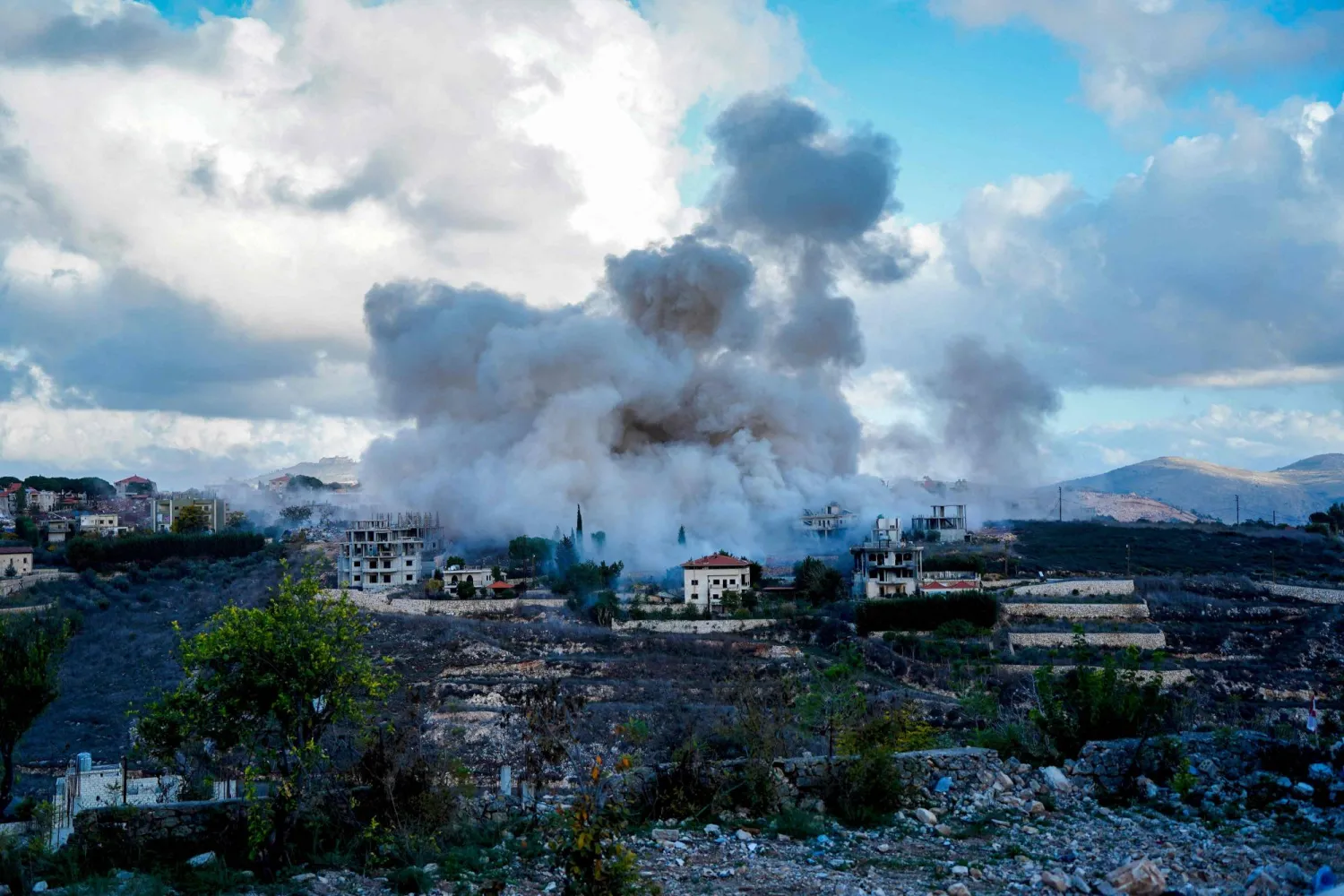
This photograph taken from the southern Lebanese village of Zawtar al-Gharbiyeh shows smoke rising during the demolition of houses by the Israeli army in the village of Zawtar al-Sharqiyeh on November 22, 2026. (AFP)

Israeli military's Arabic-language spokesperson Ella Waweya sparked controversy in Lebanon after releasing a video showing her speaking to students inside a classroom in the occupied border village of Debel, coinciding with Lebanon’s Independence Day celebrations.

The incident, in which Waweya and Israeli soldiers entered the school in South Lebanon and filmed themselves with students without the administration’s consent, highlighted the plight of civilians living under Israeli occupation.

The footage triggered a wave of accusations against Debel’s residents and drew official Lebanese condemnation. The residents insisted that Israeli military activities were imposed on them, fearing that accusations of treason, coupled with security restrictions and economic hardship, could prevent them from remaining in Debel.

Without permission

Debel’s municipality said that the incident had occurred without prior coordination with the school administration, rejecting attempts to hold teachers and children responsible for the actions of Israeli forces.

Charbel Louka, a Debel native and head of the Kataeb Party’s Bint Jbeil district, explained that the incident took place in early October, when residents reported extensive Israeli military activity before soldiers carrying cameras entered the school, frightening the students.

“The Israelis did not come in a suit for a formal visit. They came in as armed soldiers and entered the school. You cannot say no to them,” Louqa said, stressing that civilians’ failure to resist an armed force did not constitute consent.

Residents had refrained from publicizing the incident, but the timing of the video’s release fueled accusations of treason against them, he added.

“If our people leave this area, the Lebanese state will lose its last link to this land. Once we leave, no one will remain,” he warned.

“We have endured humiliation and indignity to remain on this land and preserve our homes.”

He blamed those who decided to open a “support front” for Gaza, meaning Hezbollah, for exposing border villages to war and criticized the state’s failure to assert its authority.

Resilience under threat

Debel parish priest Father Fadi Felfle stressed that Israeli forces had imposed themselves on the village, entering the school without permission and taking the principal and teachers by surprise.

“We did not choose this war. We are people of peace, but circumstances have forced us to live through this difficult situation,” he said.

Felfle recalled the human and material losses suffered by the village. He added that residents have been unable to harvest their entire olive crop, while damaged roads and growing difficulties in accessing healthcare, education and housing compounded their suffering.

“More than half of Debel is now off-limits to us,” he noted.

He denounced accusations of treason by fellow Lebanese, warning that continued pressure could drive more residents from their homes.

Remaining on the land

MP Firas Hamdan contrasted images of schoolchildren in Rmeish raising the Lebanese flag and drawing a map of Lebanon with the footage from Debel.

He said that the steadfastness of residents of Rmeish, Ain Ebel and Debel, despite occupation, siege and isolation, might be the last tangible assertion of the land’s Lebanese identity.

Hamdan called for a UN-backed arrangement after UNIFIL’s mission ends to maintain safe humanitarian corridors, ensure supplies and services, and preserve residents’ links with state institutions, stressing that they deserved solidarity and support, not suspicion and accusations of treason.

Official Condemnation

Interior and Municipalities Minister Ahmad al-Hajjar discussed the incident with Debel Mayor Akl Naddaf, condemning the violation of the sanctity of educational institutions and the dignity of residents, particularly children.

He underlined the state’s responsibility toward South Lebanon and its duty to liberate occupied territory and extend its authority nationwide.

Education Minister Rima Karami also condemned the use of the school and children in military media footage.

Prime Minister Nawaf Salam rejected attempts by an occupying force to exploit Lebanese children to whitewash its occupation or impose its dominance over residents.