


Identifying Challenges of the Gulf Common Market to Boost its 10 Tracks

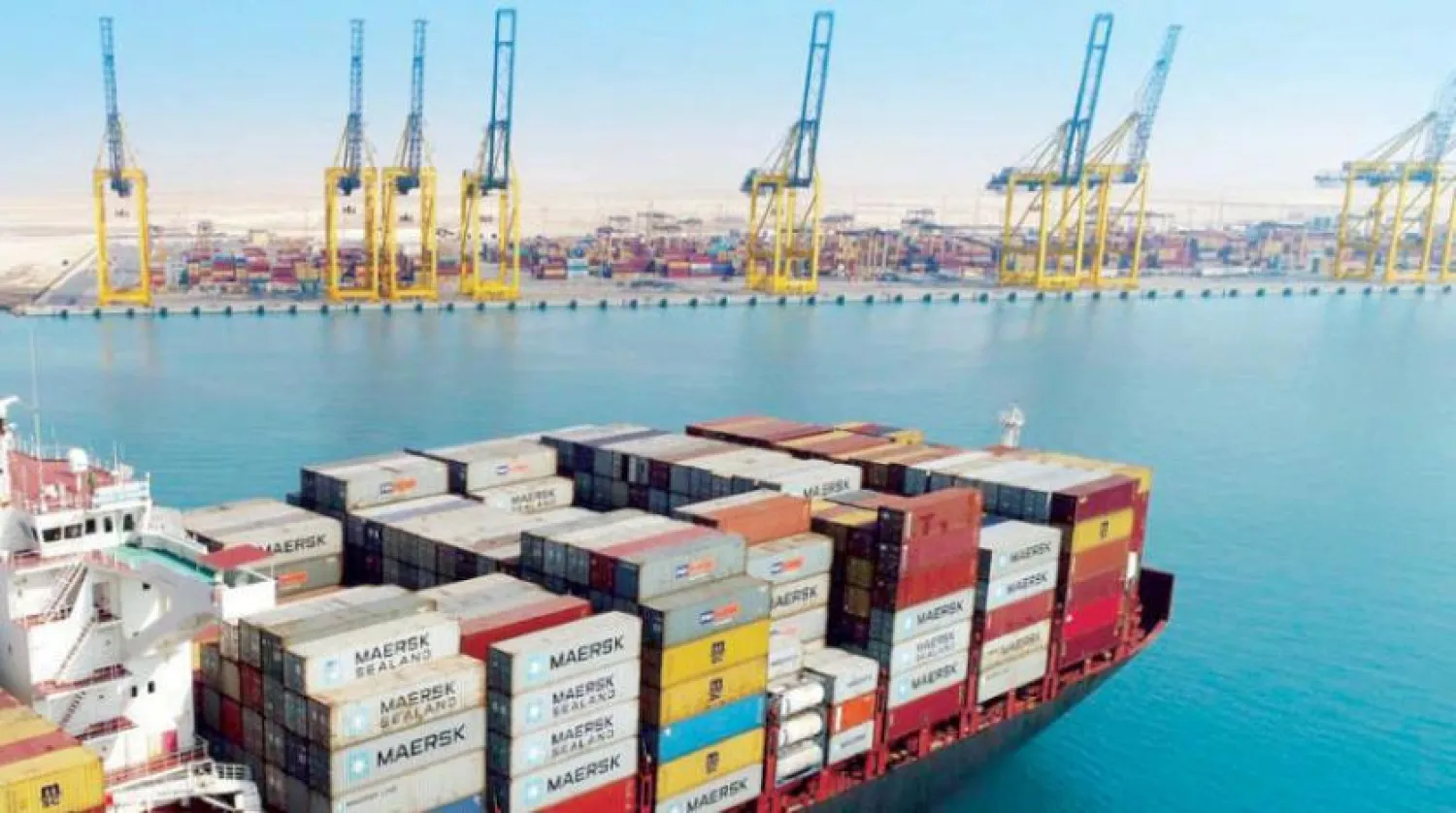
Accelerating integration in the Gulf Common Market (Asharq Al-Awsat)
TT

Identifying Challenges of the Gulf Common Market to Boost its 10 Tracks

Accelerating integration in the Gulf Common Market (Asharq Al-Awsat)

The President of the Federation of Gulf Chambers, Ajlan al-Ajlan, has acknowledged several challenges facing the Gulf common market, revealing ongoing efforts to identify them.

Speaking to Asharq Al-Awsat, Ajlan called for cooperation between the public and private sectors to address the challenges, noting that efforts are being made to attract international investments to the GCC countries.

Ajlan said that although the GCC countries have benefited from the ten tracks of the Gulf common market, there are some challenges facing the full implementation of the market, which the Federation is working to solve with the private sector.

The ten paths of the GCC common market are movement and residence, work in the government and private sectors, social insurance, and pension, engagement in all professions and crafts, engagement in economic, investment, and service activities, real estate ownership, movement of capital, tax treatment, stock ownership and formation of corporations, and education, health, and social services.

Ajlan pointed out that the completion of the paths of the common market will pave the way for achieving complete economic unity among the GCC states, which will open the way for the private sector to activate its role in economic development.

The Gulf countries are working to amend their legislation and regulations to encourage global investment flows through many significant successful investments, announced Ajlan adding that Gulf countries are ready to become a hub for international investments.

He recalled that the Federation supports entrepreneurs, inventors, and owners of small enterprises to create promising job opportunities for Gulf youth.

Ajlan explained that the Federation is a window of opportunity for introducing the available investments in the GCC countries through its partnerships with international investment blocs and bodies.

He referred to the investment laws in the GCC countries, pointing to the ongoing efforts of the Federation to bring global investments to the Gulf.

It is necessary to support the small enterprises and encourage youth initiatives, especially creativity and innovation, asserted Ajlan, adding that it supports the field of business youth in member chambers and exchanges best practices and experiences.

The Chairman stressed that owners of small and medium enterprises should use the latest technologies to improve production quality, enabling them to compete with imported products.

He indicated that small and medium enterprises create job opportunities for young people and establish opportunities for innovation and creativity.

The Federation seeks to encourage entrepreneurship to enhance the contribution of this category to the GDP of the GCC countries.

Ajlan pointed out that this can be achieved by supporting projects and providing all facilities to them, reducing service fees, and providing financial opportunities.



3rd Edition of Global Labor Market Conference to Kick off in Riyadh on Monday

The King Abdullah Financial District (KAFD) during the early hours of the night in Riyadh, Saudi Arabia, August 29, 2025. (Reuters)
TT

3rd Edition of Global Labor Market Conference to Kick off in Riyadh on Monday

The King Abdullah Financial District (KAFD) during the early hours of the night in Riyadh, Saudi Arabia, August 29, 2025. (Reuters)

Riyadh will host on Monday the third edition of the Global Labor Market Conference (GLMC) under the patronage of Custodian of the Two Holy Mosques King Salman bin Abdulaziz Al Saud. Held under the theme “Future in Progress,” the event will feature high-level participation from decision-makers, thought leaders, and experts from around the world.

Minister of Human Resources and Social Development Ahmed Al-Rajhi stressed that convening the third edition of GLMC under King Salman’s patronage reflects the Kingdom’s commitment to its international role in advancing global dialogue on the future of work and addressing the shared challenges reshaping labor markets worldwide.

The conference is a global platform that brings together key stakeholders to exchange expertise and build shared visions that contribute to the development of more flexible and inclusive policies, boost workforce readiness, and achieve a balance between economic growth and quality of life, in line with the objectives of Saudi Vision 2030, he added.

This year’s conference will see broad international participation, with more than 10,000 participants from 100 countries, alongside more than 40 labor ministers, and representatives of international organizations, the private sector, and academic institutions. The conference will also feature more than 200 speakers across over 50 sessions.

The two-day conference is organized by the Ministry of Human Resources and Social Development in strategic partnership with a number of international organizations, including the International Labor Organization (ILO), the World Bank, the United Nations Development Program (UNDP), the Organization for Economic Co-operation and Development (OECD), the International Organization for Migration (IOM), UN Tourism, Labor Center of the Organization of Islamic Conference, and King’s Trust International (KTI), and the Mohammed bin Salman Foundation (Misk).

In its third edition, the conference will focus on six main pillars reflecting the major transformations taking place in global labor markets. These include trade transformations and their impact on employment, informal economies, the new global skills landscape, the real impact of artificial intelligence on jobs and productivity, building resilient labor markets in times of crisis, and boosting job quality, with particular attention given to youth as the foundation of the future economy.

The conference will include a number of milestones, most notably the Ministerial Meeting of labor ministers, bringing together ministers from more than 40 countries to discuss practical and immediate employment pathways in light of global transformations. Other activities include the signing of agreements and memoranda of understanding, the organization of bilateral meetings, and the launch of new initiatives.

The conference will also witness the graduation of the first cohort of the Labor Market Academy, as part of efforts to bolster capacity building for policymakers, develop specialized labor market competencies, and enhance international knowledge exchange in this field.

GLMC is one of the world’s leading platforms dedicated to labor market issues, aiming to translate international dialogue into practical policies and initiatives, strengthen cooperation among countries, and support the development of more resilient and sustainable labor markets, contributing to enhanced economic competitiveness at the local, regional, and global levels.


Venezuela Hopes to Boost Its Oil Production by 18 Percent in 2026

A view of the installations at the Puerto La Cruz oil refinery of Venezuelan state oil company PDVSA in Puerto La Cruz, Venezuela, January 23, 2026. (Reuters)
TT

Venezuela Hopes to Boost Its Oil Production by 18 Percent in 2026

A view of the installations at the Puerto La Cruz oil refinery of Venezuelan state oil company PDVSA in Puerto La Cruz, Venezuela, January 23, 2026. (Reuters)

Venezuela wants to boost its oil production by 18 percent this year through planned reforms that will fully open the sector to private investors, the head of the state oil giant PDVSA said Saturday.

"We had a law...that was not up to date with what we needed as an industry," company CEO Hector Obregon said, adding the target for 2026 "is to grow by at least 18 percent."

Proposed reforms to the Organic Hydrocarbons Law would update the legal framework in the oil industry "to ensure that private investors can have legal certainty," Obregon said from the Puerto La Cruz refinery in eastern Venezuela.

Analysts say the law proposed by interim president Delcy Rodriguez and adopted in a first parliamentary reading on Thursday was drafted under pressure from Washington after the seizure of Venezuelan leader Nicolas Maduro from Caracas by US forces during a raid and air strikes on January 3.

The law is expected to be passed next week.

The South American nation produces around 1.2 million barrels per day (bpd), according to authorities, and sits on about one-fifth of the world's oil reserves.

Years of mismanagement and corruption have driven production down from a peak of over 3 million bpd in the early 2000s to a historic low of 350,000 barrels daily in 2020.

If adopted, the bill would roll back decades of state control over Venezuela's oil sector, which were tightened by Maduro's late mentor, socialist firebrand Hugo Chavez, in the mid-2000s.

US President Donald Trump has made no secret of his interest in Venezuela's oil. His administration has stated bluntly that it is taking over sales of the country's crude petroleum.

Rodriguez this week announced that the country had received an initial transfer of $300 million after the sale of its oil by the United States.

Oil exploitation had until now been the preserve of the state or of joint ventures in which the state held a majority stake.

The bill stipulates that private companies domiciled in Venezuela would be able to exploit oil after signing contracts.

"The main idea behind the hydrocarbons law and its reform is for us to increase oil production," said National Assembly president Jorge Rodriguez, who is also the brother of the acting president.

"What is the primary objective? To adapt to a situation that allows us to extract the oil from the land that belongs to all Venezuelan women and men."


Saudi Arabia’s Maaden Successfully Raises $1 Billion Through 10-Year International Sukuk

The offering is an important step in Maaden's journey to enhance its financial flexibility. (Asharq Al-Awsat)
TT

Saudi Arabia’s Maaden Successfully Raises $1 Billion Through 10-Year International Sukuk

The offering is an important step in Maaden's journey to enhance its financial flexibility. (Asharq Al-Awsat)

The Saudi Arabian Mining Company (Maaden) announced the successful completion of a dollar-denominated sukuk offering with a total value of $1 billion (approximately 3.75 billion riyals). This issuance is part of the company's international sukuk program, which aims to attract qualified investors from within the Kingdom and abroad to strengthen the company's financial position and support its strategic projects.

In its statement published on the Saudi Stock Exchange (Tadawul) website on Sunday, the company said the offering is a follow-up to its previous announcement on January 22 regarding the start of the subscription process.

The issuance witnessed strong demand, reflecting international investors' confidence in Maaden's financial solvency and the future of the mining sector as a fundamental pillar of Saudi Vision 2030.

According to the statement, the total number of sukuk issued is 5,000, with a nominal value of $200,000 per sukuk. The company set the sukuk yield at 5.250 percent per annum, with a maturity period extending to 10 years, reflecting the company's ability to obtain long-term financing at competitive costs in international markets.

Maaden indicated that these sukuk will be listed on the International Securities Market of the London Stock Exchange. It also confirmed that the sale process will be conducted in accordance with applicable international regulations, including “Regulation S” and “Rule 144A” of the US Securities Act of 1933, as amended, which are standards that ensure the issuance reaches a broad base of global investment institutions.

Regarding the redemption conditions, the company stated that the sukuk may be redeemed in certain pre-defined cases, in accordance with the terms and conditions detailed in the offering document for the issuance.

The offering is an important step in Maaden's journey to enhance its financial flexibility at a time when the company is experiencing rapid growth and expansion in its portfolio of mining assets inside and outside the Kingdom.