

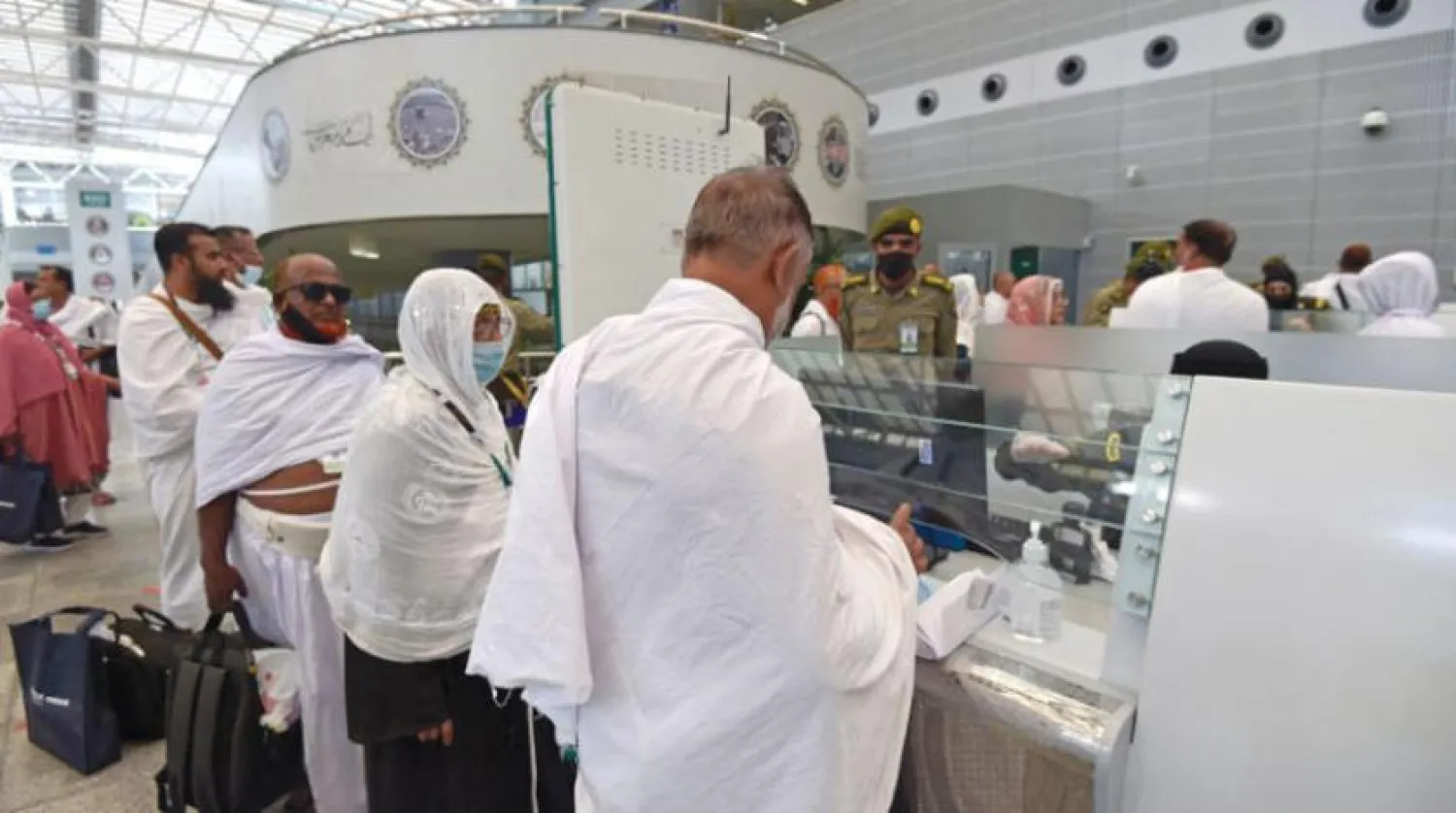

Saudi Launches Major Operational Plan to Serve Hajj Pilgrims

Pilgrims flock to Saudi Arabia to perform Hajj this year (AFP)
TT

Saudi Launches Major Operational Plan to Serve Hajj Pilgrims

Pilgrims flock to Saudi Arabia to perform Hajj this year (AFP)

Saudi Arabia’s General Presidency for the Affairs of the Two Holy Mosques on Sunday launched its operational plan for this year’s Hajj season, which mobilizes 10,000 male and female employees and workers to serve the worshippers.

Sheikh Abdulrahman Al-Sudais, president of the General Presidency for the Affairs of the Two Holy Mosques, launched the plan in the presence of the minister of Hajj and Umrah, Tawfiq Al-Rabiah, and the director of the General Directorate of Public Security, Lt. Gen. Mohammed Abdullah Al-Bassami.

Al-Sudais pointed to the plan being based on ten main axes related to strategic goals stemming from Saudi Arabia’s national transformation plan, Vision 2030.

Moreover, he said that the presidency has allocated King Abdulaziz Gate, King Fahd Gate, and Bab Al-Salam Gate for the entry of pilgrims and visitors, adding that the presidency has allocated a total of 144 gates for the entry of worshippers to the Grand Mosque.

Al-Sudais said that the presidency had launched smart applications and electronic platforms that would facilitate and enrich visitors’ experiences, revealing that the number of beneficiaries of this digital service had reached more than 160 million.

Al-Sudais said that all services and programs were being followed up minute by minute to ensure the highest quality, through a set of indicators supervised by the presidency around the clock.

In addition, the presidency is working on distributing 3 million Zamzam water bottles a day in the Grand Mosque.

Al-Sudais said that 2,000 electric vehicles had been provided to serve the elderly and people with disabilities, in addition to providing 500 engineering staff, and that the sermon of Arafah would be translated into 10 different languages.

He noted that this year’s Hajj season follows two exceptional seasons in which Saudi Arabia showed resounding success in crisis management under the effects of the coronavirus pandemic.

Saudi FM Discusses US-Iran Talks in Call with Iranian Counterpart

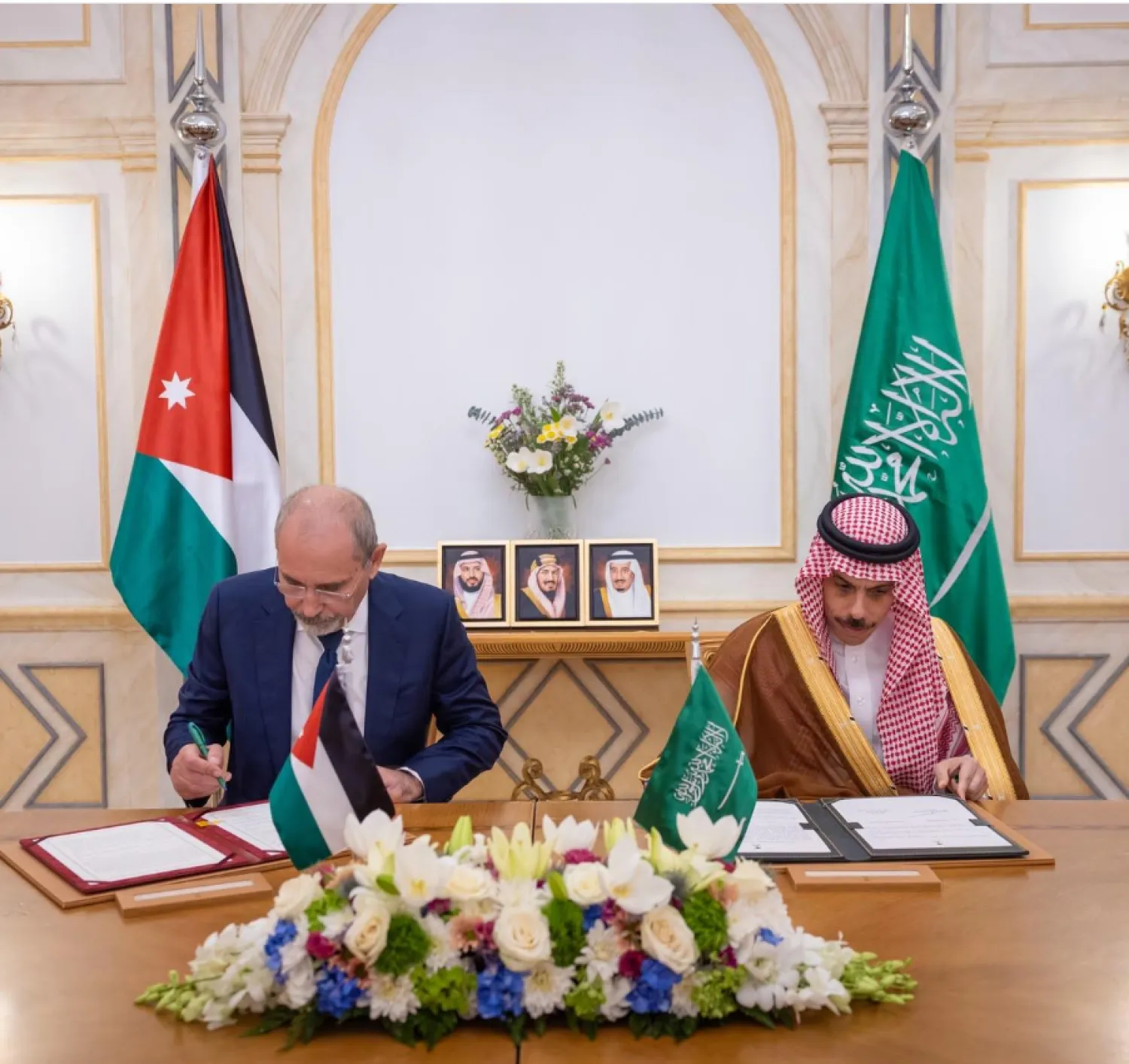
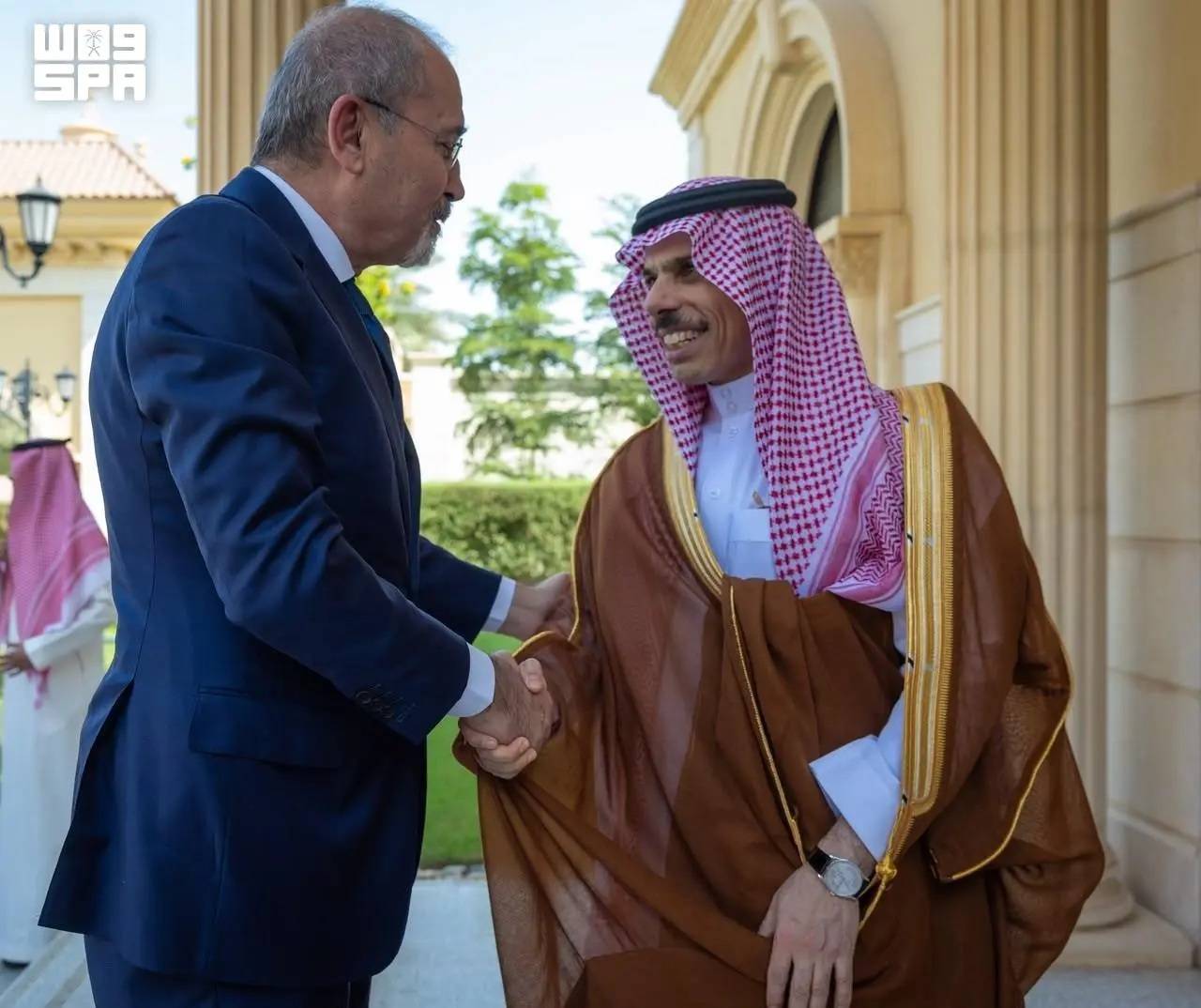
Saudi Minister of Foreign Affairs Prince Faisal bin Farhan bin Abdullah and Minister of Foreign Affairs of the Islamic Republic of Iran Abbas Araghchi (AAWSAT)
TT

Saudi FM Discusses US-Iran Talks in Call with Iranian Counterpart

Saudi Minister of Foreign Affairs Prince Faisal bin Farhan bin Abdullah and Minister of Foreign Affairs of the Islamic Republic of Iran Abbas Araghchi (AAWSAT)

Saudi Minister of Foreign Affairs Prince Faisal bin Farhan bin Abdullah received a phone call Monday from Minister of Foreign Affairs of the Islamic Republic of Iran Abbas Araghchi, SPA reported.

During the call, they discussed the latest developments following the peace negotiations between the Islamic Republic of Iran and the United States.


Makkah Entry Permit Requirement Comes into Effect for Residents

Police return violators and vehicles at security checkpoints leading to Makkah. (SPA)
TT

Makkah Entry Permit Requirement Comes into Effect for Residents

Police return violators and vehicles at security checkpoints leading to Makkah. (SPA)

Saudi Arabia’s Public Security announced that the Hajj regulations and entry procedures for Makkah took effect on Monday, April 13, requiring residents wishing to enter the city to obtain permits from the relevant authorities. Residents without valid entry permits will be denied access to Makkah.

Public Security stated that the measures apply to residents who do not possess a permit issued by the relevant authorities to work in the Holy Sites, a Makkah-issued residency ID, or a valid Hajj permit.

It added that entry permits for residents working during the Hajj season are issued electronically via the Absher Individuals platform and the Muqeem portal, through technical integration with the unified digital platform for issuing Hajj permits, “Tasreeh.”


Gulf Observers Outline Views on US Iran Talks, 14-Day Truce

A security officer stands in front of a sign for the Islamabad talks outside a media center set up to cover negotiations between the United States and Iran (AP)
TT

Gulf Observers Outline Views on US Iran Talks, 14-Day Truce

A security officer stands in front of a sign for the Islamabad talks outside a media center set up to cover negotiations between the United States and Iran (AP)

As a 14-day truce announced by the United States and Iran, brokered by Pakistan on April 8, continues to hold, and just hours after the end of the US Iran “Islamabad talks” without an agreement, Gulf states are closely watching how the situation will evolve during the temporary ceasefire period.

Three Gulf observers shared their views in response to a question from Asharq Al-Awsat on how Gulf countries see the US-Iran negotiations and their options depending on whether a deal is reached. They broadly agreed on the importance of taking Gulf concerns into account in any negotiations.

Former Kuwaiti information minister Saad bin Tefla al-Ajmi said Gulf states are primarily concerned with two key issues, peace and stability. He stressed that under no circumstances should any Gulf country become party to negotiations over freedom of navigation in the Strait of Hormuz or support such talks, as this would amount to negotiating an established principle of international law.

Calls to assess all possible scenarios

Al-Ajmi stressed that freedom of navigation in international straits such as Hormuz, Gibraltar and Bab al-Mandab is governed by the 1982 United Nations Convention on the Law of the Sea and should not be turned into a subject of political bargaining, as this would contradict the principle of freedom of the seas.

As for options if no agreement is reached, he said this would depend on the positions of the two sides, Iran and the United States. Gulf countries, he remarked, opposed the war from the outset but are now “required to assess all possible scenarios following the outbreak of war and exposure to Iranian attacks.”

He questioned whether Washington would continue granting Tehran additional deadlines or move toward resuming hostilities. In any case, he noted that Gulf states must be prepared for all scenarios, including the possibility of renewed conflict.

Political analyst Moneef Ammash al-Harbi said Gulf states view the US-Iran negotiations positively, based on their belief that military solutions do not lead to lasting settlements. He added that Gulf countries had sought, before February 28, to steer the region away from a military path and its consequences.

No flawed deal

Al-Harbi underlined that Gulf states do not want a flawed agreement similar to the 2015 deal, which he said does not prevent Iran from acquiring nuclear weapons but merely delays it within a limited timeframe.

He outlined four Gulf requirements for any lasting agreement. These include preventing Iran from obtaining nuclear weapons to avoid a regional arms race, addressing the ballistic missile issue in terms of range and capabilities, curbing Iran’s destabilizing regional role and ending support for militias, and ensuring Iran respects freedom of navigation in the Straits of Hormuz and Bab al-Mandab without using direct or indirect means to disrupt it.

He warned that if no agreement is reached, Gulf states would keep all options open, including military action, particularly if Iranian attacks on Gulf countries continue.

Abdullah al-Junaid said Gulf influence was reflected in the ceasefire decision and in the choice of Pakistan as mediator. However, he noted that Gulf states “have not put forward a unified framework representing a minimum consensus on post crisis Gulf Iran relations and the safety of navigation in the Strait of Hormuz.”

Al-Junaid also noted that the US Navy is currently clearing the Strait of Hormuz to secure navigation, describing this as unrelated to the halted war. He said Gulf naval forces should join the effort, as it would send political as well as security signals.

“That is the diplomacy that should be pursued now, rather than relying solely on traditional approaches,” he remarked.
