Jean-Paul Guerlain's Partner Says Threatened by Perfumer's Son

Jean-Paul Guerlain's Partner Says Threatened by Perfumer's Son
TT

Jean-Paul Guerlain's Partner Says Threatened by Perfumer's Son

Jean-Paul Guerlain's Partner Says Threatened by Perfumer's Son

The partner of Jean-Paul Guerlain on Monday accused the famous perfumer's son of waging a "harassment war" against her and of threatening her on several occasions.

Stephane Guerlain, the only son of Jean-Paul Guerlain, was summoned to court in Versailles, outside Paris, by Christina Kragh Michelsen, his father's companion. However, he was not present and was represented by his lawyer, said AFP.

The hearing was the latest judicial episode in the battle between Kragh, a 64-year-old French-Danish woman, and Stephane Guerlain, son of the man who ran Guerlain -- one of the world's oldest perfume houses -- for almost half a century.

Jean-Paul Guerlain, 85, one of the richest men in France, now suffers from Alzheimer's disease. Kragh has been with him since 2005.

Kragh was acquitted last autumn by a court of "neglecting a person incapable of protecting himself". The public prosecutor has appealed against this acquittal.

The woman's lawyer said that Guerlain's son is driven by his hatred for his client and wants to "break her down" by waging a "permanent harassment war".

When Stephane Guerlain "arrives in the house, he follows me everywhere", said Kragh. He takes unilateral decisions such as "turning off the heating" in their property in a Paris suburb, she added.

Kragh has no "financial interest" in staying with Guerlain senior, but is doing so "out of love", said her lawyer Frederic Belot. She has "lost sleep, lost a lot of weight" and suffers from "psychological problems", he added.

Stephane Guerlain's defense team described their client as "an extremely tired man who has been trying for 10 years to protect his father's interests".

The court listened to a recording in which Stephane Guerlain, a lawyer, called Kragh a "bitch" and a "scumbag" and threatened, according to her, to "put her head in a haystack".

Kragh is seeking 70,000 euros ($73,600) in damages.

The public prosecutor's office did not agree with the plaintiff, noting that several of the claims were unsubstantiated.

The court will deliver its decision on Friday.

French luxury giant LVMH took over the Guerlain brand in 1994. Jean-Paul Guerlain remained as master perfumer until he retired in 2002.


In ‘Pressure,’ the Story of the Meteorologist Who Helped Save D-Day

 Anthony Maras, left, director/co-writer of the film "Pressure," poses with cast members Brendan Fraser, center, and Andrew Scott on Tuesday, May 12, 2026, in Los Angeles. (AP Photo/Chris Pizzello)
Anthony Maras, left, director/co-writer of the film "Pressure," poses with cast members Brendan Fraser, center, and Andrew Scott on Tuesday, May 12, 2026, in Los Angeles. (AP Photo/Chris Pizzello)
TT

In ‘Pressure,’ the Story of the Meteorologist Who Helped Save D-Day

 Anthony Maras, left, director/co-writer of the film "Pressure," poses with cast members Brendan Fraser, center, and Andrew Scott on Tuesday, May 12, 2026, in Los Angeles. (AP Photo/Chris Pizzello)
Anthony Maras, left, director/co-writer of the film "Pressure," poses with cast members Brendan Fraser, center, and Andrew Scott on Tuesday, May 12, 2026, in Los Angeles. (AP Photo/Chris Pizzello)

D-Day was supposed to happen on June 5, 1944. The story of why it ultimately took place on June 6 is one that has been a bit lost to history, consumed by the larger events surrounding it.

One day might not seem like much in the grand scheme, but it was a seismic delay in plans for the unprecedented and daring invasion, which would deploy nearly 160,000 Allied troops in Normandy.

Ultimately it came down to a recommendation from a shrewd Scottish meteorologist, Group Capt. James Stagg, who had to tell everyone, including Gen. Dwight D. Eisenhower and the Allied leadership, something they didn’t want to hear: The weather was going to be catastrophically bad. And no, he wasn’t certain about it.

The tense 72 hours before the invasion are brought to life in "Pressure," in theaters May 29, on the eve of the operation’s 82nd anniversary. An adaptation of David Haig’s acclaimed stage play, the film sheds light on this bit of history that would effectively change the course of the second World War.

Filmmaker Anthony Maras assembled a unique group of actors for the task at hand, calling on Brendan Fraser to play Eisenhower and Andrew Scott to play Stagg.

"I didn’t think I was an Ike Eisenhower when Anthony Maras sent me the script," Fraser said. "I got on a Zoom call and he said, ‘You gotta do this man.’ Me? Why? ‘It’s because he’s you, he’s like you. He’s just a regular guy.’ Really? I mean, I thought Eisenhower was this, you know, stern, staunch, something on coin."

Fraser went deep in his preparation, reading and listening to everything he could get his hands on to help him understand the man who would ultimately have to make the decision. The research even continued on set. Maras laughed that right before they shot Eisenhower’s famous "soldiers, sailors and airmen" speech, something that they’d rehearsed many, many times, he looked up and saw Fraser reading yet another biography. But he appreciated that the Oscar-winner was passionate about knowing everything he possibly could to get it right.

"He cared intensely for his troops," Fraser said. "It was my responsibility to honor their memory and to comport myself in a way that puts a human face on the seemingly academic decisions that go into an operation as massive as this."

Scott was the opposite in terms of how he approached his role. Yes, he read Stagg’s book and wanted to have a working understanding of the metrological jargon he’d have to be spouting. While history was important, for him, character was king. And he liked that Stagg is not the most immediately likable person, but he has integrity.

"The thing with Stagg is that he’s just not interested in charm ... or being liked at all," Scott said. "I think that’s to be admired actually, because he’s just there to do a job. So I like the fact that at the beginning of the movie, you’re like, whoa, this guy is not pleasant."

Maras said that for Scott, it was all about the inner, emotional life of the character, which was essential for a part that would require so much internal conflict.

"With Andrew, he has a quality to him where he can seemingly be doing very little — he’s sitting down, rearranging his tie, he can be reading a phone book — and you can’t look away," Maras said.

In the shadow of ‘Saving Private Ryan’

The actors weren’t the only ones feeling pressure of the assignment: Maras also had a behemoth looming in attempting to stage, however briefly, the D-Day invasion.

"You’ve kind of got to be crazy maybe to attempt it, given that Spielberg did it so masterfully," Maras said.

But unlike "Saving Private Ryan," which focused on the men storming the beach, "Pressure" is about the ones making the decisions. It’s a different perspective. Still, once they make the call to go, there would have to be at least some of the operation shown to juxtapose with the "bloody tense, wire-type atmosphere of the control room," Maras said.

Inspired by Peter Jackson’s World War I documentary "They Shall Not Grow Old," and the existence of dozens of hours of pristine 35 mm black and white film from the event, Maras decided that perhaps archival footage, colorized, would be the way to go. It was a different way to present D-Day that gave it immediacy, he said, as opposed to looking like history.

Ultimately, "Pressure" isn’t just a history lesson, or even a character drama with big personalities and even bigger stakes: It’s a portrait of leadership and ego clashing with facts and science. And its relevance to the present day is the reason Maras wanted to make the film in the first place.

"How do you bring your best self to the table to make the decision? How do you have the humility to acknowledge when you don’t know something? And how do you have the wisdom to determine who to trust? ... Eisenhower in the end showed that he was a maestro at that," Maras said.

"What I love about the Stagg character is he’s someone who feels compelled to tell someone something that they don’t want to hear, that they violently don’t want to but they need to hear. The world needs more of that."

Years later, John F. Kennedy, on the way to his own inauguration, asked Eisenhower what gave them the edge on D-Day. His response? "We had better meteorologists than the Germans."

"When life or death depends on you understanding the facts, it probably has a way of like cutting up the BS and getting to it," Maras said. "It’s a very clear example of a time where the Allied worlds’ future was at stake and they listened to someone who knew what he was talking about and they did all right."



Amazon Greenlights AI-Generated Shows for Children

A message reading "AI artificial intelligence," a keyboard and robot hands are seen in this illustration created on January 27, 2025. (Reuters)
TT

Amazon Greenlights AI-Generated Shows for Children

A message reading "AI artificial intelligence," a keyboard and robot hands are seen in this illustration created on January 27, 2025. (Reuters)

Amazon MGM Studios announced Wednesday it has greenlit the first three children's shows that were created under a new initiative to use artificial intelligence (AI) in content development.

The GenAI Creators Fund pays filmmakers, digital creators and startups to use AI to develop their projects in a short time frame.

"Punky Duck" series director Jorge Gutierrez said he is used to spending two years making a pilot, but his new show was greenlit to run on Amazon after just two months.

Two more projects -- "Diana Music Hunters" from Albie Hecht and "Cupcake & Friends" from Buzzfeed Studios -- were also greenlit in a couple of months, reflecting a new approach from major studios.

Hollywood's unions and artists have raised concerns about the use of AI, with creatives, writers and actors fearing they could be replaced by digital facsimiles.

AI Studios chief at Amazon MGM Albert Cheng told the conference that the technology won't eliminate jobs, it will actually reduce costs and timelines to make it possible to increase the number of productions.

But Cheng acknowledged "AI is addictive," adding that it's important for humans to make sure they don't "succumb and let our brains go to waste."


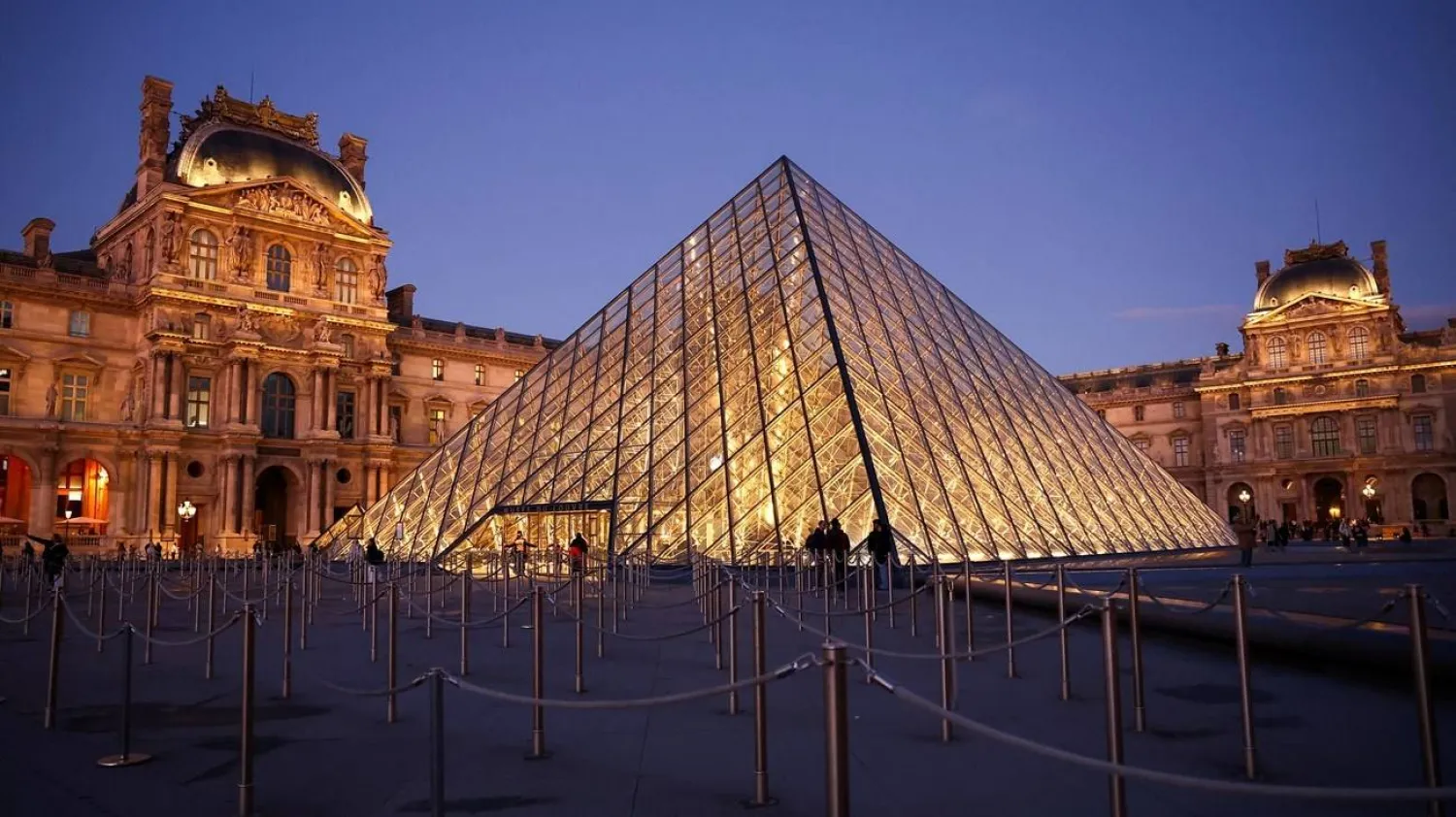
Louvre Heist to Be Turned into Film

 The Louvre Museum seen in Paris, France, November 17, 2025. (Reuters)
The Louvre Museum seen in Paris, France, November 17, 2025. (Reuters)
TT

Louvre Heist to Be Turned into Film

 The Louvre Museum seen in Paris, France, November 17, 2025. (Reuters)
The Louvre Museum seen in Paris, France, November 17, 2025. (Reuters)

Last year's brazen robbery of the Louvre -- when thieves made off with jewellery worth some $100 million -- is set to become a movie, a publisher said on Tuesday.

French director Romain Gavras -- whose work includes 2025 Hollywood film "Sacrifice" starring Anya Taylor-Joy and music videos including most recently a hypnotic schoolboy choreography for GENER8ION -- will draw inspiration from the investigative book "Main basse sur le Louvre" (literally "A grab at the Louvre").

Film rights to the book about the October 19, 2025 heist had been sold to the production company Iconoclast, the Flammarion publishing house said.

The book, written by three journalists, from French dailies Le Parisien and Le Monde, and weekly glossy magazine Paris Match, is to hit bookstores on Wednesday.

According to trade magazine Le Film Francais, the movie project is in development, though neither the title nor the cast has been announced.

The Louvre heist sent shockwaves around the world and sparked a security crisis within the world-famous museum that ultimately led to the replacement of its director, Laurence des Cars.

After seven months of investigation, and despite the arrests of the main suspects, the jewels have still not been found.

The authors said their apparent disappearance "has become a dense mystery, a puzzle that has plunged investigators into deep confusion".

The heist illustrates how "the theft of artworks has become a business like any other for many criminals", they say. "The criminal underworld has found a new cash cow."