


Moderna Sues Pfizer/BioNTech for Patent Infringement over COVID Vaccine

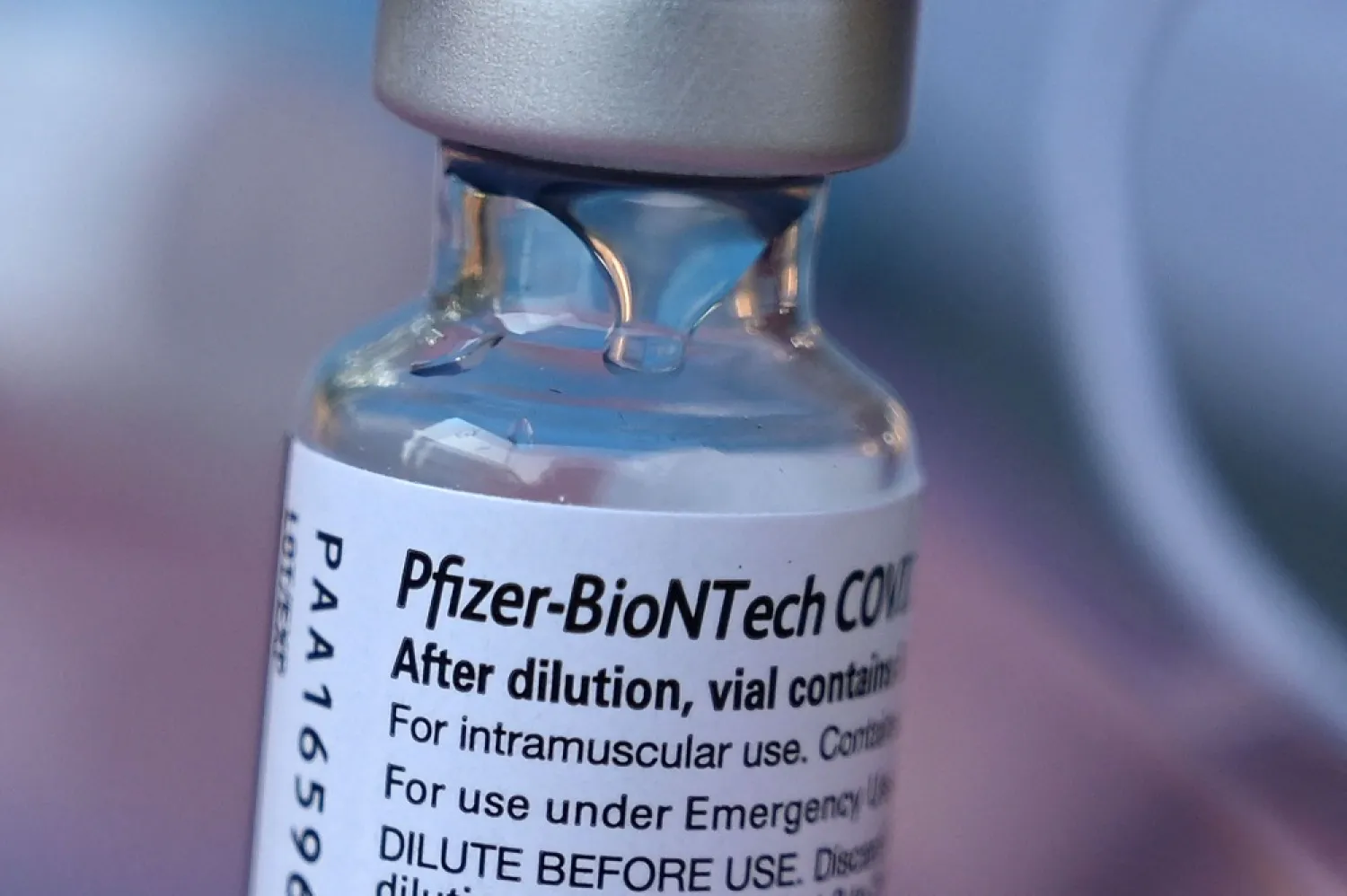
In this file photo taken on August 23, 2021, a vial of Pfizer/BioNTech Covid-19 vaccine is seen at a pop up vaccine clinic in the Arleta neighborhood of Los Angeles, California. (AFP)
TT

Moderna Sues Pfizer/BioNTech for Patent Infringement over COVID Vaccine

In this file photo taken on August 23, 2021, a vial of Pfizer/BioNTech Covid-19 vaccine is seen at a pop up vaccine clinic in the Arleta neighborhood of Los Angeles, California. (AFP)

Moderna sued Pfizer and its German partner BioNTech on Friday for patent infringement in the development of the first COVID-19 vaccine approved in the United States, alleging they copied technology that Moderna developed years before the pandemic.

Pfizer shares fell nearly 1%, while BioNTech US-listed shares were down about 1.5% and Moderna shares slipped 1.7% on Friday.

The lawsuit, which seeks undetermined monetary damages, was filed in US District Court in Massachusetts. In a news release on Friday, Moderna said the lawsuit would be filed also in the Regional Court of Duesseldorf in Germany.

Contacted by Reuters, a spokesperson for the Duesseldorf court said: "I cannot currently confirm the receipt of such a claim."

"We are filing these lawsuits to protect the innovative mRNA technology platform that we pioneered, invested billions of dollars in creating, and patented during the decade preceding the COVID-19 pandemic," Moderna Chief Executive Stephane Bancel said in the news release.

Moderna said its lawsuit was not meant to stop people from getting vaccines.

Moderna Inc, on its own, and the partnership of Pfizer Inc and BioNTech SE were two of the first groups to develop a vaccine for the novel coronavirus.

In an emailed statement, a Pfizer spokesperson said: "Pfizer/BioNTech has not yet fully reviewed the complaint but we are surprised by the litigation given the COVID-19 vaccine was based on BioNTech's proprietary mRNA technology and developed by both BioNTech and Pfizer."

"We remain confident in our intellectual property supporting the Pfizer/BioNTech vaccine and will vigorously defend against the allegations of the lawsuit," the spokesperson said.

BioNTech did not immediately reply to separate requests for comment.

Just a decade old, Moderna, based in Cambridge, Massachusetts, had been an innovator in the messenger RNA (mRNA) vaccine technology that enabled the unprecedented speed in developing the COVID-19 vaccine.

An approval process that previously took years was completed in months, thanks largely to the breakthrough in mRNA vaccines, which teach human cells how to make a protein that will trigger an immune response.

Germany-based BioNTech had also been working in this field when it partnered with the US pharma giant Pfizer.

The US Food and Drug Administration granted emergency use authorization for the COVID-19 vaccine first to Pfizer/BioNTech in December 2020, then one week later to Moderna.

Moderna's COVID vaccine - its lone commercial product - has brought in $10.4 billion in revenue this year while Pfizer's vaccine brought in about $22 billion.

The lawsuit will likely take years to play out, according to Cowen & Co analyst Tyler Van Buren.

Moderna alleges Pfizer/BioNTech, without permission, copied mRNA technology that Moderna had patented between 2010 and 2016, well before COVID-19 emerged in 2019 and exploded into global consciousness in early 2020.

Early in the pandemic, Moderna said it would not enforce its COVID-19 patents to help others develop their own vaccines, particularly for low- and middle-income countries. But in March 2022 Moderna said it expected companies such as Pfizer and BioNTech to respect its intellectual property rights. It said it would not seek damages for any activity before March 8, 2022.

Patent litigation is not uncommon in the early stages of new technology.

Pfizer and BioNTech are already facing multiple lawsuits from other companies who say the partnership's vaccine infringes on their patents. Pfizer/BioNTech have said they will defend their patents vigorously.

Germany's CureVac, for instance, also filed a lawsuit against BioNTech in Germany in July. BioNTech responded in a statement that its work was original.

Moderna has also been sued for patent infringement in the United States and has an ongoing dispute with the US National Institutes of Health over rights to mRNA technology.

In Friday's statement, Moderna said Pfizer/BioNTech appropriated two types of intellectual property.

One involved an mRNA structure that Moderna says its scientists began developing in 2010 and were the first to validate in human trials in 2015.

"Pfizer and BioNTech took four different vaccine candidates into clinical testing, which included options that would have steered clear of Moderna's innovative path. Pfizer and BioNTech, however, ultimately decided to proceed with a vaccine that has the same exact mRNA chemical modification to its vaccine," Moderna said.

The second alleged infringement involves the coding of a full-length spike protein that Moderna says its scientists developed while creating a vaccine for the coronavirus that causes Middle East Respiratory Syndrome (MERS).

Although the MERS vaccine never went to market, its development helped Moderna rapidly roll out its COVID-19 vaccine.



UK: Sapling Stolen from Famous Tree Months After Planting

The Sycamore Gap tree that was found felled next to the Hadrian's Wall UNESCO World Heritage site in northeast England in September 2023 (AFP)
TT

UK: Sapling Stolen from Famous Tree Months After Planting

The Sycamore Gap tree that was found felled next to the Hadrian's Wall UNESCO World Heritage site in northeast England in September 2023 (AFP)

A sapling taken from the Sycamore Gap tree has been stolen from the grounds of a castle just months after it was planted, according to The Guardian.

The Sycamore Gap tree, on Hadrian’s Wall in Northumberland, was one of the UK’s best-known and most loved trees. It was criminally felled for no apparent reason on a stormy night in September 2023.

Last July Daniel Graham and Adam Carruthers were found guilty over the illegal felling of the tree and sentenced to more than four years in prison.

The National Trust collected seeds from the tree, which was at least 100 years old, and 49 saplings were successfully salvaged, to be planted across the country as “signs of hope.”

Gardens and historic sites across the country clamored for the saplings, with one receiving at least 500 applications. But now, one has been stolen from the picturesque grounds of Wray parkland and castle in Cumbria where it was planted in April this year.

The castle’s staff believe it was taken deliberately. Jez Westgarth, the National Trust’s assistant director for Cumbria and Lancashire, said it must have been taken to plant elsewhere.

“It hasn’t just been pulled up recklessly – somebody’s thought about what they’re doing,” he told the BBC.

The trust said staff were “saddened” by the theft and appealed to the public to come forward with information.

Laura Lee, the National Trust’s general manager for the Lake District, said: “We are shocked and saddened that a sapling from the Sycamore Gap tree that was gifted to the Lake District national park and planted at Wray in April 2026 has been stolen.”

She added: “Grown from seeds gathered from the much-loved tree at Hadrian’s Wall, which was illegally felled in 2023, it was one of 15 saplings planted across the UK’s national parks as a symbol of hope and resilience among our most protected landscapes.”


Spain Records More Than 1,000 Heat-Related June Deaths

A person drinks from a fountain rest during a spring heatwave in Madrid, Spain, May 27, 2026. (Reuters)
TT

Spain Records More Than 1,000 Heat-Related June Deaths

A person drinks from a fountain rest during a spring heatwave in Madrid, Spain, May 27, 2026. (Reuters)

More than 1,000 deaths in Spain were attributed to the recent heatwave that roasted Europe, as the country posted the hottest first six months ever recorded, officials said on Wednesday.

At least 1,028 people died of heat-related issues during the heatwave, the public Carlos III Health Institute said.

The figure was more than double the 407 deaths that were attributed to heat in June 2025, Spain's hottest June since records started being kept, according to the national weather agency Aemet.

The first six months of 2026 were the hottest in Spain since the start of records, with temperatures 1.6C above normal levels on average, Aemet said in a post on X on Wednesday.

"The seven warmest first semesters... have occurred over the past 10 years", the Aemet agency said in a post on X.

June 2026 came in as the second-hottest June, "with temperatures on average 3.2C above the norm," Aemet said.

The heatwave that scorched Europe from late June was the most severe ever recorded in Europe, and would have been "virtually impossible" in June without climate change, the World Weather Attribution group of scientists said.

All-time temperature records have been broken in Germany, Poland, the Czech Republic, Slovakia and Hungary, as well as for the month of June in the UK and in Switzerland.

France faced record breaking average temperatures, with the country experiencing its highest-ever nighttime temperatures.


A Rare Dinosaur Fossil from Antarctica Is Found Tucked Away in a Drawer

This image provided by the Natural History Museum shows a fossil found in Antarctica that belongs to a group of dinosaurs called titanosaurs. (Natural History Museum via AP)
TT

A Rare Dinosaur Fossil from Antarctica Is Found Tucked Away in a Drawer

This image provided by the Natural History Museum shows a fossil found in Antarctica that belongs to a group of dinosaurs called titanosaurs. (Natural History Museum via AP)

Scientists have stumbled on a rare dinosaur fossil from Antarctica, tucked away for decades in a drawer.

The bone comes from the tail of a long-necked, plant-eating dinosaur called a titanosaur. Scientists haven't yet identified the species it belongs to.

It was discovered in 1985 during an expedition to Antarctica's James Ross Island and collected by geologist Mike Thomson. Working with the British Antarctic Survey, Thomson was mapping the area's rock layers and collected marine reptile fossils to help with future dating efforts. He recorded the find as a large reptile.

Decades later, paleontologist Mark Evans spotted the bone in the British Antarctic Survey's collections and wondered whether it might be a dinosaur. He and other researchers analyzed the shape of the bone and compared it to other more complete dinosaur remains, confirming their discovery. The findings were published on Monday in the journal Acta Palaeontologica Polonica.

Dinosaur fossils are rare to find in Antarctica because of the unforgiving ice caps. But millions of years ago, when this dinosaur lived, the region was populated by lush forests — a “rather different and much more hospitable place than we think of today,” said study co-author Paul Barrett with the Natural History Museum in London.

At about 23 feet (7 meters) long, the dinosaur was small for its group and may have been young when it died. Scientists don't know how the creature met its end, but they think its body floated away from the coast and sank to the sea floor, becoming fossilized in marine rock.

Technology has come a long way since the dinosaur tail bone was first found, allowing researchers to peer inside bones and gain even more detailed information about ancient creatures. Thomson died in 2020 before the fossil was identified as belonging to a dinosaur.

“If he were still with us, he would be delighted to know what this was,” Evans, a study co-author, said.