

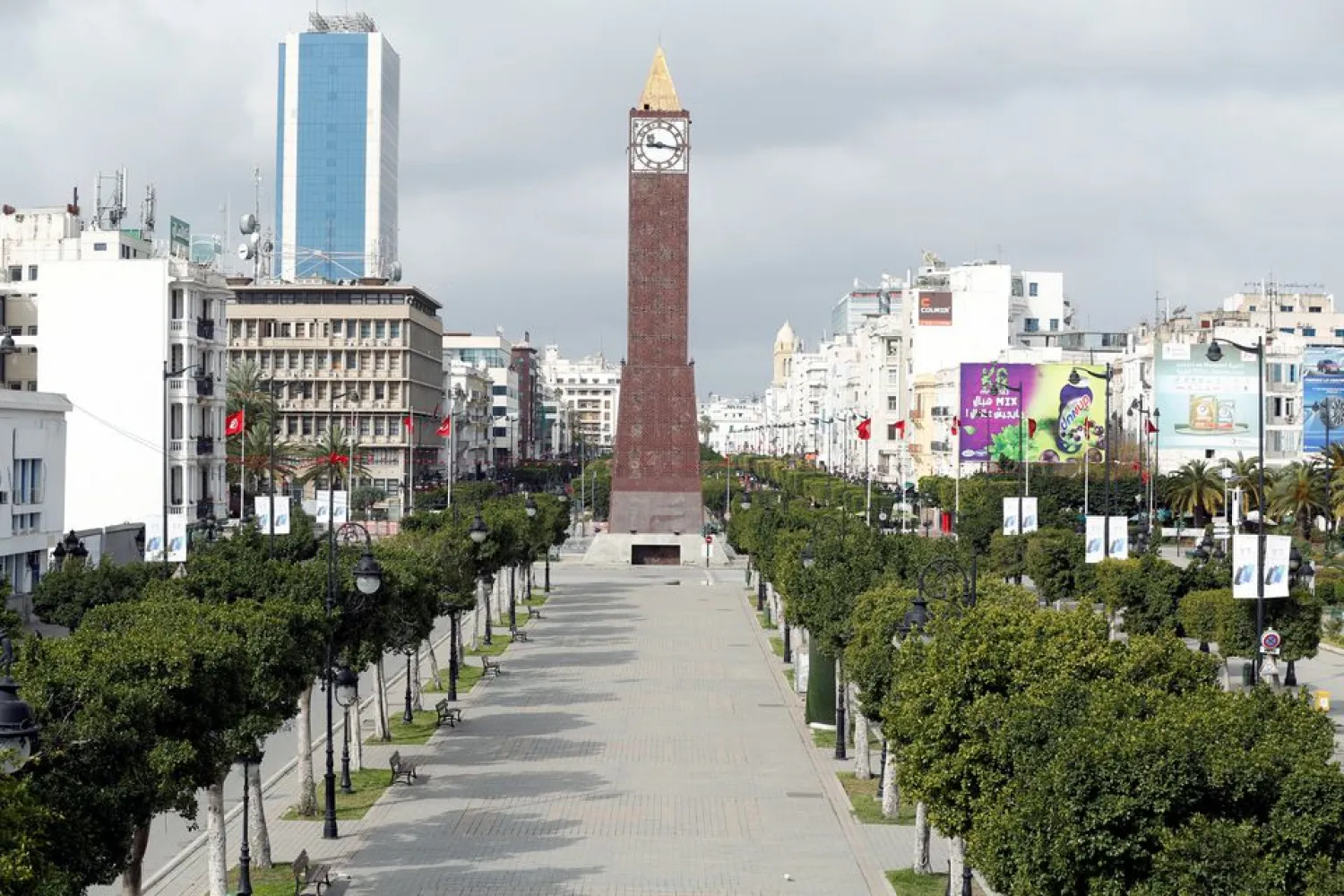

Japan Grants Tunisia $100 Million in Aid

A general view of Habib Bourguiba Avenue in downtown Tunis, Tunisia, March 22, 2020. REUTERS / Zoubeir Souissi/File Photo
TT

Japan Grants Tunisia $100 Million in Aid

A general view of Habib Bourguiba Avenue in downtown Tunis, Tunisia, March 22, 2020. REUTERS / Zoubeir Souissi/File Photo

Japan has granted Tunisia $100 million in aid to fight the impact of the COVID-19 pandemic, Tunisia's state news agency TAP reported on Saturday, citing Japanese foreign minister Yoshimasa Hayashi, who is attending a summit in the North African country.

TAP quoted Minister of Foreign Affairs, Migration and Tunisians Abroad Othman Jerandi as saying that Tunisia and Japan had inked two partnership agreements; the first provides for technical and financial cooperation and the financing of the Tunisian government's development projects and reform programs in various fields.

Tunisia will join the Japanese initiative to reduce greenhouse gas emissions under the second agreement. This is within the framework of Article 6 of the Paris Agreement.

Japan also pledged on Saturday $30 billion in aid for development in Africa, saying it wants to work more closely with the continent, with the rules-based international order under threat after Russia's invasion of Ukraine.

Addressing the Japan-Africa summit, Prime Minister Fumio Kishida said Tokyo would work to ensure grain shipments to Africa amid a global shortage.

"If we give up on a rules-based society and permit unilateral changes of the status quo by force, the impact of that will extend not only through Africa, but all the world," Kishida said by videolink after testing positive for COVID-19.



Abu Dhabi Ports Signs MoU to Develop, Operate Shuaiba Container Terminal in Kuwait

Containers are seen at Abu Dhabi's Khalifa Port, UAE, December 11, 2019. REUTERS/Satish Kumar
TT

Abu Dhabi Ports Signs MoU to Develop, Operate Shuaiba Container Terminal in Kuwait

Containers are seen at Abu Dhabi's Khalifa Port, UAE, December 11, 2019. REUTERS/Satish Kumar

Kuwait Ports Authority (KPA) said on Monday it had signed a memorandum of understanding with Abu Dhabi Ports Group to develop and operate the container terminal at Kuwait’s Shuaiba port under a concession agreement.

Shuaiba port, established in the 1960s, is Kuwait’s oldest port. It covers a total area of 2.2 million square metres (543.63 acres) and has 20 berths, while the container terminal has a storage area of 318,000 sqare metres, according to KPA’s website.

The port, located about 60 km (37.3 miles) south of the capital, handles commercial cargo, heavy equipment, raw materials and chemicals essential to various industries.

The MoU represents “the first preliminary step” toward concluding a concession contract, subject to the completion of required studies, KPA said in a statement without disclosing the value of the deal, Reuters reported.

Under the agreement, Abu Dhabi Ports Group will prepare the technical, environmental and financial studies needed for the project, including infrastructure requirements.


Iran’s Rial Currency Plummets to New Low, Sparking Fears of Higher Food Prices

An Iranian trader counts money in Tehran's Grand Bazaar. (Reuters)
TT

Iran’s Rial Currency Plummets to New Low, Sparking Fears of Higher Food Prices

An Iranian trader counts money in Tehran's Grand Bazaar. (Reuters)

Iran’s rial slid further Monday to a new record low of more than 1.3 million to the US dollar, deepening the currency’s collapse less than two weeks after it first breached the 1.2-million mark amid sanctions pressure and regional tensions.

Currency traders in Tehran quoted the dollar above 1.3 million rials, underscoring the speed of the decline since Dec. 3, when the rial hit what was then a historic low.

The rapid depreciation is compounding inflationary pressures, pushing up prices for food and other daily necessities and further straining household budgets, a trend that could be intensified by a gasoline price change introduced in recent days.

Iran on Saturday added a third gasoline price tier, raising the cost of full bought beyond monthly quotes at 50,000 rials (4 US cents). It is the first major adjustment to fuel pricing since a price hike in 2019 that sparked nationwide protests and a crackdown that reportedly killed over 300 people.

Under the revised system, motorists continue to receive 60 liters a month at the subsidized rate of 15,000 rials per liter and another 100 liters at 30,000 rials, but any additional purchases now cost more than three times the original subsidized price. While gasoline in Iran remains among the cheapest in the world, economists warn the change could feed inflation at a time when the rapidly weakening rial is already pushing up the cost of food and other basic goods.

The fall comes as efforts to revive negotiations between Washington and Tehran over Iran’s nuclear program appear stalled, while uncertainty persists over the risk of renewed conflict following June’s 12-day war involving Iran and Israel. Many Iranians also fear the possibility of a broader confrontation that could draw in the United States, adding to market anxiety.

Iran’s economy has been battered for years by international sanctions, particularly after Donald Trump unilaterally withdrew the United States from Tehran’s nuclear deal with world powers in 2018. At the time the 2015 accord was implemented — which sharply curtailed Iran’s uranium enrichment and stockpiles in exchange for sanctions relief — the rial traded at about 32,000 to the dollar.

After Trump returned to the White House for a second term in January, his administration revived a “maximum pressure” campaign, expanding sanctions that target Iran’s financial sector and energy exports. Washington has again pursued firms involved in trading Iranian crude oil, including discounted sales to buyers in China, according to US statements.

Further pressure followed in late September, when the United Nations reimposed nuclear-related sanctions on Iran through what diplomats described as the “snapback” mechanism. Those measures once again froze Iranian assets abroad, halted arms transactions with Tehran and imposed penalties tied to Iran’s ballistic missile program.

Economists warn that the rial’s accelerating decline risks feeding a vicious cycle of higher prices and reduced purchasing power, particularly for staples such as meat and rice that are central to Iranian diets. For many Iranians, the latest record low reinforces concerns that relief remains distant as diplomacy falters and sanctions tighten.


Industry Minister Inaugurates Made in Saudi Expo 2025

Industry Minister Inaugurates Made in Saudi Expo 2025
TT

Industry Minister Inaugurates Made in Saudi Expo 2025

Industry Minister Inaugurates Made in Saudi Expo 2025

Saudi Minister of Industry and Mineral Resources Bandar Alkhorayef inaugurated the third Made in Saudi Expo 2025 at the Riyadh International Convention and Exhibition Center in Malham, organized by the Saudi Export Development Authority through the Made in Saudi Program, with Syria’s Minister of Economy and Industry Dr. Mohammad Nidal al-Shaar in attendance.

The Syrian Arab Republic has been invited as the Guest of Honor at the exhibition, which has attracted strong participation from public and private sector organizations, as well as leading national manufacturers and industry leaders, SPA reported.

In his opening remarks, Alkhorayef emphasized that the exhibition serves as a key platform for showcasing advancements in Saudi industry, the quality of its products, and their competitiveness in local and international markets. He added that it is also an important venue for establishing strategic partnerships that support the growth of national industries.

He pointed out that the Made in Saudi Program, launched in 2021 under the esteemed patronage of HRH the Crown Prince, reflects the Kingdom's ambition to become a leading industrial power. Achieving this goal involves building consumer trust in its products and services in both domestic and global markets by nurturing local talent and innovation, promoting national products, and strengthening companies’ capabilities to expand internationally.

He also highlighted that Saudi non-oil exports have achieved remarkable success, reaching SAR515 billion in 2024, with historic results in the first half of 2025, demonstrating the highest half-year value of SAR307 billion. These figures underscore the industry’s vital role in diversifying the national economy in line with the objectives of Saudi Vision 2030.

The opening ceremony also welcomed the Syrian Arab Republic as this year’s Guest of Honor, highlighting the participation of more than 25 Syrian companies to present opportunities for industrial cooperation and integration, reflecting the strong fraternal ties between the two nations.

Alongside the exhibition, over 25 workshops are being conducted, while more than 50 memoranda of understanding are set to be signed.