WHO Still Working to Identify the Origins of COVID-19
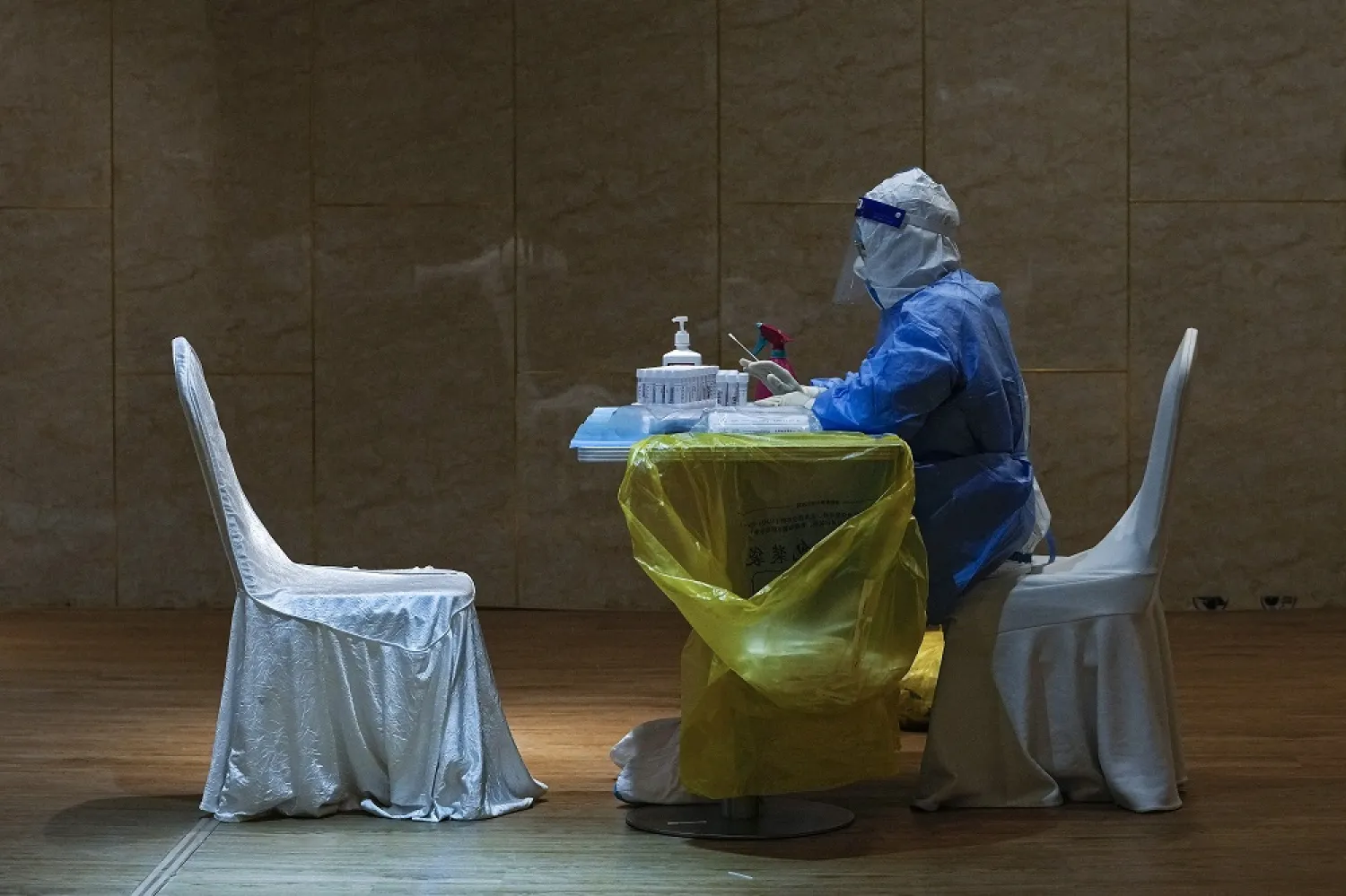
A medical worker in protective gear waits to administer COVID-19 tests for reporters who was signed up to cover the press conference and the opening of the Chinese People's Political Consultative Conference (CPPCC), at a quarantine hotel in Beijing, Thursday, March 2, 2023.(AP)
WHO Still Working to Identify the Origins of COVID-19
A medical worker in protective gear waits to administer COVID-19 tests for reporters who was signed up to cover the press conference and the opening of the Chinese People's Political Consultative Conference (CPPCC), at a quarantine hotel in Beijing, Thursday, March 2, 2023.(AP)
The World Health Organization (WHO) is still working to identify the origins of the COVID-19 pandemic, its director general said on Friday, after a US agency was reported to have assessed the pandemic had likely been caused by a Chinese laboratory leak.
"I have written to and spoken with high-level Chinese leaders on multiple occasions as recently as just a few weeks ago... all hypotheses on the origins of the virus remain on the table," said WHO Director-General Tedros Adhanom Ghebreyesus.
The Wall Street Journal reported on Sunday that the US Energy Department had concluded the pandemic likely arose from a Chinese laboratory leak, an assessment Beijing denies.
"I wish to be very clear that WHO has not abandoned any plans to identify the origins of the COVID-19 pandemic," Tedros said.
The US Energy Department made its judgment with "low confidence" in a classified intelligence report recently provided to the White House and key members of Congress, the Journal said, citing people who had read the intelligence report.
Four other US agencies, along with a national intelligence panel, still think COVID-19 was likely the result of natural transmission, while two are undecided, the Journal reported.
Maria Van Kerkhove, the WHO's technical lead on COVID-19, expressed frustration on Twitter on Thursday that the United States had not shared additional information with the WHO on its reports assessing the origin of the virus.
On Friday, she urged countries, institutions and research groups that might have any information on the origins of the pandemic to share it with the international community.
"We don't completely have the answers to how this pandemic began and it remains absolutely critical that we continue to focus on this," she said.
She said it was crucial to study coronaviruses circulating in animals and how people come into contact with those animals.
"Our work continues on this space: looking at studies in humans, looking at studies in animals, looking at studies at the animal human interface, and also looking at potential breaches in biosafety and biosecurity for any of the labs that were working with coronaviruses, particularly where the first cases were detected in Wuhan, China, or elsewhere," she said.
This picture taken on August 25, 2026 shows a woman crossing with her bike on a street in Tokyo. (Photo by Philip FONG / AFP)
One sweltering day in Tokyo, Kaoru Morimoto told friends she wasn't sure she could endure another summer in her neighborhood, where tree cover and the crucial shade it provides is dwindling.
As Japan experiences ever more frequent extreme heat, tree cover that can help lower temperatures is shrinking rather than growing in Tokyo, bucking a trend among many major world capitals.
Morimoto wants that to change. Last year she launched a campaign urging officials to set a canopy cover target, a rare grassroots initiative focused on the issue.
"Everyone says the summer has become more intense," but public awareness about Tokyo's lack of tree cover is low, Morimoto told AFP.
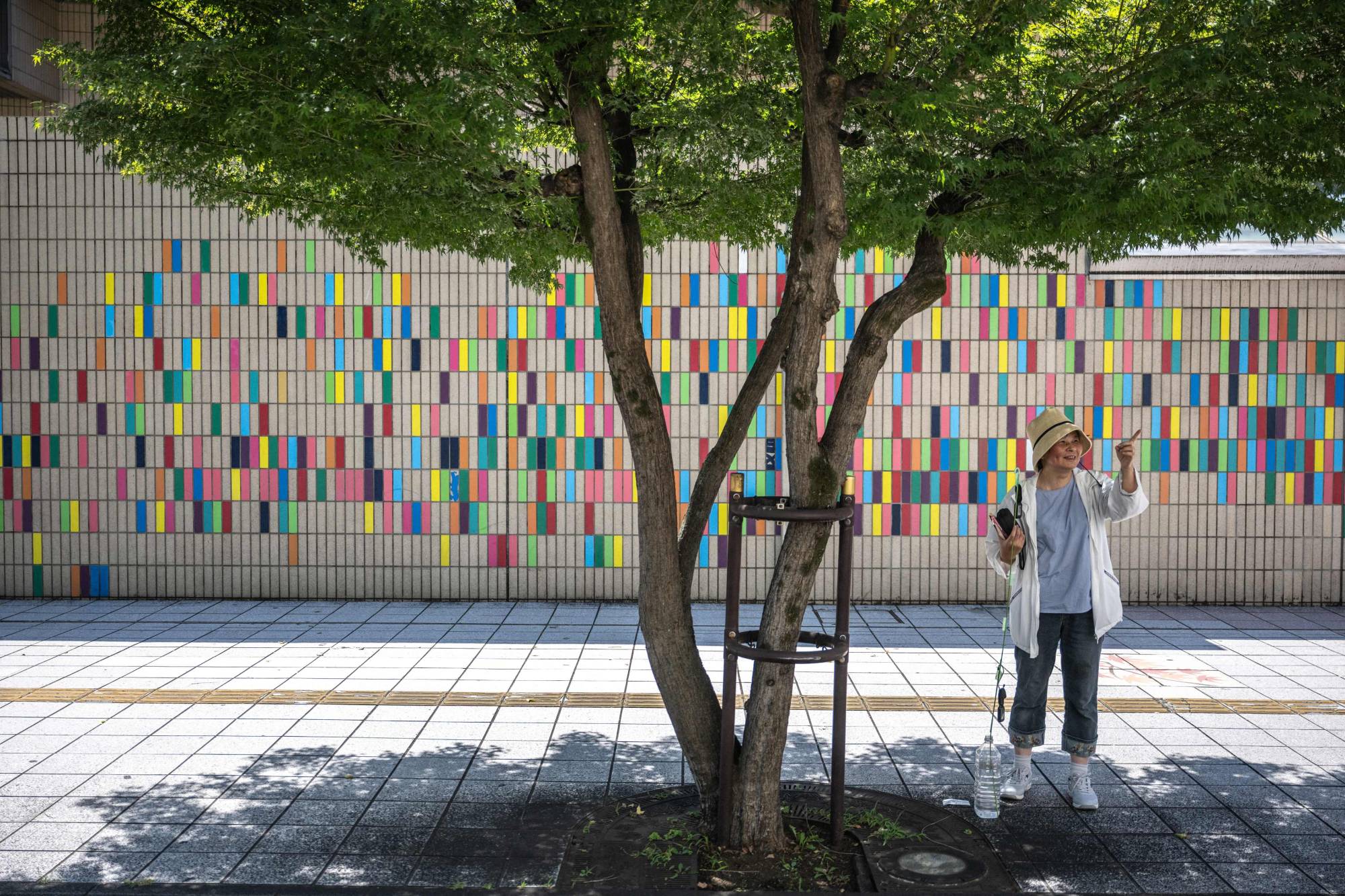
In this picture taken on August 25, 2026 activist Kaoru Morimoto looks on while checking the temperature in Nakano district of Tokyo. (Photo by Philip FONG / AFP)
Together with Susumu Nirasawa, a fellow resident in her western Tokyo neighborhood of Nakano, the 66-year-old organizes expert talks, shares temperature data on social media, and attends local council meetings where she petitions officials. Around 30 others in the community have joined the cause.
"We want the ward government to take the issue seriously," Nirasawa, 71, said.
Japan saw its hottest summer on record in 2025, with warmer days on the rise globally due to climate change.
This year, the country recorded almost 120 heat-related deaths between May and August, while more than 73,000 people needed emergency care.
Although experts say greater tree cover can help lower air temperatures, a University of Tokyo study in 2024 showed the city lost canopy cover equivalent to three and a half times the size of New York's Central Park in under a decade.
Thermometers and notebook in hand, Morimoto and Nirasawa take their own temperature readings in Nakano, hoping hard data will help unite their neighbors behind the cause.
We "measured the shade under trees with large canopies and under trees that had been more heavily pruned," said Morimoto. "There was about a three-degree difference."
In the 2024 study, University of Tokyo researcher and urban forestry expert Kinya Shiraishi found that canopy cover in central Tokyo fell to 7.3 percent in 2022 from 9.2 percent in 2013, a loss of 12 square kilometers.
By comparison, canopy cover in New York stands at around 23 percent, with the city aiming to raise it to 30 percent by 2040.
London aims for a 10 percent increase from its current 20 percent by 2050, while Paris also plans to boost coverage from about 18 percent.
"If we want to improve the quality of urban life, canopy cover is one of the key factors," Shiraishi told AFP, adding that trees also lower flooding risks and can help city dwellers feel calmer.
He said the decline was driven largely by the loss of private residential gardens, with ageing landowners selling their properties and mature trees often felled as large plots are subdivided to meet housing demand in the capital.
Many roads in Tokyo are also narrow and have little space for greenery, while authorities are wary of trees toppling over in extreme weather.
A Tokyo metropolitan government official told AFP that the city "is currently working to expand tree canopies through careful pruning, focusing on roads where the pavements are wide and the trees can grow".
Without proper management, trees threaten the visibility of traffic lights and are at risk of falling during typhoons, he said, adding that Tokyo uses a benchmark for measuring greenery which includes farmland and grassland found in its outer reaches.
But on a hot, sunny day in the city center, there was little shade along a street home to the finance ministry. One plane tree stood almost bare, its upper branches cut back close to the trunk.
"Unless we promptly make efforts to increase canopy cover and shift our policies, we'll run out of time," said Eijiro Fujii, professor emeritus at Chiba University who specializes in horticulture, glancing at a group of heavily pruned trees in Tokyo's central district of Kasumigaseki.
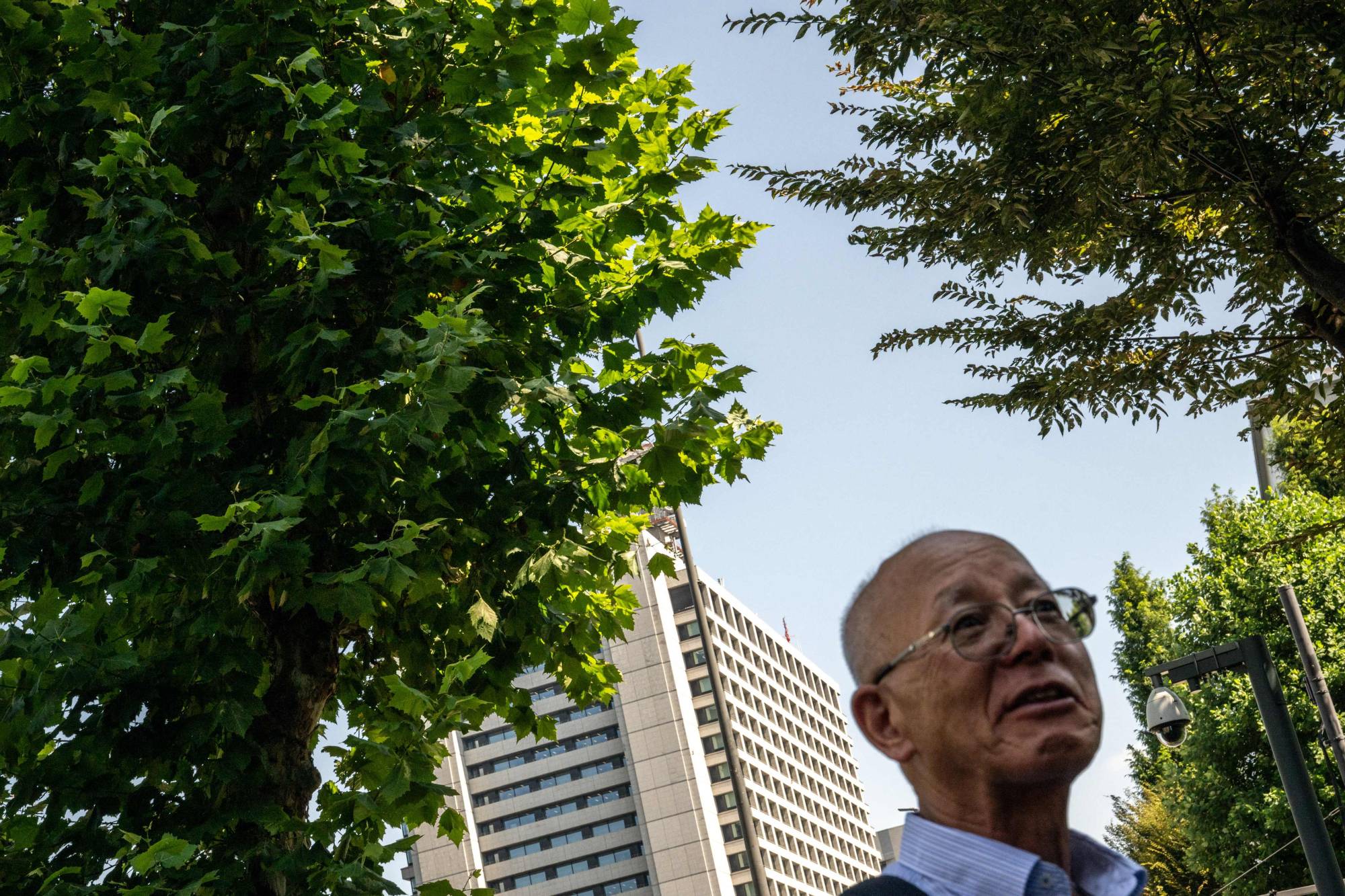
In this picture taken on August 25, 2026 Eijiro Fujii, professor emeritus at Chiba University, speaks during an interview with AFP in the Kasumigaseki neighbourhood, where most government ministries are located, in Tokyo. (Photo by Philip FONG / AFP)
Fujii blames overpruning, developed to manage trees in limited spaces, as well as the frequent rotation of public officials overseeing street greenery, for the decrease in canopy cover.
In Nakano, Morimoto and Nirasawa say the ward's mayor has recently begun to emphasize the importance of tree shade, but neighborhood officials have so far failed to set a target for canopy cover.
"Deaths from heat stroke are rapidly increasing in Japan," Fujii said. "We need to act before it's too late."
KAUST, Oxford Develop Electronic Sensor to Detect Parkinson’s Markers in Bloodhttps://english.aawsat.com/varieties/5325869-kaust-oxford-develop-electronic-sensor-detect-parkinson%E2%80%99s-markers-blood
KAUST, Oxford Develop Electronic Sensor to Detect Parkinson’s Markers in Blood
The study was published in Science Advances. SPA
Researchers at King Abdullah University of Science and Technology (KAUST), in collaboration with the University of Oxford, have developed a blood-based electronic sensor capable of detecting molecular signatures associated with Parkinson’s disease.
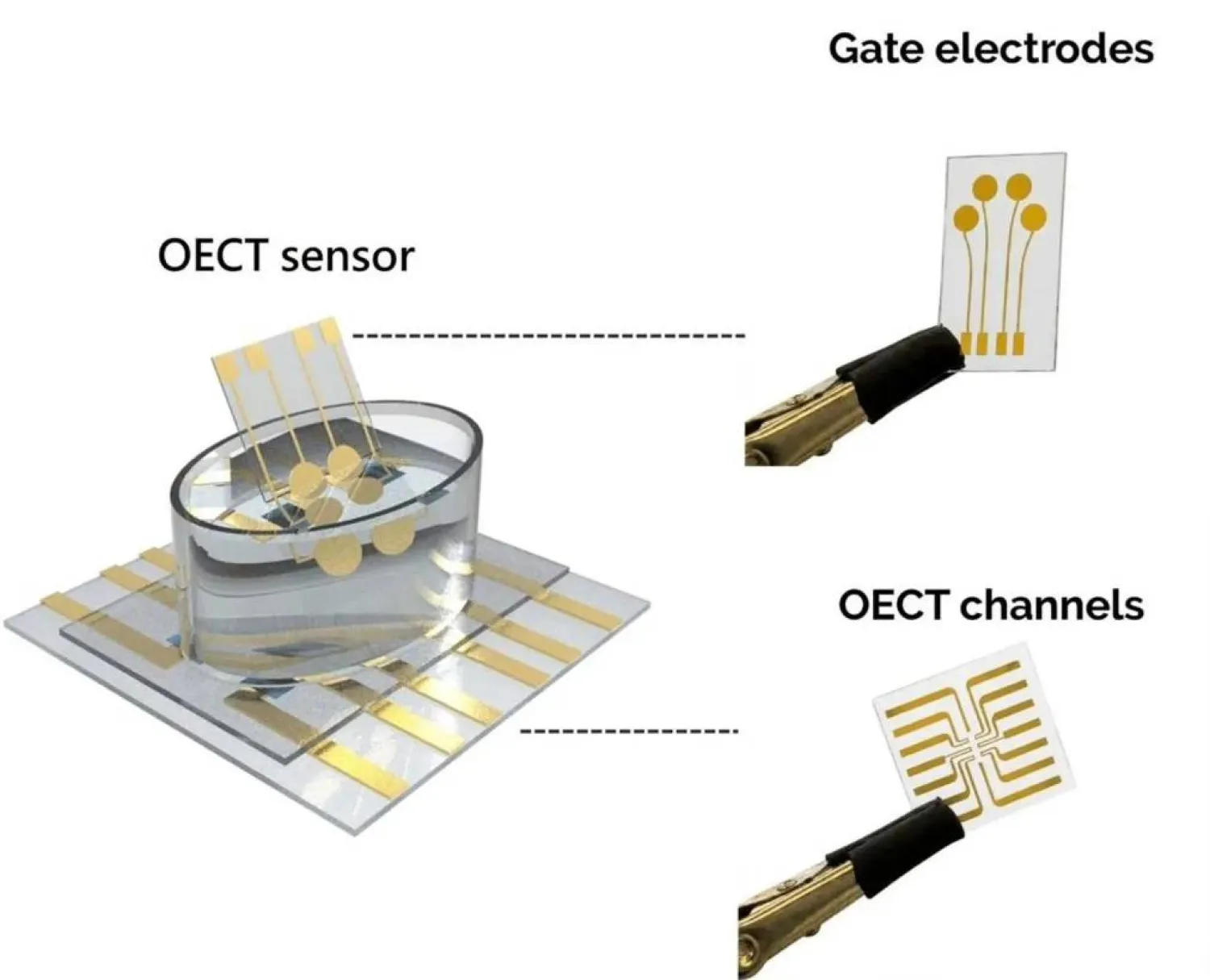
The study was published in Science Advances. The technology uses a highly sensitive electronic sensor developed at KAUST to simultaneously detect three different forms of alpha-synuclein, a protein closely associated with Parkinson’s disease. The sensor can detect these proteins at extremely low concentrations that are difficult to measure using conventional analytical techniques.
The approach first isolates tiny packages released by nerve cells into the bloodstream before their protein contents are analyzed using the electronic sensor. At the heart of the technology is a transistor that amplifies very small biological signals into much larger electronic signals, allowing all three forms of alpha-synuclein to be measured within 40 minutes.
Parkinson’s damages dopamine-producing neurons, leading to problems with movement, balance, and other bodily functions. It is currently diagnosed largely through clinical assessment, often after characteristic movement symptoms have emerged.
Detecting disease-related proteins originating from the brain could offer an earlier window into the disease but measuring them in blood is extremely difficult because more than 95 percent of circulating alpha-synuclein originates from red blood cells, creating heavy background noise.
Saudi Arabia’s healthcare system is placing increasing emphasis on prevention and earlier detection as people live longer. Life expectancy in the Kingdom has risen to 79.7 years, approaching the Saudi Vision 2030 target of 80, while the proportion of older people is expected to grow significantly in the coming decades.
Against this backdrop, technologies that could eventually help identify age-related diseases such as Parkinson’s earlier could become increasingly relevant to long-term healthcare.
In a blinded evaluation involving 59 participants from the Oxford Discovery cohort, the platform achieved 90.9 percent accuracy in distinguishing disease-associated profiles from healthy controls.
The study included people diagnosed with Parkinson’s disease, healthy controls, and individuals with isolated REM sleep behavior disorder, a condition which is associated with an increased risk of developing Parkinson’s or related neurological disorders.
Researchers found distinct patterns in the different forms of alpha-synuclein across the groups, suggesting that measuring them together could provide more useful diagnostic information than relying on a single marker.
Associate Professor of Bioengineering at KAUST Sahika Inal said: “Changes associated with Parkinson’s can begin long before a clinical diagnosis, but detecting those changes through something as accessible as blood remains extremely challenging.”
“Our approach allows us to detect several forms of alpha-synuclein together at extremely low concentrations. These early results are encouraging, and the next step is to validate the technology in much larger groups of patients,” he added.
The researchers caution that the technology is not yet a standalone clinical blood test. The current study represents a retrospective evaluation in an initial cohort, and larger, prospective, multicenter clinical studies will be needed to establish its long-term predictive value before the platform could be used routinely in healthcare.
Sumatra Rhino Pregnancies Nurse Hope for Endangered Species' Futurehttps://english.aawsat.com/varieties/5325678-sumatra-rhino-pregnancies-nurse-hope-endangered-species-future
Sumatra Rhino Pregnancies Nurse Hope for Endangered Species' Future
People commute along a road as haze from forest and land fires shrouds Palembang, South Sumatra on October 2, 2026. (Photo by AL ZULKIFLI / AFP)
Two critically endangered Sumatran rhinos have fallen pregnant at an Indonesian sanctuary, boosting hopes for the survival of one of the world's rarest and most threatened mammals, the government said on Sunday.
Ratu, a female Sumatran rhino at the Way Kambas National Park on Sumatra island, has been pregnant with her fourth calf for 238 days -- nearly half the gestation period.
Ratu means "queen" in Indonesian.
Ratu's daughter, Delilah, is more than 250 days into a pregnancy with her second calf, and both should give birth in May next year.
"The pregnancies of these two Sumatran rhinos are not only good news for Indonesia, but also for the world," AFP quoted Indonesian forestry ministry official Ahmad Munawir as saying in a statement.
"The pregnancies of the two female rhinos are part of long-term efforts to ensure the survival of the Sumatran rhino population through planned breeding, reproductive health management, and intensive monitoring of individual animals," he added.
The ministry said the health and safety of the females were being closely monitored by a medical team, keepers, and national parks management.
"All five species of rhino face serious threats... This announcement marks a significant milestone in the fight to save this imperiled species," Nina Fascione, executive director of the International Rhino Foundation, said in a separate statement.
"Ratu and Delilah's pregnancies represent two more individuals that can help bring Sumatran rhinos back from the brink of extinction."
The International Union for Conservation of Nature (IUCN) classifies Sumatran rhinos as critically endangered, with fewer than 80 individuals remaining in the wild.
The species is found only in Indonesia, scattered across national park areas in North Sumatra, Lampung, Bengkulu, and East Kalimantan.
لم تشترك بعد
انشئ حساباً خاصاً بك لتحصل على أخبار مخصصة لك ولتتمتع بخاصية حفظ المقالات وتتلقى نشراتنا البريدية المتنوعة