


World on ‘Thin Ice’ as UN Climate Report Gives Stark Warning

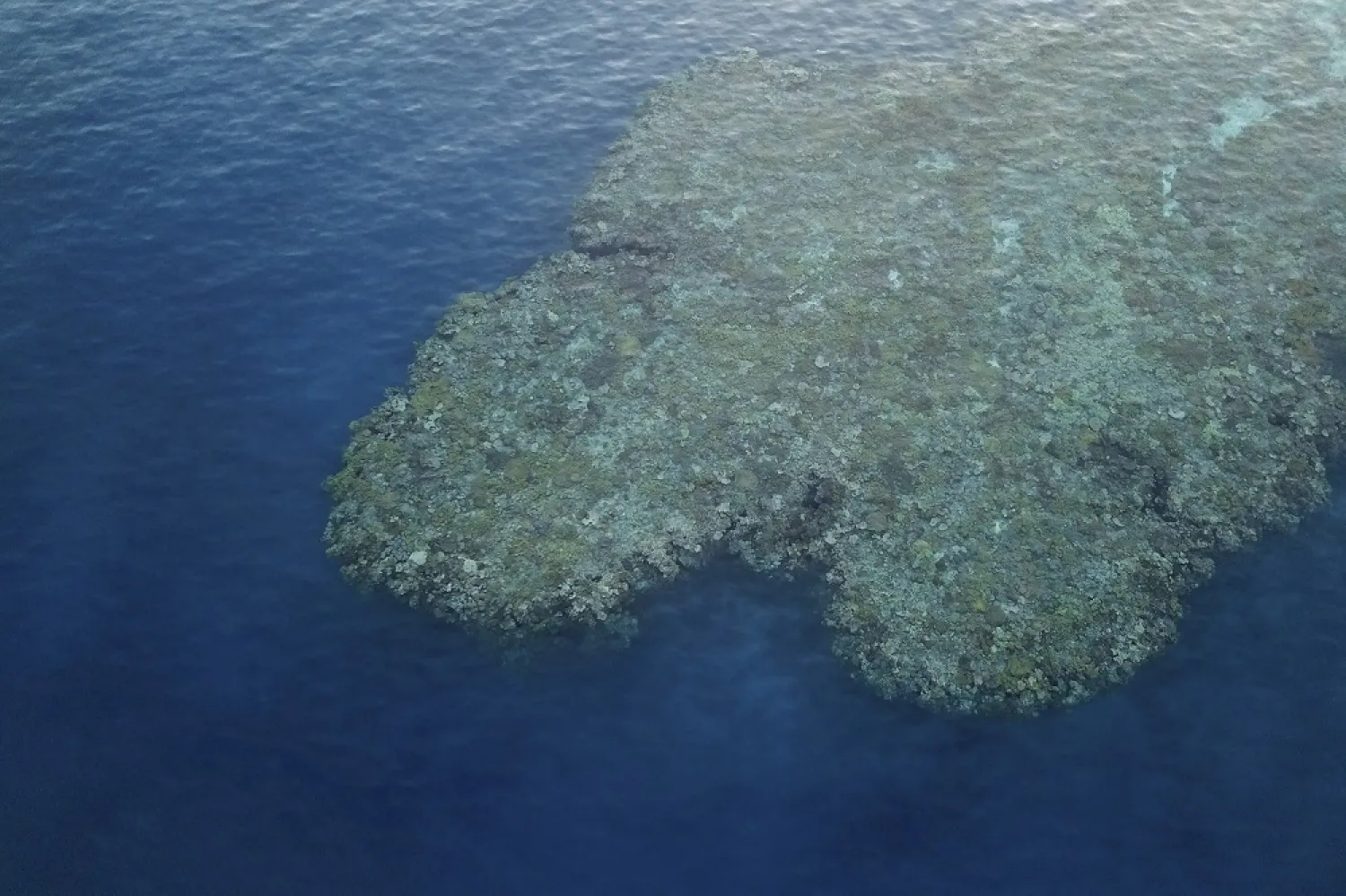
Corals on the Great Barrier Reef are visible in Gunggandji Sea Country off coast of Queensland in eastern Australia on Nov. 14, 2022. (AP)
TT

World on ‘Thin Ice’ as UN Climate Report Gives Stark Warning

Corals on the Great Barrier Reef are visible in Gunggandji Sea Country off coast of Queensland in eastern Australia on Nov. 14, 2022. (AP)

Humanity still has a chance, close to the last, to prevent the worst of climate change ’s future harms, a top United Nations panel of scientists said Monday.

But doing so requires quickly slashing nearly two-thirds of carbon pollution by 2035, the Intergovernmental Panel on Climate Change said. The United Nations chief said it more bluntly, calling for an end to new fossil fuel exploration and for rich countries to quit coal, oil and gas by 2040.

“Humanity is on thin ice — and that ice is melting fast,” United Nations Secretary-General Antonio Guterres said. “Our world needs climate action on all fronts — everything, everywhere, all at once.”

Stepping up his pleas for action on fossil fuels, Guterres called for rich countries to accelerate their target for achieving net zero emissions to as early as 2040, and developing nations to aim for 2050 — about a decade earlier than most current targets. He also called for them to stop using coal by 2030 and 2040, respectively, and ensure carbon-free electricity generation in the developed world by 2035, meaning no gas-fired power plants either.

That date is key because nations soon have to come up with goals for pollution reduction by 2035, according to the Paris climate agreement. After contentious debate, the UN science report approved Sunday concluded that to stay under the warming limit set in Paris the world needs to cut 60% of its greenhouse gas emissions by 2035, compared with 2019, adding a new target not previously mentioned in six previous reports issued since 2018.

“The choices and actions implemented in this decade will have impacts for thousands of years,” the report, said calling climate change “a threat to human well-being and planetary health.”

“We are not on the right track but it’s not too late,” said report co-author and water scientist Aditi Mukherji. “Our intention is really a message of hope, and not that of doomsday.”

With the world only a few tenths of a degree away from the globally accepted goal of limiting warming to 1.5 degrees Celsius (2.7 degrees Fahrenheit) since pre-industrial times, scientists stressed a sense of urgency. The goal was adopted as part of the 2015 Paris climate agreement and the world has already warmed 1.1 degrees Celsius (2 degrees Fahrenheit).

This is likely the last warning the Nobel Peace Prize-winning collection of scientists will be able to make about the 1.5 mark because their next set of reports may well come after Earth has either breached the mark or is locked into exceeding it soon, several scientists, including report authors, told The Associated Press.

After 1.5 degrees “the risks are starting to pile on,” said report co-author Francis X. Johnson, a climate, land and policy scientist at the Stockholm Environment Institute. The report mentions “tipping points” around that temperature of species extinction, including coral reefs, irreversible melting of ice sheets and sea level rise on the order of several meters (several yards).

“1.5 is a critical critical limit, particularly for small islands and mountain (communities) which depend on glaciers,” said Mukherji, who’s also the climate change impact platform director at the research institute CGIAR.

“The window is closing if emissions are not reduced as quickly as possible,” Johnson said in an interview. “Scientists are rather alarmed.”

Many scientists, including at least three co-authors, said hitting 1.5 degrees is inevitable.

“We are pretty much locked into 1.5,” said report co-author Malte Meinshausen, a climate scientist at the University of Melbourne in Australia. “There’s very little way we will be able to avoid crossing 1.5 C sometime in the 2030s” but the big issue is whether the temperature keeps rising from there or stabilizes.

Guterres insisted “the 1.5-degree limit is achievable.” Science panel chief Hoesung Lee said so far the world is far off course.

“This report confirms that if the current trends, current patterns of consumption and production continues, then ... the global average 1.5 degrees temperature increase will be seen sometime in this decade,” Lee said.

Scientists emphasize that the world, civilization or humanity won’t end suddenly if and when Earth passes the 1.5-degree mark. Mukherji said “it's not as if it's a cliff that we all fall off.” But an earlier IPCC report detailed how the harms – from Arctic Sea ice absent summers to even nastier extreme weather – are much worse beyond 1.5 degrees of warming.

“It is certainly prudent to be planning for a future that’s warmer than 1.5 degrees,” said IPCC report review editor Steven Rose, an economist at the Electric Power Research Institute in the United States.

If the world continues to use all the fossil fuel-powered infrastructure either existing now or proposed Earth will warm at least 2 degrees Celsius since pre-industrial times, the report said.

Because the report is based on data from a few years ago, the calculations about fossil fuel projects already in the pipeline do not include the increase in coal and natural gas use after Russia’s invasion of Ukraine.

It comes a week after the Biden Administration in the United States approved the huge Willow oil-drilling project in Alaska, which could produce up to 180,000 barrels of oil a day.

The report and the underlying discussions also touch on the disparity between rich nations, which caused much of the problem because carbon dioxide emissions from industrialization stay in the air for more than a century, and poorer countries that get hit harder by extreme weather.

Residents of poorer climate vulnerable nations are “up to 15 times more likely to die in floods, droughts and storms,” Lee said.

If the world is to achieve its climate goals, poorer countries need a three-to-six times increase in financial help to adapt to a warmer world and switch to non-polluting energy, Lee said. Countries have made financial pledges and promises of a damage compensation fund.

The report offers hope if action is taken, using the word “opportunity” nine times in a 27-page summary. Though opportunity is overshadowed by 94 uses of the word “risk.”

“The pace and scale of what has been done so far and current plans are insufficient to tackle climate change,” IPCC chief Lee said. “We are walking when we should be sprinting.”

Lee said the panel doesn't tell countries what to do to limit worse warming, adding: “It's up to each government to find the best solution.”

Activists also found grains of hope in the reports.

“The findings of these reports can make us feel disheartened about the slow pace of emissions reductions, the limited transition to renewable energy and the growing, daily impact of the climate crisis on children,” said youth climate activist Vanessa Nakate, a goodwill ambassador for UNICEF. “But those children need us to read this report and take action, not lose hope.”

Peter Thorne, a researcher at the National University of Ireland in Maynooth and one of the report's authors, said the responsibility for action rests with everyone.

“The reality is we at all levels — governments, communities, individuals — have made climate change somebody else’s problem,” he said. “We have to stop that.”



Al-Qatif Street Food Festival Celebrates Saudi Culinary Arts

The event features six pavilions that allow visitors to explore a wide variety of foods and beverages made from local ingredients, reflecting the Kingdom’s diverse environments and regional flavors - SPA
TT

Al-Qatif Street Food Festival Celebrates Saudi Culinary Arts

The event features six pavilions that allow visitors to explore a wide variety of foods and beverages made from local ingredients, reflecting the Kingdom’s diverse environments and regional flavors - SPA

The Culinary Arts Commission launched Al-Qatif Street Food Festival, which runs until December 30, 2025, offering visitors a rich cultural experience that highlights Saudi culinary arts in a setting that reflects the authenticity and diversity of the Kingdom’s national cuisine, while reinforcing the presence of heritage within the contemporary cultural landscape.

The festival showcases Saudi food culture as a vital component of national identity through live cooking stations where traditional dishes are prepared and presented by culinary experts, SPA reported.

The event features six pavilions that allow visitors to explore a wide variety of foods and beverages made from local ingredients, reflecting the Kingdom’s diverse environments and regional flavors.

In addition to the culinary offerings, the festival presents a range of accompanying cultural experiences designed to enrich the visitor journey and encourage engagement with food as both an artistic and knowledge-based experience.

These include a dedicated children’s pavilion, interactive tasting spaces for dishes, and innovative beverage experiences inspired by Saudi agricultural products.


Want to Read More in 2026? Here's How to Revive Your Love of Books

A woman reads a book in the afternoon sun on a bench outside South Station in Boston, on Friday, May 31, 2024. (AP Photo/David Goldman, File)
TT

Want to Read More in 2026? Here's How to Revive Your Love of Books

A woman reads a book in the afternoon sun on a bench outside South Station in Boston, on Friday, May 31, 2024. (AP Photo/David Goldman, File)

People stop reading in adulthood for lots of reasons. But it’s never too late to turn the page on old habits and start again.

Curling up with a good book can reduce stress, increase creativity and boost empathy. A recent analysis of US government data found that the percentage of Americans who read for pleasure during an average day has fallen to 16% in 2023 from 28% in 2004. That includes not just books but audiobooks, e-books and periodicals like magazines, The AP news reported.

Some people say they're fatigued from years of assigned reading in school. Others don't have the time or would rather zone out by doom-scrolling on social media. And many just got out of the habit.

“It’s difficult for people who are really tired and busy to think about getting into reading if it’s not something they’re used to,” said Jacqueline Rammer, director of Menomonee Falls Public Library in Wisconsin.

For those looking to set reading goals or resolutions in 2026, here's how to get back into the habit.

Choose the right book When picking your next book, avoid dense nonfiction or a 500-page doorstop.

“Your first book should be something that you think will be joyful,” said Jocelyn Luizzi, a software engineer from Chicago who blogs about books.

Everyone's taste is different, so get recommendations from a variety of places including friends, booksellers and online communities like BookTok.

Rammer and her staff ask library visitors: What was the last book, TV show or movie that you really enjoyed? Then, they look for similar genres or themes.

Many libraries offer access to a service called NoveList which suggests “read-alikes” for various books and authors.

Set a reading routine To create a habit that sticks, “start by scheduling reading into your day,” said Gloria Mark, an attention span expert with the University of California, Irvine. Read five pages during a lunch break or right before bed.

If you're reading a physical book, Mark said to avoid distractions by keeping phones and laptops out of sight.

But experimenting with other formats can make reading more convenient. E-books are portable and audiobooks are a good candidate to accompany chores or the morning commute. You can likely access both for free by downloading an app called Libby and signing in with a library card.

Try to read in a quiet setting, but don't be afraid to make it a social activity. Many cities in the US and around the world host silent book clubs where people read their own books together in coffee shops and libraries.

Setting a reading goal for the year or joining a local library's winter reading challenge can help with motivation — but if it feels like added pressure, don't do it.

Shannon Whitehead Smith, a book blogger from the Atlanta area who also works in marketing, says scrolling through lists of other people's reads on social media and trackers like StoryGraph encourages her to keep the habit.

“Seeing all these other people reading motivates me to put my phone down and pick up this book that’s sitting beside me,” she said.

Feel free to skip a read if a book feels particularly sluggish, it's OK to put it down and start another. Reading “shouldn't feel like a burden,” said Jess Bone with University College London, who analyzed the survey data about American adults reading for pleasure.

Routine readers say the habit helps them stay curious and release the stress of the day. Rammer, the library director, reads mysteries rife with twists and turns, and romances that cycle through roller coasters of emotions.

Most of all, she likes books that end with a “happily ever after.”

“I think the guarantee of knowing that things are going to end up OK is really reassuring,” Rammer said.


Saudi Architecture and Design Commission Launches Graphic Design Association in Riyadh

The association aims to unify graphic design practitioners
TT

Saudi Architecture and Design Commission Launches Graphic Design Association in Riyadh

The association aims to unify graphic design practitioners

The Graphic Design Association has been launched in Riyadh under the patronage of the Saudi Architecture and Design Commission.

Sunday’s event, attended by officials and culture experts, marks a significant step in empowering graphic design talents.

The ceremony included a presentation outlining the association’s vision and operational plans for developing the graphic design sector. Key goals include supporting designers and enhancing their professional presence locally and internationally.

The association aims to unify graphic design practitioners, providing a framework that fosters skill development, stimulates innovation, and creates opportunities in the cultural sector.

Acting CEO of the Architecture and Design Commission Prince Nawaf bin Abdulaziz bin Ayyaf stressed that the association is vital for organizing the sector and improving professional practices, thereby enhancing its role in the cultural ecosystem.

The Graphic Design Association is one of the professional associations established under the Saudi Ministry of Culture, aimed at building an integrated system of organizations to empower practitioners across various cultural fields.